
A dog that backs out of a harness can turn an ordinary walk into a frightening scramble. It may happen when a truck rumbles by, another dog appears, or your dog suddenly pulls backward at the end of the leash. If you are looking for the best escape proof dog harness, start with a realistic goal: choose gear that fits your dog’s body, stays secure through normal movement, and works with safe leash handling. No harness can guarantee that a dog will never get loose. Fit, adjustment, supervision, and your dog’s behavior all matter.
The question “How to choose the right escape proof dog harness?” is really about matching a harness to the way your dog moves and the situations that make them try to retreat. A secure design can reduce opportunities to slip free, but it should still allow comfortable movement and breathing. Here is what to look for in an escape proof dog harness, how to check its fit, and how often to inspect or replace it.

What makes a dog harness harder to escape?
Dogs usually slip a harness by backing up, twisting, or pulling through an opening that is too large. A loose neck opening, a chest strap that shifts, or a design that does not account for a dog’s body shape can create a path out. A harness that is too tight can cause rubbing or restrict movement, so simply tightening every strap is not a safe fix.
A more secure harness tends to have several adjustment points and a belly strap behind the rib cage. That third strap helps prevent a dog from backing straight out, especially if the dog has a narrow waist or deep chest. Veterinary behavior specialists at VCA note that dogs can back out of an improperly fitted harness, and that harnesses should not limit front-leg movement or rub behind the elbows.
“Escape-proof” is a useful search phrase, but it is not a guarantee. A harness can loosen, break, or shift, and a frightened dog may move in ways you did not anticipate. Treat a secure harness as one part of a safety plan rather than the entire plan.
Choose a harness style for your dog’s shape
Harnesses are not one-size-fits-all in shape, even when their size labels match. A dog with a deep chest and narrow waist may need a different cut from a broad, stocky dog. Puppies, thin-coated dogs, and dogs whose weight changes may also need frequent fit checks.
Three-strap harnesses
A three-strap or “escape-resistant” harness usually has straps around the chest, behind the front legs, and around the torso. The extra belly strap can make it harder for a dog to back out. It should sit behind the rib cage without pressing into the soft abdomen or interfering with urination.
Y-front and H-style harnesses
Y-front and H-style designs can leave the shoulders freer than some vest-like designs, depending on how the straps are positioned. Check that the front strap does not lie across the shoulder joints or restrict the dog’s stride. A harness that looks sturdy but changes how your dog walks is not a good fit. VCA advises choosing a body harness that allows the front legs to move freely and does not cause chafing.
Step-in and overhead designs
A step-in harness may suit dogs that dislike having equipment pulled over their heads. An overhead style may be easier to put on a dog that is comfortable with handling. Neither style is automatically more secure: the fit and adjustment range matter more than the label. If your dog is afraid of harnesses, introduce the gear gradually instead of forcing it on.
Measure before choosing a size
Use a soft tape measure and follow the sizing instructions for the harness you are considering. Size labels are not standardized, and one brand’s medium may fit differently from another’s.
Measure your dog while standing naturally. The most important measurement is usually chest girth: wrap the tape around the widest part of the rib cage, generally just behind the front legs. Measure the neck if the harness design uses a neck opening. Keep the tape snug, not tight. The American Kennel Club recommends checking the product’s specific sizing chart and leaving enough room for a comfortable fit.
If your dog’s measurement falls between sizes, do not assume that sizing up is always safer. A larger harness may leave openings wide enough to back through. Look for a design with enough adjustment to fit both the chest and neck areas, and contact the maker if the chart does not explain your dog’s measurements. For unusual body shapes, a veterinary professional or qualified trainer may help you assess options.
How to check the fit at home
Check the harness each time you put it on, especially after washing it or adjusting the straps. These checks are practical starting points, not a substitute for the fit instructions that came with the harness.
- Look at the position. The chest piece should sit on the chest rather than slide toward the throat. The belly strap should stay behind the front legs without pressing into the armpits.
- Check the space. You should be able to slide a finger or two beneath the straps, depending on your dog’s size and the design. The harness should not pinch, sag, or shift easily.
- Watch your dog walk. Look for shorter steps, rubbing, unusual resistance, or straps that move toward the neck or front legs.
- Practice a gentle backing-up check indoors. With the leash attached and your hands close, apply only light, steady tension as your dog steps backward. Do not jerk the leash or deliberately frighten your dog. If the harness shifts toward the head or slides over the shoulders, stop and reassess the size or style.
- Recheck after movement. Have your dog sit, stand, turn, and walk a few steps. A harness that fits only while your dog stands still needs adjustment.
What details should you look for?
For a best escape proof dog harness, focus on function and fit rather than extra features.
- Multiple adjustment points: These help you fit the neck, chest, and belly separately.
- A secure belly strap: It can reduce the chance of backing out when it is positioned correctly.
- Sturdy, easy-to-check hardware: Buckles and leash rings should close fully and show no cracks, bending, or corrosion.
- Clear leash attachment points: Follow the harness maker’s directions for which ring to use. A second attachment point may help with control in some situations, but it does not replace training or careful handling.
- Comfortable contact surfaces: Look for edges and seams that do not dig into the skin or rub behind the legs.
- A practical putting-on process: If the harness is difficult to secure correctly, rushed outings can lead to mistakes.
Avoid assuming that padding, a broad vest shape, or a heavy-looking buckle makes a harness escape-proof. Those features do not tell you whether the openings match your dog’s proportions or whether the straps remain in place while moving.
Add a backup when the risk is high
If your dog has escaped before, is very fearful, or is walked near traffic, consider asking a qualified trainer or veterinary professional to help you plan a safer setup. Some handlers use a safety connector between a body harness and a well-fitted collar. A backup should be attached so it does not tangle or pull sharply on the dog’s neck. VCA notes that a second attachment can offer additional control in urgent situations, but equipment and setup need to suit the individual dog.
Keep your dog on leash in unenclosed areas, even if the harness seems secure. Make sure your dog’s identification is current; a microchip and visible ID tag provide additional ways to identify them if they get loose. The American Kennel Club also recommends up-to-date identification and secure leash use as part of escape prevention.
Help your dog feel comfortable wearing it
A secure harness only helps if your dog can wear it without panic or struggling. Let your dog investigate the harness in a calm room. Reward relaxed sniffing, then briefly touch the harness to the body and reward again. Build up to fastening it for a short time, then remove it. Keep early sessions easy.
Once your dog is comfortable, attach the leash indoors and walk a few steps. Watch for freezing, scratching at the harness, tucked posture, or attempts to back away. These signs mean you should slow down and make the process easier. If the dog remains distressed, ask your veterinarian or a qualified reward-based trainer for guidance.
How often should you use or replace an escape proof dog harness?
Use a harness when it is appropriate for your dog’s walk and the gear fits comfortably. Before each walk, check that the straps are adjusted, buckles are secured, and leash rings are not damaged. Also check the harness after it gets wet, is washed, or has been worn during rough play.
There is no single replacement interval that suits every harness. Replace it when straps fray, stitching separates, buckles crack or fail to close, hardware bends, or the harness no longer adjusts securely to your dog. Reassess the fit after a puppy grows, a dog gains or loses weight, or a coat change affects how the harness sits. Remove the harness when your dog is not directly supervised; VCA warns that harnesses can become entangled and cause injury.

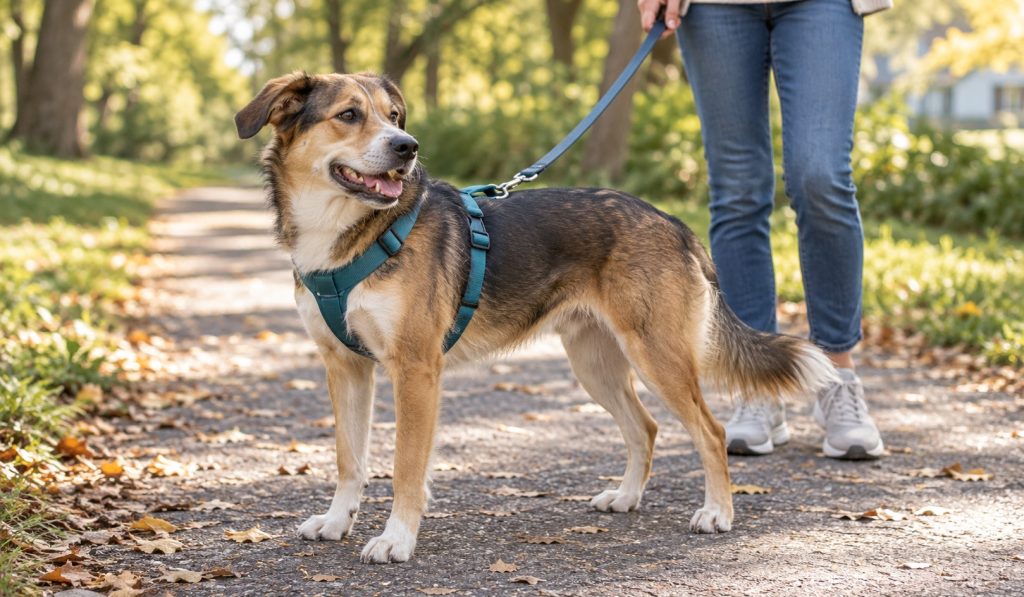
A close look at the harness position helps you spot shifting or wear.
Image source and CC0 license. This image is 2,681 × 2,679 pixels and is released under CC0. Wikimedia Commons
Frequently Asked Questions
Can any dog harness be truly escape-proof?
No. A well-fitted harness can reduce the chance of slipping out, but no design can guarantee that a dog will never escape. Fit, condition, handling, and the dog’s movement all matter.
Is a three-strap harness always the safest choice?
Not for every dog. A belly strap may help prevent backing out, but the harness still needs to fit without rubbing or restricting movement. Choose a design that matches your dog’s build and walking needs.
Should I tighten the harness if my dog backs out?
Only adjust it within the maker’s fit guidance. If the harness shifts despite correct adjustment, the style or size may not suit your dog. Tightening too far can cause discomfort or restrict movement.
Can my dog wear the harness all day?
Harnesses are generally walking gear, not all-day unsupervised wear. Remove it when you cannot supervise your dog, since straps can catch or entangle.
What if my dog is frightened of the harness?
Introduce it gradually with brief, positive sessions. Do not force it over your dog’s head or rush straight into a walk. If fear persists, ask your veterinarian or a qualified reward-based trainer for help.
Final Thoughts
The best escape proof dog harness is one that fits your dog’s shape, stays in place during movement, and allows a comfortable stride. Measure carefully, check the fit before every walk, and replace worn gear promptly. For a dog with a history of slipping free, combine well-fitted equipment with calm practice, secure leash handling, identification, and a backup plan suited to your dog.









