
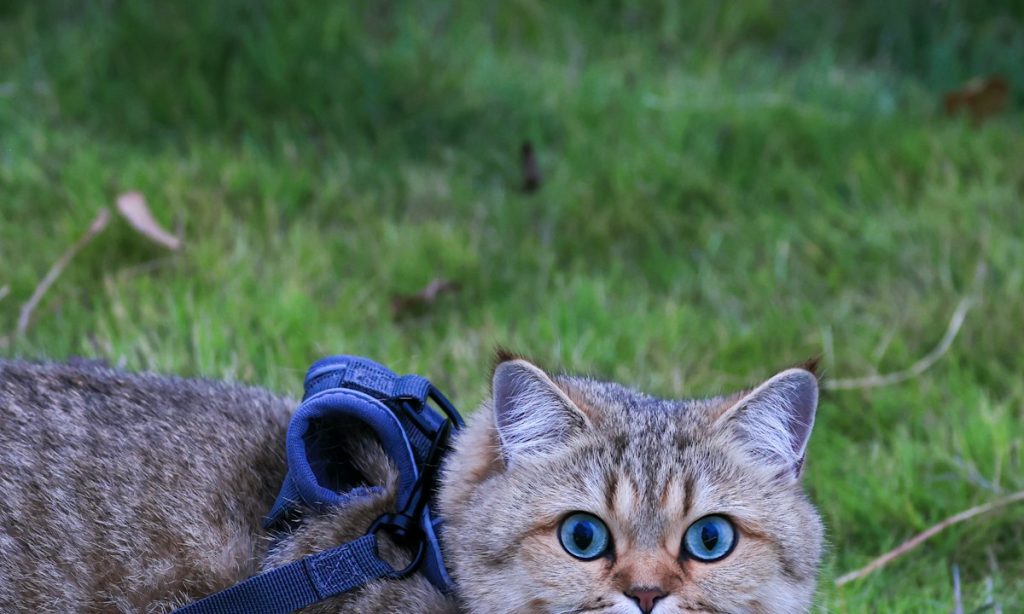
How to adjust a harness to prevent rubbing near the legs is especially important for cats whose shoulder movement is sensitive to strap placement. A harness that looks secure while your cat stands still may chafe when your cat walks, crouches, or turns. The skin behind the front legs can be affected by a strap that sits too close, shifts under tension, or traps fur.
This guide explains how to adjust a harness to prevent rubbing near the legs, with special attention to large, long-haired cats. Readers considering a harness for Maine Coon cat should focus on measurements, strap placement, body movement, and a gradual introduction. The goal is comfort and containment together. Learn a careful fit routine, what early friction looks like, and when a different harness design is safer than another adjustment.
Locate the rubbing and inspect the skin
Begin with the harness removed. Examine the fur and skin at the armpits, chest, shoulder openings, and lower edges of any vest panels. Look for flattened fur, tangles, redness, bare spots, warmth, or reluctance to be touched. Long coats may hide irritation, so part the fur gently rather than rubbing against the skin. A cat that starts biting at a strap, crouching unusually low, or refusing to move may be uncomfortable. These signs can also reflect fear of the equipment, so consider both fit and training.
If the skin is broken, actively inflamed, swollen, or painful, stop harness use and ask your veterinarian for advice. Do not cover irritated areas and continue walking. Photograph the location before it changes, and note which strap touches it. How to adjust a harness to prevent rubbing near the legs starts with identifying the exact contact point. A strap pressing behind the elbow requires a different solution than a neck opening that shifts sideways as the leash tightens.
Measure your cat and understand the harness shape
Use a flexible measuring tape according to the harness manufacturer’s instructions. Common measurements include neck circumference and the girth around the chest behind the front legs, but designs differ. Measure while the cat stands comfortably and keep the tape level without squeezing fur into the skin. Record the numbers rather than assuming a large-breed label guarantees fit. Maine Coons vary in body shape; weight alone does not predict strap length or the distance between front legs and chest panels.
Inspect how the harness is constructed. Some designs have adjustable neck and chest loops; others use vest panels whose arm openings cannot be repositioned. If a fixed edge repeatedly touches the armpit, loosening another strap may simply make the whole harness rotate. The site’s guide on choosing an escape-resistant cat harness explains why secure closures and fit are linked. How to adjust a harness to prevent rubbing near the legs sometimes means accepting that a particular cut does not fit your cat.
Position straps without restricting movement
Lay the harness flat and identify the intended front and back. Fasten it gently while your cat is standing on a nonslip surface. Center the chest panel so pressure is distributed rather than concentrated on one edge. The strap behind the forelegs should not ride into the armpit with each step. Follow the maker’s stated strap placement; avoid improvising a new routing pattern that could reduce security. Check whether buckles, seams, and adjustment sliders sit against bony points or areas of thin fur.
Adjust one strap at a time, then recheck the entire fit. Many cats tolerate a small amount of comfortable movement between fabric and body, but a universal finger-width rule cannot guarantee security or comfort. A harness must not pull over the head when the cat backs away. It also must not squeeze the chest or obstruct the shoulders. How to adjust a harness to prevent rubbing near the legs requires observing the cat in motion, not merely measuring a stationary gap. If the harness rotates under gentle tension, reassess the design and size.
Test fit indoors before adding leash tension
Let your cat take a few steps in a quiet room. Watch from the side and behind as the shoulders move. Does a strap slide toward the elbows, bunch the coat, or create an obvious crease at the armpit? Does the cat change its stride or lie down? Some cats freeze because the sensation is unfamiliar, so distinguish fear from physical friction. Offer rewards for voluntary exploration and remove the harness after a short comfortable interval. Avoid pulling the cat forward to test whether the equipment will hold.
Once the cat moves naturally, attach the leash indoors and keep it slack. Apply only minimal, controlled tension as the cat changes direction, watching whether the harness twists or rides forward. An appropriate walking fit should remain centered without digging into the legs. If the material pulls into a sensitive area, remove it and try a different adjustment. For large cats, a related large-cat harness fit guide may help clarify why broad size ranges can still leave gaps at the chest. Never test escape resistance by deliberately frightening your cat.
Reduce friction from coat, seams and movement
Long fur can become caught in buckles or folded beneath edges. Before closing the harness, smooth the coat in its natural direction and free any trapped tufts. Check for hard seams, rough binding, exposed hook-and-loop material, or plastic sliders touching the armpit. A small change in the strap’s angle may reduce pressure. Keep the harness clean and dry because dirt, moisture, and stiff material can add irritation. Do not use adhesive padding that interferes with secure fastening or creates a new pressure point.
Inspect the cat after each early practice, particularly behind the forelegs. Temporary fur flattening is not the same as a sore, but repeated redness or avoidance should end use until resolved. Record where the rubbing occurs and what adjustment made it better or worse. How to adjust a harness to prevent rubbing near the legs is an iterative process with firm limits: the equipment must remain secure. When correct adjustment cannot meet both goals, use a better-fitting design rather than sacrificing comfort or containment.
Introduce the harness through cooperative training
Harness acceptance develops gradually. First allow your cat to investigate the harness on the floor. Reward sniffing and calm proximity, then brief contact at the shoulders. Move to a momentary fastening, immediate release, and eventually short indoor movement. Keep sessions short and voluntary. A cat that repeatedly hides, panics, or bolts needs an easier plan. Do not leave a new harness on an unsupervised cat, and do not attach the leash until the cat moves comfortably with the harness alone.
Before outdoor walks, verify that identification and parasite-prevention arrangements are appropriate, the environment is quiet, and you have a secure way to carry your cat home. Outdoor sounds and unfamiliar movement can trigger backward escape attempts even in a well-fitting harness. The guide to reflective cat harness selection adds visibility considerations, but reflective material cannot correct poor fit. Safety starts with comfort indoors and supervision outdoors. A hesitant cat never needs to be forced into a walk.
Frequently Asked Questions
Many fit questions appear only after the cat starts moving. A harness that looks tidy in a photograph may shift under leash tension or restrict the shoulder. Use these answers as a checklist before trying another adjustment.
Individual body shape matters more than breed labels. Stop if your cat shows pain or skin injury, and have a veterinarian assess any lesion that does not resolve quickly.
Should the chest strap touch the armpit?
It should not dig into the armpit or repeatedly rub during walking. Check the manufacturer’s positioning instructions and observe movement.
Can I fix rubbing by loosening every strap?
Not necessarily. Excess looseness can let the harness rotate or slip off. A different design may be safer.
Does a Maine Coon always need a large-size harness?
No. Measure the individual cat and follow the actual sizing chart. Breed and weight alone do not establish fit.
What if my cat refuses to walk in the harness?
Pause and use gradual positive-reinforcement introduction. If discomfort or pain is suspected, remove the equipment and ask a veterinarian.
Can I keep walking if there is mild redness?
No. Remove the harness and allow the skin to recover. Seek veterinary advice for persistent, painful, or broken skin.
Final Words
How to adjust a harness to prevent rubbing near the legs means inspecting the skin, centering the harness, checking shoulder clearance, and retesting while the cat moves naturally. Small strap changes may help, but no adjustment can fix a fundamentally incompatible cut. Prioritize a secure, comfortable fit and gradual indoor training before considering outdoor walks.
For a large, long-haired cat, information on a harness for Maine Coon cat can support size considerations. How to adjust a harness to prevent rubbing near the legs should remain a comfort-and-safety decision, never a reason to tighten through discomfort. If chafing or escape risk persists, stop and reassess the equipment.









