
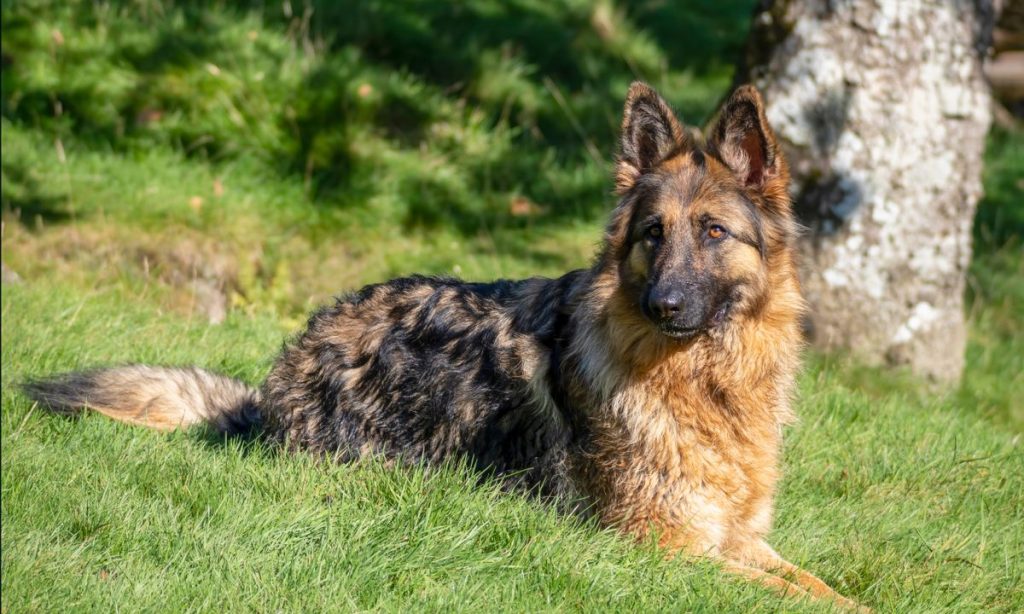
How skin allergies appear in German Shepherds often begins with persistent itching rather than an obvious rash. You may notice repeated paw licking, ear shaking, face rubbing, or scratching around the belly. The skin can look fairly normal early on. Over time, friction and inflammation may lead to redness, hair thinning, and irritated patches. These signs deserve attention because several different conditions can look alike.
This guide explains how skin allergies appear in German Shepherds, what symptoms mean, and how veterinarians investigate them. Food sensitivity is only one possibility; even a guide to dog food for German Shepherds with skin allergies cannot diagnose the cause of an itchy dog. Fleas, infections, and environmental triggers may be involved. By tracking the pattern and seeking an examination, owners can help their dog get appropriate care without guessing at treatments.
Where allergy-related changes commonly show up
Itching, or pruritus, is a major feature of canine allergic skin disease. Watch the feet between the toes, ears, face, muzzle, groin, belly, and armpits. A German Shepherd may lick a paw repeatedly after coming indoors or wake at night to scratch. Brown saliva staining can develop on pale fur. Redness may be mild at first, especially under a dense double coat. Run your eyes across the skin as the hair parts, rather than relying only on visible fur loss.
Some dogs show recurrent ear discomfort before obvious body rashes. Ear shaking, a musty odor, or dark discharge can suggest inflammation or infection and needs veterinary assessment. Scratching can create excoriations, scabs, and broken hairs. Chronic irritation may cause thickened, darker skin. The location does not prove a particular allergen, but it helps the veterinarian build a differential diagnosis. This visible pattern is central to understanding how skin allergies appear in German Shepherds.
How itching changes behavior and coat condition
A dog that keeps rubbing the face on furniture or chewing the paws may be responding to discomfort, not misbehavior. Some become restless, stop playing, or resist being touched near tender spots. Others tolerate irritation quietly. Look for new hot spots, moist areas, crusts, patches of missing fur, or a change in usual grooming behavior. A sudden smell from skin or ears may point toward a secondary microbial problem that needs its own diagnosis.
German Shepherds have dense coats, so a superficial glance can miss inflamed skin. Separate the fur gently at the base of the tail, along the belly, and beneath the collar. Do not shave large areas at home to search for a rash. Note whether itching worsens after outdoor activity, during certain seasons, or regardless of weather. Take photographs in consistent light so the veterinary team can compare changes. How skin allergies appear in German Shepherds becomes clearer when signs are documented over time.
Distinguish allergies from common look-alike problems
An itchy Shepherd may have flea allergy, sarcoptic mange, bacterial folliculitis, yeast overgrowth, contact irritation, or another skin disorder. A dog can also have more than one problem at once. Flea allergy can cause intense itching even when fleas are difficult to see. Infection can worsen allergic inflammation and produce an odor, pustules, or greasy scaling. A veterinary examination may include flea checks, skin cytology, parasite testing, and careful history before assigning an allergy label.
Environmental atopic dermatitis commonly involves recurring itch, with seasonal flares in some dogs and year-round signs in others. Food allergy can produce similar paw, ear, or body itching and cannot be identified simply by looking at a photograph. Many owners suspect food first, yet diet changes alone may miss an infection or parasite. The best way to interpret how skin allergies appear in German Shepherds is through stepwise evaluation rather than a quick diagnosis based on breed.
What a veterinarian checks during the visit
Bring notes about when signs began, their locations, previous flea prevention, diet history, treats, and any medicines. Explain whether problems recur after bathing, outdoor activity, or particular seasons. The clinician examines the coat, ears, feet, and skin, checking for lesions and infection. Depending on findings, they may perform skin scrapings, cytology, or additional testing. Allergy testing has a specific role in planning environmental allergy management; it does not replace basic diagnostic exclusion.
If food allergy remains plausible, a veterinarian may recommend a strict elimination diet followed by an appropriate challenge. This process requires precise control of snacks, supplements, and flavored medications. Randomly switching from one everyday recipe to another is not a reliable test. Our guide to how veterinarians diagnose suspected food allergies explains the reasoning, while tracking a veterinarian-guided elimination diet can help organize observations. Clinical assessment, not a single food claim, determines what to do when evaluating how skin allergies appear in German Shepherds.
Comfortable home care while awaiting a diagnosis
Keep up with veterinarian-recommended flea prevention and clean the dog’s resting areas. Gently dry wet paws after walks and avoid exposing raw skin to harsh detergents, fragrances, or human skin medicines. Do not apply essential oils or strong disinfectants to irritated areas. Prevent repeated self-trauma where possible, using a veterinarian-approved protective plan if the dog is chewing until the skin bleeds. Persistent lesions should not be covered with random ointments that may worsen irritation.
Bathing or cleaning strategies depend on whether the dog has allergy, infection, or another condition. A veterinarian may recommend suitable bathing frequency and a therapeutic plan for the actual diagnosis. Do not start steroid tablets, antibiotics, antifungals, or a prolonged restrictive diet without veterinary guidance. Record comfort, sleep, appetite, and ear signs between appointments. The goal is not to conceal how skin allergies appear in German Shepherds, but to reduce avoidable irritation while obtaining effective treatment.
When symptoms require urgent care
Arrange a prompt veterinary appointment for persistent scratching, recurrent ear infections, hair loss, oozing lesions, or skin that looks painful. Severe swelling, rapidly spreading redness, lethargy, fever, or a dog that refuses food warrants faster assessment. Facial swelling with breathing difficulty, collapse, or repeated vomiting after a suspected allergic exposure is an emergency. An acute reaction is different from chronic atopic dermatitis and should not be managed through home diet experiments.
Tell your veterinarian about prior reactions to medicines, treats, or topical products. Photos and a timeline can help distinguish an isolated event from a recurring allergy pattern. For food-related questions, review questions about possible food allergies in dogs before your visit. Ask what alternative diagnoses still need to be ruled out, what symptoms should improve first, and when rechecks are needed. Understanding how skin allergies appear in German Shepherds is most valuable when it guides timely, appropriate veterinary care.
Frequently Asked Questions
Allergic skin symptoms often overlap with unrelated skin conditions, so these answers describe patterns rather than offering a home diagnosis. Persistent symptoms require examination.
A German Shepherd can have environmental allergies, parasites, infections, or dietary sensitivity. Each cause needs a different plan, even when the dog scratches the same spot.
Are itchy paws always a food allergy?
No. Environmental allergens, infections, parasites, and other causes can also produce paw licking. The veterinarian may need several tests or controlled trials.
Can a German Shepherd have allergies without visible bumps?
Yes. Itch may begin before obvious lesions appear. Continued rubbing and licking can later create redness, crusts, or hair loss.
Does a bad ear smell mean an allergy?
It can accompany allergic disease, but it often suggests an ear infection that needs direct evaluation. Do not place household cleaners into the ear.
Should I change food immediately when my dog scratches?
Not without considering other causes. Ask a veterinarian whether a structured elimination diet is warranted, and follow it exactly if prescribed.
When should I worry about an itchy rash?
Seek veterinary care for persistent or worsening itch, painful skin, discharge, swelling, or behavioral changes. Breathing problems or collapse are emergencies.
Final Words
How skin allergies appear in German Shepherds varies from early paw licking to chronic inflamed ears and thickened skin. No single patch of redness proves environmental or food allergy. Careful observations, flea control, examination, and treatment of secondary infections are more reliable than assumptions.
If dietary triggers remain a concern, the site’s discussion of dog food for German Shepherds with skin allergies is background reading, not a substitute for veterinary diagnosis. Keep a record of flare-ups and ask for a follow-up plan. That approach turns concern about how skin allergies appear in German Shepherds into sensible next steps.
Reference
These veterinary sources informed the descriptions of symptoms, diagnosis, and allergy management above. They do not replace individual veterinary care.
The references are limited to clinical and veterinary education resources. The underlying research also considered different causes of itch and secondary infection.









