
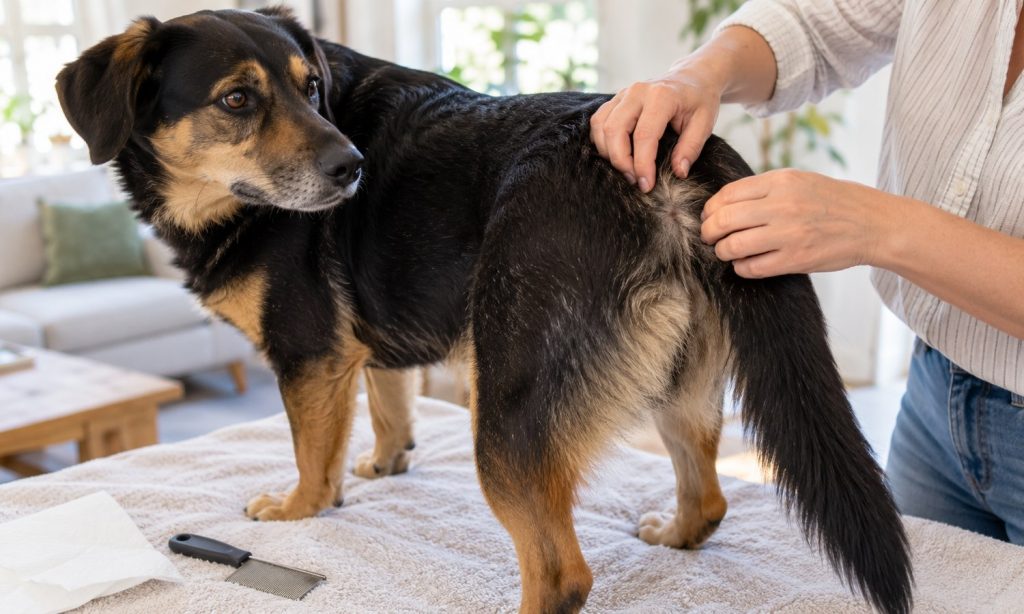
How to identify fleas on dogs and recognize an infestation starts with checking the skin and coat, not just searching for jumping insects. Fleas are small, fast, and easy to miss, especially on thick or dark fur. Black specks called flea dirt, repeated scratching, chewing near the tail, and irritated skin can provide clues. The phrase flea treatment for dogs without a vet prescription often comes up when owners find those clues, but a suspected infestation still deserves careful identification and safe product selection. Flea allergy, mites, infection, and other skin conditions can look similar. This guide explains what to inspect, how to distinguish likely flea evidence, when to contact a veterinarian, and why treating the dog and its environment are separate parts of a control plan.
What fleas and flea dirt look like
Adult fleas are tiny, dark reddish-brown insects with flattened bodies. They move quickly through a coat and may jump when disturbed. You might spot one while parting the fur, but failing to see a live flea does not rule out a problem. A dog can groom away some fleas, and a small number can still trigger substantial itching in a flea-sensitive animal.
Flea dirt is digested blood passed by adult fleas. It looks like small black or dark-brown grains, often described as pepper. Check places where fleas commonly gather, such as the lower back, base of the tail, belly, groin, and inner thighs. Redness, tiny crusts, scabs, broken hairs, or moist irritated patches may appear where a dog scratches or chews.
How to check your dog at home
Part the coat and use a flea comb
Choose a bright area and gently part the hair down to the skin. Work slowly over the rump, tail base, abdomen, and neck. A fine-toothed flea comb can catch adult fleas, flea dirt, and loose debris. Comb over a white towel or paper so dark particles are easier to see. Be gentle around tender, inflamed, or matted areas; stop if your dog seems painful.
After each pass, inspect the comb. A moving brown insect is stronger evidence than a vague itch alone. Place loose dark specks on a damp white tissue. Flea dirt may dissolve and leave a rusty red or reddish-brown stain because it contains digested blood. Ordinary soil or many other coat particles will not behave the same way. This check is suggestive, not a laboratory diagnosis, and skin flakes or dried blood can confuse the result.
Look for a pattern, not one symptom
Repeated scratching, licking, or nibbling around the rear half of the body can raise suspicion. Some dogs develop small crusted bumps or hair loss along the lower back and tail base. A dog with flea allergy dermatitis may react intensely even when only a few fleas are present. Other dogs carry fleas with little visible irritation. The amount of scratching does not reliably measure how many fleas are present.
Signs that can indicate a heavier infestation
Visible live fleas, recurring flea dirt after grooming, and multiple household pets scratching make an infestation more likely. You may also see fleas or dark debris in bedding, resting areas, carpet edges, or places where the dog spends time. Flea eggs are tiny and pale, so owners usually do not identify them reliably on a dog. Larvae and pupae tend to develop in the environment rather than remain on the pet.
Heavy flea burdens can be more serious for puppies, very small dogs, older pets, or animals with other health problems. Fleas feed on blood, so a severe infestation can contribute to anemia. Pale gums, weakness, rapid breathing, collapse, or marked lethargy need urgent veterinary attention. Open sores, pus, swelling, a foul odor, or widespread hair loss also call for prompt veterinary care.
When itching may have another cause
Fleas are not the only reason a dog scratches. Environmental allergies, food allergy, mites, bacterial or yeast infection, dry skin, contact irritation, and other parasites can produce overlapping signs. Licking paws or recurrent ear problems may point toward a broader skin issue. A veterinarian can inspect the skin, use a flea comb, look for parasites or infection, and decide whether further testing is needed.
Do not assume that every black speck is flea dirt or that every itchy dog needs the same treatment. If the signs continue despite an appropriate control plan, a veterinary examination can help identify a missed infestation, an incorrect application, reinfestation from the home, or a different diagnosis.
What to do if you suspect fleas
-
Record what you saw. Note the areas checked, whether you found a live flea, whether particles stained a damp tissue, and when the itching occurs. A clear photo or a small sample on white paper may help your veterinarian.
-
Check every pet in the household. Cats, dogs, and other animals may need species-specific plans. Never use a dog-labeled flea product on a cat. Some dog products contain ingredients that can be highly toxic to cats.
-
Ask about a safe control plan. Flea treatment for dogs without a vet prescription may be available over the counter, but labels differ by age, weight, species, health status, and active ingredient. Read the entire label, use only the labeled dose, and ask a veterinarian before using spot-on products if a pet is very young, old, pregnant, nursing, ill, or taking medication.
-
Address the environment. Flea eggs, larvae, and pupae may remain where pets rest. Wash pet bedding as the care label permits and vacuum areas where pets spend time. Empty the vacuum safely. In a larger infestation, ask a veterinarian how to coordinate pet treatment and any household measures around children and animals.
Using nonprescription flea products carefully
Over-the-counter availability does not mean every product is suitable for every dog. Check that the package names the correct species, current weight range, minimum age, and application interval. Do not combine products or repeat a dose early unless a veterinarian or the product label directs you. Avoid homemade essential-oil remedies, unverified online recipes, and products without a clearly identifiable EPA registration or FDA approval information when required.
Monitor your dog after an application. Excessive drooling, vomiting, tremors, weakness, agitation, skin swelling, or unusual behavior may signal an adverse reaction. Contact a veterinarian or an animal poison-control service promptly and keep the product package available. If a dog product contacts a cat, seek veterinary advice at once, particularly if the product contains permethrin.
Why one treatment may not end an infestation
Adult fleas on a pet are only one stage of the life cycle. Eggs fall into the surroundings, and larvae and pupae can develop in protected places. Treating only the visible fleas may therefore give temporary relief while new adults emerge. A veterinarian can explain how long a control plan may take, whether all pets need treatment, and how to respond if fleas remain visible. Do not apply household pesticide to an animal or treat a room with a product that is not labeled for that use.
Frequently Asked Questions
Can I confirm fleas if I do not see one jump?
No. Fleas move quickly and may be difficult to spot. Flea dirt, recurring itching, and a careful comb check can support suspicion, but a veterinarian can help confirm the cause.
Does a red stain on wet black specks prove fleas?
A rusty red stain is consistent with flea dirt because it contains digested blood. It is a useful clue, but it is not definitive by itself.
Can a dog have fleas without scratching?
Yes. Some dogs show little irritation, while flea-sensitive dogs may react strongly to a small number of bites.
Should I treat every pet in my home?
Household pets can share exposure, but each species and animal needs an appropriate plan. Never transfer a dog product to a cat. Ask your veterinarian about coordinated control.
When should I call a veterinarian?
Call for persistent itching, sores, suspected adverse reactions, or uncertainty about the product. Seek urgent care for pale gums, weakness, collapse, breathing changes, or a painful infected-looking skin lesion.
Final Words
How to identify fleas on dogs and recognize an infestation depends on several clues: a live flea, flea dirt, recurring signs, and the pattern of skin irritation. A comb and damp tissue can help you inspect the coat, but they cannot diagnose every cause of itching. If you are considering flea treatment for dogs without a vet prescription, match the label to your dog and discuss risks when age, health, or other medicines complicate the choice. Treating the pet, other animals, and resting areas as one coordinated plan can reduce reinfestation. Contact a veterinarian when signs are severe, persistent, or unclear.









