
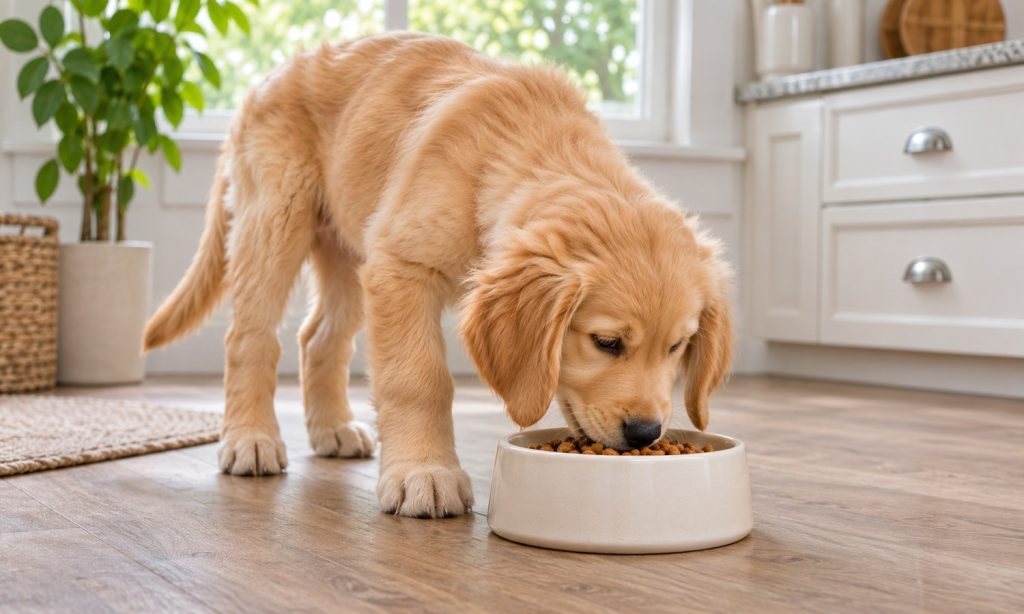
Golden Retriever puppies grow quickly, so choosing food is about more than picking a familiar brand. The best dog food for a Golden Retriever puppy should provide complete, balanced nutrition for growth and be appropriate for the puppy’s expected adult size. This guide compares one breed-specific recipe and six large-breed puppy formulas. We focus on life-stage positioning, kibble format, and verified listing details—not promises about appearance or development. Check the current nutrition statement on the bag and ask your veterinarian which formula and portions fit your puppy. Regular weigh-ins and steady growth checks help you adjust portions with your veterinarian.
Quick Picks
| Product | Best For | Key Advantage | Buy | |
|---|---|---|---|---|
| Royal Canin Golden Retriever Puppy Dry Food | Breed-specific kibble for purebred Golden Retriever puppies | Listed for Golden Retrievers 8 weeks to 15 months | View on Amazon | Jump to Review |
| Hill’s Science Diet Puppy Large Breed Chicken & Brown Rice | Large-breed growth formula with DHA | Large-breed puppy formula | View on Amazon | Jump to Review |
| Nutro Natural Choice Large Breed Puppy Chicken & Brown Rice | A chicken-and-rice recipe for large-breed growth | Large-breed puppy formula | View on Amazon | Jump to Review |
| IAMS Proactive Health Large Breed Puppy Chicken | Chicken-based large-breed puppy kibble | Chicken is first ingredient per listing | View on Amazon | Jump to Review |
| Purina Pro Plan Large Breed Puppy Chicken & Rice | A large-bag formula targeting controlled growth | Formulated for large-breed puppies | View on Amazon | Jump to Review |
| Wellness Complete Health Large Breed Puppy | A grain-inclusive large-breed puppy formula | Large-breed puppy kibble | View on Amazon | Jump to Review |
| Diamond Naturals Large Breed Puppy Lamb & Rice | A lamb-based large-breed puppy formula | Lamb is first ingredient per listing | View on Amazon | Jump to Review |
Puppy Food and Growth
For other life stages, compare this guide with adult Golden Retriever food options, our notes on large-breed feeding routines, and food considerations for Golden Retrievers with allergies.
Royal Canin Golden Retriever Puppy Dry Food

- Listed for Golden Retrievers 8 weeks to 15 months
- Specialized kibble shape per listing
- Antioxidants and vitamin E
- Prebiotics for digestive support
- Small bag for a first comparison
- Small bag may be costly per pound
- Not intended for adult dogs
Royal Canin Golden Retriever Puppy is the most breed-specific choice in this group. The verified listing describes a dry formula for purebred Golden Retrievers from 8 weeks to 15 months, with a kibble shape designed around the breed’s muzzle and bite. It also notes antioxidants and vitamin E for immune support, plus prebiotics and highly digestible proteins. These features make it a targeted option for owners who want a formula explicitly labeled for Golden Retriever puppies rather than a general large-breed recipe.
The breed-specific positioning is convenient, but it does not mean every puppy needs a unique breed formula. Check the nutritional adequacy statement and feeding chart for your puppy’s age and expected adult size. The 2.5-pound bag is useful for a first comparison or transition but can be expensive if used long term. As your puppy grows, recheck the age range and switch to an appropriate next-stage food with veterinary guidance rather than continuing puppy food indefinitely.
This may suit a purebred Golden Retriever puppy whose owner values breed-specific kibble and whose veterinarian approves the formula. It may be less practical for a mixed-breed dog, a household seeking a large bag, or a puppy with a medical diet requirement. Measure meals and monitor body condition; a specialized kibble cannot replace appropriate portions and regular growth checks. Check the package’s growth adequacy statement and confirm portions for your puppy’s expected adult size with your veterinarian.
My Recommendation
Consider Royal Canin Golden Retriever Puppy Dry Food if your Golden Retriever puppy needs breed-specific kibble for purebred golden retriever puppies and the package’s growth statement fits its expected adult size. The key benefit is a clearly described puppy formula; the main tradeoff is that ingredients and bag size vary. Check labels, measure meals, and monitor growth.
Hill’s Science Diet Puppy Large Breed Chicken & Brown Rice

- Large-breed puppy formula
- Chicken and brown rice recipe
- DHA and fish oil noted in listing
- Balanced minerals for growing bones and teeth
- Large bag for established feeding
- Chicken recipe may not suit every puppy
- Large bag is a commitment
Hill’s Science Diet Puppy Large Breed Chicken & Brown Rice is a general large-breed growth formula, rather than a Golden Retriever-only food. The verified listing highlights balanced minerals for bones and teeth, DHA and fish oil for brain and eye development, and protein for growing muscles. Those are useful features to compare for a larger puppy, where growth rate and nutrient balance matter. Check the current bag for the nutritional adequacy statement that specifically covers growth of large-size dogs.
The large 27.5-pound bag can suit a household with a puppy already eating this formula, but it is a lot to buy before you know the puppy tolerates it. The chicken-and-rice recipe may not fit every puppy’s preferences or sensitivities. Follow the feeding guide as a starting point and use body condition and veterinary growth checks to adjust portions. Avoid adding calcium or growth supplements unless your veterinarian recommends them; a complete puppy food is meant to supply nutrients in appropriate balance.
This option may fit a Golden Retriever puppy when the owner prefers a large-breed formula and the vet approves its nutritional adequacy statement. It is less convenient for a short trial or a puppy needing another protein. Track weight and body shape, and keep meals measured rather than allowing unrestricted grazing. Look for a complete growth statement that covers large-size dogs, and verify the correct life stage on the current package.
My Recommendation
Consider Hill’s Science Diet Puppy Large Breed Chicken & Brown Rice if your Golden Retriever puppy needs large-breed growth formula with dha and the package’s growth statement fits its expected adult size. The key benefit is a clearly described puppy formula; the main tradeoff is that ingredients and bag size vary. Check labels, measure meals, and monitor growth.
Nutro Natural Choice Large Breed Puppy Chicken & Brown Rice
- Large-breed puppy formula
- Chicken and brown rice recipe
- Listed for puppies up to 18 months
- DHA for brain and eye development
- 13-pound bag size
- Contains chicken
- Age transition still needs planning
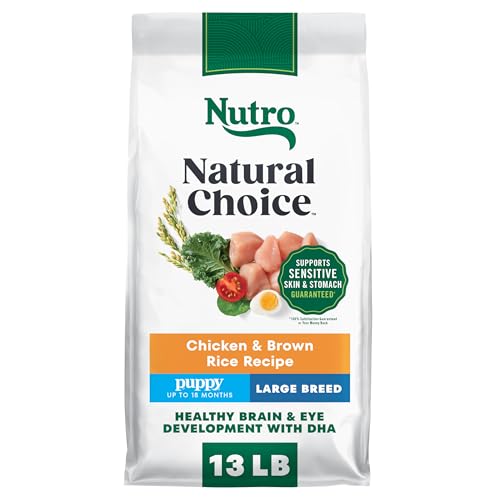
Nutro Natural Choice Large Breed Puppy Chicken & Brown Rice is a dry food listed for large-breed puppies up to 18 months. The verified product details identify chicken as the first ingredient and mention DHA for brain and eye development, along with support for bones, muscles, and joints. The 13-pound bag is a middle-sized option compared with the very small breed-specific bag and larger household bags. Confirm the current package’s growth statement for large-size puppies before choosing it as the main diet.
The product is designed for a longer puppy period than some formulas, but age cutoffs vary by brand and individual growth. Your veterinarian can help decide when your puppy is ready to transition. The chicken-based recipe may not fit puppies with a known sensitivity, and there is no need to avoid chicken unless the puppy’s health plan calls for it. Measure portions carefully, since rapid weight gain is not a goal for large-breed growth.
This may suit a Golden Retriever puppy that likes chicken-based kibble and needs a general large-breed puppy formula. It is less appropriate when the puppy requires another protein or a veterinary therapeutic diet. Keep feeding times consistent, monitor body condition, and follow the package and clinic advice as your puppy matures. For a large-breed puppy, match the bag’s growth statement to expected adult weight and review portions as growth continues. Ask your veterinarian to check progress.
My Recommendation
Consider Nutro Natural Choice Large Breed Puppy Chicken & Brown Rice if your Golden Retriever puppy needs a chicken-and-rice recipe for large-breed growth and the package’s growth statement fits its expected adult size. The key benefit is a clearly described puppy formula; the main tradeoff is that ingredients and bag size vary. Check labels, measure meals, and monitor growth.
IAMS Proactive Health Large Breed Puppy Chicken

- Chicken is first ingredient per listing
- Large-breed puppy formula
- DHA for cognitive and vision development
- Calcium positioning for bones and joints
- 15-pound bag
- Chicken may not fit every puppy
- Verify the current growth adequacy statement
IAMS Proactive Health Large Breed Puppy is a chicken-based dry food for large-breed puppies. Its verified listing describes chicken as the first ingredient and highlights DHA for cognitive and vision development, plus nutrients intended to support bones and joints. The 15-pound bag is a moderate size for households transitioning from breeder food or testing acceptance. Check the exact current package for its growth-stage statement and whether it covers the expected adult size of your Golden Retriever.
The formula offers a practical large-breed option, but it is not breed-specific and does not replace individualized feeding advice. Protein or ingredient ranking alone does not establish that a food is best for every puppy. Your puppy’s weight trend, body condition, stool quality, and activity help guide portion changes. Avoid adding supplements to a complete food unless the veterinarian recommends them, because extra nutrients can upset the balance of a growth diet.
This may suit a Golden Retriever puppy that tolerates chicken and eats kibble comfortably. It is less suitable if your veterinarian recommends a different protein or a prescription diet. Use measured meals and regular growth checks, and follow the package’s feeding guidance as a starting point rather than a fixed amount for every puppy. Check the current label for large-size growth adequacy, then measure meals and review body condition with the veterinarian as the puppy matures. Avoid growth supplements unless advised. as growth progresses.
My Recommendation
Consider IAMS Proactive Health Large Breed Puppy Chicken if your Golden Retriever puppy needs chicken-based large-breed puppy kibble and the package’s growth statement fits its expected adult size. The key benefit is a clearly described puppy formula; the main tradeoff is that ingredients and bag size vary. Check labels, measure meals, and monitor growth.
Purina Pro Plan Large Breed Puppy Chicken & Rice

- Formulated for large-breed puppies
- Chicken and rice recipe
- Appropriate growth-rate positioning
- Glucosamine feature for developing joints
- DHA and calcium listed
- 34-pound bag may be too large for a first buy
- Chicken is not ideal for all sensitivities
Purina Pro Plan Large Breed Puppy Chicken & Rice is a dry formula listed for large-breed puppies. The verified product information emphasizes supporting an appropriate growth rate, and identifies DHA for brain and vision development and calcium for bones and teeth. It also lists glucosamine for developing joints. These details make it a relevant comparison with Golden Retriever-specific and other large-breed puppy diets. Before purchasing, confirm the current package is complete and balanced for growth of large-size dogs.
The 34-pound bag offers a larger supply for a puppy that already eats the formula well, but it can be inconvenient during an initial transition. Keep food fresh and store it according to the package. Portion recommendations are only a starting point; puppies grow at different rates, and a lean body condition is preferable to pushing rapid weight gain. Your veterinarian can help adjust the amount as your dog’s activity and growth change.
This may fit a Golden Retriever puppy that tolerates chicken and whose owner wants a large-breed formula in a larger bag. It is less practical for a first-time food trial or a puppy with ingredient sensitivities. Transition gradually, measure meals, and ask the vet when to move to adult food. The bag’s large-breed growth statement should fit expected adult size. Follow feeding directions as a starting point, then adjust measured portions with veterinary guidance as weight and body condition change.
My Recommendation
Consider Purina Pro Plan Large Breed Puppy Chicken & Rice if your Golden Retriever puppy needs a large-bag formula targeting controlled growth and the package’s growth statement fits its expected adult size. The key benefit is a clearly described puppy formula; the main tradeoff is that ingredients and bag size vary. Check labels, measure meals, and monitor growth.
Wellness Complete Health Large Breed Puppy

- Large-breed puppy kibble
- Chicken, brown rice, and salmon meal recipe
- DHA from salmon oil per listing
- Wholesome-grain positioning
- 30-pound bag
- Large bag is a commitment
- Chicken is part of the recipe
Wellness Complete Health Large Breed Puppy is a grain-inclusive dry puppy food with chicken, brown rice, and salmon meal, according to its verified listing. The product details highlight DHA from salmon oil for brain development, along with balanced nutrients and omega fatty acids. It is a broad large-breed formula rather than a Golden Retriever-specific recipe. Compare the nutrition adequacy statement and package directions with your veterinarian to make sure the food fits the puppy’s expected adult size and current age.
The 30-pound bag can work well when the puppy has already adjusted to the formula, but it may be too much for a new food trial. This product contains chicken, so it is not a choice for a puppy whose veterinarian has recommended strict chicken avoidance. Grain-inclusive recipes are a normal option for many puppies; a grain-free diet is not inherently necessary unless the veterinarian identifies a reason. Store the bag securely and measure portions rather than feeding freely.
This may suit a Golden Retriever puppy that tolerates chicken and benefits from a large-breed growth formula. It is less convenient for owners who want a small introductory bag or a different protein. Follow growth and body-condition checks, and ask before making major changes to the puppy’s diet. Verify the growth statement and expected-size guidance on the current package; portion needs change as growth rate and body condition change. Review progress with your veterinarian.
My Recommendation
Consider Wellness Complete Health Large Breed Puppy if your Golden Retriever puppy needs a grain-inclusive large-breed puppy formula and the package’s growth statement fits its expected adult size. The key benefit is a clearly described puppy formula; the main tradeoff is that ingredients and bag size vary. Check labels, measure meals, and monitor growth.
Diamond Naturals Large Breed Puppy Lamb & Rice

- Lamb is first ingredient per listing
- Large-breed puppy positioning
- DHA for brain and vision development
- Rice-based recipe
- 40-pound bag
- Very large bag size
- Confirm exact life-stage statement on the bag
Diamond Naturals Large Breed Puppy Lamb & Rice is a dry formula whose verified listing names pasture-raised lamb as the first ingredient and describes nutrient levels for larger growing bodies. It also mentions DHA for brain and vision development. The lamb-based recipe creates a useful alternative to the chicken-focused choices in this roundup, although it is not automatically hypoallergenic. Check the current package for the exact life-stage adequacy statement and whether it is suitable as a complete diet for your puppy’s growth stage.
The 40-pound bag is one of the largest options here, making it more suitable after you know your puppy tolerates the food. A large package needs dry, pest-resistant storage and a plan to use it while fresh. Some listing language includes multiple life stages, so confirm whether the specific formula is suitable for large-breed puppy growth rather than assuming every lamb recipe covers the same needs. Measure meals based on the puppy’s age, weight, activity, and veterinary advice.
This may suit a Golden Retriever puppy that tolerates lamb and whose veterinarian approves the package’s growth statement. It is less convenient for a first transition or a household with limited storage. Introduce gradually, watch body condition, and keep the puppy on an appropriate growth diet until the veterinarian recommends a transition. Review the growth adequacy statement and portion guidance with your veterinarian, especially as the puppy approaches adult size.
My Recommendation
Consider Diamond Naturals Large Breed Puppy Lamb & Rice if your Golden Retriever puppy needs a lamb-based large-breed puppy formula and the package’s growth statement fits its expected adult size. The key benefit is a clearly described puppy formula; the main tradeoff is that ingredients and bag size vary. Check labels, measure meals, and monitor growth.
How to Choose Food for a Golden Retriever Puppy
Check growth-stage and large-size adequacy
Puppies need food formulated for growth, and larger puppies have specific nutrient-balance considerations. Read the AAFCO nutritional adequacy statement on the current bag. If the puppy may reach large adult size, look for a statement that covers growth of large-size dogs rather than relying on the front label alone. A Golden Retriever-specific formula can be convenient, but a suitable large-breed puppy food can also be an option. Your veterinarian can help compare the label, expected adult size, and the puppy’s health history.
Compare recipe, format, and bag size
This roundup includes chicken-based and lamb-based recipes, as well as a breed-specific kibble. Choose ingredients your puppy tolerates and check for known sensitivities. The puppy may need time to adjust to a new kibble shape or recipe, so a large bag is a substantial commitment before acceptance is clear. Compare the feeding directions and calorie information on each product’s current package. Do not assume two foods use the same serving size just because both are labeled large-breed puppy formulas.
Manage portions and transition thoughtfully
Feed measured meals rather than aiming for the fastest possible growth. Follow package instructions as a starting point, then work with your veterinarian to adjust portions based on age, weight, activity, and body condition. Transition gradually when possible, especially if the puppy is moving from a breeder’s food. Avoid adding calcium or other supplements to a complete growth diet unless the veterinarian recommends them. Keep an eye on appetite, stool, and weight trend, and ask when the puppy should transition to adult food; timing varies with individual growth and the formula’s stated age range.
Read the nutritional adequacy statement rather than relying only on “puppy” or “large breed” on the front of the bag. Confirm that the formula is intended for growth and that any large-size growth statement applies to your puppy’s expected adult weight. Avoid adding calcium or growth supplements unless the veterinarian recommends them. Weigh the puppy regularly, adjust portions with the clinic’s guidance, and use body condition and steady growth—not a desire for rapid size gain—to assess whether the feeding plan is working.
Frequently Asked Questions
Does a Golden Retriever puppy need breed-specific food?
Not necessarily. A complete growth formula appropriate for the puppy’s expected adult size can be a reasonable option. Compare label statements with your veterinarian.
How long should a Golden Retriever puppy eat puppy food?
Follow the formula’s age guidance and your veterinarian’s advice. Large-breed growth periods can last longer than those of small dogs.
Should I add calcium to puppy food?
Do not add calcium unless your veterinarian directs you to. Complete puppy foods are formulated to provide nutrients in a planned balance.
How much should I feed my Golden Retriever puppy?
Use the package feeding guide as a starting point and adjust with your veterinarian based on age, weight, activity, and body condition.
Can I switch brands quickly?
Unless your veterinarian advises an immediate change, transition gradually and watch appetite and stool during the switch.
Final Verdict
Royal Canin’s Golden Retriever Puppy formula is the most breed-specific option, while Hill’s, Nutro, IAMS, Purina Pro Plan, Wellness, and Diamond Naturals offer large-breed growth formulas. The best fit depends on the label’s growth statement, your puppy’s tolerance, and portion guidance from your veterinarian. Check the current package before choosing.
As an Amazon Associate I earn from qualifying purchases.









