
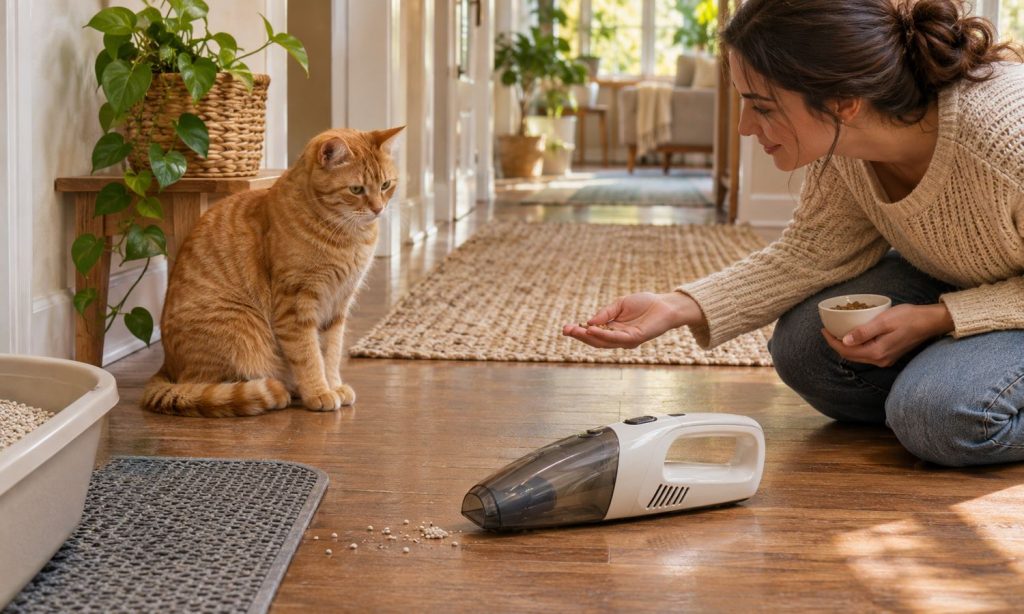
Loose litter granules on the floor are a familiar part of cat ownership. A small handheld vacuum can make cleanup easier, but the sudden sound and movement may frighten a cat. Learning how to introduce a handheld vacuum for cat litter to your pet is about giving your cat choice and time. Begin with the vacuum switched off, keep it far from the litter box, and let your cat retreat without being pursued.
This article explains a gradual introduction, practical cleaning habits, and the signs that mean you should stop. If you are exploring the best handheld vacuum for cat litter, consider noise, handling, filtration, and the way your cat responds before choosing how to use it. The goal is a cleaner floor and a cat that still feels safe near its toilet—not a pet that has to tolerate every household machine.
Understand Why Vacuum Noise Can Be Frightening
Cats have sensitive hearing and may react to sudden sounds, low vibrations, unfamiliar objects, or fast motion. A vacuum combines all of these. The cat may not understand that the sound comes from a household tool rather than a threat. Common fear signs include crouching, flattened ears, widened pupils, a tucked body, hiding, hissing, or rushing away. Some cats stay still when frightened, so quiet behavior should not always be interpreted as comfort.
The Feline Veterinary Medical Association's training guidance explains that repeated exposure to an alarming stimulus can increase fear when the animal cannot control the situation. The aim is therefore not to turn the vacuum on repeatedly until the cat 'gets used to it.' Start below the cat's fear threshold, where it can notice the object and remain relaxed. How to introduce a handheld vacuum for cat litter to your pet begins by observing rather than testing how much noise the cat will endure.
Begin With a Switched-Off Vacuum at a Distance
Place the unplugged or switched-off handheld vacuum on the floor in a familiar room, well away from food, water, and litter facilities. Give the cat an open route to leave. Do not hold the cat beside the machine or put the nozzle near its face. Allow the cat to investigate voluntarily. Reward calm curiosity with a favorite treat, gentle praise, or play, depending on what it enjoys. If the cat retreats, leave it alone and try another day.
Keep these initial sessions brief. A cat that sniffs the object and walks away calmly has already made progress. You can later pick up the vacuum and move it without switching it on, again at a comfortable distance. Avoid forcing interaction or concealing the device to startle the cat. A predictable sequence builds trust. Even a cat that accepts the silent object may still dislike the motor sound, so treat the next stage as a separate challenge rather than assuming the work is done.
Introduce Sound in Short, Controlled Stages
When the cat remains relaxed around the silent vacuum, have another person switch it on briefly from a distant room while the cat has access to its refuge. Start with the shortest, quietest exposure the cat can tolerate. Follow with something pleasant if it remains comfortable. Stop immediately if the cat shows fear, bolts, or stops eating. Do not increase sound intensity and duration on the same day simply because one trial went well. Progress at the cat's pace.
Move closer only after several calm experiences, and keep the nozzle directed at the floor rather than toward the animal. Never use suction on the cat, its fur, bedding while occupied, or its body. Do not treat the process as a performance test. If the cat remains distressed at a distant sound, step back and consider veterinary behavior guidance. How to introduce a handheld vacuum for cat litter to your pet is successful when the cat can ignore the device or retreat calmly, not when it stays trapped beside an active motor.
Protect the Litter Box as a Safe Resource
A litter box should remain accessible and predictable. Do not turn on the vacuum while the cat is eliminating, entering, or leaving the box. That could create an unpleasant association with an essential resource. Clean tracked litter after the cat moves away, ideally while it rests in another room. Keep the vacuum away from the box during early introductions and avoid blocking entrances. A cat must not have to approach a feared object just to toilet.
Use a suitable litter mat, regular scooping, and measured litter depth to reduce scatter at the source. Our guide to clumping litter for multiple cats discusses features that affect household upkeep. The cleaning tool cannot replace a comfortable, suitably placed litter box. If the cat begins avoiding the box, urinating elsewhere, or showing distress during elimination, seek veterinary assessment rather than assuming the solution is a quieter vacuum alone.
Clean Safely Without Creating Dust Clouds
Follow the vacuum manufacturer's guidance on the types of dry material it may collect. Some handheld units are not designed for wet clumping litter, large amounts of fine dust, or heavy debris. Do not vacuum liquids, chemical spills, or sharp objects unless the device is specifically intended for those materials. Empty the collection chamber in a suitable location, avoiding a cloud of dust near cats. Use appropriate filtration and maintenance to reduce debris escaping back into the room.
Keep pets away when emptying the canister or cleaning filters. Check for cracks, blocked airways, damaged cords, and unusual heat. Wash or replace parts only according to the device instructions and dry fully before reassembly. Our guide to caring for a vacuum cleaner for cat hair offers related maintenance ideas. The equipment should support a clean environment without producing loud, prolonged disturbances. Routine small cleanups are often easier on both cat and caregiver than letting litter accumulate.
Create a Predictable Cleaning Routine
Choose a time when the cat is comfortable elsewhere, and use the same brief cleanup sequence. Announce your movement in a normal voice, secure any doors that might swing into the cat, and let it leave freely. Do not chase the cat into another room with a moving vacuum. Keep cables, batteries, and detachable nozzles out of reach when storing the unit. The cleaning location should be separate from food preparation areas, and hands should be washed after handling litter debris.
If your cat reacts strongly to the machine despite gradual exposure, use a dustpan, brush, or other quiet cleaning method when necessary. You do not have to train every cat to like a vacuum. The household's comfort and hygiene can be maintained in more than one way. For broader home cleaning choices, see our pet-safe carpet cleaning routine. In my view, an uneventful two-minute cleanup is a better goal than persuading a frightened cat to pose beside a noisy device.
Know When to Pause or Ask for Help
Persistent hiding, trembling, aggression, loss of appetite, or litter-box changes suggest that the process is too stressful or another problem is present. Stop the exposure and restore the cat's usual safe routine. A veterinarian can rule out illness and advise on severe noise anxiety. Some cats have previous frightening experiences or general anxiety that make conditioning more difficult. Professional guidance may be useful before trying further sound exposure.
Do not punish a fearful response, spray water at the cat, or corner it for a 'lesson.' Such methods can worsen fear. Keep logs of the distance, duration, and behavior during calm sessions, and progress only after comfortable repetitions. How to introduce a handheld vacuum for cat litter to your pet is a patient process with a simple rule: if the cat feels threatened, give it space. There is no deadline that makes force necessary.
Frequently Asked Questions
The following answers clarify typical introduction problems. Cats differ widely in sound sensitivity, so a strategy that succeeds quickly for one may require much longer for another. A safe refuge and freedom to move away are essential throughout the process.
Keep equipment care and cat training separate. A vacuum must remain safe to operate, while the cat's acceptance should develop through calm, voluntary experiences. If litter-box behavior changes, treat that as a significant concern rather than an inconvenience.
Should I let my cat sniff the vacuum while it is running?
No need. Start with it switched off at a safe distance. Let the cat approach voluntarily, and introduce sound later in controlled, brief stages.
Can I hold my cat to get it used to the noise?
No. Restraining a frightened cat can worsen fear and risk scratches. Provide an escape route and move at the cat's pace.
Is a quieter vacuum always better?
Lower noise may help some cats, but movement, vibration, and prior experience also matter. Observe the individual cat and use the device safely.
Can I vacuum immediately beside the litter box?
Avoid doing so while the cat is using or approaching the box. Protect toileting as a safe, predictable activity and clean after the cat has moved away.
What if my cat never accepts vacuum noise?
Use quieter cleanup methods and discuss persistent severe fear with a veterinarian. The cat does not need to like the device for you to maintain a clean home.
Final Words
How to introduce a handheld vacuum for cat litter to your pet starts with a silent object, voluntary exploration, and brief sound exposure from a distance. Keep the litter box a safe place, reward calm behavior, and stop when the cat signals fear. Never aim suction at a pet or force it to remain beside a running motor.
When considering the best handheld vacuum for cat litter, remember that the right cleaning routine matters as much as equipment features. A calm, predictable household supports both litter hygiene and feline welfare. If the cat remains fearful, a quiet brush and dustpan are perfectly reasonable tools.









