
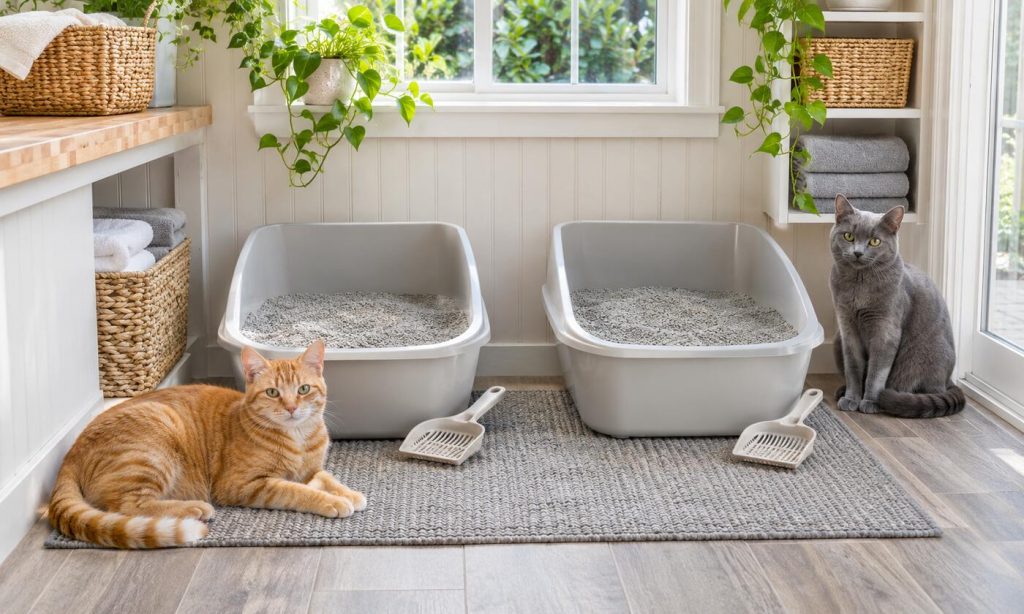
In a home with several cats, litter works harder and gets noticed sooner when something goes wrong. The most useful features are not a dramatic fragrance or an ambitious package claim. They are consistent clumps, comfortable texture, manageable dust, and a cleaning routine your cats will accept. If you are asking what features matter most in clumping litter for multiple cats, start with the cats’ preferences and the real volume of daily waste.
Good clumping litter for multiple cats needs to support hygiene without discouraging box use. No litter can compensate for too few boxes, poor placement, or long gaps between cleaning. This guide explains how to evaluate clump strength, odor, dust, tracking, texture, and maintenance needs without turning the discussion into a product ranking. It also shows how to make changes gently in a multi-cat household.
Prioritize clump integrity over fancy claims
A useful clump should hold together during ordinary scooping. When urine spreads before the litter sets, wet material may remain behind and contribute to odor. Fragile clumps can also break into small contaminated pieces. Pay attention to what happens during real use, not just how quickly the package says the material clumps. Look at the scoop and the box floor after a routine cleaning. If residues accumulate, you may need to adjust litter depth, scoop technique, or how often you remove waste. A cleaner box helps you notice changes in your cats’ elimination habits.
A strong clump still needs to be easy to remove without excessive scraping. Material that bonds firmly to the pan can make washing more difficult. A reasonable layer of clean litter helps prevent urine from reaching the bottom, but too much can be wasteful and harder for some cats to navigate. The article on scooping and replacing cat litter explains why daily waste removal remains essential. With multiple users, inspecting and scooping more than once daily may be helpful. Clump quality is only one part of overall hygiene.
Put feline comfort and unscented texture first
Cats may refuse a box if the substrate hurts their paws, smells too strong, or feels unfamiliar. Cornell University’s feline behavior guidance notes that many cats favor fine-textured, unscented litter. Preferences are individual, so observe rather than assume. In a multi-cat home, one confident cat may use a new material immediately while another avoids it. The best feature is genuine acceptance across the household. Sudden changes in box use are important information and should prompt a check of cleanliness, location, social stress, and health.
Perfume does not equal cleanliness. A heavy fragrance can mask odor for people while making the litter less attractive to a sensitive cat. Avoid treating deodorizing additives as a substitute for removing urine and feces. When considering dust, watch how much visible powder rises while pouring or scooping. Cats and people with respiratory concerns may be especially bothered by dusty conditions. A low-dust routine and ventilation can help. However, no manufacturer claim guarantees a completely dust-free experience. FYI, the cat’s opinion of texture matters more than the package’s enthusiasm.
Examine odor control without overlooking moisture
Odor management depends on how quickly waste is removed and whether moisture remains in the box. A clumping material that captures urine effectively can make cleanup easier, but a dirty drawer or pan will still smell. Check whether used litter remains damp after scooping. Keep the box and surrounding floor dry. Avoid spraying fragrances or household chemicals directly onto litter, where cats may step, inhale residue, or groom it from their paws. The guide to reducing litter box odor offers practical hygiene measures that do not rely on heavy scent masking.
In a multi-cat household, smell may signal that demand exceeds available clean boxes rather than a problem with one litter material. Record how often each box is used and how quickly clumps fill the available space. If one box stays clean while another overflows, adjust location and access. Cats may avoid boxes placed in noisy rooms or areas where another cat blocks the route. Odor should lead you to inspect the setup, not automatically increase scented additives. A clean, accessible box protects comfort and makes abnormalities easier to notice.
Consider tracking, dust, and cleaning effort together
Fine particles may feel pleasant to cats but can travel beyond the box. Larger grains may track less in some homes, yet texture changes can also affect acceptance. The right balance depends on paw size, coat length, floor type, and how cats exit. A stable mat outside the box can catch grains without restricting access. Vacuum or sweep tracked litter using an appropriate method, and wash nearby hard surfaces when necessary. A lower-tracking claim should not outweigh a cat’s refusal to use the box. The cat litter tracking guide can help frame these tradeoffs.
Evaluate the whole maintenance workload: scooping effort, clump breakup, bag changes, dust during pouring, and how often you must wash the box. Two cats using separate boxes may be easier to manage than two cats relying on one large pan. Material weight also matters for carrying, especially when you empty several containers. Consistency is more valuable than a one-day improvement that disappears after the box gets busy. IMO, the litter that supports a predictable cleaning routine is more useful than the one with the longest list of marketing adjectives.
Keep enough boxes and introduce changes gradually
A multi-cat environment needs enough safe bathroom choices. Cornell recommends a common starting point of one litter box per cat, plus one extra, placed in different accessible locations. Some homes need more depending on social relationships and mobility. Putting all boxes side by side may not offer meaningful escape routes if one cat blocks the area. The multi-cat litter box location guide explains how placement can reduce tension. A good litter material cannot repair an intimidating or hard-to-reach setup.
Switch gradually if a cat reacts badly to a new texture or scent. Keep at least one familiar clean box available while offering another box with the proposed litter. Observe which cats use which space and avoid forcing a hesitant cat into the box. Cleanliness should remain consistent during the trial so preference does not get confused with odor. If a cat strains, urinates frequently without much output, or suddenly stops using boxes, seek veterinary help. A blocked urethra can be life-threatening, especially in male cats. Treat health warning signs as urgent, not a litter shopping problem.
Frequently Asked Questions
A useful litter supports clumping, odor control, paw comfort, and practical cleaning. These answers address familiar tradeoffs in households with more than one cat.
Never judge the litter alone. Box number, access, social tension, and cleaning frequency can be equally important. Use your cats’ behavior to decide whether a change is helping.
Is stronger fragrance better for multiple cats?
Usually not. Many cats prefer unscented litter, and fragrance can hide poor hygiene. Remove waste promptly and keep boxes clean instead.
Does fast clumping matter more than low dust?
Both can matter. Firm clumps improve cleanup, while manageable dust helps comfort. Choose based on what your own cats tolerate and the box’s performance.
How many litter boxes should two cats have?
A common starting point is three boxes in separate accessible locations. Adjust for the cats’ preferences, health, and social relationships.
Can I use different litters in different boxes?
Yes. Different clean boxes can help you identify preferences during a gradual change. Avoid sudden removal of every familiar option.
What if one cat stops using the litter?
Check cleanliness, location, stress, and litter changes. Contact a veterinarian for abrupt elimination changes, discomfort, or urinary symptoms.
Final Words
The features that matter most in clumping litter for multiple cats are reliable clumps, cat-friendly texture, manageable dust, and uncomplicated cleaning. Odor control counts, but it cannot replace adequate boxes or regular waste removal. Watch each cat’s behavior and judge the litter by how the household functions over time, not the first pour.
When evaluating clumping litter for multiple cats, protect access and keep litter changes gradual. Pair the material with the right box locations, consistent cleaning, and veterinary attention for unexplained bathroom changes. A comfortable cat is the strongest measure of success.









