
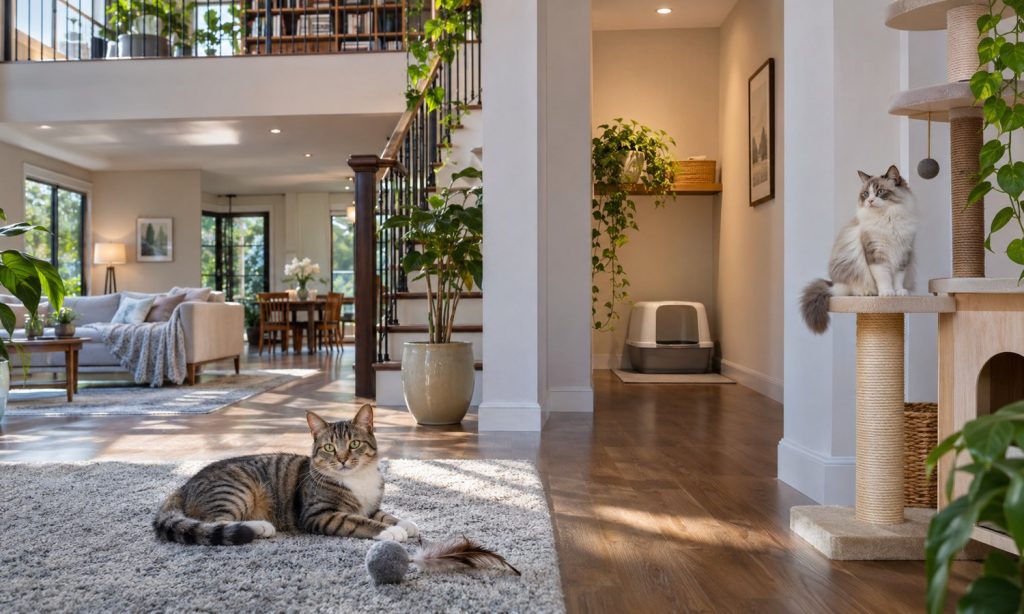
In a multi-cat home, a litter box can be clean and still feel unsafe if another cat can block the doorway or wait nearby. Choosing litter box locations means considering privacy, escape routes, noise, stairs, and how cats move through the home. A thoughtful layout gives each cat a reliable place to eliminate without being cornered.
This guide helps you map litter stations across rooms and floors, avoid common placement mistakes, and adjust the setup if a cat starts avoiding a box. Litter texture also matters, so our guide to cat litter for urine absorption can help you consider cleanup needs while keeping location and access as the first priorities. The best layout is one each cat can use privately, without depending on a single doorway, room, or route past another cat.
Start with enough separate litter stations
A common starting point is one litter box per cat, plus one extra. The number alone is not enough; cats need to reach the boxes without passing through a bottleneck or confronting a housemate. If several boxes sit side by side, a cat may view them as one station that another cat can guard.
Spread boxes through separate areas and, in a multilevel home, across floors. This reduces competition and avoids making a cat travel far when it needs to go. It also gives you options if one room becomes noisy, occupied, or inaccessible during the day.
Choose quiet locations with more than one way out
Look for a calm place where a cat can see approaching people or animals and leave without squeezing into a dead end. A box behind a door, under a noisy appliance, or at the end of a narrow corridor may feel exposed. Avoid locations where a second cat can sit in the only exit path.
A quiet corner can work if it remains easy to enter and exit. Keep the box away from sudden sounds such as a washer, furnace, or automatic door. Cats may tolerate background activity, but repeated startling experiences can make a location unpleasant.
Separate toileting from food and resting areas
Place litter stations away from bowls, water, beds, and favorite resting spots. Cats generally prefer distinct areas for eating, sleeping, and toileting. If space is limited, use different corners of a room and maintain a clear path between resources.
Do not hide a box so thoroughly that you cannot notice whether it needs cleaning. A location should be convenient for both the cat and the caregiver. Regular access and consistent scooping help prevent a quiet corner from becoming a neglected one.
Plan for social tension and individual preferences
Watch how cats interact around doorways and hallways. A cat that stares, chases, or waits outside a box can make another cat feel trapped even if no fight occurs. Provide stations in different parts of the home so a less confident cat can avoid crossing another cat’s preferred territory.
Observe each cat’s habits rather than assuming all cats like the same setup. One may prefer an open box with a clear view; another may choose a quieter location. A short-term camera or a simple daily log can help identify which cat uses which station without hovering nearby.
Consider age, mobility, and the home layout
Older cats, kittens, and cats with arthritis or other mobility limits may struggle with stairs, high entrances, or slippery floors. Keep at least one box on the level where the cat spends most of its time. Use a low-entry box when needed, and make sure nearby rugs do not slide underfoot.
Map the home from the cat’s point of view. Note narrow passages, closed doors, baby gates, and rooms that are sometimes unavailable. A box that is reachable only when a door stays open is not reliably accessible if household routines change.
Make a location change gradually
If a box must move, shift it a small distance at a time and keep another familiar station available. Abruptly relocating every box can confuse cats and make an existing access problem worse. When possible, add a new box in the preferred location before removing an old one.
Keep the box, litter depth, and cleaning routine familiar during the transition. Changing several features at once can make it difficult to tell what helped. Once the cat uses the new place consistently, remove the temporary station if the overall number and distribution remain suitable.
Troubleshoot avoidance by checking access first
If a cat stops using a box, inspect the route and surroundings before assuming it is a training problem. Is a door closed? Is another cat guarding the path? Did a loud machine start nearby? Is the box dirty, too small, or hard to enter?
House-soiling can also have medical causes, including urinary or digestive pain. Contact your veterinarian for new or persistent accidents, straining, blood, frequent attempts, or changes in appetite and energy. Our guide to common cat setup and adjustment problems covers broader home changes that may affect comfort. For one related house-soiling pattern, see why cats return to urine-marked carpet.
A simple floor-plan check
Sketch the rooms and mark each box, food and water station, resting place, and common doorway. Then trace how each cat moves between them. If the only route to a box crosses another cat’s favorite perch or a narrow hallway, try a second approach or place an additional station on the other side.
Repeat the check at different times of day. A route that is quiet in the morning may be crowded when children return or appliances run. Keep boxes accessible when doors are shut, guests visit, or household routines change. This small map can reveal bottlenecks that are easy to miss when looking only at the box itself.
Frequently Asked Questions
A good layout offers multiple clean, safe choices in different parts of the home. These common questions can help you fine-tune the arrangement.
Every cat is an individual, so watch actual use and comfort. Make changes gradually and seek veterinary advice when elimination habits change.
How many litter boxes should a multi-cat home have?
A useful starting point is one box per cat plus one extra. Place them in separate locations so one cat cannot control every option.
Can litter boxes be placed in the same room?
They can if the room has enough space and separate access, but multiple boxes in one cluster may act like a single station. Distribute them when possible.
Should a litter box be covered for privacy?
Some cats accept covered boxes, while others prefer an open view and an easy exit. Prioritize the cat’s use, ventilation, and safe access.
Is a basement a good place for a litter box?
Only if the cat can reach it easily and does not have to pass a guarded stairway. Keep at least one box on the cat’s main living level.
What if one cat blocks another from using the box?
Add stations in different areas with more than one escape route, and consult a veterinarian or qualified behavior professional if conflict continues.
Final Words
The best litter box locations in a multi-cat home are quiet, accessible, distributed, and free from ambush points. Provide enough boxes, separate them across rooms or floors, and keep them away from food, resting areas, loud appliances, and narrow dead ends.
Watch your cats’ actual routes and adjust slowly if one avoids a station. For material and cleanup considerations, see our guide to cat litter for urine absorption. If avoidance begins suddenly or comes with discomfort, ask your veterinarian to rule out a health problem.









