
Common setup and adjustment problems with cats often begin with the home rather than with the cat. A new cat may hide under furniture, ignore a litter box, avoid food, or become overwhelmed by activity. Even a resident cat can struggle when you move its belongings, change a room, or introduce another pet. The goal is not to force quick confidence. It is to make essentials easy to find, give the cat choices, and change one thing at a time.
For families exploring cats for kids, a calm home setup also teaches children to respect an animal’s space. This guide covers safe-room arrangements, litter placement, feeding areas, vertical space, household routines, and signs that call for veterinary care. Every cat adjusts at its own pace. Better observation, simple changes, and a predictable environment are usually more helpful than buying more gear or insisting on immediate attention.
Set Up a Calm Starting Room
Choose a quiet room with a clean litter box, fresh water, appropriate food, a safe hiding place, and comfortable bedding. Keep resources separated where practical so the cat can eat and rest without feeling trapped near the litter box. Secure windows and remove toxic plants, dangling cords, and small objects that could be swallowed. Introduce a new cat to this space before opening the entire home.
Let the cat investigate and approach when ready. Avoid pulling a hiding cat into the open or reaching into narrow spaces. Offer gentle play at a distance and sit quietly nearby. Once the cat is eating, using the litter box, and exploring confidently, introduce additional rooms gradually. Forcing a timetable can make the initial adjustment harder. Common setup and adjustment problems with cats often improve when the surroundings become more predictable.
Troubleshoot Litter Box Avoidance
A cat may avoid a box because it is dirty, hard to reach, placed in a noisy room, or surrounded by disturbances. Choose a stable location with an easy escape route. Keep the box accessible at all times, including overnight. Scoop regularly and wash with mild unscented cleaning methods. A box with tall sides can be difficult for kittens or cats with mobility problems.
Provide enough boxes for the household. A common starting guideline is one box per cat plus one extra, distributed across usable spaces, though individual homes vary. Avoid placing all boxes in the same crowded corner. If a previously house-trained cat urinates outside the box, strains, cries, or passes little urine, seek veterinary guidance promptly. Litter problems are not proof of stubbornness, and urinary obstruction can be an emergency.
Fix Feeding and Water Station Problems
Place meals where the cat can relax without being chased or interrupted. Some cats avoid bowls near noisy appliances or busy walkways. Use clean, stable dishes and keep drinking water readily accessible. For multiple cats, separate feeding locations can reduce competition and reveal which cat is eating. Offer age-appropriate, nutritionally complete food and preserve a consistent routine while the cat adapts.
Do not move feeding stations repeatedly just because the first meal is slow. Give the cat a chance to learn the area, while monitoring how much it actually eats. A cat refusing food for a day, especially a kitten or a cat with illness, needs veterinary advice promptly. If odor or residue builds up, use the pet bowl cleaning guide for a practical maintenance routine. Regular care is more valuable than a decorative feeding station.
Make Resting and Hiding Spaces Work
Cats need places to hide, watch, and rest without constant interaction. Offer a covered bed, open box, or quiet shelf that the cat can access safely. Avoid blocking the entrance or treating the hiding place as a punishment area. Position resting spots away from drafts and household traffic. A safe retreat can help a cat feel secure even when the surrounding home is active.
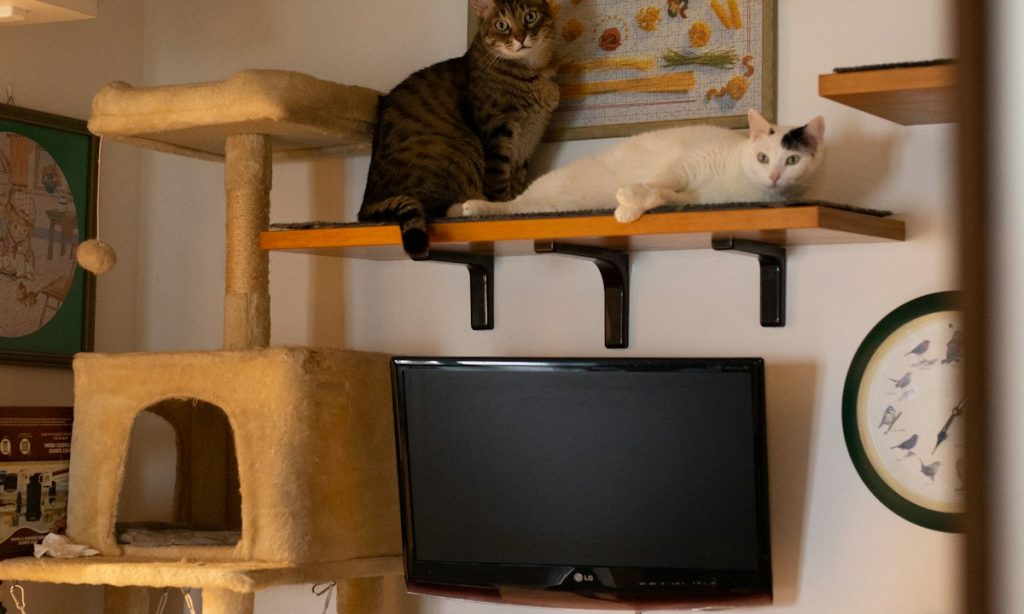
Vertical space may help many cats, but every structure must be stable and suited to the animal’s mobility. Check shelves, trees, and furniture for tipping risks, exposed staples, or torn fabric. In a multi-cat home, create more than one route to favored places. See securing a cat tree in a multi-cat home for layout and safety checks. FYI, the highest shelf is not automatically the best choice for a cat with sore joints.
Handle Scratching and Play Without Conflict
Scratching is normal cat behavior. Place sturdy scratching surfaces near resting areas and paths the cat uses. Offer both vertical and horizontal options if preferences are unclear. Reward use of appropriate surfaces and protect household furniture while the new routine develops. Avoid punishment and methods that startle the cat; these can increase fear without teaching a better alternative.
Provide short, interactive play sessions with suitable toys. Allow the cat to stalk and catch the toy, then finish calmly. Do not encourage people to use hands and feet as play targets. If biting increases during play, shorten the session and look for signs of overexcitement. Remove toys with loose strings or small detachable parts when unsupervised. A balanced routine supports activity without turning playtime into a household wrestling match.
Reduce Stress Around Children and Visitors
Before a child interacts with a cat, teach a simple rule: the cat chooses whether to approach. Show how to use gentle strokes and when to stop. Never allow tail pulling, squeezing, chasing, or carrying a reluctant cat. Adult supervision matters even with a calm, familiar animal. Give the cat an elevated or separate refuge that children are not allowed to enter.
Visitors should follow the same boundaries. Ask them to avoid surrounding a hiding cat or reaching toward its face. Provide a predictable routine during parties and gatherings, with quiet time afterward. If a cat hisses or swats, increase distance and look for the trigger instead of scolding. Better room design and supervision can solve many common setup and adjustment problems with cats in busy homes.
Manage Transitions Between Rooms and Pets
Introduce new rooms gradually, keeping the original safe room available as a retreat. When introducing another pet, start with separate spaces and controlled scent exchanges. Avoid forcing face-to-face meetings. Watch body language, appetite, litter habits, and sleep. A cat that appears relaxed in one room may need more time before handling a larger territory.
Separate resources for pets that compete. Make sure each cat can access food, water, litter, and resting spots without passing a threatening animal. For elderly cats, add low steps or accessible beds instead of requiring high jumps. Our guide to making vertical space accessible for older cats covers gentle adjustments. If chasing, fighting, or hiding persists, ask a veterinary behavior professional for help.
Know When Adjustment Is Not Just Stress
Some behaviors that look like routine adjustment can signal illness. Pay attention to persistent appetite loss, repeated vomiting, diarrhea, excessive thirst, pain, unexplained aggression, difficulty urinating, or sudden changes in mobility. A new cat deserves a veterinary visit to review history, preventive care, and any medical concerns. Do not dismiss prolonged hiding when it accompanies other symptoms.
Keep a simple daily note of eating, drinking, litter use, grooming, and activity. A pattern often tells you more than one odd afternoon. Never wait at home when a cat repeatedly strains to urinate with little or no output. Such signs can be life-threatening, especially in male cats. For ordinary grooming and observation, daily cat care and inspection gives helpful checkpoints.
Frequently Asked Questions
Most setup problems have several possible causes. The best response begins with safety and observation, then a small change that the cat can evaluate at its own pace.
These answers cover frequent early challenges. Consult a veterinarian when the change is sudden, persistent, painful, or linked to reduced eating or abnormal urination.
How long does a new cat need one room?
There is no universal timeline. Expand access when the cat is eating, toileting, and exploring confidently, not on a fixed calendar.
Should I move a hiding cat into the living room?
No. Provide safe hiding choices and allow the cat to approach at its own pace unless medical care or immediate safety requires handling.
Can I place food beside the litter box?
Separate them when possible. Many cats prefer eating away from elimination areas, and accessible locations make routines easier.
Why is my cat scratching furniture?
Scratching is normal. Offer stable scratching surfaces where the cat naturally spends time, reward use, and protect sensitive furniture.
When is a litter accident urgent?
Straining, distress, blood, or little to no urine warrants prompt veterinary attention. Urinary blockage can be an emergency.
Final Words
Common setup and adjustment problems with cats are often best solved through a calmer layout, reliable resources, and patient observation. Start with accessible essentials, allow hiding, and introduce new areas slowly. Check for medical causes when behavior changes suddenly or comes with physical symptoms.
If you are preparing a home for cats for kids, prioritize quiet refuge, adult supervision, and respectful handling. A good environment gives the cat control over rest and interaction. With consistent routines, practical adjustments become easier to evaluate and your household can build trust without rushing the process.









