
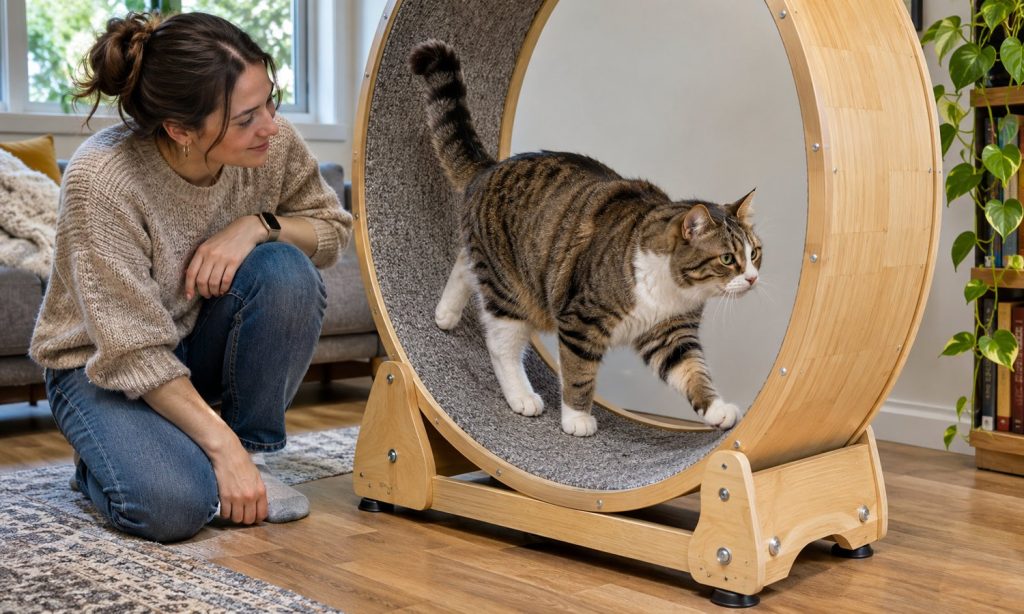
A cat exercise wheel can offer an indoor outlet for a cat that enjoys running, but safety depends on fit, stability, training, and the individual cat’s health. Large cats need enough room to move with a natural posture, and a wheel should never be used to force exercise. The goal is voluntary, controlled activity.
This guide explains how to use a cat wheel safely with large cats, how to introduce it gradually, and which warning signs mean it is time to stop. The secondary topic, a cat wheel for large cats, starts with checking the manufacturer’s size and weight limits against your cat’s actual body and stride. A wheel is not right for every cat, and a cat can benefit from play without ever using one.
Check the wheel and space before use
Assemble the wheel according to its instructions and check that its base sits level on a nonslip surface. Confirm that the wheel turns smoothly without sudden jumps, grinding, or excessive wobble. Tighten hardware as directed and inspect the running surface for gaps, sharp edges, loose material, or pinch points.
Give the wheel a clear zone with room around it. Move furniture, cords, glass objects, and other pets away from the running path. Keep the wheel away from stairs and doors that can swing into it. A stable mat may reduce sliding, but it should not interfere with the wheel’s base.
Make sure the wheel suits a large cat
Read the maker’s maximum weight and fit guidance before assembly. Weight capacity alone does not show whether a cat can run comfortably. The wheel should provide enough diameter and width for the cat to move without hunching, twisting, or striking the sides with its shoulders.
Observe your cat walking through the wheel while it is stationary. A natural posture, free tail, and unforced stride are better signs of fit than a quick sprint. If your cat’s back arches sharply, its head lifts to avoid the surface, or its feet slip, stop and reassess rather than encouraging faster movement.
Introduce the wheel at the cat’s pace
Let the cat investigate the stationary wheel first. Keep it in a familiar room and avoid blocking the cat’s route away from it. Reward calm curiosity with praise, a favorite toy, or a small treat if appropriate for the cat’s diet.
Once the cat is comfortable stepping onto the wheel, move it only a short distance by hand while the cat is not on it. Later, encourage a few slow steps with a toy held at walking pace. End the session while the cat remains relaxed; do not pull, push, trap, or place the cat on a moving wheel.
Build short, supervised sessions
Begin with brief sessions and allow the cat to choose whether to participate. Stay close enough to stop the wheel if it spins too fast or the cat loses balance. Keep sessions quiet and predictable, and let the cat leave freely at any time.
Increase activity gradually only when the cat remains relaxed and coordinated. A wheel is optional enrichment, not a daily fitness requirement. Rotate it with other play, climbing, and foraging activities so exercise does not depend on one device.
Watch body language and stop at warning signs
Stop immediately if the cat freezes, crouches, flattens its ears, lashes its tail, tries to escape, or vocalizes in distress. These signals mean the experience is too intense or uncomfortable. Give the cat space and allow it to return to the wheel later only if it chooses.
Also stop for stumbling, slipping, limping, unusual panting, open-mouth breathing, weakness, or sudden fatigue. Cats with breathing difficulty, collapse, or persistent abnormal breathing need urgent veterinary care. Never use a wheel as a way to test a cat’s stamina or push through discomfort.
Consider health, age, and body condition
Talk with your veterinarian before starting wheel exercise if your cat is overweight, very young, elderly, recovering from an injury, or has heart, lung, joint, neurologic, or other chronic disease. A vet can advise whether this type of activity is appropriate and how to adjust a broader exercise plan.
A large body size does not automatically mean poor fitness, and a lean cat may still have a health limitation. If your cat tires more quickly than expected or its movement changes, pause wheel use and seek veterinary advice. Weight management should pair safe activity with a suitable feeding plan.
Keep children and other pets safely away
Supervise every session, especially while a cat is learning. Teach children not to spin the wheel, chase a cat onto it, or reach into moving parts. Keep dogs and other cats from bumping the device or startling the runner.
If more than one cat is curious, give each cat a separate introduction. A shy cat should not have to compete for the wheel or pass another animal to leave. Store loose toys and treats so they do not become choking hazards or create a scramble near the moving wheel.
Offer other ways to move and play
Some cats prefer a wand toy, a food puzzle, or short games that mimic stalking and chasing. These options can provide movement without asking a cat to use unfamiliar equipment. Rotate activities and let your cat pause between bursts of play rather than making exercise continuous.
Observe how your cat moves during ordinary play. If it hesitates to jump, favors a leg, or seems unusually tired, do not use the wheel to build endurance before checking with a veterinarian. The safest exercise plan matches the cat’s current comfort and ability.
Inspect the wheel routinely
Before each session, check for loose fasteners, debris, worn tread, and any change in the wheel’s balance. A small problem can become more noticeable when a larger cat puts more weight on the running surface.
Follow the maker’s maintenance instructions and keep replacement parts compatible. If the wheel starts making a new sound or moving unevenly, stop use until you have identified and corrected the cause.
Frequently Asked Questions
A wheel should remain a voluntary activity with close supervision. These answers cover common concerns about introducing one to a larger cat.
If you are unsure whether your cat’s movement or breathing is normal, stop the activity and consult a veterinarian.
Can every large cat use an exercise wheel?
No. Some cats dislike wheels, and some have health or mobility limits. Fit and willingness matter more than body size alone.
How long should my cat use the wheel?
Start with very short, calm sessions and let your cat stop. There is no required duration that suits every cat.
Should I hold my cat on the wheel?
No. Do not restrain or force a cat onto a moving wheel. Let the cat choose to investigate and step away freely.
What if my cat only walks instead of running?
Walking is fine if the cat looks relaxed and coordinated. Do not speed up the wheel to make it run.
Can a wheel replace other exercise?
No. Provide varied play, climbing, and enrichment. A wheel is one optional activity, not a complete care plan.
Final Words
To use a cat wheel safely with large cats, confirm size and weight limits, set it up on a stable surface, clear the area, and introduce it slowly. Keep every session voluntary and supervised, and stop at signs of fear, slipping, pain, or unusual breathing.
Ask your veterinarian before starting if your cat has a health condition or mobility concern. A suitable cat wheel for large cats should allow a comfortable stride, but no equipment can replace careful observation and the cat’s choice to participate.









