
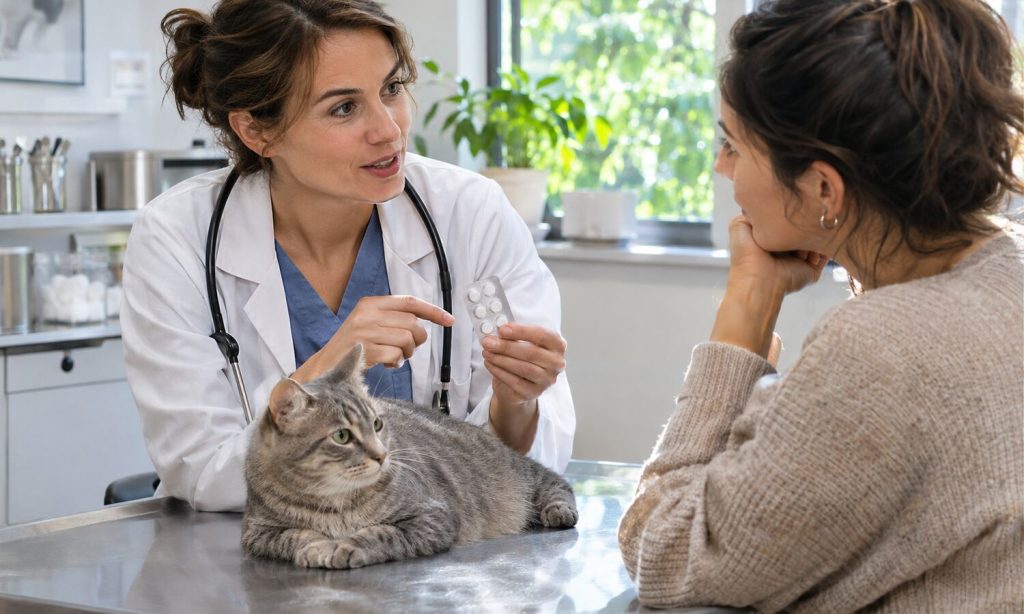
Oral flea medicine can simplify parasite control, but the pill must match the cat and the prescription or label. Learning how to use and care for a oral flea treatment for cats means more than getting a tablet swallowed. Check the animal’s age, weight, health history, dosing directions, and any medicine interactions with a veterinarian. Some oral drugs have important warnings, and not every flea medicine protects against the same parasites for the same duration.
If you are researching oral flea treatment for cats, use category information as background rather than as a substitute for an individualized plan. This article explains practical questions to ask before treatment, safe administration principles, observation afterward, and proper medication storage. It also covers what to do when a dose is missed or a cat seems unwell. Never give a dog’s flea tablet to a cat or improvise a dose from another animal’s medicine.
Confirm the Medicine and Cat Are a Safe Match
Before opening the package, verify the species listed, active ingredient, age restrictions, minimum weight, and instructions on the actual prescription label. Weigh the cat accurately rather than estimating by appearance. A veterinarian should assess kittens, pregnant or nursing cats, seniors, and cats with chronic disease or current medication. Ask what the medicine treats, when it begins working, how long protection lasts, and whether a separate parasite-control plan is needed for the household.
The FDA notes that some flea and tick drugs in the isoxazoline class have been associated with neurologic reactions in dogs and cats. Tremors, poor coordination, and seizures are examples reported in some treated animals. Many animals use these treatments without neurologic problems, but prior seizure history and other health details matter. Discuss the class warning with the veterinarian rather than assuming every product has the same safety profile or the same indications.
Read Administration Directions Before Each Dose
Some tablets must be given with food; others have different instructions. Follow the exact label and veterinary directions for timing, amount, and administration. Do not crush, split, dissolve, or hide a tablet unless the prescribing team confirms that method is appropriate for that formulation. Never combine two flea medicines or shorten the retreatment interval because you still see fleas. Depending on the drug, remaining environmental fleas may emerge after treatment without indicating that an extra dose is safe.
Choose a quiet place and prepare the approved method before approaching your cat. A small amount of food may help with some medicines, but only if the label permits it and the cat eats the full dose. If pilling is stressful, ask the veterinary team to demonstrate a safe technique or offer an alternative dosage form. Do not force liquid down a struggling cat’s throat or risk bites and choking. The right treatment plan should account for the animal’s handling tolerance.
Monitor Your Cat After Administration
Record the date, medicine, strength, and the amount actually given. Watch appetite, energy, behavior, vomiting, and gait, particularly after a first dose or a change of medicine. Excess salivation may occur in some cats after tasting medication, but do not automatically dismiss symptoms. Marked lethargy, repeated vomiting, tremors, collapse, or abnormal walking warrants urgent veterinary advice. Seizures, breathing trouble, or collapse require emergency veterinary care.
If a cat vomits after a dose, contact the prescribing veterinarian before repeating it. You cannot reliably infer how much medication was absorbed. The same caution applies if only part of a tablet was consumed. Keep the packaging available when calling; it carries the active ingredient and strength. If your cat is also itching, see the site’s guide to identifying fleas on cats to document the signs, but do not let a home inspection delay needed medical assessment.
Store Medication Securely and Check Expiry
Keep tablets in their original labeled packaging, away from moisture, heat, food preparation surfaces, and children. Follow the manufacturer’s temperature instructions and inspect expiration dates before use. Do not transfer loose pills into unmarked containers or leave a tablet beside the feeding bowl. Cats and dogs may chew through packaging, and accidental ingestion can be dangerous. Store the medicine where every household member understands it is medication, not a treat.
Do not wash or sanitize an oral flea tablet; moisture may damage it. If a pill is wet, crumbling, discolored, or removed from packaging without its identity, ask a pharmacist or veterinarian about safe disposal. Never use an expired drug simply because it looks intact. Keep a written schedule and note the refill date. A phone reminder is helpful, but double-check the record before administering so another household member does not accidentally repeat the dose.
Reduce Reinfestation Around the Home
A cat can acquire new fleas from its surroundings or from other untreated animals. Effective management often combines veterinary treatment of all suitable household pets with regular laundering of bedding, vacuuming, and attention to flea development in the environment. Ask a veterinarian which animals require treatment and what species-specific precautions apply. Do not use household pesticide products directly on a cat unless their label explicitly permits that use.
The site’s guide to removing fleas from the home explains practical environmental measures. Avoid mixing pesticides in a desperate attempt to speed control; some combinations increase exposure without improving safety. Monitor flea evidence over the following weeks and follow the agreed treatment interval. Persistent itching, sores, anemia signs, or substantial flea burdens need veterinary reassessment. Environmental hygiene supports, but does not replace, the cat’s medical prevention plan.
Handle Missed Doses and Suspected Reactions
If a dose is missed, consult the medication instructions or veterinary team rather than doubling up. Products vary in how quickly protection wanes and when the next dose can safely be given. If you accidentally administer a second dose or the wrong species’ medicine, contact a veterinarian or animal poison-control service immediately, bringing the product label and dose details. Do not wait for symptoms before seeking guidance about a potentially significant exposure.
Adverse reactions should be documented, including the time given, signs observed, and any other medications. Your veterinarian can determine what urgent treatment is necessary and how to report an event through the appropriate regulatory pathway. Do not decide on your own to restart a drug that caused concerning symptoms. Another flea-control strategy may be suitable, but the benefits and risks must be evaluated for the individual cat.
Frequently Asked Questions
Flea medicine works best when each dose is deliberate and documented. These answers address common administration and storage questions.
The exact medicine label and your veterinarian’s advice take precedence over generalized instructions. Seek urgent care for severe or unusual symptoms after administration.
Can I use an oral flea tablet made for dogs?
No. Never substitute a dog-labeled medicine for a cat without specific veterinary authorization. Species and dosing differences can be dangerous.
Should I give the pill with food?
Only as the specific label or veterinarian directs. Some formulations require food while others have different administration guidance.
What if my cat spits out part of the medicine?
Contact your veterinarian before trying an extra dose. The swallowed amount may be unclear, and repeating treatment can risk overdose.
Do oral flea medicines prevent every parasite?
No. Their approved indications differ. Ask which fleas, ticks, or other parasites are covered and whether other prevention is needed.
Can I give another dose when I still see fleas?
Not without veterinary direction. Fleas emerging from the environment do not automatically justify giving the drug more frequently than labeled.
Final Words
Safe use of oral flea treatment for cats starts with choosing the right species-specific medicine and checking every label detail. Measure the cat’s weight, follow the exact dosing schedule, observe afterward, and store tablets securely. If severe symptoms or accidental overdosing occur, seek veterinary guidance immediately rather than trying home remedies.
Use the related oral flea treatment for cats overview only to frame informed questions. Your veterinarian should select the medicine, review medical history, and help manage side effects or missed doses. The purpose is lasting flea control with the fewest avoidable risks to your cat and household.
Reference
The following veterinary and institutional resources support the treatment-related guidance in this article.
FDA: Isoxazoline flea and tick product safety · FDA: Safe use of flea and tick products in pets · FDA: How to report flea and tick product problems









