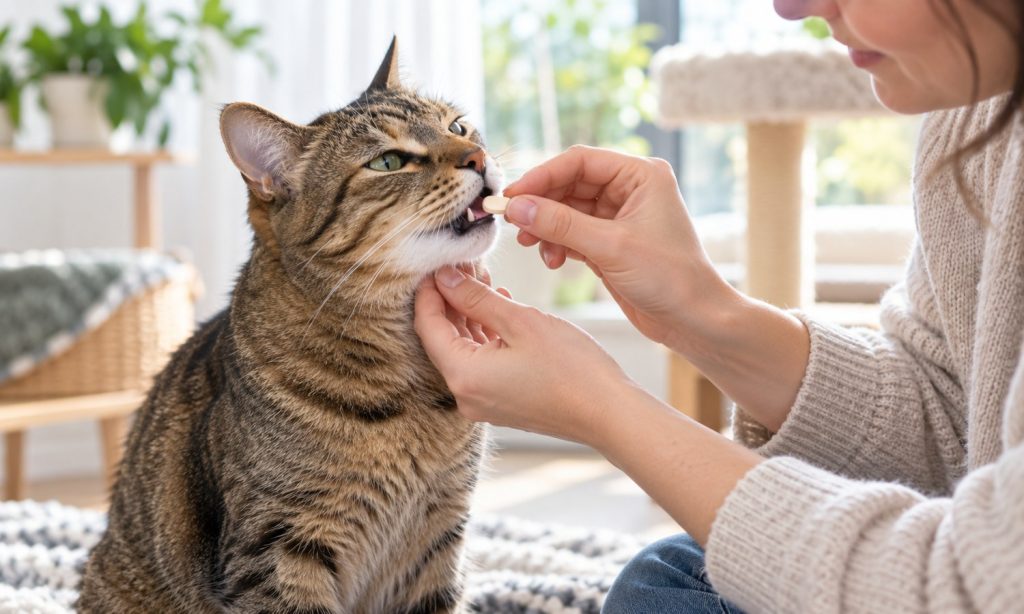
Choosing the best oral flea treatment for cats depends on the cat’s age, weight, health history, and whether you need short-term adult-flea treatment or monthly prevention. We found three distinct oral products with identifiable active ingredients and FDA labeling: a monthly lotilaner chew, a monthly spinosad chew, and short-acting nitenpyram tablets. Many online “natural flea chews” make broad claims without the same drug labeling, so they are not treated as proven flea medicines in this guide. Prescription products require veterinary approval, and label weight bands matter. Check the active ingredient, current package insert, age and weight requirements, and other medicines your cat takes. An oral flea product treats the cat, but a home infestation may also require cleaning and a veterinarian-approved plan for every pet in the household.
Quick Picks
| Product | Best For | Key Advantage | Buy | |
|---|---|---|---|---|
| Credelio CAT (lotilaner), 2–4 lb | Best monthly chew for small cats | FDA-labeled monthly flea control for cats 8 weeks and older within the labeled weight range | View on Amazon | Jump to Review |
| Comfortis for Cats, 6.1–12 lb | Best monthly spinosad chew | Monthly oral flea treatment and prevention | View on Amazon | Jump to Review |
| Capstar Oral Flea Tablets for Cats | Best fast-acting adult-flea treatment | OTC nitenpyram tablets for short-term flea knockdown | View on Amazon | Jump to Review |
1. Credelio CAT (lotilaner), 2–4 lb

- Monthly oral chew format
- Weight-specific presentation
- Prescription veterinarian oversight
- FDA-labeled flea treatment and prevention
- Requires a veterinarian prescription
- Isoxazoline neurologic risks should be discussed
Credelio CAT contains lotilaner and is sold as an oral chewable for cats. This Amazon listing is the 2-to-4-pound presentation, so it applies only to a cat whose current weight and age fit the package label. FDA labeling supports monthly flea treatment and prevention for cats at least 8 weeks old and 2 pounds; flea use differs from tick-related indications, which have separate age requirements. This is a prescription product, so a veterinarian should confirm it is appropriate before purchase.
The listing describes a small chewable tablet with vanilla and yeast flavoring and a monthly duration. As an isoxazoline medicine, lotilaner can have neurologic adverse reactions in some cats, including tremors, ataxia, or seizures; the FDA advises owners to discuss risk with a veterinarian, particularly if the cat has a neurologic history. Follow the prescription label and monitor after administration. Do not split a tablet or choose a weight band by estimate; weigh the cat and verify the exact product strength.
Credelio CAT may suit owners who need a veterinarian-prescribed oral option with monthly flea coverage and a cat that accepts chews. Its key tradeoff is the prescription requirement and the need to screen for health history and other medicines. It does not replace environmental flea control when an infestation is established, and it should not be combined with another pesticide or medication unless the veterinarian directs it. Review the current package insert, confirm eligibility, and report any concerning reaction promptly.
My Recommendation
Credelio CAT (lotilaner), 2–4 lb is worth discussing with your veterinarian when the cat’s age, measured weight, health, and treatment goal fit the label. Its main advantage is fda-labeled monthly flea control for cats 8 weeks and older within the labeled weight range. The tradeoff is requires a veterinarian prescription. Confirm the active ingredient and exact strength, follow the prescribed or package directions, and avoid combining products without professional guidance. Keep a record of when it was given and monitor the cat for unexpected effects. If fleas continue or the cat is unwell, contact the veterinary clinic rather than repeating or changing medication on your own.
2. Comfortis for Cats, 6.1–12 lb

- Monthly oral chew
- Weight range stated in listing
- Prescription veterinary guidance
- Different active ingredient from nitenpyram
- Prescription required
- Only the listed 6.1–12 lb presentation is covered here
Comfortis contains spinosad and this listing covers cats weighing 6.1 to 12 pounds. The FDA-approved label describes oral administration once monthly for flea treatment and prevention in cats and kittens at least 14 weeks old and at least 2 pounds. The featured weight band is narrower than the full labeled range, so confirm the current label and the exact strength on the box. A veterinarian should review the cat’s health, medicines, age, and actual weight before use.
The listing identifies a beef-flavored chewable, which may be easier to give than a topical application for cats that accept food-based medicines. Giving with food may be specified on the label; follow package directions and veterinary instructions exactly. Comfortis is a prescription medicine, and monthly use means owners need to keep a reliable dosing calendar. Never substitute a dog tablet or calculate a cat dose from a dog’s package. If the cat spits out or vomits a dose, contact the veterinarian before repeating it.
This option may suit a cat in the listed weight range when a veterinarian recommends spinosad and an oral monthly product. The tradeoffs are prescription access, weight-specific packaging, and the need to verify current labeling and contraindications. It is not the same ingredient as nitenpyram, which is used as a short-acting adult-flea treatment. Keep the medication in its original package, store it securely, and ask the clinic whether it is compatible with other flea products or medications the cat receives.
My Recommendation
Comfortis for Cats, 6.1–12 lb is worth discussing with your veterinarian when the cat’s age, measured weight, health, and treatment goal fit the label. Its main advantage is monthly oral flea treatment and prevention. The tradeoff is prescription required. Confirm the active ingredient and exact strength, follow the prescribed or package directions, and avoid combining products without professional guidance. Keep a record of when it was given and monitor the cat for unexpected effects. If fleas continue or the cat is unwell, contact the veterinary clinic rather than repeating or changing medication on your own.
3. Capstar Oral Flea Tablets for Cats

- Over-the-counter availability
- Oral tablet option
- Weight and age criteria are labeled
- Short-acting adult flea treatment
- Does not provide month-long prevention
- Not a complete home infestation solution
Capstar contains nitenpyram, an oral tablet labeled to kill adult fleas on cats and kittens at least 4 weeks old and weighing 2 pounds or more. The product listing describes a six-dose package for cats 2 to 25 pounds. FDA information explains that nitenpyram begins working quickly, but it is a short-acting adult-flea treatment rather than a month-long preventive. Read the current label for weight-based directions and ask a veterinarian if the cat is very young, ill, pregnant, or taking other medication.
The main practical advantage is that the tablet can be given when an owner needs an oral option and the cat meets label criteria. The listing says doses may be repeated according to label directions, but that does not mean it prevents new fleas from emerging in the home. Flea eggs and immature stages can persist in bedding and carpets, so household cleaning and a longer-term veterinary plan may still be needed. Expect to see fleas become more active as they die; follow the label and monitor the cat.
Capstar is the only over-the-counter product in this roundup and may be useful as a short-term treatment step, but it is not a complete flea-control program by itself. Choose the tablet size for the cat’s measured weight, never give a dog-strength tablet to a cat, and do not combine flea medicines without professional advice. If fleas persist, the cat is scratching intensely, or multiple pets are affected, ask a veterinarian about an ongoing prevention plan and environmental treatment.
My Recommendation
Capstar Oral Flea Tablets for Cats is worth discussing with your veterinarian when the cat’s age, measured weight, health, and treatment goal fit the label. Its main advantage is otc nitenpyram tablets for short-term flea knockdown. The tradeoff is does not provide month-long prevention. Confirm the active ingredient and exact strength, follow the prescribed or package directions, and avoid combining products without professional guidance. Keep a record of when it was given and monitor the cat for unexpected effects. If fleas continue or the cat is unwell, contact the veterinary clinic rather than repeating or changing medication on your own.
How to choose best oral flea treatment for cats
Start with the active ingredient and the exact flea-control goal. Then check age, current weight, medical history, and whether a prescription is required. Do not choose a product from a marketing phrase alone; confirm its FDA-approved label and ask your veterinarian about interactions.
Separate fast knockdown from ongoing prevention
Nitenpyram products such as Capstar kill adult fleas but do not provide the same month-long prevention as products labeled for ongoing control. Lotilaner and spinosad products have different dosing intervals and labeled age or weight limits. Choose based on whether you are treating an active infestation, maintaining prevention, or addressing both with a veterinarian-approved plan. If fleas are present in the home, treating only the cat may not resolve the problem because immature fleas develop off the animal. Wash bedding, vacuum regularly, and ask whether other pets need treatment. See our guide to reducing fleas and reinfestation at home.
Check the label, age, weight, and health warnings
Use a current scale to determine the cat’s weight and compare it with the exact package strength. Confirm minimum age and any special instructions, and never split a tablet unless a veterinarian and label specifically direct it. FDA sources note that Credelio CAT is an isoxazoline; this class has been associated with neurologic reactions such as tremors, uncoordinated movement, or seizures. Discuss prior seizures or neurologic disease before using one. For nitenpyram, FDA states the product is for cats at least 2 pounds and 4 weeks old. Comfortis labeling has its own minimum age and directions. Read the relevant official FDA nitenpyram information and FDA isoxazoline safety fact sheet.
Coordinate treatment for every pet
Use only cat-labeled products on cats. Some dog flea products can be dangerous to cats, and household members may pass fleas back and forth if untreated. Ask your veterinarian to coordinate products for every animal, including kittens, pregnant or nursing cats, and pets with chronic disease. Do not stack a chew, collar, spray, or topical treatment without a professional plan. If you are comparing topical approaches too, see our cat flea shampoo guide; bathing products should not replace a proper control plan. Call the clinic promptly for vomiting, weakness, tremors, breathing difficulty, or another concerning reaction.
Frequently Asked Questions
Which oral flea treatment works fastest?
Nitenpyram is described by FDA and product labeling as fast-acting against adult fleas, but it is short-acting and is not monthly prevention.
Can I give a cat flea medication made for dogs?
No. Use only products labeled for cats, and ask a veterinarian before combining or substituting any flea medicine.
Do oral flea tablets kill flea eggs in the home?
These oral medicines treat the cat according to their labels. Flea eggs and immature stages in the home may require cleaning and a broader control plan.
Does Credelio CAT need a prescription?
Yes. Credelio CAT is a prescription product. A veterinarian should review the cat’s weight, age, health, and medical history.
What should I do if my cat reacts to a flea medicine?
Contact a veterinarian promptly. Seek urgent veterinary help for severe symptoms such as tremors, seizures, collapse, or trouble breathing.
Final Verdict
There is no single oral flea product for every cat. Credelio CAT and Comfortis are monthly prescription options with different active ingredients and label requirements. Capstar is an over-the-counter nitenpyram tablet for short-acting adult-flea treatment and does not replace ongoing prevention or home control. Verify the cat’s age and weight, review health warnings with a veterinarian, and follow the current label. If the cat has a neurologic history, is very young, or takes other medication, get professional guidance before choosing or combining treatments.
Affiliate disclosure: This article contains Amazon affiliate links. If you purchase through them, PetAdvisorPro may earn a commission. As an Amazon Associate I earn from qualifying purchases.