For cats with diagnosed hyperthyroidism, “best food” means a veterinarian-selected treatment plan, not an ordinary food marketed for thyroid support. The only condition-specific iodine-restricted diet we could verify in two distinct food formats is Hill’s Prescription Diet y/d, available here as dry kibble and canned wet food. Veterinary sources explain that the diet must be fed exclusively to limit iodine intake; treats, other foods, prey, or stolen meals can make the approach ineffective. It is not suitable for every cat or household, and it does not replace diagnosis or monitoring. We compare the two formats to help owners discuss palatability, feeding logistics, hydration, and ongoing care with their veterinarian. Do not use herbal thyroid drops or a general senior diet as treatment for hyperthyroidism.
Quick Picks
| Product | Best For | Key Advantage | Buy | |
|---|---|---|---|---|
| Hill’s Prescription Diet y/d Thyroid Care Dry Cat Food | Best dry iodine-restricted diet | Dry format for veterinarian-supervised exclusive feeding | View on Amazon | Jump to Review |
| Hill’s Prescription Diet y/d Thyroid Care Wet Cat Food | Best wet iodine-restricted diet | Canned format for cats that prefer wet food | View on Amazon | Jump to Review |
1. Hill’s Prescription Diet y/d Thyroid Care Dry Cat Food

- Therapeutic iodine-restricted formula
- Dry format is easy to portion
- Complete adult maintenance nutrition is listed
- Prescription care encourages veterinary follow-up
- Must be fed exclusively for diet therapy
- Not appropriate for every cat or household
Hill’s Prescription Diet y/d is an iodine-restricted therapeutic diet formulated for cats with hyperthyroidism. This listing is the 4-pound chicken-recipe dry food. The manufacturer says it is intended to decrease thyroid hormone production when fed as the sole source of nutrition; this restriction is central to the diet’s use, not an optional serving suggestion. Cornell and Merck describe iodine-restricted prescription food as one possible management approach. A veterinarian must diagnose the disease and decide whether a diet-only plan fits the cat.
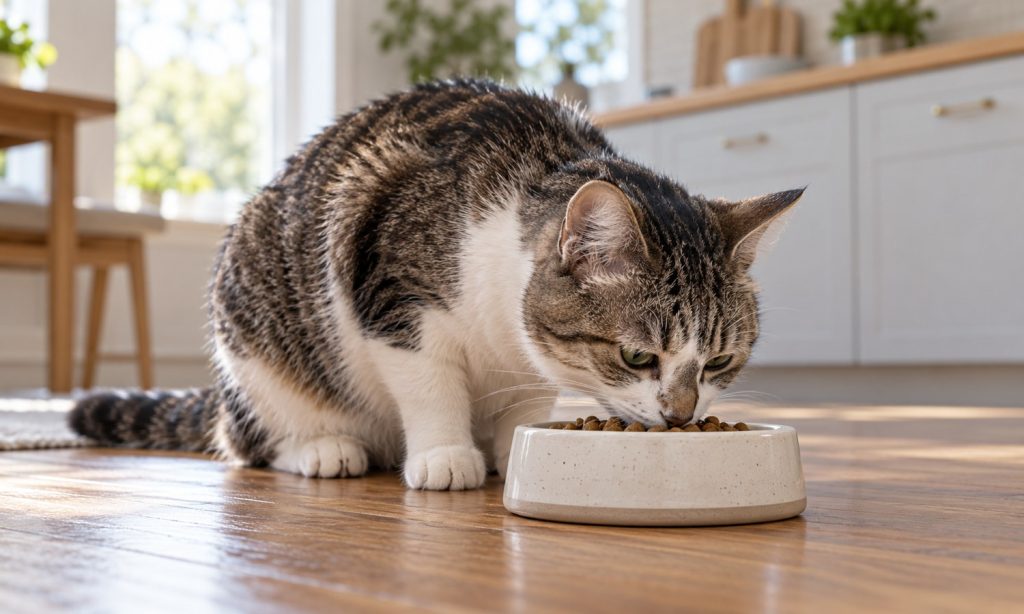
The dry kibble may be convenient to portion and store, but a cat on this therapy cannot also eat ordinary kibble, treats, table food, prey, or another pet’s meals if the diet is expected to work. Even small amounts of other food can undermine the iodine restriction. Multi-cat homes need a practical feeding arrangement, and cats that roam outdoors may be difficult candidates. Review the ingredient and nutrient profile with the veterinarian, especially if the cat also has kidney disease, diabetes, or another condition requiring a different diet.
This is not an over-the-counter wellness food; the product is a prescription diet for a specific diagnosis. A dry format can suit cats that readily eat kibble, but hydration and food acceptance still matter. Transition according to the clinic’s plan, monitor appetite and weight, and keep scheduled thyroid and general-health follow-ups. If the cat refuses it or has another medical need, do not force a diet-only plan; ask the veterinarian about medication, radioactive iodine, or other management choices. Verify the current package and prescription requirements before purchase.
My Recommendation
Hill’s Prescription Diet y/d Thyroid Care Dry Cat Food may be appropriate only if your veterinarian confirms that an exclusive iodine-restricted diet is a safe option for this cat. Its main advantage is dry format for veterinarian-supervised exclusive feeding. The tradeoff is must be fed exclusively for diet therapy. Before ordering, confirm the food format, prescription, transition plan, and whether the cat will reliably eat it. Make a plan to prevent access to other foods and track appetite, body weight, and follow-up thyroid results. If exclusive feeding is unrealistic or another disease changes the nutrition plan, ask your veterinarian about alternatives rather than improvising with supplements or ordinary food.
2. Hill’s Prescription Diet y/d Thyroid Care Wet Cat Food
- Therapeutic iodine-restricted wet formula
- Canned format adds meal moisture
- Chicken recipe and pack size are listed
- Can suit cats that prefer soft food
- Must be fed exclusively
- Large multipack may be impractical if acceptance is uncertain
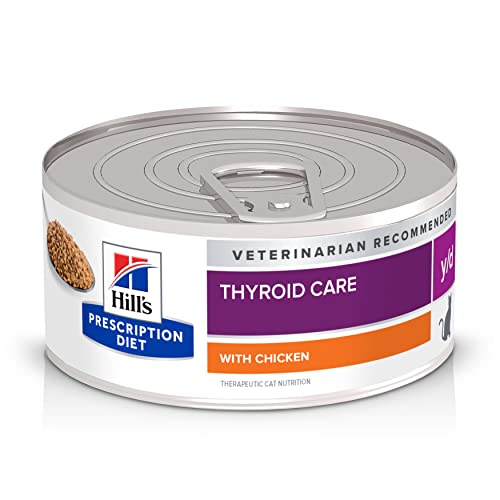
The wet version of y/d uses a chicken recipe in 5.5-ounce cans, with this Amazon listing offering a 24-pack. Like the dry formula, it is a prescription iodine-restricted diet designed to manage feline hyperthyroidism when fed as the sole food. The can format may be easier for cats that prefer a softer texture or need added moisture in meals, but it is still a therapeutic feeding plan, not a general senior food. Confirm diagnosis, suitability, and transition timing with the veterinarian.
Exclusive feeding is critical: other cat food, treats, table scraps, prey, or access to a housemate’s bowl can introduce iodine and compromise the diet plan. This makes household logistics an important factor in choosing wet versus dry. Opened cans require safe refrigeration and careful portioning, and the owner must follow the label’s storage guidance. The food’s wet texture does not remove the need for monitoring; appetite, body weight, thyroid values, and concurrent disease still need veterinary review.
The wet format may improve palatability for some cats, but individual acceptance is not guaranteed, and the 24-can pack may be wasteful if the cat refuses it. Ask the clinic about a transition strategy and what to do if the cat eats inconsistently. This diet is one of several treatment approaches; it is not a cure or a replacement for medical oversight. If the cat cannot be kept on an exclusive diet, the veterinarian can discuss alternative therapies. Purchase only the exact prescription diet recommended and monitor the cat as directed.
My Recommendation
Hill’s Prescription Diet y/d Thyroid Care Wet Cat Food may be appropriate only if your veterinarian confirms that an exclusive iodine-restricted diet is a safe option for this cat. Its main advantage is canned format for cats that prefer wet food. The tradeoff is must be fed exclusively. Before ordering, confirm the food format, prescription, transition plan, and whether the cat will reliably eat it. Make a plan to prevent access to other foods and track appetite, body weight, and follow-up thyroid results. If exclusive feeding is unrealistic or another disease changes the nutrition plan, ask your veterinarian about alternatives rather than improvising with supplements or ordinary food.
How to choose best cat food for hyperthyroidism
First confirm the diagnosis and discuss all treatment options with your veterinarian. If an iodine-restricted diet is being considered, choose a format the cat will consistently eat and the household can feed exclusively. Follow a monitoring plan rather than judging success by appetite alone.
Understand what the therapeutic diet requires
Thyroid hormone production depends on iodine, and prescription y/d is formulated with restricted iodine. Merck Veterinary Manual notes that cats on this approach must eat only the diet; other foods, treats, table food, or prey may make it ineffective. That means an outdoor cat that hunts, a multi-cat household with shared bowls, or a cat that receives frequent treats may not be a practical candidate. Cornell likewise describes an iodine-restricted diet as one management option. Ask the veterinarian how to transition safely, what counts as an exposure, and what to do if the cat refuses a meal. Read Merck’s overview of hyperthyroidism treatment and Cornell’s feline hyperthyroidism guidance.
Choose dry or wet around the cat’s eating habits
The dry and canned y/d versions serve the same therapeutic purpose but differ in texture, storage, portioning, and household routine. Dry kibble is easy to measure and keep available for scheduled meals; wet food can offer a softer texture and more moisture, but opened cans need safe storage and the cat must finish an appropriate portion. Neither format works if the cat will not eat it consistently. Ask the clinic whether a gradual transition is appropriate and how to maintain enough calories and hydration. Avoid changing flavors, treats, or add-ons without checking whether they fit the iodine restriction.
Plan for monitoring and other health conditions
Hyperthyroidism can occur alongside kidney, heart, or other age-related disease, so the diet should be chosen with the full medical picture. Ask about baseline tests, recheck timing, body-weight tracking, appetite, and what symptoms warrant a prompt call. Diet is one option among antithyroid medication, radioactive iodine therapy, and surgery; the right choice depends on the cat and household. For general aging-cat feeding context, see our guide to feeding routines for older cats and senior cat food overview. These general articles do not replace a thyroid-specific plan.
Frequently Asked Questions
Is there a special food that treats feline hyperthyroidism?
An iodine-restricted prescription diet is one veterinary-managed option. It must be fed exclusively and is not suitable for every cat.
Can my cat have treats while eating y/d?
Ask the veterinarian before offering treats or any other food. Even small iodine exposures can interfere with the diet’s intended effect.
Is wet or dry y/d better?
Neither format is universally better. Choose based on the cat’s acceptance, hydration needs, and household ability to maintain exclusive feeding.
Can I use thyroid support drops instead?
Do not replace diagnosis or prescribed treatment with supplements. Ask a veterinarian before giving any product marketed for thyroid support.
Is diet the only treatment option?
No. A veterinarian can discuss medication, radioactive iodine therapy, surgery, and diet based on the cat’s health and circumstances.
Final Verdict
For hyperthyroid cats, Hill’s Prescription Diet y/d is the condition-specific food option identified in this roundup, offered as dry and canned formulas. The best format is the one your veterinarian approves and your cat will eat exclusively. This diet requires strict control of all other food and close medical monitoring; it is not a casual switch to a senior formula. Ask the veterinarian to compare diet therapy with medication, radioactive iodine, or surgery, especially if your cat has another chronic condition or may not reliably avoid other food.
Affiliate disclosure: This article contains Amazon affiliate links. If you purchase through them, PetAdvisorPro may earn a commission. As an Amazon Associate I earn from qualifying purchases.