
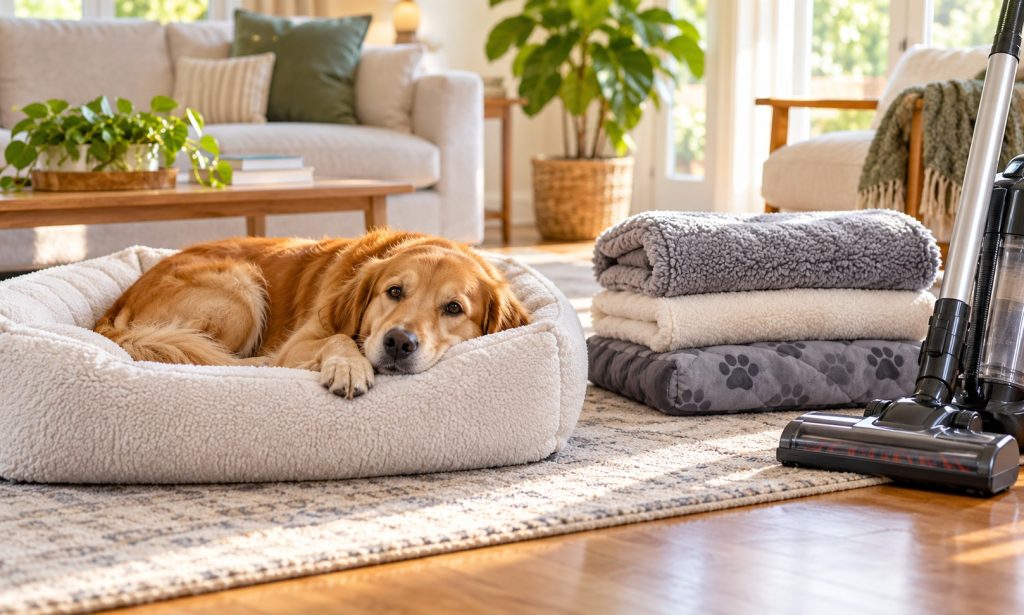
Finding fleas in the house can feel as if they appeared overnight, but most of the population may be developing out of sight in carpets, pet bedding, and quiet corners. Removing them usually takes coordinated cleaning, safe flea control for every household pet, and follow-through while new adults emerge. Start by checking your dog’s coat and identifying where pets rest. Then clean the spaces fleas use and ask a veterinarian which prevention is appropriate for each animal. If you are comparing flea treatment for dogs without a vet prescription, remember that an over-the-counter label still needs to match your dog’s age, weight, health, and household. A single spray or vacuum session rarely solves an established infestation. A steady plan reduces the chance that hidden stages restart the cycle.
Why fleas keep returning after cleaning
Adult fleas live on an animal, feed, and lay eggs that fall into the environment. The eggs can collect wherever a pet sleeps or spends time. Larvae develop in protected areas with debris, and pupae can remain inside cocoons until conditions encourage them to emerge. Vacuuming and washing can reduce these environmental stages, but one cleaning cannot reach every egg, larva, or cocoon.
That is why a household may see new adult fleas after treating a pet. The newly emerged fleas may have come from a room, rug, or bed that was not cleaned, rather than from a failed treatment. The Companion Animal Parasite Council notes that established infestations may take several months to bring under control and that every pet in the home needs an appropriate plan. Your veterinarian can help distinguish continuing environmental emergence from a product or application problem.
Start with the pets and the places they use
Check each dog and cat, even if only one is scratching. Use a flea comb around the neck, tail base, and belly. Black specks that turn reddish brown on a damp white tissue may be flea dirt, which contains digested blood. For more on coat checks and other clues, read our guide to identifying fleas on dogs and recognizing an infestation.
List the areas each animal uses: beds, couches, rugs, car seats, crates, and favorite resting spots. Include shaded outdoor areas where pets lie. This simple map helps you focus cleaning where eggs and larvae are more likely to collect. Avoid assuming that a pet who rarely goes outside cannot have fleas; fleas can enter on animals, people, or other routes.
A practical home-cleaning sequence
Vacuum regularly and dispose of debris
Vacuum carpets, rugs, upholstered furniture, floor edges, cracks, and spaces beneath furniture. Pay special attention to places where pets sleep. EPA guidance recommends frequent vacuuming during initial control. Empty the vacuum canister outdoors into a sealed bag, or remove and discard the vacuum bag promptly. Follow the vacuum maker’s directions and keep the appliance away from pets during cleaning.
Repeat cleaning on a schedule rather than stopping after the first pass. Fleas can emerge from protected pupal cases over time. Continue frequent vacuuming while the household’s veterinary flea-control plan is underway, then maintain regular cleaning as prevention.
Wash bedding and washable fabrics
Wash pet bedding and washable covers using the hottest water and dryer settings the fabric care label allows. Wash blankets and other family bedding that pets use. Clean the pet’s crate mat and car cover if they can be laundered safely. If an old bed cannot be cleaned thoroughly, ask your veterinarian whether replacement makes sense. Do not discard contaminated items where pets or wildlife can reach them.
Clean carefully around pets
Keep pets and children away from cleaning equipment and any household pesticide until the area is safe according to its label. Never apply a home or yard pesticide directly to an animal unless the label specifically permits that use. Do not mix insecticides or apply more than directed. EPA advises people to follow each product label and use flea products only for the animal species and size listed.
If considering a home spray or other pest-control treatment, read the full label, including ventilation, re-entry, and pet-safety instructions. A veterinarian or licensed pest professional can help if the infestation is widespread or cleaning alone is not enough. Avoid foggers or concentrated products unless their exact label directions fit your home and situation.
Coordinate flea control for every pet
Ask your veterinarian to recommend a product and schedule for each dog, cat, or other household animal. Product eligibility varies by species, age, weight, health status, pregnancy or nursing, and other medications. Never use a dog flea product on a cat; some ingredients that are used safely for dogs can be dangerous to cats. Do not split a larger-animal dose or combine products without veterinary direction.
Some flea treatments are available without a prescription, while others require one. Nonprescription availability does not mean a product is right for every pet. Read the label every time, confirm the active ingredient and weight range, and follow the exact application interval. Keep pets from grooming one another until a topical product is dry if the label advises separation. Store packaging so you can identify what was used if a reaction occurs.
If you are considering a nonprescription option, our information on flea treatment for dogs without a vet prescription can help you prepare questions. It does not replace a veterinarian’s assessment, especially for puppies, senior dogs, sick pets, or animals with a history of seizures or product reactions. For additional context, see our guides to oral flea and tick treatment for dogs and flea collars for dogs and cats.
Reduce the chance of reinfestation
- Keep every household pet on a veterinarian-approved prevention plan for the recommended interval.
- Continue cleaning favorite sleeping and resting areas, including car bedding and washable covers.
- Inspect pets after boarding, grooming, visits to parks, or contact with animals that may carry fleas.
- Address outdoor resting spots by keeping grass trimmed and removing leaf litter where pets spend time.
- Ask a veterinarian whether other animals in the household need treatment or whether another parasite could explain itching.
The CAPC describes comprehensive control as treating pets, addressing environmental infestation, and preventing new infestations. A recurring flea problem can also reflect missed doses, incorrect application, untreated household animals, or a continuing source nearby. Keep a simple record of product dates and cleaning tasks. If fleas continue despite following labels and cleaning, bring the product packaging and timeline to your veterinarian rather than increasing the dose or frequency yourself.
When to ask a veterinarian for help
Contact a veterinarian if your pet has intense or persistent itching, inflamed skin, sores, hair loss, pale gums, weakness, or signs of illness. Very young, small, senior, pregnant, nursing, or medically fragile animals may need tailored advice before using any flea product. Severe infestations can be especially concerning for small puppies and kittens because blood loss may contribute to anemia.
If a pet develops tremors, trouble walking, repeated vomiting, marked drooling, seizures, or another concerning reaction after treatment, seek urgent veterinary guidance. The FDA has reported that some flea and tick medicines in the isoxazoline class may be associated with neurologic adverse events in some animals. This does not mean these medicines are unsuitable for every pet; it is a reason to discuss medical history and options with a veterinarian.
Frequently Asked Questions
How long does it take to remove fleas from a home?
It varies with the size of the infestation, the home, and whether every pet receives appropriate control. Hidden pupae may continue to emerge for weeks, so consistent cleaning and prevention matter.
Should I treat every pet if only one has fleas?
Ask your veterinarian about every animal in the home. Fleas can move between hosts, and the right product differs by species, age, weight, and health.
Can vacuuming alone eliminate fleas?
Vacuuming helps remove flea stages and debris, but it may not reach every protected area or treat fleas living on pets. Combine cleaning with veterinarian-guided pet control.
Can I use a dog flea product on my cat?
No. Use a product only for the species named on its label. Some dog products contain ingredients that can seriously harm cats.
What if fleas return after I clean?
Continue the cleaning schedule, check that every pet’s prevention is current, and ask a veterinarian to review the product, application, and timeline. Do not apply extra doses without direction.
Final Words
Removing fleas from a home takes a coordinated routine: clean the places pets use, keep every animal on an appropriate prevention plan, and continue long enough for hidden flea stages to emerge and be addressed. Be especially careful with pesticide labels and never substitute a dog product for one labeled for cats. If you are weighing flea treatment for dogs without a vet prescription, confirm that the product fits your dog and household with a veterinarian. Consistency and accurate product use help reduce reinfestation risk while protecting the animals who share your home.
Reference
- U.S. Environmental Protection Agency: Controlling Fleas and Ticks Around Your Home
- U.S. Environmental Protection Agency: Controlling Fleas and Ticks on Your Pet
- Companion Animal Parasite Council: Fleas
- U.S. Food and Drug Administration: Isoxazoline Flea and Tick Products
- U.S. Food and Drug Administration: Safe Use of Flea and Tick Products in Pets









