
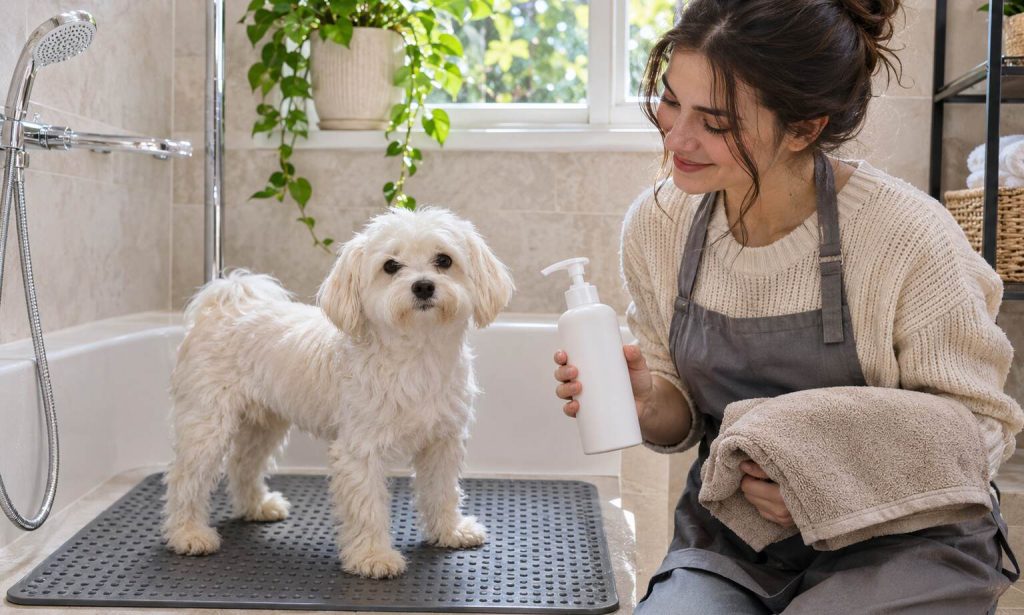
A bright white coat can look lovely, but color is never more important than healthy canine skin. Whitening shampoos may contain optical brighteners, purple-toning ingredients, or other cleansing agents. Introducing a whitening shampoo for dogs means checking what the formula does, ensuring the dog tolerates bathing, and watching for irritation. A cosmetic change should not turn bath time into a stressful experiment.
This guide explains a gradual, comfortable approach to a new grooming product. It covers labels, coat preparation, first-bath planning, rinsing, and when to stop. It also separates ordinary stains from medical problems that need a veterinarian. The goal is clean, comfortable fur and an easy, positive grooming experience rather than an unrealistic promise of a perfectly white coat after one wash.
Check What the Shampoo Is Designed to Do
Some whitening shampoos are made for white or light coats, while others target yellow tones or surface buildup. Not every formula is suitable for every dog. Look for clearly stated species, intended use, dilution directions, and skin warnings. A shampoo marketed for humans or other animals should not be assumed appropriate for dogs. Avoid any product that relies on strong household bleaching chemicals.
Read ingredient and fragrance information, especially if the dog has reacted to grooming products before. Consult a veterinarian about skin disease, broken skin, or prescribed medicated baths. Our whitening shampoo for dogs overview explains common formats, but the formula’s label and the dog’s skin history should guide the introduction.
Prepare the Dog Before the First Wash
Begin by helping the dog feel comfortable in the washing space. Use a non-slip mat, lukewarm water, calm handling, and rewards for relaxed behavior. Let the dog explore the empty tub or wash area before starting the water. For a nervous animal, several short practice sessions may work better than one long bath. Avoid rushing a dog that is trying to escape.
Brush the coat gently and remove loose debris or tangles, taking care around sensitive areas. Mats can tighten when wet and may require professional grooming. Check for redness, scabs, hot spots, ear irritation, or other concerns before introducing anything new. If abnormal skin is present, postpone the cosmetic wash and ask a veterinarian whether bathing is appropriate.
Consider a Careful First-Use Plan
Follow the manufacturer’s directions for any advised sensitivity testing. If the instructions do not provide a method, ask the veterinarian about a safe approach for a dog with prior reactions rather than inventing a concentrated ‘patch test.’ Using a new product on only a small area does not guarantee full-body safety. Keep the first grooming session simple and avoid adding other unfamiliar skin products.
Choose a time when the dog is healthy and relaxed. Gather towels and the correct dilution container in advance. Use only the recommended amount and contact time. Do not leave shampoo longer than instructed in hopes of getting whiter fur. More exposure can increase residue and irritation. A pleasant first experience matters far more than achieving a dramatic cosmetic result.
Apply Gently and Avoid Sensitive Areas
Wet the coat with comfortably warm water, then spread diluted or ready-to-use shampoo according to the label. Work in manageable sections, avoiding eyes, nose, mouth, ear canals, and genital areas. Never force the dog’s face beneath a stream of water. A soft cloth may be more suitable for areas that should not be sprayed, provided the instructions permit it.
Massage lightly through the coat without rough scrubbing. Check for signs of distress, such as intense shaking, struggling, yelping, or unusual scratching. Stop when needed and give the dog a break. For more sensitive coat routines, the guide to shampoos for dogs with skin allergies offers related safety considerations. Whitening effects do not justify ignoring discomfort.
Rinse Thoroughly and Dry Comfortably
Rinsing is an essential part of the process. Remove visible suds from under the chest, legs, belly, and tail, and check dense fur for leftover product. Residue may irritate skin or leave the coat feeling stiff. Use clean towels and warm surroundings, particularly for small, senior, or thin-coated dogs. If a dryer is needed, follow safe temperature and sound-handling practices.
Do not layer multiple brightening products to intensify results. Different formulas can interact or make it harder to identify the cause of a reaction. Observe the dog’s skin after drying and again over the following day. If itching, redness, hives, or distress appears, stop the shampoo and contact a veterinarian. Persistent coat discoloration may need different care.
Set Realistic Expectations for Coat Color
Whitening shampoos are cosmetic cleansers, not medical treatments or permanent changes to hair pigment. Mud, saliva staining, tears, age, and coat genetics can influence appearance. Some staining comes from ongoing moisture or licking, and simply making the fur brighter will not resolve the cause. Be cautious about claims that a wash makes all white-coated dogs uniformly bright.
For recurring tear staining, excessive licking, or foul-smelling areas, ask your veterinarian to assess allergies, infection, eye irritation, or dental concerns where relevant. Do not use brightening shampoo close to eyes to chase a stain. A well-maintained coat is healthier-looking when grooming is paired with appropriate nutrition, brushing, and routine skin care.
Build a Reasonable Ongoing Grooming Routine
Determine bathing frequency from coat type, activity, and veterinarian guidance. A dog that hikes in mud may need different maintenance from one that spends most days indoors. Too much washing may irritate skin, even with a cosmetic formula. Alternate grooming tools only if the dog tolerates them and the products are compatible with your care plan.
Keep the shampoo in its original labeled packaging and record when it was opened. Clean and dry applicators, store the bottle securely, and replace expired products. Our overview of oatmeal shampoo for dogs describes the same logic for measuring volume; use only directions specific to the whitening formula. IMO, a comfortable dog with a few cream-colored patches is doing just fine.
Frequently Asked Questions
A gradual introduction helps you notice whether a grooming product is suitable and whether the dog feels safe during bathing. These questions focus on common cosmetic assumptions.
Skin lesions, persistent itching, and unusual staining deserve professional assessment. Do not substitute whitening agents for veterinary treatment.
Can I use human purple shampoo on my dog?
Do not assume it is appropriate. Use only dog-labeled products or follow your veterinarian’s specific advice.
Will whitening shampoo remove tear stains?
It may affect some surface discoloration, but tear staining can have underlying causes and the eye area needs special caution.
Should I leave whitening shampoo on longer for better results?
No. Follow the label’s contact time. Longer exposure may increase irritation.
Can I use whitening shampoo on irritated skin?
Ask a veterinarian first, especially with sores, active infection, or a history of reactions.
How often should I wash with it?
Frequency depends on coat, skin health, and the product directions. Avoid overbathing.
Final Words
Introducing a whitening shampoo for dogs should feel like an ordinary, gentle bath. Read the label, prepare the coat, keep the dog comfortable, rinse carefully, and monitor the skin. Avoid chemical shortcuts, exaggerated brightening claims, and long contact times that contradict instructions. Healthy skin always comes first.
If you are exploring whitening shampoo for dogs, check ingredient and handling details before making a new product part of the routine. The brightest outcome is a dog who finishes bath time relaxed and comfortable, not simply a whiter coat.









