
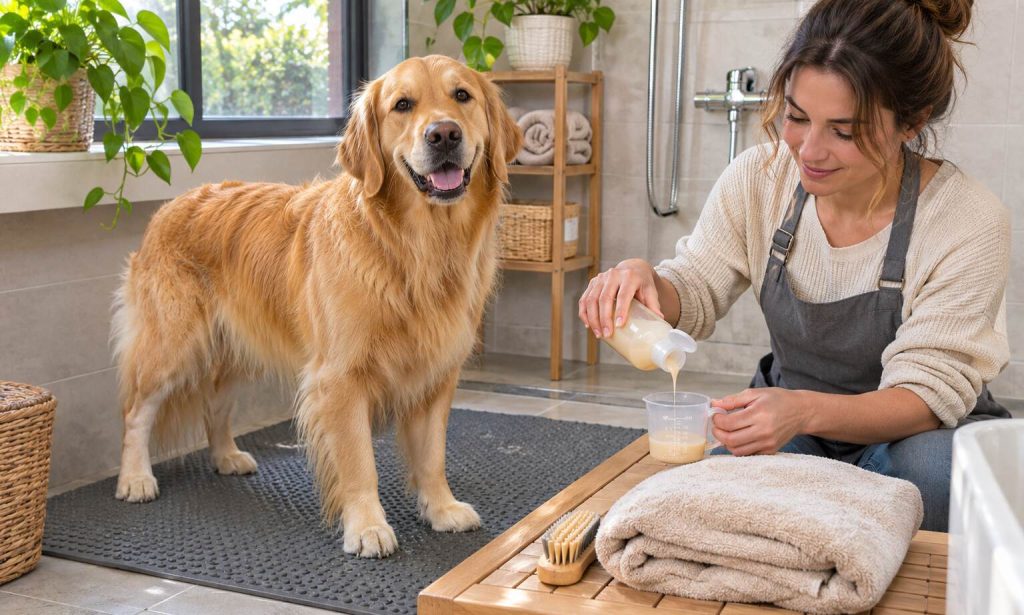
Buying an oatmeal dog shampoo raises two different sizing questions: how much should go into a bath, and how large a bottle will your household use? Neither answer is determined by weight alone. Coat length, thickness, water absorption, product dilution, and bathing frequency all matter. Learning how to size oatmeal shampoo for dogs starts with reading the formula’s directions and measuring actual use.
A short-coated terrier and a double-coated retriever can need very different amounts for thorough coverage. More shampoo does not automatically mean a cleaner or more comfortable dog. This guide explains safe measuring, dilution, lathering, rinsing, bottle planning, and the warning signs that require veterinary advice. It focuses on everyday grooming rather than claiming a medicated product can treat an unexamined skin condition.
Clarify Whether You Mean Amount or Bottle Size
The amount per bath is the volume required to spread the shampoo as directed over the coat. Bottle size is the quantity you keep in storage for future baths. These are separate decisions. Start by reading whether the formula is ready to use or concentrated. A concentrated shampoo may require a particular dilution, and guessing the ratio can lead to irritation or poor rinsing.
Also check whether the label describes a cosmetic cleansing shampoo or a veterinary therapeutic product. Medicated shampoos may have prescribed frequency and contact times that should not be changed casually. The oatmeal shampoo for dogs overview explains commonly mentioned formulation terms. The key is to use the actual product instructions and your veterinarian’s plan when one exists.
Account for Coat Length and Density
A dog’s surface area matters, but so does the type of coat. Dense undercoats can trap product near the skin and require careful wetting and rinsing. Short smooth coats often distribute lather more quickly. Long hair can make even coverage harder if tangled. Brush loose hair and address mats before bathing as appropriate for the coat. Do not scrub aggressively to make a small amount stretch farther.
Wet the coat evenly before adding an appropriate amount according to the label. Work in sections, keep the shampoo away from eyes and ears, and check whether lather reaches the areas intended to be cleaned. Add only what is necessary for complete coverage rather than chasing huge bubbles. A mild shampoo still needs thorough rinsing. Residue can cause discomfort.
Read Dilution and Contact-Time Directions
Some shampoos are mixed with water before use; others are used straight from the bottle. Follow the stated ratio and use a clean measuring container dedicated to grooming. Do not change it because the coat seems thick or dirty. Never combine different shampoos, essential oils, or household cleaning products in the hope of improving results.
If a clinician prescribed a topical therapeutic routine, follow that plan for contact time and frequency. A general oatmeal shampoo does not replace diagnostic testing or indicated treatment. Use lukewarm water and avoid letting a dog lick the foam. A dog with inflamed, broken, or infected skin should be assessed before introducing new grooming products. Our guide to shampoo for dogs with skin allergies helps frame skin-sensitivity questions.
Measure a Trial Bath Instead of Guessing
For an ordinary grooming shampoo, record the volume consumed in a complete bath while following the label. Use marked measuring cups or note the bottle’s weight before and after, keeping units consistent. This creates a household-specific estimate that is more useful than a universal ‘tablespoon per pound’ rule. Do not use the first trial to exceed or contradict any specified instructions.
Repeat the estimate after the coat and your technique become familiar. A puppy growing quickly or a dog losing seasonal undercoat may use a different amount later. If you bathe several dogs, track each animal separately. This also prevents running out mid-bath. FYI, a giant bottle is not a bargain if most of it expires before anyone gets clean.
Choose Bottle Capacity Based on Actual Need
Estimate how many baths will occur before the expiration date or recommended period after opening. Multiply the measured safe volume per bath by the number of expected baths, then allow a modest margin for occasional extra cleaning. This calculation helps compare bottle capacity without encouraging excessive product use. Check whether a bulk package can be stored safely and closed reliably.
Keep the original product label and record the opening date. Avoid decanting into unmarked containers. Store shampoo away from extreme temperature conditions and where children and pets cannot reach it. A smaller container may be practical for occasional baths, while a multi-dog household may use more. Capacity should follow actual use, not marketing.
Rinse, Dry, and Watch the Skin
Rinse thoroughly until the water runs clear and the coat no longer feels slippery. Pay attention to armpits, belly folds, paws, and dense areas that hold suds. Do not direct water into ears or eyes. Dry with clean towels and keep the dog warm and comfortable. Use a dryer only if the dog tolerates it and the temperature is safe.
Observe for new scratching, redness, hives, or unusual behavior. Stop the shampoo and contact a veterinarian if symptoms develop. Persistent itch, odor, hair loss, or skin lesions may require medical diagnosis. The guide to anti-itch sprays for dogs discusses a different topical category; layering products without guidance is not a safe way to manage a skin problem.
Avoid Overbathing and Measuring Shortcuts
Bathing frequency depends on skin health, coat type, activities, and veterinarian guidance. Excess washing with an unsuitable product may dry or irritate skin. A shampoo described as soothing is not a license for daily baths. Set a schedule that fits the animal rather than a convenient calendar. Do not exceed instructions to finish a large bottle.
Watch for discomfort during bathing and make the experience gradual and calm. Use a non-slip surface and reward cooperative handling. If the dog has a diagnosed skin condition, follow its prescribed regimen even when it differs from general grooming habits. How to size oatmeal shampoo for dogs is about safe coverage and planning, not forcing an exact amount for every animal.
Frequently Asked Questions
There is no single correct shampoo volume for every dog and coat. The manufacturer’s instructions and the dog’s skin condition determine the safe starting point.
These answers address the most common measuring questions. Seek a veterinarian’s advice when a product is medicated or the dog has ongoing skin disease.
How many ounces of oatmeal shampoo should I use?
There is no universal amount. Follow the label and use enough for safe, even coverage of your dog’s coat.
Can I dilute any oatmeal dog shampoo?
No. Dilute only if the label permits it, using the specified ratio and a clean container.
Is more shampoo better for thick coats?
Not automatically. Thorough wetting, correct coverage, and rinsing are more important than excess suds.
How should I estimate the right bottle size?
Track actual use per bath and expected frequency within the product’s shelf-life guidance.
Will oatmeal shampoo cure a skin allergy?
No. A cosmetic shampoo cannot diagnose or cure an allergy. A veterinarian should assess persistent itching or lesions.
Final Words
How to size oatmeal shampoo for dogs starts by separating per-bath application from bottle capacity. Read dilution directions, consider coat density, measure actual use, rinse thoroughly, and track how often the dog genuinely needs a bath. More foam or a larger bottle does not make a formula more appropriate.
If you are deciding on oatmeal shampoo for dogs, consider safe storage and the quantity your household will use before the product expires. Skin discomfort deserves veterinary attention, not a bigger squeeze of shampoo.









