
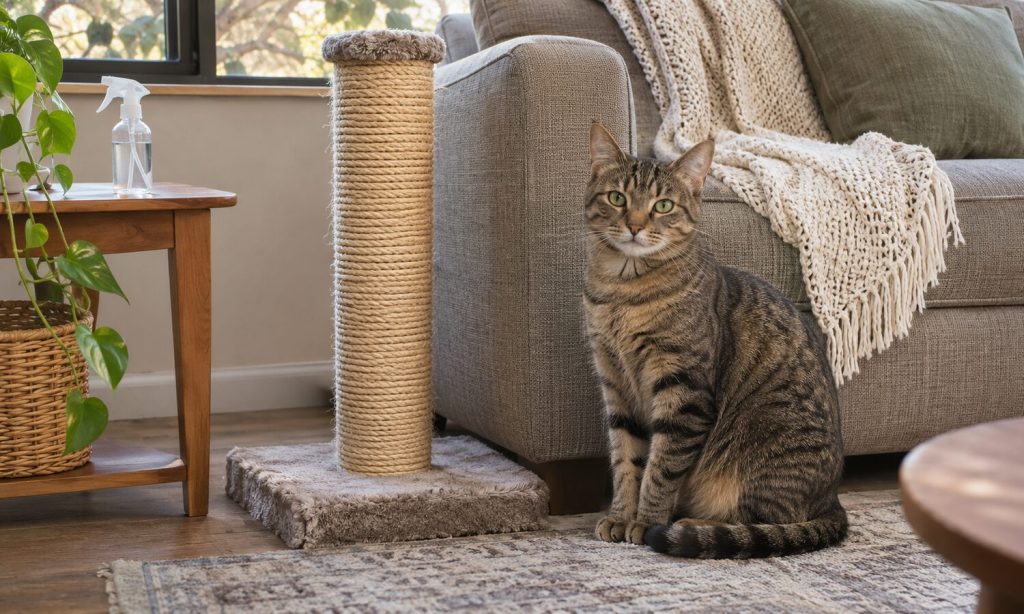
When should you replace a cat deterrent spray for furniture? Start with its printed expiration date, any change in the liquid or bottle, and whether the label still permits its intended use. A spray with a damaged nozzle, leaking seal, unusual separation, or uncertain identity is not worth keeping. The goal is to protect upholstery without exposing your cat to questionable substances. Reapplication frequency and replacement of the bottle are two different decisions.
A cat deterrent spray for furniture may be part of a larger plan to redirect scratching or marking. It should never replace comfortable scratching surfaces, cleaning, and patient training. Some cats dislike scents; others ignore them entirely. Learn when to discard an old container, spot warning signs, store and test the product safely, and seek veterinary care for behavior changes. The safest schedule follows the actual label rather than an invented universal deadline.
Understand What ‘Replace’ Means for a Deterrent Spray
There are two separate clocks. The first measures the usable life of the product inside the bottle. The second measures how long an application remains useful on a particular surface. When should you replace a cat deterrent spray for furniture as a stored product? Replace it at any stated use-by date, or earlier if packaging integrity and safety become doubtful. No single number of weeks or months applies to every formula.
An application may lose its scent or effect long before the bottle needs replacing. Cleaning the surface, sunlight, ventilation, and normal household use can change how long residue remains. Some labels specify when to repeat an application; others give only general directions. Never assume that spraying more frequently is safer. Treat the product’s label as the source for both concentration and timing.
Sprays Are Not a Complete Behavior Solution
Scratching is a normal feline behavior linked to stretching, claw care, and scent marking. A deterrent alone cannot teach a cat where scratching is welcome. Offer stable horizontal and vertical scratchers near the furniture, reward their use, and make the preferred surface easy to reach. For additional background on spray styles, our guide to citrus sprays used around cats discusses common use scenarios; check any formulation’s own warnings before applying it.
Five Clear Signals That the Bottle Should Be Replaced
A clear sign is a manufacturer expiration date that has passed. Another is a container that no longer protects its contents. Leaks, broken closures, missing labels, or an unidentified mixture make safe storage and use impossible. If you cannot tell exactly what a product contains or how to use it, discontinue it. Do not transfer it into an unlabeled household bottle.
Next, inspect the liquid only without smelling it closely or touching it. Persistent unexpected separation, new sediment, discoloration, swelling, or a strange odor may indicate a problem. Some formulas naturally separate and instruct users to shake before use; that is different. When should you replace a cat deterrent spray for furniture after noticing a change? If the label does not describe that change, contact the maker or stop using the product.
Watch the Sprayer and Packaging
A clogged nozzle does not always mean the contents are spoiled. Some removable tips may be cleaned according to product directions. However, a trigger that cracks, sprays unpredictably, dribbles onto hands, or cannot close is a practical reason to replace the container. Do not puncture or improvise repairs on pressurized containers. Protect household members and pets from accidental mist by testing an intact nozzle only in an approved, well-ventilated setting.
Changes in Performance Need Investigation, Not Automatic Replacement
A cat that returns to the sofa may have become comfortable with the surface, or a previously applied scent may have faded. That is not proof that the bottle expired. Examine whether the cat has a suitable scratcher and whether application instructions were followed. Sudden urination, restlessness, or a new pattern of inappropriate scratching can have other causes. When behavior changes abruptly, investigate discomfort and stress rather than responding with stronger or repeated spraying.
Check the Expiration Date and Storage History
Look for an expiration, use-by, or batch code on the original label or container. Some sprays have no printed expiration date. That absence does not prove they last indefinitely. The manufacturer may offer product-specific shelf-life guidance. When should you replace a cat deterrent spray for furniture without a readable date? If you cannot establish its identity, age, or safe use directions, dispose of it using the applicable local guidance.
Heat, direct sunlight, freezing conditions, moisture, and loose caps can undermine storage stability. Check the manufacturer’s instructions for the temperature range and any warning about light exposure. Do not rely on a homemade calendar rule such as ‘all sprays last six months.’ Even two products marketed for the same task may use different ingredients, preservatives, and packaging.
Keep a Simple Record
Write the opening date on a removable note or in a household inventory, keeping the printed label legible. Record the batch number if needed for support or recalls. Check the closure whenever you put the product away. If the bottle becomes sticky, leaks, or loses readable directions, move it out of service. Keeping the original packaging is especially important when multiple caregivers share responsibility for the cat.
Use Deterrent Sprays More Safely Around Cats and Furniture
Confirm that the label specifically permits use on the intended surface and around the species in your home. ‘Natural’ does not automatically mean safe for cats. Cats can be sensitive to substances that are harmless to people, and concentrated essential oils present particular concerns. Do not mix formulations, add fragrance oils, or spray a cat directly. Keep cats away from the area until the label’s drying or ventilation instructions are satisfied.
Before treating a visible panel, try a small hidden fabric area if permitted by the label. Delicate finishes, leather, untreated wood, and specialty upholstery may stain or discolor. Avoid food preparation areas, water bowls, bedding, and items the cat is expected to lick. A compatible protector or furniture cover may be a simpler approach. This is a useful time to reassess whether any spray is necessary.
Reapplication Is Not the Same as Replacement
Follow the printed direction for spraying distance, amount, drying time, and repeat use. Excess product can build up on upholstery and create unnecessary exposure. If the instructions are missing, stop using the bottle. When should you replace a cat deterrent spray for furniture if it no longer seems effective? Verify proper use and the cat’s environment first. A new bottle of the same product will not address a missing scratcher or anxiety-related behavior.
Improve the Environment So You Need Less Spray
Put a tall, stable scratching post next to the exact corner being scratched. Offer a horizontal cardboard option if the cat favors carpets or sofa bases. Reward the moment your cat uses an acceptable surface. Avoid shouting, chasing, water squirts, or other punishment. These methods can increase fear and may weaken your relationship with the cat. An inviting alternative often matters more than a strong-smelling deterrent.
For a vulnerable sofa, consider a washable throw or purpose-made protective cover while new habits develop. Keep nails appropriately trimmed when your cat tolerates handling. If a cat is scratching more because of household changes, improve hiding spots, resting places, predictable play, and access to essentials. Our broader guide to humane deterrent approaches for cats provides context; the behavior plan should remain gentle and specific to your pet.
When a Veterinarian Should Be Involved
Seek veterinary advice for new urine marking, straining to urinate, frequent trips to the litter box, sudden behavior changes, skin irritation, or signs of distress. Difficulty passing urine can be an emergency, particularly in male cats. A spray should never be used to mask a medical problem. Persistent scratching or marking may also warrant support from a qualified feline behavior professional after medical causes are assessed.
Disposal and Purchasing Habits That Prevent Waste
Check the label and local household hazardous-waste rules before disposing of leftover contents. If a product is classified or labeled as a pesticide, follow the specific disposal instructions and never pour unused liquid into drains unless the label and local rules explicitly permit it. Do not reuse empty chemical containers for pet food or water. Keep unwanted bottles secured away from pets until disposal.
Buy only an amount you can realistically use. Larger containers may appear economical, but an unfinished bottle with an uncertain opening date can create waste. When should you replace a cat deterrent spray for furniture in a home where the cat has stopped scratching the sofa? You may not need another bottle at all. Continue rewarding the desired scratching choice and preserve the option to use nonchemical protection.
Frequently Asked Questions
Replacement questions can sound similar while referring to different problems. The answers below separate a product’s shelf life, its performance on furniture, and the cat’s behavior. That distinction keeps the advice practical and helps avoid unnecessary exposure.
No spray is guaranteed to work for every cat or fabric. If a product label gives different directions than a general care tip, use the label. If you are worried about a particular ingredient or a reaction, ask your veterinarian before further use.
Should I replace the bottle as soon as the scent fades?
Not necessarily. An application can fade while the remaining contents are still within their usable life. Check the label’s reapplication guidance and the cat’s scratching setup before buying a replacement bottle.
Can I keep a spray after its printed expiration date?
No. If a use-by or expiration date is present, follow it. Do not assume an apparently normal scent means the ingredients remain stable or safe after that date.
What if the liquid looks cloudy or separated?
Read the directions first because some mixtures need shaking. If an unexpected change persists or the label is missing, discontinue use and ask the manufacturer about safe disposal.
Is it safe to spray a cat directly?
No. Furniture deterrents are intended for approved surfaces, not direct application to a cat. Follow the product’s species-specific precautions and keep your cat away during treatment as directed.
What if my cat scratches the couch even with fresh spray?
Add appealing scratchers near the couch, reward their use, and protect the upholstery without punishment. New or sudden behavior changes warrant a veterinary assessment. For a related discussion, see bitter-deterrent considerations for cats.
Final Words
When should you replace a cat deterrent spray for furniture? Replace it at the marked expiration, when its packaging fails, or when its identity or safety directions are uncertain. Do not confuse a faded application with expired contents. Check the actual label before storing, applying, or discarding the product. A fresh bottle is not automatically a better behavior plan.
The safest long-term strategy combines furniture protection, positive reinforcement, and convenient scratching choices. Use a cat deterrent spray for furniture only where the label permits and only when your cat can avoid exposure. For context on different scent-based approaches, read about citrus sprays used to discourage furniture scratching. If urine marking or discomfort is involved, seek veterinary guidance rather than escalating spray use.









