
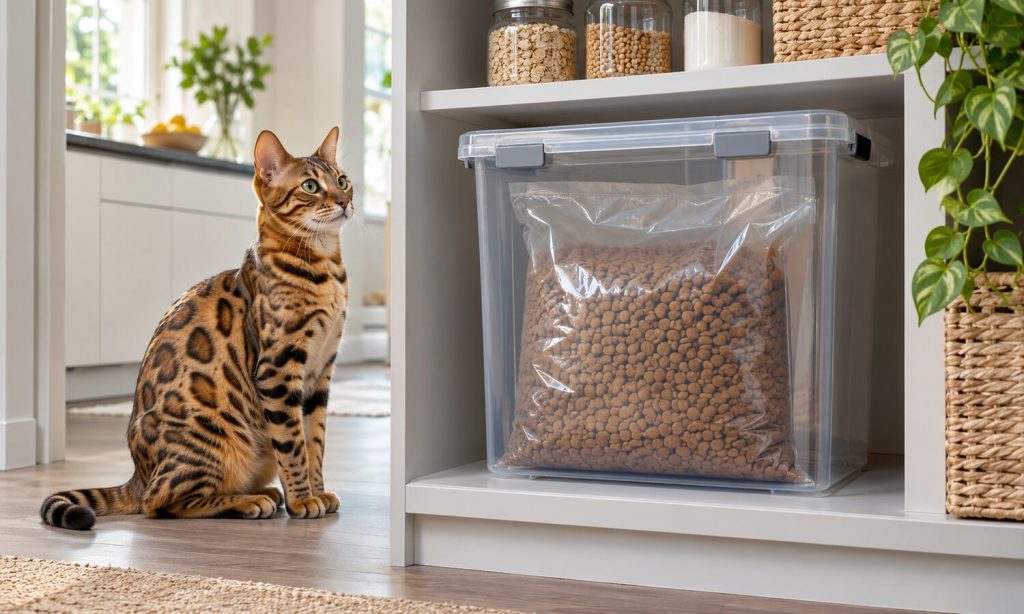
Learning how to store a cat food for Bengals safely starts with a simple rule: keep the original packaging, protect the food from heat and moisture, and handle it with clean, dry hands. Bengal cats are active and curious, but they do not need a special storage system because of their breed. Their food deserves the same careful handling as food for any other cat. Storage matters because spoiled or contaminated meals can cause problems even when the nutritional formula is otherwise appropriate.
Whether you use dry kibble, canned meals, or a mixture, check the label before putting anything away. A guide to cat food for Bengals can help explain feeding-format differences, but safe storage depends on the package and food type. This guide covers containers, wet food, hygiene, and spoilage signs. The goal is fresher meals with less waste.
Store Dry Bengal Cat Food in Its Original Bag
The U.S. Food and Drug Administration recommends keeping dry pet food in its original bag, folded or closed tightly after each use. If you prefer a storage bin, place the entire bag inside a clean, dedicated container. This keeps the lot number, best-by information, ingredients, and handling instructions available. Pouring loose kibble into a bin can leave old fat residue and makes it harder to trace a recalled batch.
Choose a cool, dry place away from direct sunlight, damp floors, cleaning chemicals, and pests. Avoid an unconditioned garage that becomes very hot or humid. Once the bag is opened, reseal it promptly after measuring each meal. The packaging is part of the food-safety system, not just advertising. Learning how to store a cat food for Bengals safely means keeping the identification on the package until the last serving is finished.
What Makes a Good Secondary Container?
Look for a dedicated, food-safe bin that closes securely, is easy to wash and fully dry, and accommodates the original bag without crushing it. Place it where cats and children cannot knock it over. You do not need to purchase a fashionable storage system; a clean, correctly sized container is enough. FYI, attractive scoops are no substitute for a closed bag and a dry pantry.
Handle Opened Wet Food Differently
Unopened cans or sealed pouches generally belong in a cool, dry storage area according to their label. Once opened, wet food becomes perishable. Cover or transfer unused portions as directed by the manufacturer and refrigerate promptly. Follow the package’s time limits for refrigerated leftovers rather than assuming all canned formulas have the same shelf life. Never serve food from a swollen, leaking, or visibly damaged can.
For a meal, place only the portion your Bengal is likely to eat. Remove uneaten wet food according to label directions and household conditions. In a warm room, it may spoil faster. Wash the bowl with soap and water after feeding and dry it before the next use. Knowing how to store a cat food for Bengals safely includes managing the portion after it leaves the container, not only where the unopened package sits.
Keep the Feeding Schedule Predictable
Bengals vary widely in age, body condition, and activity, so no fixed serving amount suits every cat. Follow the nutritional statement and feeding guidance on the chosen food as a starting point. A veterinarian can help adjust the plan for growth, pregnancy, illness, or weight changes. Measure portions using a consistent tool, and avoid leaving large wet meals unattended just because a cat prefers to graze.
Temperature, Humidity, and Light Are Important
High humidity encourages clumping and can damage packaging. Heat and sunlight can accelerate quality loss, including changes in fats and vitamins. A shelf away from windows, hot appliances, and water pipes is usually more suitable than a sunny counter. Do not place the food next to strong household chemicals or pest-control products. The food should remain protected from both contamination and unwanted odors.
Check your storage area during seasonal changes. Summer heat, a damp basement, or a leaking ceiling can turn an otherwise convenient location into a poor choice. If an entire bag gets wet, do not try to dry the kibble and feed it anyway. Discard food that has become damp, moldy, or suspicious. Learning how to store a cat food for Bengals safely also means admitting when food is no longer fit to keep.
Do Not Assume Freezing Fixes Old Food
Freezing is not a reliable way to restore stale food or make contaminated food safe. Follow the package directions for any permitted freezing, thawing, or refrigeration steps. Store all foods in clean containers and avoid repeated thawing cycles. If the label gives no freezer guidance, ask the manufacturer before trying an improvised method. Freshness and microbial safety are not guaranteed by appearance alone.
Keep Tools, Containers, and Bowls Clean
Wash your hands with soap and water before and after handling pet food. Use a clean scoop rather than dipping an unwashed bowl into the main bag. Keep scoops dry, and avoid using the same utensil for raw meat or household cleaning products. Bacteria from animal food can affect people as well as pets. Food safety is especially important in households with young children or immunocompromised people.
Before refilling a reusable bin, empty it, wash with soap and water, and let it dry completely. Do not add a new batch of loose food over the remains of the old one. If you place the original bag inside a bin, clean spills and residue during bag changes. Knowing how to store a cat food for Bengals safely includes these small steps that prevent a tidy storage area from hiding stale crumbs.
Separate Diets if You Have More Than One Cat
If different cats eat veterinary diets, kitten diets, or different calorie formulas, clearly label each storage location. A Bengal’s energetic personality does not make it safe to eat another cat’s prescribed food. Avoid mixing bags unless a veterinarian recommends a specific transition plan. Keep measuring tools separate when accidental diet swaps could matter clinically. This is particularly important during medication and allergy investigations.
Recognize Food That Should Not Be Fed
Check the printed best-by date and the product’s storage instructions. The date is a useful quality guide, but a future date does not cancel evidence of contamination. Discard food with unusual odor, visible mold, pests, moisture, or packaging damaged by rodents. Oiliness or texture changes that are not normal for the formula also deserve caution. Do not taste suspicious pet food to decide whether it is safe.
If your cat refuses food that normally appeals to them, examine the batch before assuming pickiness. A refusal alone does not prove spoilage, but repeated vomiting, diarrhea, lethargy, or lack of appetite needs veterinary attention. Save the bag, lot number, and purchase details if a safety complaint or recall is suspected. Proper recordkeeping is part of how to store a cat food for Bengals safely and respond when something goes wrong.
Check Recalls and Report Problems
Use official recall information from the FDA or the relevant manufacturer, and compare the exact lot code and product identity. A similar brand or package color is not enough to establish a match. If you suspect food-related illness, stop serving the affected batch and contact your veterinarian. Keep the packaging available for questions and follow official instructions about retaining samples or reporting a complaint.
Build a Practical Food-Storage Routine
At the beginning of each bag, inspect its seal and expiry or best-by markings. Put the unopened bag in the designated cool, dry area. After opening, fold or close it securely and place it inside a clean bin if desired. Record the opening date in a way that does not cover the label. Use one consistent scoop and close the lid immediately after measuring a meal.
Once a week, inspect for moisture, insects, spills, and damage to the storage container. When switching diets, finish or safely discard the previous bag instead of combining unknown leftovers. For wet food, prepare refrigerator space before opening a large can. Learning how to store a cat food for Bengals safely is mostly a repeatable routine, not a collection of special gadgets.
Prepare for Travel and Pet Sitters
Leave portions in the original labeled packaging whenever possible. Write feeding instructions separately, including how to cover and refrigerate opened wet food. Tell the sitter where clean utensils and emergency veterinary contacts are kept. Small premeasured servings can reduce mistakes, but never remove the food’s identity when allergy, recall, or treatment issues might arise. Keep the schedule simple enough for another caregiver to follow.
Frequently Asked Questions
The safest answer depends partly on the form of food and the package directions. These common questions help clarify what to do when space is limited, a bag has been opened, or leftovers remain in a bowl.
For any suspected contamination or pet-food recall, use official safety guidance and contact a veterinarian if your cat becomes unwell. The suggestions below are for everyday storage, not for recovering spoiled food.
Can I pour Bengal cat kibble directly into a storage bin?
Keeping the original bag inside a clean bin is preferable. It preserves the label, lot number, and the manufacturer’s intended package barrier. If you must transfer food, retain all original packaging information and clean the bin between batches.
How long is an opened bag of kibble good?
Follow the manufacturer’s guidance for that exact formula and storage conditions. There is no single safe duration for all dry cat foods. Close the bag after every use and discard suspect contents regardless of the date.
Should I refrigerate unopened dry cat food?
Usually a cool, dry pantry is appropriate when that matches the label. Refrigeration may introduce condensation when bags are opened. Ask the manufacturer before changing the storage conditions.
What should I do with wet food left in the bowl?
Remove leftovers promptly according to the label and room conditions. Do not repeatedly return food from a used feeding bowl to the clean container. Wash and dry dishes before the next meal.
Can I feed from a bag with a torn seal?
If the bag arrived open or tampered with, do not feed it. Keep the package details and ask the seller or manufacturer about a replacement. Damaged packaging can undermine product safety.
Final Words
How to store a cat food for Bengals safely comes down to protecting the original bag, keeping a clean and cool storage area, and following separate rules for opened wet food. Labels, lot numbers, and visible food quality matter. Do not try to rescue damp, moldy, or questionable food. A consistent routine makes it easier to notice small problems before they affect a meal.
Safe storage supports good nutrition but does not determine whether a formula meets your cat’s needs. If you are still selecting cat food for Bengals, evaluate life stage, body condition, and veterinary guidance separately. Keep meals fresh, portions measured, and your Bengal’s food station clean. Healthy habits can be pleasantly ordinary, even for a famously energetic cat.









