Bengals are energetic, curious cats, and feeding one can raise questions about protein, moisture, and portion size. Finding the best cat food for Bengals does not mean choosing the loudest breed-specific claim. Healthy adult Bengals need complete, balanced food appropriate to their life stage, just like other domestic cats. Individual needs vary with age, activity, health, and body condition. This guide compares seven verified dry and wet food options, including a breed-labeled kibble, fish and chicken recipes, and moisture-rich pâtés. Each has a different practical benefit and a tradeoff worth knowing before you buy. Start by checking the nutritional-adequacy statement on the current packaging; our guide to reading cat food labels explains what to examine. We have not personally tested these foods or observed individual Bengal cats eating them, so treat manufacturer descriptions as information to evaluate, not guaranteed results.
Quick Picks
| Product | Best For | Key Advantage | Buy | |
|---|---|---|---|---|
| Royal Canin Bengal Adult Dry Cat Food | Breed-labeled adult kibble | Designed specifically for adult Bengals | View on Amazon | Jump to Review |
| Purina ONE Plus High Protein Salmon & Ocean Whitefish | Fish-based adult kibble | Salmon-first high-protein formula | View on Amazon | Jump to Review |
| Instinct Ultimate Protein Cage-Free Chicken Dry Food | Chicken-based textured kibble | Chicken recipe with freeze-dried pieces | View on Amazon | Jump to Review |
| CRAVE Grain-Free High Protein Chicken Dry Cat Food | Bulk adult chicken kibble | 40% protein stated on listing | View on Amazon | Jump to Review |
| Tiki Cat Born Carnivore Chicken, Herring & Salmon | Multi-protein adult kibble | Baked kibble with poultry and fish | View on Amazon | Jump to Review |
| Blue Buffalo Wilderness Chicken, Salmon & Duck Pâté | Wet-food flavor variety | Three adult pâté recipes with moisture | View on Amazon | Jump to Review |
| Wellness Complete Health Chicken Entrée Pâté | Single-flavor adult wet food | Chicken pâté in small cans | View on Amazon | Jump to Review |
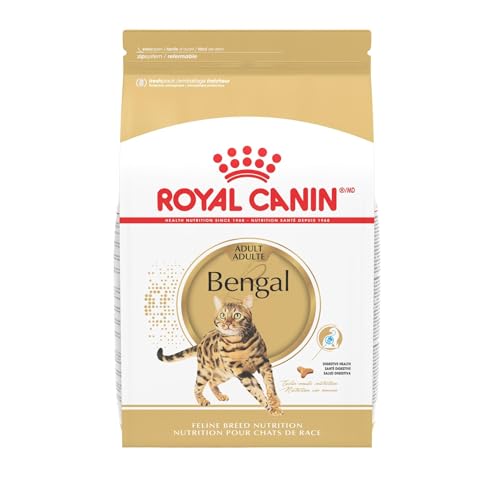
1. Royal Canin Bengal Adult Dry Cat Food
What We Like
- Formulated for adult Bengals
- Coat and muscle-support positioning
- Digestible protein ingredients
- Prebiotics listed in formula
What We Don’t Like
- Dry-only format
- Breed-specific marketing is not a necessity
Royal Canin Bengal Adult is the most explicitly breed-targeted food in this roundup. The product listing says it is formulated for purebred Bengals aged one year and older, with attention to protein, coat condition, and digestive support. Those features make its positioning relevant to an owner who prefers food packaged specifically for a Bengal. Yet a healthy Bengal does not automatically require a breed-branded formula. What matters first is the food’s nutritional adequacy for the cat’s life stage, individual health, and ability to maintain a healthy body condition.
The kibble format can fit homes that use measured portions or puzzle feeders, especially when a busy cat benefits from mealtime enrichment. Its listing describes highly digestible proteins and prebiotics; these are formulation characteristics, not guarantees that a particular cat will never have digestive upset. Compare the current package’s calorie density and feeding chart against your Bengal’s body weight and activity level. Active behavior does not mean unlimited calories. Include treats in the daily calculation, and provide water at multiple convenient places.
This food is less attractive if your cat prefers pâté, needs a veterinarian-prescribed diet, or benefits from more moisture in the meal. If you choose dry food, a clean water supply and attention to total hydration remain important. Review the exact nutritional-adequacy statement rather than inferring suitability from the word Bengal on the label. Transition gradually and monitor stool, appetite, weight, and coat over several weeks. A veterinarian can guide adjustments when your cat is underweight, overweight, recovering from illness, or showing persistent digestive signs.
My Recommendation
For an adult Bengal owner wanting a breed-specific dry formula, this is the most direct match. I would not treat the breed label as proof it outperforms every complete adult cat food. Compare calories, price per day, acceptance, and your veterinarian’s guidance, particularly if a moisture-rich diet is preferred.
2. Purina ONE Plus High Protein Salmon & Ocean Whitefish

What We Like
- Salmon is first listed ingredient
- Ocean whitefish recipe
- Manufacturer lists 38% protein
- Omega-6 fatty acids for coat care
What We Don’t Like
- Fish recipe may not fit an elimination diet
- Dry feeding needs water planning
Purina ONE Plus High Protein Salmon and Ocean Whitefish offers a fish-forward dry option for adult cats, rather than a food marketed to one breed. The verified listing names salmon first and describes a 38 percent protein formulation. That may attract Bengal owners comparing animal-protein sources, but the printed protein percentage should not become the sole buying criterion. Cats also need adequate calories, essential amino acids, minerals, vitamins, and proper life-stage nutrition. Look for the manufacturer’s nutritional-adequacy statement on the actual bag before deciding.
A practical benefit is the small 3.5-pound package in the verified listing. It gives households a manageable way to introduce a different flavor without committing to an enormous bag. This is particularly useful for cats that have established texture preferences or are sensitive to sudden menu changes. Fish flavor can be appealing, but individual acceptance is unpredictable. Keep the food in its original bag or store the bag in a sealed container, and measure portions rather than filling the bowl without considering the cat’s daily needs.
The chief tradeoff is that a fish-based kibble may not work for a cat following a restricted or veterinarian-directed protein trial. It also supplies less moisture than canned food, making water availability and overall hydration part of the feeding decision. Do not assume omega-6 ingredients automatically solve itching or coat problems. Persistent skin changes warrant a veterinary assessment. Choose this food for its verified protein-source profile and ordinary adult feeding purpose, not because a Bengal requires fish or because a headline protein number guarantees better health.
My Recommendation
This is a practical salmon-led dry option for an adult Bengal that tolerates fish and does well with kibble. The smaller bag can reduce waste during a gradual transition. I would prefer a veterinarian-guided alternative for food allergies, chronic digestive symptoms, or a therapeutic diet.
3. Instinct Ultimate Protein Cage-Free Chicken Dry Food

What We Like
- Chicken-first dry food
- Freeze-dried pieces add texture variety
- Probiotics listed in formula
- No wheat, corn or soy listed
What We Don’t Like
- Texture mix may not suit every cat
- Freeze-dried inclusions need careful handling
Instinct Ultimate Protein Chicken is a dry cat food with a distinctive texture approach. The listing describes chicken as the first ingredient and freeze-dried pieces mixed with kibble, alongside probiotics and omega fatty acids. The company’s protein-source claim should not be confused with an overall crude-protein percentage: the listing refers to protein coming from chicken, not a food that is 95 percent protein by weight. For a Bengal household, the meaningful comparison is whether the complete formula fits the cat’s life stage and feeding preferences.
The mixture of crunchy pieces and freeze-dried inclusions can make meals more varied than a uniform kibble. Some cats enjoy that contrast, while others pick out favored pieces or reject a changed texture. If your Bengal eats too quickly, measured meals in an appropriate puzzle feeder may slow access and add enrichment. Start with a gradual transition and observe how much of each meal actually disappears. The four-pound bag is neither a tiny trial pouch nor the largest bulk option, giving some flexibility for household storage.
There are also practical cautions. Freeze-dried and dry foods should be handled and stored according to current package instructions; never assume a raw-associated marketing phrase makes a product safer or more nutritious. Talk to your veterinarian if anyone in the household is medically vulnerable or if your cat has a compromised immune system. Grain-free labeling is not, by itself, a health advantage. Compare calcium, calories, nutritional adequacy, and feeding directions as appropriate, and do not use marketing terms to replace individualized dietary judgment.
My Recommendation
Consider this for an adult Bengal that already tolerates chicken and enjoys crunchy food with varied pieces. Its primary difference is texture, not an independently proven breed benefit. I would choose a simpler, uniformly textured diet for a cat that selectively eats pieces or needs closer food-intake monitoring.
4. CRAVE Grain-Free High Protein Chicken Dry Cat Food

What We Like
- Chicken listed first
- Adult-specific dry formula
- Listing states 40% protein
- Large 10-pound bag option
What We Don’t Like
- Large bag may lose freshness slowly
- Grain-free is not automatically beneficial
CRAVE Chicken Dry Cat Food is another adult formula that emphasizes animal protein, with chicken listed first and 40 percent protein stated in the verified product information. For an active Bengal, those details can help narrow a comparison between dry diets. They do not mean that every cat needs the highest number on the front of a bag, or that a grain-free ingredient list is nutritionally superior. A complete and balanced diet for adult maintenance should be the starting point, followed by calorie intake and real-world body condition.
The 10-pound bag creates a different purchasing decision from a small trial package. It may work for a household with several cats eating the same suitable food, but it is less convenient if only one cat eats a modest daily amount. Storage time, the bag’s best-by date, and protection from humidity deserve attention. Before opening a large package, check that the cat has already tolerated the formulation in an appropriate trial size if available. A strong appetite during the first meal does not establish long-term suitability.
CRAVE’s grain-free identity is a preference or ingredient constraint, not a necessary rule for healthy Bengals. Grains are not inherently harmful to cats when used appropriately in balanced diets, and removing them does not prove an allergy has been addressed. If your Bengal is itchy, vomiting, or losing weight, a veterinarian can evaluate whether an elimination diet or other testing is indicated. This is best assessed as a conventional adult dry food with a particular chicken-based formulation and bulk format, not as a specialized medical diet.
My Recommendation
This is an option for an adult Bengal that tolerates chicken and eats a consistent dry ration, especially in a suitable multi-cat home. The large bag is a tradeoff when freshness or uncertain acceptance matters. I would not select it solely because it is grain-free or advertises a high protein percentage.
5. Tiki Cat Born Carnivore Chicken, Herring & Salmon

What We Like
- Chicken first ingredient in listing
- Herring and salmon in recipe
- Baked dry kibble presentation
- Adult-cat feeding focus
What We Don’t Like
- Multiple proteins complicate allergy trials
- Dry formula cannot supply canned-food moisture
Tiki Cat Born Carnivore Chicken, Herring and Salmon blends poultry and fish ingredients in an adult dry food. The manufacturer describes baked kibble and a chicken-first ingredient list, with herring and salmon also named in the verified listing. For Bengal owners, this offers a different protein mix from single-flavor chicken or salmon bags. It is still important to examine the nutritional-adequacy statement and calorie density rather than assuming a carnivore-themed name proves superior nutrition. An adult cat with no medical restrictions may do well on many balanced formulas.
The smaller 2.8-pound bag can be appealing for a single-cat home, especially if you are comparing flavor acceptance or planning to alternate suitable foods over time. Baking is a processing method, not a guarantee of higher nutrient retention or better digestion for every pet. If your Bengal is highly food-motivated, a puzzle feeder can help convert some kibble into an activity rather than a rushed meal. Measure the portion and remember that dry food can concentrate calories into a relatively small volume.
A mixture of chicken, herring, and salmon can be inconvenient when a veterinarian needs to isolate a suspected food trigger. An owner should not mistake a multi-protein recipe for a formal hypoallergenic or limited-ingredient diet. The manufacturer also promotes plant ingredients and oils, but no one addition can substitute for overall nutritional balance. Keep clean water accessible and consider a wet-food component when appropriate. Watch the cat’s weight and stool during transitions, and contact a veterinarian for repeated vomiting, reduced appetite, or unexpected weight change.
My Recommendation
I would consider this for an adult Bengal whose diet can include both poultry and fish and whose owner wants a smaller dry-food package. The blend is less suitable during a strict food-sensitivity investigation. Favor observed body condition and ingredient tolerance over the product’s carnivore branding.
6. Blue Buffalo Wilderness Chicken, Salmon & Duck Pâté

What We Like
- Chicken, salmon and duck varieties
- Moist pâté meal format
- Complete adult food positioning
- Pre-portioned 3-ounce cans
What We Don’t Like
- Three proteins complicate food trials
- Opened cans require refrigeration
Blue Buffalo Wilderness Chicken, Salmon and Duck Variety Pack brings a wet-food option into a Bengal feeding conversation often dominated by kibble. The verified listing describes twelve 3-ounce cans divided among chicken, salmon, and duck pâté recipes. Its adult nutritional positioning and moisture-rich format make it relevant for owners who want a complete meal rather than a supplementary topper. Moist food can contribute water to the diet, although every cat should still have fresh drinking water available. The ingredients do not become Bengal-specific merely because the breed is active.
A variety pack can help an owner discover whether an adult cat accepts different protein flavors, but a cat may like one recipe and refuse another. That makes a mixed pack potentially more economical for a flexible eater than for a cat that reliably eats only chicken. Track the calories in each recipe and avoid mixing wet food and kibble without accounting for both portions. Feed from a clean dish and refrigerate unused food according to the manufacturer’s instructions. Discard leftovers that have been standing too long.
The major limitation is complexity if the cat has suspected food allergies or needs a restricted diet. Three distinct animal proteins are not useful for a carefully controlled veterinary elimination trial. Grain-free wording also should not substitute for checking adult nutritional adequacy. If a Bengal has urinary issues, consult a veterinarian about the whole dietary plan rather than relying on moisture content alone as treatment. This pack may add welcome variety, but safe transitions, appropriate daily calories, and consistent appetite monitoring are more important than exciting flavor names.
My Recommendation
This is a strong option for a healthy adult Bengal that enjoys wet pâté and can tolerate several protein sources. It offers meal moisture and flavor choice, not a breed-specific health claim. For a cat with food reactions or urinary disease, consult a veterinarian before using a mixed variety pack.
7. Wellness Complete Health Chicken Entrée Pâté

What We Like
- Adult chicken pâté recipe
- Moist food format
- Complete balanced positioning
- Three-ounce can portion size
What We Don’t Like
- Only one flavor in this package
- Open-can storage is important
Wellness Complete Health Chicken Entrée Pâté is a more focused canned-food choice than a multi-protein variety pack. The verified product listing describes a smooth chicken pâté formulated as complete and balanced nutrition for adult cats. That makes it relevant to a healthy adult Bengal without relying on unsupported claims that the breed requires an exotic raw diet. The smaller 3-ounce cans can be convenient for controlled meals, although the number needed each day depends on the manufacturer’s calorie information, the cat’s weight, and any other foods.
Moisture is an immediate practical difference between this and a dry-food pick. Many cats obtain a portion of their water intake from wet meals, which can help an owner planning daily hydration. The texture is smooth rather than chunky, so acceptance depends partly on your cat’s established preferences. Introduce it gradually alongside an appropriate existing diet and watch food intake carefully. Some cats eat eagerly at first but lose interest as the novelty fades. A clean feeding area and prompt refrigeration of unused food help maintain a sensible routine.
Although the marketing mentions grain-free ingredients, that label should not be treated as an automatic benefit for Bengals. The total recipe and its nutrient adequacy matter more than the exclusion of common ingredients without a medical reason. Chicken may also be unsuitable for a cat undergoing a veterinarian-directed elimination diet. Check the specific life-stage statement and calorie content on current cans, and seek advice for kittens, pregnant cats, or cats with diagnosed disease. This is primarily an uncomplicated adult wet-food comparison option.
My Recommendation
I would shortlist this for a healthy adult Bengal that prefers smooth chicken pâté and whose owner wants a simple wet-food routine. Its single-flavor packaging is easier to plan than a variety pack, but food sensitivity and calorie needs remain individual. Confirm life-stage suitability and daily servings on the label.
How to Choose the Best Cat Food for Bengals
Use the nutritional-adequacy statement first
The most useful label detail is whether a food is complete and balanced for the life stage you are feeding. An adult Bengal does not need kitten food simply because it is athletic, and a growing kitten needs nutrition specifically suited to growth. Check feeding directions, calories, and the manufacturer’s quality information as well as the ingredient list. Protein is essential for cats, but the highest advertised percentage is not an automatic measure of better nutrition. Taurine and adequate overall nutrient balance matter too. If you need to compare labels systematically, follow our practical cat food label guide. Consult your veterinarian before feeding an unbalanced homemade or raw diet.
Compare wet food and kibble without assumptions
Dry food is convenient for measured portions and puzzle feeders, but it contains less moisture than canned food. Wet food can contribute useful water and may better suit certain feeding preferences. Neither format is universally right for every Bengal. A mixed plan can work when both foods are suitable and their calories are counted together. If your Bengal mainly eats dry food, refresh drinking water regularly and make it easy to access. Cats that like moving water may engage more with an appropriate ceramic cat water fountain. Treat diagnosed urinary conditions as a reason for veterinary guidance, not a reason to improvise a therapeutic diet from ordinary products.
Match portions and ingredients to your individual cat
Bengals are often active, yet weight and energy needs vary substantially. Begin with package guidance, then monitor body condition rather than assuming activity grants unlimited food. Keep treats modest, and weigh portions if it helps maintain consistency. Ingredients can matter for a cat with food allergies, but grain-free and breed-specific claims do not establish a medical advantage. If a veterinarian suspects a food allergy, follow a controlled trial rather than rotating several proteins randomly. A cat that repeatedly vomits or refuses food needs assessment; our separate sensitive-stomach dry cat food guide is background reading, not a substitute for a diagnosis. Maintain clean feeding equipment, wash bowls regularly, and store food as directed.
Frequently Asked Questions
Do Bengal cats need special breed-specific food?
Not necessarily. A suitable complete and balanced diet for the cat’s age and health is more important than breed branding.
Is wet food better for Bengal cats than dry food?
Wet food adds dietary moisture, while dry food can be convenient. The best format depends on the cat’s preferences, health needs, and total daily calories.
Should a Bengal eat grain-free cat food?
Grain-free food is not automatically healthier. Choose based on nutritional adequacy and an individual need rather than marketing language.
Can I feed Bengal kittens these adult foods?
Only use a product if its current nutritional-adequacy statement includes growth or the kitten’s appropriate life stage. Otherwise choose kitten food.
How do I change my Bengal’s diet safely?
Introduce a new food gradually while monitoring intake, stool, and appetite. Seek veterinary advice if your cat stops eating or develops persistent symptoms.
Final Verdict
Royal Canin Bengal Adult is the most directly breed-labeled kibble here, but its label alone does not make it universally best. For fish-based dry food, consider Purina ONE Plus High Protein Salmon and Ocean Whitefish. For wet meals, Wellness Chicken Pâté is a straightforward single-flavor comparison, while Blue Buffalo Wilderness offers variety. The best cat food for Bengals is a complete diet that meets a specific cat’s life stage, preferences, health needs, and calorie requirements. Refer again to our cat food label checklist before deciding.
Affiliate disclosure: As an Amazon Associate, PetAdvisorPro earns from qualifying purchases. When you purchase through eligible Amazon links in this article, we may earn a commission at no additional cost to you. Recommendations reflect available product information and editorial comparison; we do not claim firsthand testing, individualized veterinary endorsement, or guaranteed health outcomes.