
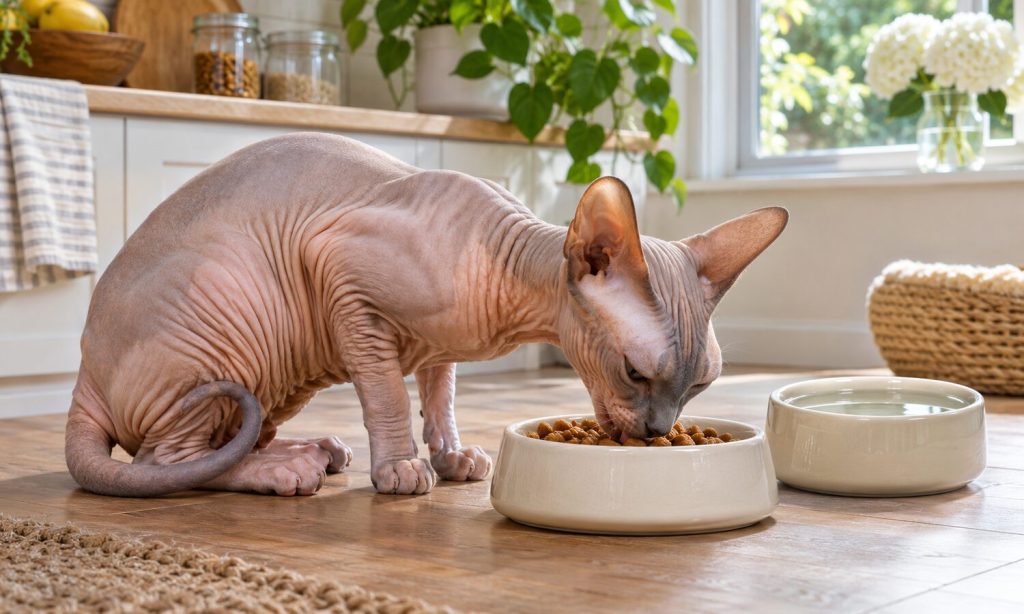
How to choose the right cat food for Sphynx cats begins with the same fundamentals that protect any feline: complete and balanced nutrition, the correct life stage, and a feeding amount that maintains a healthy body condition. Hairlessness makes the breed distinctive, but it does not create a universal requirement for one unusual ingredient or a particular food format. Your cat’s age, appetite, weight, health, and tolerance matter more than marketing aimed at a breed.
Some Sphynx cats are lively, food-motivated companions; others are calmer or have medical needs. Their skin can also make owners especially alert to visible changes. This guide explains how to read the nutritional adequacy statement, assess calorie needs, compare wet and dry formats, transition gradually, and recognize when a veterinarian should guide diet decisions. The goal is an everyday feeding plan that fits the individual cat without claims of a miracle ‘skin diet.’
Start With Complete and Balanced Nutrition
Read the nutritional adequacy statement on the package before looking at fashionable ingredients. In the United States, statements referencing AAFCO nutrient profiles or feeding trials help identify whether a diet is intended to be complete and balanced for a stated life stage. Kittens require growth-appropriate nutrition. Adult maintenance formulas target mature cats. A cat that is pregnant, nursing, or managing illness may need a different approach.
Cats are obligate carnivores, meaning they require nutrients normally found in animal tissues. That does not mean the ingredient list alone can establish nutritional quality. Assess the entire diet and the manufacturer’s nutritional expertise. If your cat eats a complete diet and has no medically diagnosed deficiency, adding vitamins without advice can upset the nutrient balance. This is the foundation of how to choose the right cat food for Sphynx cats.
Compare the Nutritional Statement, Not the Front Label
A prominent label can emphasize a single meat, a fashionable term, or the absence of an ingredient. None of those claims confirms that the final food suits your cat’s life stage. Check the adequacy statement, feeding directions, calorie content, and contact information for the manufacturer. The World Small Animal Veterinary Association encourages questions about formulation expertise, quality control, and research. These questions matter more than the most dramatic phrase on a bag.
Estimate Energy Needs From Body Condition
A Sphynx may feel warmer to the touch because there is little fur between skin and your hand, but this alone does not establish how much energy that individual cat needs. Calorie requirements depend on body size, age, activity, neuter status, environment, and health. Start with the food’s feeding directions, then use measured portions and regular body-condition checks to refine the amount with your veterinarian.
A healthy waist and appropriate palpable ribs are better guides than an empty bowl or frequent begging. Weigh your cat consistently and track trends. Unplanned weight loss, rapid gain, or excessive hunger warrants medical assessment. How to choose the right cat food for Sphynx cats includes reviewing portion size over time, because the same recipe can lead to very different results in two households.
Avoid Guessing From Breed Averages
Breed-wide calorie formulas can hide individual differences. A playful young cat may use more energy than an older indoor cat. Illness can alter appetite or absorption. If precise calorie targets are needed, ask your veterinarian for a plan based on the cat’s current weight, ideal weight, and body condition. When adjusting servings, make small measured changes and reassess rather than alternating between overfeeding and restrictive diets.
Wet Food, Dry Food, and Mixed Feeding
Both canned and dry foods can meet nutritional needs when complete and balanced. Wet food contains more water and may help some cats increase total moisture intake. Dry food offers convenient portions and can be stored differently. Neither format is automatically superior for every Sphynx. Consider the cat’s preferences, dental health, hydration, feeding schedule, and any specific veterinary recommendations.
If you offer both formats, count calories from both to avoid accidental overfeeding. Keep fresh water accessible regardless of the menu. Do not assume dry kibble alone cleans teeth sufficiently or that wet food treats a medical condition. Learning how to choose the right cat food for Sphynx cats means weighing real nutrition and practical feeding needs, not treating texture as a substitute for evidence.
Monitor Water Intake and the Litter Box
Healthy hydration is important for all cats. Watch for changes in drinking, urination, appetite, or litter-box behavior. Straining, vocalizing while trying to urinate, or producing little urine needs urgent veterinary attention. Diet changes should not delay medical assessment. A veterinarian may recommend a particular moisture strategy or therapeutic food when a diagnosed condition requires it.
Skin Health Is Not a Reason to Guess at Supplements
Sphynx cats have exposed skin that needs careful observation and appropriate grooming. Redness, greasy buildup, itching, scabs, or recurrent irritation should prompt veterinary advice. A nutritionally complete diet helps support normal skin, but visible symptoms are not proof of a dietary deficiency. Parasites, infections, allergies, and other conditions may require examination and targeted care.
Do not add oils, vitamin powders, or unusual ingredients simply because a label promises a shinier coat. A hairless cat does not need hair-growth products. Cornell University’s feline health information notes that skin disease is often unrelated to food when a complete diet is being eaten. How to choose the right cat food for Sphynx cats is therefore a nutrition decision first and a medical decision when symptoms justify it.
When a Special Diet Is Appropriate
A veterinarian may recommend a diet trial for suspected adverse food reactions or a therapeutic formula for another diagnosed illness. Such plans require a defined purpose and careful follow-through. Randomly switching protein sources every few days can obscure results. Keep a record of food, treats, skin symptoms, stool quality, and treatment changes. Do not remove major nutrients from a cat’s diet without a professionally developed replacement.
How to Transition to a New Diet
Abrupt food changes can upset digestion in some cats. When a veterinarian has not prescribed an immediate switch, introduce new food gradually by mixing small amounts with the familiar food and increasing the share over several days. Slow the pace if stool softens or appetite drops, and contact your veterinarian for persistent problems. For cats with a prescribed diet, follow the medical team’s specific instructions. Senior-cat caregivers may also find our guide on gradually transitioning older cats to new food helpful.
Measure the portions and watch what your cat actually eats. Some Sphynx cats are eager at mealtimes; others need extra patience with unfamiliar textures. How to choose the right cat food for Sphynx cats is only half the process. The transition should be calm, with no punishment or forced feeding. Prolonged refusal to eat is unsafe for cats and needs prompt veterinary guidance.
Keep a Simple Feeding Log
Record the food name, amount, feeding times, weight, stool changes, and any skin concerns. Include treats in the daily intake. A brief log helps reveal whether the problem is portion size, a sudden diet transition, or something unrelated to food. Avoid treating one day’s appetite as a definitive verdict. Repeated patterns matter more than a single fussy meal.
Red Flags and Common Feeding Mistakes
Avoid recipes promoted as universally ideal for every Sphynx. Be wary of unsupported claims that a food will cure skin disease or prevent specific conditions. Unbalanced homemade meals and extreme ingredient restrictions can create deficiencies. Raw animal products also carry risks of contamination for cats and their household. Ask a veterinary nutrition professional before attempting a homemade formula, especially for kittens.
Common everyday mistakes include estimating portions by eye, ignoring calorie density, changing several foods at once, and leaving wet food unrefrigerated. An expensive package is not a quality guarantee. How to choose the right cat food for Sphynx cats should result in a repeatable plan that supports healthy weight, normal digestion, and your cat’s actual medical needs.
Questions to Ask Your Veterinarian
Ask whether your cat’s body condition is appropriate and whether the chosen diet matches their life stage. Discuss unusual hunger, persistent vomiting, diarrhea, skin inflammation, or difficulty maintaining weight. A nutrition consultation can be useful when chronic disease or food reactions complicate feeding. The veterinarian can distinguish a dietary problem from a condition that needs diagnosis.
Frequently Asked Questions
Sphynx owners often hear strongly worded feeding advice. These answers separate practical nutrition questions from claims that are not supported for every individual cat. They are starting points for discussion, not substitutes for an examination.
The correct choice may change with age, weight, reproductive status, and disease. Reassess the plan whenever your cat’s health or activity changes significantly. Consistency helps you see whether a feeding change truly made a difference.
Do all Sphynx cats need extra calories?
No universal calorie increase suits every Sphynx. Energy needs vary by individual. Monitor weight and body condition, then adjust measured servings with veterinary guidance.
Is wet food better than kibble for a Sphynx?
Either can be nutritionally complete. Wet food provides more moisture, while dry food is convenient. A vet can help choose the format for health conditions and household routines.
Will a special food prevent oily skin?
Not reliably. Skin oil and irritation have several causes. A balanced diet supports health, but ongoing skin problems should be evaluated rather than treated with unverified food claims.
Should I add supplements to improve skin?
Not without a reason. A complete and balanced diet already supplies essential nutrients. Excess supplementation may be harmful; discuss any suspected deficiency with your veterinarian.
How fast should I change foods?
For a routine switch, transition gradually over several days or longer if needed. Follow a veterinarian’s different directions when a medical condition requires a specific diet.
Final Words
How to choose the right cat food for Sphynx cats is not about finding a label that mentions hairlessness. Check nutritional adequacy, life stage, calories, feeding tolerance, and the cat’s weight trend. Make sure food is stored and served safely, and keep fresh water available. Avoid exaggerated skin claims and unnecessary supplements.
The best feeding plan is the one that meets your individual cat’s needs and remains easy to monitor. If you cannot find a suitable published guide on cat food for Sphynx, rely on the package’s adequacy statement and a veterinarian’s advice instead of an unsupported product promise. Revisit the plan as your cat grows, ages, or develops new health needs.









