
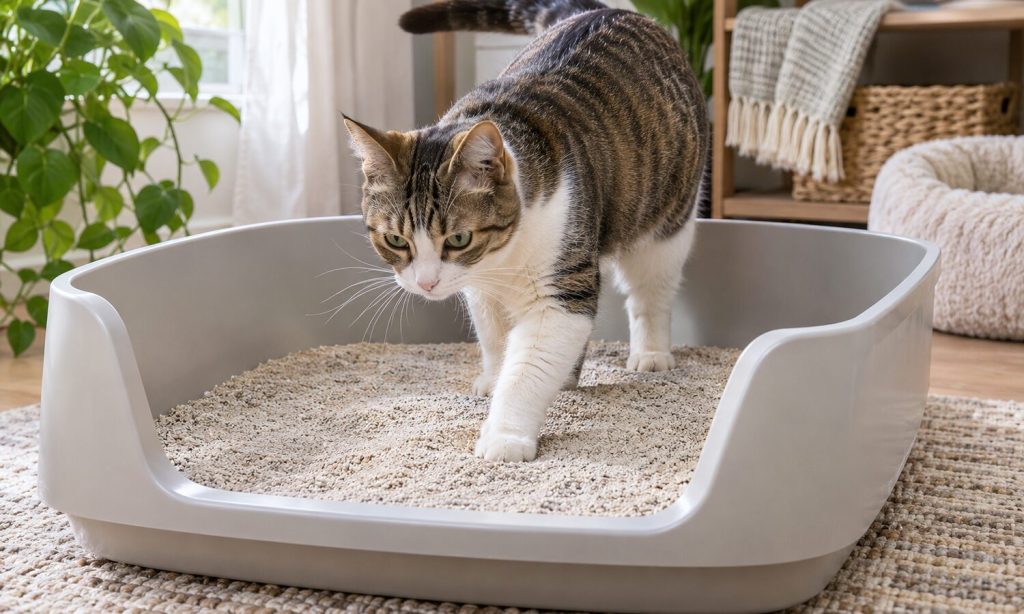
What to look for in a cat litter for declawed cats is primarily about comfort, easy access, and preventing pain-related litter-box avoidance. Declawing removes the last bone of a cat’s toe, and some cats experience lingering discomfort or changes in movement. A litter texture that feels rough under sensitive paws may lead a cat to hesitate before entering the box. The safest approach is to prioritize the individual cat’s response rather than a bold claim on a bag.
A previously declawed cat needs patient care, not another surgery or punishment for accidents. Our overview of cat litter for declawed cats discusses general substrate considerations. This guide explains soft textures, dust, box size, low entries, safe transitions, cleaning, and warning signs that require a veterinarian. For a cat recovering from recent surgery, follow the surgeon’s specific postoperative litter instructions rather than general advice.
Prioritize Soft, Comfortable Texture
A fine, soft surface may be easier for a cat with tender paws to stand on and dig in. Hard, sharp, or unusually coarse granules can be uncomfortable for some cats. However, there is no single material guaranteed to suit every declawed cat. Watch how your cat enters the box, shifts weight, digs, and exits. Comfortable, voluntary use is the most meaningful sign of acceptance.
What to look for in a cat litter for declawed cats includes the way the material behaves after it becomes wet. A clump that sticks to sore paws or a rough material that shifts unpredictably may be difficult to tolerate. On the other hand, some cats strongly prefer the familiar substrate they have always used. Keep the cat’s history and current paw comfort at the center of the decision.
Postoperative Care Is Different
A cat healing from a recent surgery may need a specific nonadhering or paper-based substrate for a limited period, as directed by the operating veterinarian. Do not assume advice for an older, healed cat applies to a fresh incision. Pain control, wound monitoring, and activity restrictions take priority. Contact the surgical team about bleeding, swelling, discharge, reluctance to bear weight, or refusal to use the box.
Choose Low Dust and Minimal Fragrance
Litter dust can be unpleasant for cats and people, especially during pouring and scooping. A claim of being ‘dust free’ does not eliminate the need to watch the cat’s response. A low-dust material may reduce airborne particles in a small room, while calm pouring and ventilation can further help. Do not sacrifice a comfortable paw texture solely to pursue a numerical dust claim.
Strong fragrance may also cause litter avoidance. Many cats prefer unscented, fine-textured litter, though preferences vary. What to look for in a cat litter for declawed cats is a predictable, clean surface rather than heavy perfume. A box should be kept fresh through scooping and washing. Odor masking cannot solve pain, mobility limitations, or fear of another cat.
Observe Without Forcing Use
If a cat stands outside the tray, stretches awkwardly to eliminate, or leaves quickly without digging, the substrate or box setup may be uncomfortable. These signs are not proof that the litter alone is responsible. Arthritis, chronic pain, urinary illness, or stress could also play a role. Seek veterinary assessment for persistent or sudden changes.
Make the Litter Box Easy to Enter and Exit
A low-entry box can reduce the need to step over a high wall. A spacious open tray lets a cat turn comfortably without squeezing into a covered entrance. Good placement also matters. Keep the box on an accessible floor, away from noisy equipment and places where another pet might block the exit. Slip-resistant footing around the tray can help cats with mobility difficulty.
What to look for in a cat litter for declawed cats is only part of the problem if reaching the tray hurts. Older cats may need a box near their resting area, with no staircase between them and the toilet. In multi-cat homes, provide separate choices so a confident cat cannot monopolize access. Our guide to litter-box avoidance in multi-cat homes expands on access and inter-cat tension.
Size Matters More Than a Decorative Cover
Choose enough floor space for the cat to turn, squat, and dig. If an enclosed box traps odors or makes the cat feel cornered, try a more open setup. A practical low-entry tray that stays easy to clean is better than a stylish box the cat avoids. When a cat is recovering or has mobility problems, small differences in the rim height can matter.
Change the Litter Gradually and Watch Behavior
When a healed cat already uses a litter successfully, do not replace it abruptly without a reason. Offer another clean box with the alternative material nearby but separated enough for an independent choice. Observe which one is used, whether digging looks comfortable, and whether accidents increase. A slow trial makes it easier to understand preferences without forcing an uncomfortable transition.
What to look for in a cat litter for declawed cats includes consistency. Sudden changes to litter, box type, location, and scooping routine can combine to cause avoidance. Keep as many variables stable as possible. If one litter is rejected, return access to a familiar option while considering a veterinary examination for possible pain. Never punish the cat for choosing another surface.
Keep a Simple Observation Record
For a week or two, note which box is used, stool and urine patterns, willingness to dig, and any signs of limping or paw licking. A short record can help the veterinarian distinguish a sudden change from a long-standing preference. Avoid interpreting a single unusual visit as a definitive diagnosis. Trends and accompanying symptoms are more informative.
Keep Waste Removal Gentle and Consistent
Scoop clumps and feces daily or more often when needed. Replace the substrate and wash the tray at appropriate intervals, then rinse and dry it before refilling. Avoid harsh fragrance and residues. A clean surface helps reduce odor and may encourage a reluctant cat to use the box. However, overzealous scrubbing with strong chemicals can make the area less inviting.
What to look for in a cat litter for declawed cats includes manageable daily cleaning. A material that breaks into damp crumbs may be frustrating for a cat who dislikes sticky paws. Use a scoop that removes waste without stirring unnecessary dust. Keep the litter depth consistent once a comfortable amount is established. Wash hands after cleaning and store litter securely.
Handle Accidents With Care
Clean soiled floors thoroughly, but never scold, chase, or force the cat back into the tray. Painful associations can deepen avoidance. If urine or stool appears outside the box, consider whether the cat had difficulty entering, disliked the substrate, or was blocked by another pet. Seek a veterinary diagnosis before assuming the behavior is deliberate.
Know When a Litter Change Is Not Enough
A previously declawed cat may experience chronic pain or changes in gait. Reluctance to jump, paw sensitivity, excessive grooming, hiding, or aggression can be signs that something is wrong. A veterinarian can assess the paws and joints, check for other causes, and recommend suitable treatment or environmental adjustments. Litter choice is supportive care, not a substitute for medical assessment.
Straining to urinate, frequent attempts with little urine, blood in urine, or obvious distress requires prompt veterinary attention. Inability to pass urine is an emergency. What to look for in a cat litter for declawed cats should never distract from these warning signs. Better comfort may help a cat use the tray, but it cannot treat urinary obstruction or infection.
Support Normal Cat Behavior
Declawing should not be treated as a routine solution to furniture scratching. Cats need appropriate surfaces, enrichment, rest, and humane handling. If you are choosing care for a cat whose claws are intact, discuss scratching alternatives rather than considering declawing. For cats already declawed, focus on comfort and quality of life.
Frequently Asked Questions
Cats with a history of declawing have varied needs. These answers explain common selection questions without assuming every cat has the same level of discomfort.
If your cat has current surgical wounds, ask the veterinarian about the permitted litter. General guidance for healed cats may not be appropriate during immediate recovery.
Is soft litter always required for a declawed cat?
Soft texture can improve comfort, but preferences vary. Consider the cat’s response and any veterinary advice. A previously tolerated litter may remain suitable for some cats.
Can a declawed cat use clumping litter?
A healed cat may tolerate clumping litter, but a recently operated cat may have different instructions. Follow the surgeon’s guidance and watch for sticking or discomfort.
Should the box have low sides?
A low entry often helps cats with sore paws or reduced mobility. Provide enough interior room for easy turning and digging.
What if my cat suddenly avoids the litter box?
Arrange a veterinary assessment. Pain, urinary illness, stress, and box setup can all contribute. Do not punish accidents or assume the cat is being stubborn.
Does scented litter remove the need for scooping?
No. Strong scent may discourage use. Daily waste removal and clean trays remain important for both odor control and feline comfort.
Final Words
What to look for in a cat litter for declawed cats is comfort first: a soft, tolerated surface, manageable dust, minimal fragrance, and a low-entry, accessible tray. Introduce changes gradually and pay attention to paw posture, digging, and willingness to use the box. Keep cleaning consistent and avoid punishment.
A supportive environment and veterinary care matter more than any single bag of cat litter for declawed cats. Our related guide to gentle litter considerations for declawed cats can help frame questions, but pain and sudden elimination changes need clinical attention. Always follow postoperative directions for a recently operated cat.
Reference
Welfare and medical background: Feline Veterinary Medical Association — Declawing Position Statement; and FelineVMA — Chronic Pain Toolkit.
Behavior and litter-box guidance: Cornell Feline Health Center — House Soiling; and ASPCA — Position Statement on Declawing Cats.









