
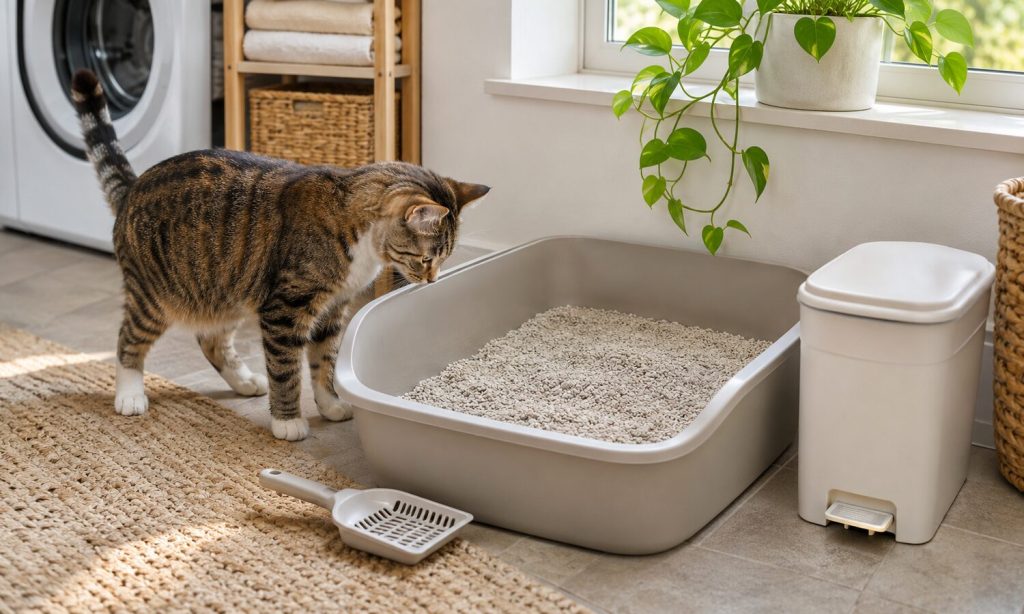
Common mistakes when choosing a cat litter for clumping and odor control often start with shopping for the strongest perfume rather than the litter your cat will actually use. Good clumping helps remove urine promptly, while odor control also depends on scooping, ventilation, and box placement. Cats may avoid a tray if the texture hurts their paws or the fragrance overwhelms them. The best fit balances comfortable digging with manageable cleaning.
Most cats prefer a fine-textured, unscented substrate, according to feline behavior guidance, but individuals differ. The right choice also depends on age, dust sensitivity, box design, and how many cats share the home. Our guide to odor-control litter in multi-cat homes gives related context. Here, we’ll cover the selection mistakes that cause tracking, poor clumps, persistent odor, and avoidable litter-box problems without recommending commercial products.
Mistake One: Treating Fragrance as Odor Control
A scented litter can make the room smell pleasant to a person while being uncomfortable for a cat. Strong perfume may mask poor cleaning rather than remove urine and feces. Cornell’s feline guidance recommends unscented litter and regular removal of clumps and waste. Choosing fragrance by its strength ignores the cat’s much more sensitive nose and the importance of consistent litter-box use.
When evaluating common mistakes when choosing a cat litter for clumping and odor control, ask whether the litter traps waste for easy removal without a heavy artificial scent. A fresh box should smell clean because it is clean. Changing perfumes every week may create an unpredictable surface. FYI, your cat is the actual customer of the litter box; your bathroom air freshener does not get a vote.
What to Do Instead
Begin with a simple, tolerated unscented litter and an appropriate scooping schedule. If a cat has a long history with a familiar substrate, introduce changes gradually. Seek veterinary advice if the cat suddenly avoids the box, especially when elimination is painful or frequent. Do not assume switching fragrance will solve an underlying health or household-stress problem.
Mistake Two: Ignoring Clump Strength and Texture
Some litter forms compact clumps that lift cleanly; other materials crumble and leave damp residue behind. Weak clumps can increase cleaning work and lingering odor. Extremely hard or sticky clumps may attach to the tray or paws. Evaluate how the litter behaves during normal use rather than trusting a claim on a package. Texture matters too, since some cats dislike coarse or sharp-feeling granules.
Common mistakes when choosing a cat litter for clumping and odor control include judging only the bag’s weight or material. An absorbent material can still be poorly tolerated by a particular cat. Use a consistent trial period and observe digging, covering, paw shaking, and any hesitation. If you use an automatic box, check the equipment’s substrate requirements and our guide to litter compatibility with an automatic box.
Clumping Is a Cleaning Aid, Not a Health Guarantee
Even a strong clump does not remove the need to clean the tray or investigate changes in urination. Blood, straining, repeated unproductive trips, and pain require veterinary care. For a young kitten inclined to eat litter, discuss safe litter choices with a veterinarian. The goal is suitable hygiene, not a material that promises to prevent every disease.
Mistake Three: Underestimating Dust and Tracking
Dusty litter can make cleaning unpleasant and may irritate sensitive cats or people. A low-dust claim should be evaluated through normal handling and the cat’s response. Avoid pouring material aggressively into the box and keep ventilation appropriate. Tracking is influenced by granule size, coat length, paw shape, and box exit design, so one litter cannot guarantee a spotless floor.
Another of the common mistakes when choosing a cat litter for clumping and odor control is solving tracking by selecting a texture the cat dislikes. A washable mat, appropriately sized tray, and gentle sweeping may help without sacrificing acceptance. Keep mats flat and easy for older or mobility-impaired cats to step over. Do not place harsh cleaners or strong scents where paws will contact them.
Observe the Cat, Not Just the Floor
A cat that perches on the edge of a tray, shakes its paws repeatedly, or avoids digging may dislike the material. Watch patterns over multiple visits. A small amount of scattered litter may be preferable to a pristine floor and a cat that eliminates elsewhere. Adjust one variable at a time to learn what makes the box more comfortable.
Mistake Four: Forgetting Box Size, Number, and Placement
Odor problems often reflect the litter-box environment rather than the substrate. A tray that is too small or rarely scooped accumulates waste quickly. In multi-cat households, the commonly recommended starting point is one box per cat plus one extra, placed in separate locations. A guarded doorway can prevent a cat from reaching an otherwise perfectly clean box.
Common mistakes when choosing a cat litter for clumping and odor control include spending time comparing materials while ignoring access. Select a spacious box in a calm location, away from food and loud appliances. Keep exits open and cleaning supplies handy. For more detail, see our published guide to clumping litter considerations for multiple cats.
Plan for the Real Household
An older cat may need a lower entrance, while a household with several cats may need more trays. A busy hallway or washer can turn an otherwise good location into a stressful one. Regular scooping supports odor control more reliably than merely adding a thicker layer of litter. Adjust the setup before blaming the substrate for every problem.
Mistake Five: Changing Everything at Once
A sudden switch from a familiar unscented fine litter to a strongly fragranced coarse litter can make a cat hesitant. Changing the box, litter, location, and cleaning routine simultaneously makes it difficult to identify what caused avoidance. Offer a second tray with the new material when practical, while preserving access to the familiar option. Let the cat express preference through voluntary use.
The common mistakes when choosing a cat litter for clumping and odor control are easier to prevent when you keep notes. Record the change date, texture, clumping performance, tracking, and each cat’s acceptance. Avoid treating one accident as proof that the litter failed. If problems persist, consider medical issues, inter-cat tension, and other environmental factors rather than cycling through endless bags.
Never Punish Accidents
Clean soiled areas thoroughly, but do not yell, chase, or force the cat into the tray. Punishment can increase fear and worsen avoidance. For persistent house-soiling, a veterinarian can rule out pain or urinary illness and suggest behavior support. The first priority is always a comfortable, accessible elimination area.
Mistake Six: Assuming ‘Low Maintenance’ Means No Maintenance
Clumping litter allows convenient removal of wet waste, but boxes still need regular scooping and periodic emptying and washing. Add clean litter as needed to maintain a suitable depth. Follow the litter and tray directions for cleaning intervals, and dry equipment completely before refilling. Avoid overwhelming fragrances or cleaners that leave irritating residue behind.
Also consider disposal instructions and local waste rules. Do not flush used cat litter unless a specific product and local plumbing regulations clearly permit it. Store waste in a secure container and wash hands after handling the tray. Common mistakes when choosing a cat litter for clumping and odor control often end after purchase; ongoing maintenance determines how well the system works day after day.
Keep a Realistic Routine
Place a scoop and waste container where a caregiver can use them conveniently, outside a child’s reach. Check each box daily and examine for unexpected changes in waste. If multiple people share the job, agree on a schedule. The easiest litter to maintain is the one the household can keep clean consistently.
Frequently Asked Questions
Choosing clumping litter raises questions about smell, dust, cats’ preferences, and cleaning frequency. These answers focus on habits that make a litter-box system workable.
No single substrate suits every cat. Observe how the individual pet uses the box and seek veterinary care when elimination changes suddenly or appears painful.
Is scented litter better at controlling odor?
Not necessarily. Strong fragrance can mask smells while deterring some cats. Unscented clumping litter, daily scooping, and adequate box numbers are often a more sensible starting point.
Does stronger clumping always mean better litter?
No. Clumps should be removable, but the cat must also tolerate the texture. Assess breakage, residue, dust, and paw comfort together.
Can low-dust litter still track across floors?
Yes. Dust and tracking are different issues. Granule size, coat, paws, and box design all affect tracking. Use gentle floor-cleaning measures without compromising cat comfort.
How many boxes do two cats need?
The usual starting recommendation is three boxes in separate locations. Individual household layout, mobility, and cat relationships may require further adjustment.
What if a cat suddenly stops using the box?
Check access, cleanliness, and recent changes, and contact a veterinarian to rule out illness. Straining or inability to urinate is an urgent concern.
Final Words
Common mistakes when choosing a cat litter for clumping and odor control usually involve overvaluing fragrance, ignoring texture, overlooking box access, or assuming clumps eliminate cleaning. Choose a material your cat accepts, maintain a regular scoop schedule, and adjust one factor at a time. Keep the box easy to reach and free of intimidating interruptions.
The right cat litter for clumping and odor control supports both hygiene and your cat’s comfort. If you have more than one cat, revisit our guide to multi-cat odor-control litter considerations alongside the number and placement of trays. Persistent accidents are a reason to investigate health and environment, not a reason to apply ever-stronger perfume.









