
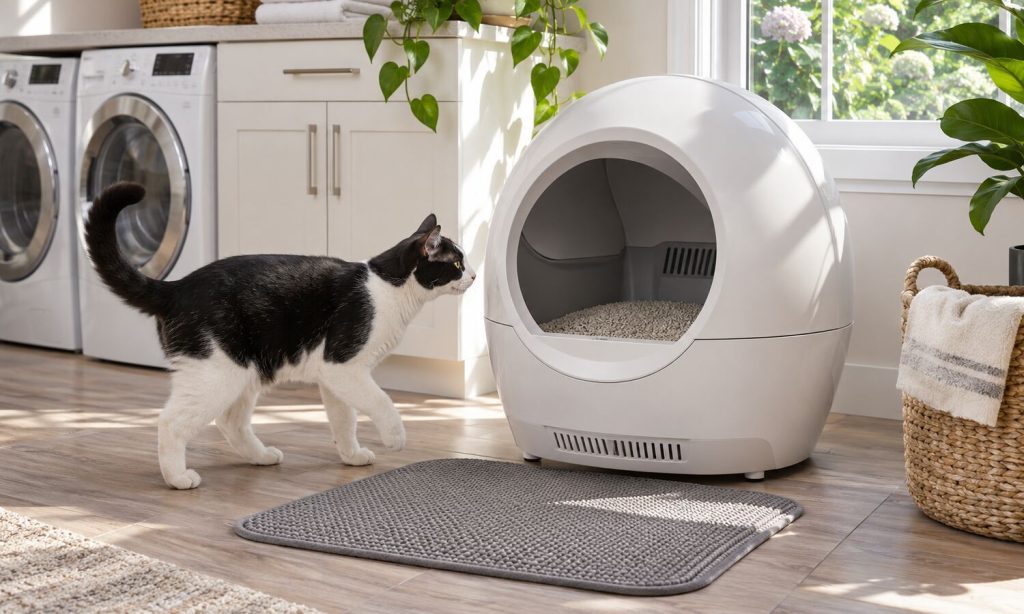
A self-cleaning litter box can remove a chore, but it cannot make unsuitable litter behave well. How to choose the right cat litter for litter robot 4 comes down to compatibility, reliable clumps, sensible granule weight, low dust, and your cat’s willingness to use the box. The goal is a clean, comfortable setup with a smooth cleaning cycle. A litter that works in a traditional tray may not perform the same way in an automatic sifting mechanism.
Start with the machine’s operating instructions, then evaluate how the litter behaves under real conditions. Our cat litter for litter robot 4 article covers category context; this guide explains selection criteria without naming a particular product as the answer. You will learn what to inspect during a trial, how to measure tracking and dust, and when to adjust the setup. Cat comfort always comes first, even when a machine is doing the cleanup.
Check Compatibility Before Filling the Globe
Read the current manufacturer instructions for your exact machine version, including supported litter types and fill-line guidance. Automatic boxes commonly rely on litter forming scoopable masses and passing through a sifting component, but their design limits vary. Do not assume any substance sold as cat litter is compatible. Nonclumping pellets, very large granules, or unusually light materials can behave differently from a standard clumping medium in a rotating mechanism.
Compatibility also involves the amount used. Overfilling may interfere with sorting and create waste, while too little litter may allow urine to reach the base before a proper clump forms. Follow the machine’s indicated level rather than relying on a guessed number of cups. If the device reports an error, inspect the fill amount and litter behavior before treating it as an electronic fault. Unplug or power down before cleaning any part when required by the operating instructions.
Prioritize Firm Clumps That Hold Together
A useful clumping litter binds moisture into masses that remain intact during the normal cleaning cycle. Clumps that crumble can leave soiled particles mixed with the clean bed. Very sticky clumps may cling to surfaces or produce messy residue. Observe several real cycles rather than judging performance by how quickly the litter looks firm in a cup of water. The combination of urine volume, time before a cycle, humidity, and depth all affects results.
If clumps break apart regularly, check whether the timing and litter level match the machine instructions. You may also need a different permitted litter composition. Avoid changing several variables at once; otherwise you cannot tell what improved performance. Keep a record of clump integrity, visible residue, and cleaning effort during the first week. The objective is not the hardest possible clump at any cost, but a dependable one that your cat can dig through comfortably.
Consider Dust, Fragrance, and Paw Comfort
Dust matters for people cleaning the unit and for cats that breathe near the surface while digging. Look for a litter that produces little visible dust during pouring and normal use. Fragrance can mask odor for humans but may be unpleasant to a scent-sensitive cat. A lightly scented or unscented option is often worth evaluating when a cat is reluctant to use the box. Be cautious about heavily perfumed materials or deodorizing additives that the cat might avoid.
Paw feel is just as important. Some cats dislike sharp, coarse, or unfamiliar granules, particularly if they have arthritis or sensitive feet. An automatic machine that cycles perfectly is not successful if your cat begins eliminating elsewhere. Transition gradually, keep a familiar alternative litter box available during adaptation, and watch for hesitation, rapid exits, or accidents. Older cats and cats with urinary problems need thoughtful veterinary and environmental assessment rather than simply another litter type.
Evaluate Tracking, Odor, and Waste
Tracking describes granules carried out on paws or fur. Fine, lightweight litter may spread more easily around the room; coarser material may feel uncomfortable to some cats. The right balance depends on the individual animal and floor layout. Use a safe mat that does not block entry and sweep surrounding areas regularly. The site’s litter box odor-control guide explains why cleaning and ventilation matter alongside litter selection.
Odor control also depends on prompt waste removal, a clean waste drawer, and a properly maintained box. No litter can substitute for hygiene when soiled material remains in the system. Avoid adding unapproved powders, essential oils, or chemicals to compensate for smell. Some scents and additives are unsuitable around cats. If strong odor suddenly increases despite cleaning, consider whether your cat’s urine or stool has changed and consult a veterinarian when health symptoms accompany the change.
Test One Change at a Time
Begin with a small trial of a permitted clumping litter. Note how much the cat uses the box, how clean the globe remains, and whether a typical cycle separates waste properly. Watch for dust clouds while filling, litter clinging to surfaces, and granules collecting outside the entrance. A quick photo of residue after several cycles can make comparison easier, but keep essential observations written down as well.
If changing litter types, mix gradually only when the manufacturer permits that approach and the cat remains willing to use the box. Leave an ordinary backup tray available while the cat adapts. A sudden full switch of both litter and box may make avoidance hard to interpret. See the site’s guide to choosing litter box locations for wider placement factors. In multi-cat homes, enough accessible boxes may matter more than the convenience of a single automated unit.
Maintain the Box and Recognize Health Signals
Maintain the unit according to its manual, including waste removal, surface cleaning, and sensor care. Follow litter-level limits and do not spray liquid into electronic components. Keep cleaning products appropriate for cat-contact surfaces and rinse or dry as directed. The site’s guide to scooping and replacing cat litter offers general litter-hygiene context, though automatic devices have their own maintenance schedules.
Monitor whether each cat uses the box normally. Repeated straining, blood in urine, frequent tiny urinations, vocalizing, or an inability to urinate requires veterinary attention; a blocked cat can face a life-threatening emergency. Do not assume altered box behavior proves litter preference when pain or illness may be involved. FYI, the fanciest automatic box still needs a human to notice when a cat’s bathroom habits change.
Frequently Asked Questions
Choosing litter is an ongoing usability check, not merely a one-time shopping decision. These answers address the most common practical questions.
Always use the current instructions for your specific automatic box. A cat’s comfort and health take priority over the convenience of a cleaning mechanism.
Do all clumping litters work in Litter-Robot 4?
No. Materials differ in weight, particle size, and clump behavior. Check the device’s current compatibility guidance before use.
Is a dust-free claim a guarantee?
No. Observe actual dust during pouring and cleaning, and consider the cat’s respiratory comfort and your own household needs.
Should I switch all the litter at once?
Usually a gradual change is easier for cats, provided the machine’s instructions allow that transition. Keep an alternative box available.
What if waste sticks inside the globe?
Check litter depth, clump quality, timing, and cleaning instructions. Avoid unapproved chemicals or modifications to the machine.
How do I know my cat dislikes the litter?
Watch for hesitation, avoiding the box, paw shaking, accidents, or changed bathroom habits; rule out medical causes promptly.
Final Words
How to choose the right cat litter for litter robot 4 is a matter of balancing machine compatibility with feline comfort. Prioritize reliable clumping, suitable granule behavior, low dust, acceptable texture, and easy maintenance. Test deliberately, keep the box clean, and do not mistake a mechanical issue for your cat’s fault.
Use the Litter-Robot 4 litter guide for additional context and check current machine instructions before any change. The best result is a clean cycle that your cat willingly uses every day. If bathroom habits change suddenly or straining occurs, seek veterinary advice immediately.









