
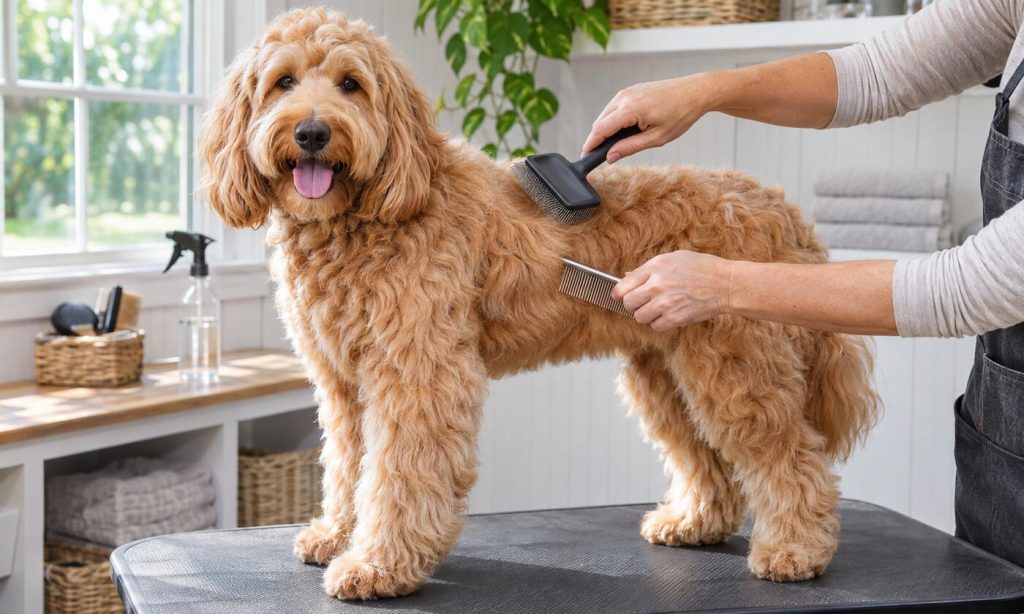
A Goldendoodle’s coat can be soft, wavy, curly, dense, or a mix of textures across the same body. Choosing a brush by breed name alone is therefore unreliable. If you want to choose the right dog brush for a Goldendoodle, study the length and density of the coat in front of you, how easily it tangles, and whether the dog enjoys being handled. The useful goal is to reach the coat gently without scraping the skin.
A dog brush for Goldendoodle grooming should make regular maintenance comfortable, not turn every session into a wrestling match. VCA veterinary guidance notes that longer and curly coats often need frequent brushing to prevent mats. This guide explains generic brush styles, pin length, head size, comb checks, and a practical routine. It also identifies matting situations that are better handled by a professional groomer or veterinarian.
Start with the actual coat type and length
Run your fingers gently through several sections of the coat, including the ears, chest, armpits, belly, and back legs. Some Goldendoodles have loose waves that separate easily, while others develop tight curls and an underlayer that tangles close to the skin. A brush that glides across the surface may leave knots underneath. Consider whether the coat has recently been clipped and whether new growth is changing the texture. Puppies may have a different grooming experience as their adult coat develops. Treat the dog’s current coat as your guide.
Look for areas where the hair feels compacted or resists parting. Do not pull forcefully through mats. They can trap moisture and cause skin discomfort. For a coat with only mild loose tangles, a gentle routine may be enough. Dense, long curls often require more careful line-by-line brushing. If the skin looks irritated or the coat has tight mats attached close to the body, ask a groomer or veterinarian for help before continuing. Choosing the correct tool is partly about recognizing when home brushing is no longer the safest approach.
Understand what different brush styles can do
A slicker brush uses many fine pins to separate hair and remove loose material from longer coats. Pin length and softness matter: pins that barely contact the coat may miss deeper tangles, while rough pressure can irritate skin. A pin brush can be gentler for some coats and useful during routine finishing, but it may not reliably identify tight undercoat mats. A metal comb is valuable as a follow-up check, since it can reveal snags a brush passed over. These are different tool functions, not a ranking of specific products.
Select a brush size that lets you control pressure around curved areas. A large head may be efficient along the back but awkward near legs and ears. Pay attention to rounded or smooth pin tips and to whether the handle stays secure when your hands are tired. Avoid sharp teeth, loose heads, and damaged pins. The guide to brush considerations for doodle coats offers additional context on detangling features. No one brush guarantees a mat-free dog without consistent technique and a suitable grooming schedule.
Match pin reach and pressure to coat density
Choose pin reach based on how much hair the brush must travel through, while keeping contact with the skin gentle. Long dense coats often need pins that can separate deeper layers. Short clipped coats may not need the same reach or stiffness. Work with a small section first and watch the dog’s body language. If the brush catches repeatedly, stop and part the hair with your hands instead of pressing harder. An effective grooming tool should help separate hair gradually, not remove knots by force or scrape the skin.
Apply light strokes and keep the brush moving with the direction of hair growth. Avoid repeatedly dragging pins across the same patch. Sensitive locations include the belly, armpits, behind ears, and inner thighs. Use extra caution if the dog is thin-skinned, elderly, or already uncomfortable. A common mistake is brushing only the top layer until it looks fluffy, then discovering tight mats close to the body. Use a comb gently after brushing to check the full coat depth. FYI, a fluffy surface is not proof that the skin beneath is free of tangles.
Use line brushing and a gentle comb check
Line brushing means parting a small layer of hair and brushing it carefully before moving to the next section. Start somewhere the dog tolerates, such as the shoulder or side, rather than a sore area. Hold hair near its base when easing mild tangles so you do not pull directly on the skin. Brush a small section, inspect it, then use a comb to check for remaining snags. Reward calm behavior and end sessions before the dog becomes distressed. Short regular sessions can be more successful than occasional exhausting ones.
Keep a consistent order to avoid overlooking common mat sites. Check behind the ears, under the collar or harness, between the legs, and near the tail. Brush before bathing when tangles are present, because wetting a matted coat can complicate removal. The Goldendoodle shampoo and coat-care guide provides related bathing context. If a mat cannot be separated without pain, do not cut against the skin with scissors. Ask a qualified groomer for safe removal. Your priority is a comfortable dog, not winning a contest against a knot.
Make grooming part of a realistic home routine
Long, curly coats often need daily attention, while shorter or less tangle-prone coats may have different needs. VCA emphasizes frequent brushing for dogs with longer or curly hair. Adjust the schedule for coat length, outdoor activity, collar friction, and how quickly small tangles form. Inspect skin as you work. Redness, sores, a strong new odor, or unusual scratching warrants veterinary advice rather than more brushing. A planned professional grooming schedule can help keep length manageable. Do not rely on a brush alone to handle severe matting.
Clean the brush after use by removing collected hair and wiping or washing parts according to their materials. Dry it before storage and inspect for bent pins or rough edges. Keep grooming sessions positive with breaks and treats if appropriate to the dog’s diet. IMO, a tool that you can use gently and consistently is worth more than an oversized brush that frustrates the dog. Track which areas mat most often and discuss them with a groomer. A good routine adapts to the coat as it changes across seasons and growth stages.
Frequently Asked Questions
Goldendoodle brushing depends on coat texture, length, and the dog’s comfort. These answers focus on practical decisions that help prevent painful tangles without suggesting that a single tool suits every doodle.
Treat grooming as a calm, repeatable health routine. If knots sit close to the skin or the dog becomes painful, stop and seek professional assistance rather than applying greater force.
Does every Goldendoodle need a slicker brush?
Not necessarily. Many long or curly coats benefit from a suitable slicker, but the exact brush and technique depend on coat type and tolerance.
Can a comb replace brushing entirely?
A comb helps check for remaining tangles, but it may not be the most comfortable tool for all routine grooming. Use tools according to coat needs.
How often should I brush a curly Goldendoodle?
Frequent, often daily, attention may be necessary for longer curly coats. Adjust with your groomer’s advice and your dog’s actual tangle rate.
Should I brush before giving a bath?
Yes, remove manageable tangles first. Water can make existing mats more difficult to address. Do not bathe over severe mats without professional guidance.
What if my dog yelps when the brush touches a mat?
Stop. Pain can indicate tight matting or irritated skin. Ask a groomer or veterinarian for safe next steps rather than pulling harder.
Final Words
Choosing the right dog brush for a Goldendoodle means matching pin reach, head size, and technique to the coat’s real texture. Focus on gentle control, regular line brushing, and a comb check that reaches beyond the surface. Respond to discomfort immediately. No tool can compensate for neglected dense mats or rough handling.
For a dog brush for Goldendoodle care, make the coat’s condition and the dog’s comfort your decision points. Combine patient brushing, sensible bathing, and professional grooming when needed. A comfortable coat is more important than a perfectly fluffy photograph.









