
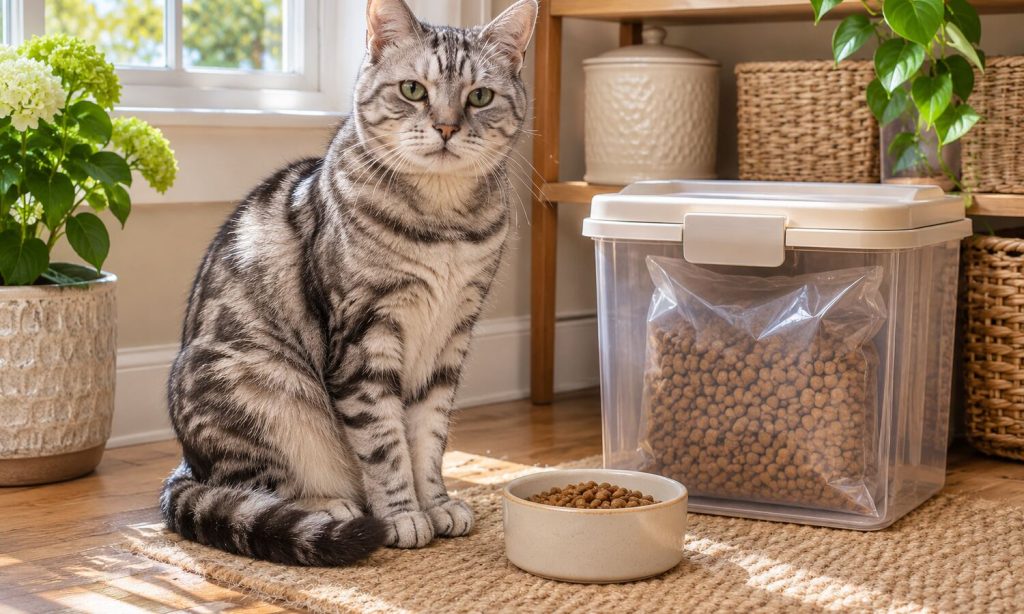
For a cat with hyperthyroidism, food storage can be part of the treatment plan, not merely a pantry habit. Learning how to store a cat food for hyperthyroidism safely means preserving freshness and preventing accidental mixing with other diets. Some cats receive a veterinarian-prescribed iodine-restricted food as medical therapy. That approach requires strict exclusivity: ordinary treats, another pet’s meals, and food caught outdoors can interfere with the treatment.
Not every cat with an overactive thyroid needs a special food, and the right approach depends on the diagnosis and medical plan. The site’s cat food for hyperthyroidism guide provides category context, but your veterinarian must direct any therapeutic nutrition. This article covers original packaging, cool storage, handling opened wet food, separate feeding in multi-cat homes, and what to do after a mix-up. Storage care should protect medical accuracy without making daily feeding unnecessarily stressful.
Know Whether Food Is Part of Treatment
Hyperthyroidism is excessive thyroid hormone production, commonly seen in older cats. Signs can include weight loss despite increased appetite, rapid heart rate, thirst, and changes in behavior. A veterinarian diagnoses the condition using examinations and thyroid testing. Options may include radioactive iodine therapy, medication, surgery, and a carefully managed iodine-restricted diet. Each option has benefits and limitations that require veterinary judgment, especially when kidney or heart disease is also present.
If an iodine-restricted diet is chosen as the treatment, the cat generally must eat that prescribed food exclusively. Other meals, treats, flavored medicines, supplements, or prey may introduce iodine and undermine control. Do not start an iodine-restricted diet simply because a food label mentions thyroid support. Ask the veterinary team which exact foods and amounts are allowed, how to handle medications, and when blood work is needed. Strictness here is about the prescribed treatment, not a general rule for all hyperthyroid cats.
Keep Dry Food Protected in Its Original Bag
Store dry therapeutic food in the original bag with its lot number, expiration date, and feeding instructions visible. Fold the top tightly closed and place the entire bag inside a clean, secure container when added protection is useful. This approach avoids pouring fresh kibble onto older crumbs or oily residue. FDA guidance recommends cool, dry pet food storage, generally below 80°F. Avoid hot garages, humid utility rooms, direct sunlight, and places where pests can damage the package.
Use a dedicated, clean measuring scoop for the prescribed food. Label the outer container for the specific cat, but do not cover the original product information. Wash and thoroughly dry containers when bags are replaced. Do not put a damp scoop into the food or add water directly to the storage bag. If the bag becomes wet, smells unusual, develops mold, or suffers pest damage, discard the questionable food and ask the veterinary team how to replace it without interrupting the treatment.
Refrigerate Opened Wet Food Promptly
Unopened wet food usually remains in cool, dry storage unless its label says otherwise. Once opened, promptly refrigerate unused food in a covered container or discard it. Keep the refrigerator at 40°F or below. Follow the specific food label for how long refrigerated portions may be kept. Never assume a therapeutic diet is protected from spoilage merely because it is medically formulated. Clean hands, utensils, and bowls matter just as much for this food as for ordinary cat meals.
Use a small, clean spoon to portion the prescribed meal and return the remainder to refrigeration promptly. Do not reuse leftover food from a bowl that has been standing in a warm room. If a cat refuses cold food, ask whether a gently warmed serving is appropriate, checking for hot spots and discarding uneaten portions safely. Avoid mixing in broth, tuna, or other flavor enhancers unless the veterinarian has specifically approved them as compatible with the treatment. A tiny ‘helpful’ topper can create a meaningful dietary exception.
Prevent Accidental Mixing in Multi-Cat Homes
Feeding multiple cats can be challenging when only one requires an iodine-restricted diet. Separate feeding rooms, closed doors, microchip-controlled access if already used, or scheduled supervised meals can reduce cross-feeding. Remove bowls after meals and keep other pets’ treats out of reach. If a dog scavenges cat food or another cat pushes into the prescribed meal, revise the layout. The goal is a practical system in which every animal gets its own appropriate nutrition.
Do not assume a shared bowl is harmless because the hyperthyroid cat only licks a few crumbs. When dietary treatment depends on strict iodine control, any access to other food matters. Discuss safe arrangements with your veterinarian before changing the diet of healthy housemates. Prevent outdoor hunting access if required by the treatment plan, since prey can undermine dietary exclusivity. Keep a clear household note of what the cat may eat so visitors and pet sitters do not make well-intentioned exceptions.
Track Food Intake and Veterinary Monitoring
Measure portions and note how much the cat actually eats. Weight loss, poor appetite, vomiting, or renewed thirst may indicate problems with the disease, treatment, or other illnesses. Do not attribute every symptom to food freshness. Older cats can have kidney or heart disease alongside hyperthyroidism, and treatment changes can alter how those conditions appear. The veterinary team may recommend thyroid hormone tests, kidney values, blood pressure checks, and adjustments to the plan.
If the cat stops eating the therapeutic diet, call the veterinarian promptly instead of allowing prolonged inadequate intake. Cats can suffer serious consequences from not eating. Your veterinarian may explore alternative approved treatment options or appetite management strategies. The site’s guide to introducing food around hyperthyroidism gives related context, but it cannot replace an individualized medical plan. Maintain the prescribed feeding strategy until the treating team tells you to change it.
Handle Food Mix-Ups and Suspected Spoilage
If your cat eats another pet’s food, record what was consumed and roughly when, then contact the veterinary team for advice. One accident does not justify doubling medication or restricting all subsequent meals. The appropriate response depends on the chosen treatment and amount eaten. Adjust doors, storage, and household routines to prevent repetition. Keep medication and prescribed diet instructions together so everyone understands that they are coordinated parts of the same care plan.
For suspected spoiled food, stop feeding the batch immediately, retain its packaging details, and obtain a safe replacement. Contact a veterinarian if the cat has gastrointestinal symptoms or becomes less interested in eating. Wash dishes and food-contact tools before serving from a new package. Store refills separately from cleaning chemicals and mark the date each container was opened. This simple record can make future food-safety and medical conversations much clearer.
Frequently Asked Questions
A therapeutic feeding plan succeeds through consistency and monitoring. These answers address common storage and household questions.
Your cat’s treating veterinarian should determine whether dietary iodine restriction is appropriate. These general handling steps do not replace a prescription or laboratory follow-up.
Can I add treats to an iodine-restricted diet?
Not unless the veterinarian specifically approves them. Strictly iodine-restricted dietary treatment usually requires exclusive feeding of the prescribed food.
Should I pour dry therapeutic food into a bin?
Keep food in its original bag and place that bag inside a clean, dry, secure container if needed.
Can another cat eat the prescription food?
Ask your veterinarian. Housemates may need different nutrition, and feeding arrangements should prevent food sharing without creating deficiencies.
What if my cat steals another cat’s dinner?
Note the incident and contact the veterinary team about its significance. Do not change medication dosing on your own.
How should opened wet therapeutic food be kept?
Cover and refrigerate leftovers promptly at 40°F or below, follow the specific label, and use clean utensils and bowls.
Final Words
How to store a cat food for hyperthyroidism safely begins with the treatment plan. Keep dry food in its original protected bag, refrigerate opened wet food, clean tools, and prevent other foods from reaching a cat on strict dietary iodine restriction. Keep track of portions, weight, and changes in appetite so the veterinarian can monitor treatment response.
The site’s cat food for hyperthyroidism overview can help you organize questions. It should never replace the medical instructions that govern an iodine-restricted diet. Good storage protects food quality, but accurate diagnosis, exclusive feeding when prescribed, and regular veterinary follow-up protect the cat’s health.
Reference
The following veterinary and institutional resources support the treatment-related guidance in this article.
Cornell Veterinary: Feline Hyperthyroidism · Cornell Feline Health Center: Hyperthyroidism in Cats · FDA: Proper Storage of Pet Food and Treats









