
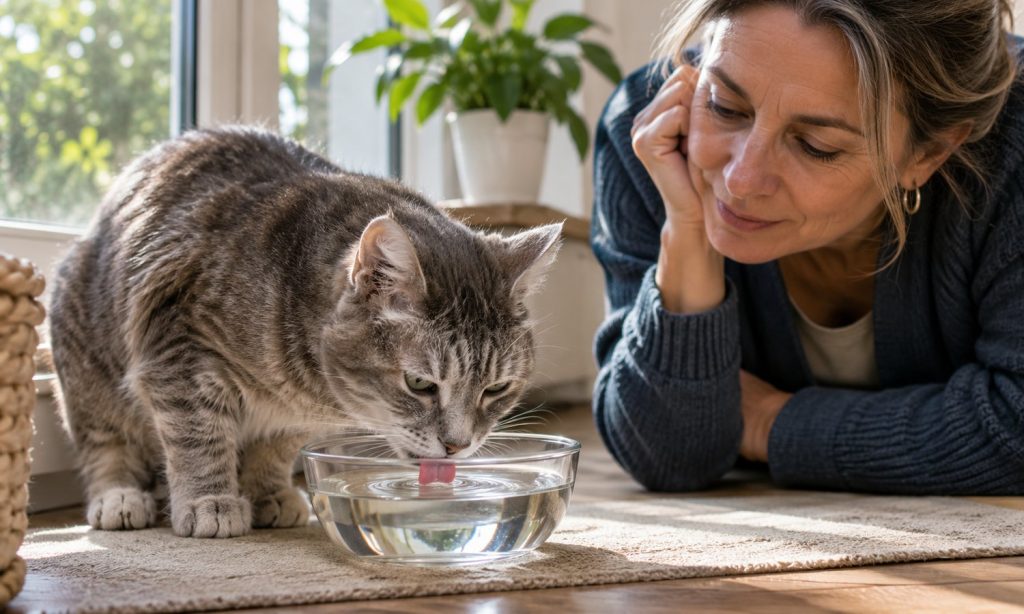
Signs of kidney disease in cats can be subtle at first. A cat may drink more, urinate larger amounts, lose weight, or seem less interested in food, while still appearing normal between changes. Chronic kidney disease is more common in older cats, but age alone cannot diagnose it, and early disease may cause few obvious signs.
This guide explains changes to watch for, how veterinarians evaluate kidney function, and when to arrange care. Nutrition decisions belong with the veterinary team; our guide to canned cat food for kidney disease can help you prepare questions after a diagnosis, but it should not determine a diet on its own. Noting small changes and arranging a check early can help your veterinarian compare the pattern with exam and test results.
Early signs can be easy to overlook
Healthy kidneys help regulate water balance and remove waste products. As kidney function declines, a cat may make more dilute urine and drink more to compensate. A larger water-bowl refill or heavier litter clumps can be an early clue, particularly when the pattern is new and persistent.
Some cats show no clear changes in the early stages. An owner may notice gradual weight loss, a less tidy coat, or reduced interest in food only when comparing the cat with its usual behavior. Routine veterinary exams and lab work can detect changes that are hard to spot at home.
Common signs of chronic kidney disease
Signs of kidney disease in cats may include increased thirst and urination, reduced appetite, weight loss, vomiting, low energy, and a dull or unkempt coat. Dehydration can occur even when a cat drinks more, because the kidneys may lose the ability to conserve water normally.
As disease progresses, some cats develop weakness, bad breath, mouth discomfort, pale gums, or nausea. These signs are not unique to kidney disease. Diabetes, thyroid disease, dental problems, infection, and other conditions can cause similar changes, so testing is necessary.
Record changes without delaying an exam
Write down when you first noticed the change, whether it is worsening, and how appetite, water intake, urination, weight, and energy have shifted. If practical, take a short video of a behavior change or bring the current food and medication list.
Do not restrict water to reduce urination. A cat that drinks more may be compensating for fluid loss. Contact your veterinarian to discuss the pattern and whether the cat should be examined soon.
How veterinarians diagnose kidney disease
Diagnosis usually combines the history, physical exam, blood tests, and urinalysis. Bloodwork may measure creatinine, blood urea nitrogen, and symmetric dimethylarginine, or SDMA. Urine concentration and other urine findings help the veterinarian interpret whether the kidneys are filtering and conserving water effectively.
No single result provides a complete picture. Dehydration, muscle mass, infection, medications, and other conditions can affect values. The veterinarian may recommend repeat testing when the cat is stable and well hydrated, plus blood pressure measurement or imaging to evaluate related concerns.
When signs need prompt or emergency care
Arrange a veterinary visit for persistent changes in thirst, urination, appetite, weight, or activity. Seek prompt advice if your cat repeatedly vomits, cannot keep water down, becomes very weak, or stops eating. A rapid decline can indicate an acute problem even if chronic kidney disease is already known.
Straining to urinate, repeated unproductive trips to the box, crying, or producing little or no urine may signal a urinary blockage or another emergency. Do not assume these signs are simply kidney disease. Call an emergency veterinary clinic if urine output suddenly stops or your cat appears severely ill.
Treatment and daily management require individual plans
A veterinarian tailors management to test results, blood pressure, urine protein, appetite, hydration, and other health problems. Plans may include monitoring, medication, fluid support, and nutrition changes. Staging and treatment should be based on confirmed disease and stable test findings.
Do not start supplements, fluid therapy, or a therapeutic diet without veterinary direction. A cat that refuses food needs timely attention; a theoretically ideal food is not helpful if the cat stops eating. Your veterinarian can discuss gradual transitions, appetite support, and follow-up tests.
Support comfort and track follow-up
Keep fresh water easy to reach and provide a calm environment with accessible litter boxes and resting spots. Offer familiar food while you discuss nutrition with the veterinary team. For general hydration context, see our guide to wet food versus dry food for cat hydration. A simple log of appetite, water, weight, vomiting, and medication can make follow-up visits more informative.
Ask how often the cat needs bloodwork, urine testing, blood pressure checks, and weight monitoring. Contact the clinic sooner if signs worsen between visits. Treatment goals may change as the condition and the cat’s preferences evolve.
Routine screening helps catch subtle changes
Ask the veterinary team how often your cat should have wellness exams and screening tests, especially as it gets older. A baseline makes future results easier to interpret. The schedule depends on age, medical history, medication use, and any changes found during an exam. Ask whether blood pressure or urine testing is appropriate, and when follow-up results should be reviewed based on your cat’s overall health and risks.
At home, note water bowl refills and litter patterns without trying to measure every detail perfectly. A photo of the bowl or a weekly weight, if your cat tolerates it, may help you describe a gradual shift. Share the observations rather than waiting for several signs to appear together.
Frequently Asked Questions
Kidney disease cannot be confirmed from symptoms alone. Testing helps separate it from other causes of similar changes.
Use these answers as a starting point for a veterinary conversation, especially if a change is new or progressing.
What is an early sign of kidney disease in cats?
Increased drinking and urination can be early signs, but they also occur with other diseases. A veterinarian can investigate them.
Can an indoor cat develop kidney disease?
Yes. Indoor or outdoor status does not rule out kidney disease. Risk rises with age, and regular exams help detect changes.
Can kidney disease be diagnosed from one blood test?
Usually, results need to be interpreted with urine tests, hydration, exam findings, and sometimes repeat measurements.
Should I change my cat’s food right away?
Discuss diet with your veterinarian first. The right plan depends on the diagnosis, disease stage, other conditions, and what the cat will eat.
Can kidney disease cause vomiting?
It can be associated with nausea or vomiting, but many conditions cause vomiting. Persistent or repeated episodes need veterinary advice.
Final Words
Signs of kidney disease in cats include increased thirst and urination, appetite or weight changes, vomiting, and lower energy, but some cats show little at first. These signs deserve veterinary evaluation because several other conditions can look similar.
Blood and urine tests, exam findings, and follow-up help establish a diagnosis and management plan. For a nutrition discussion after diagnosis, our guide to canned cat food for kidney disease can help you prepare, while your veterinarian should guide any diet change.
Reference
These veterinary sources describe feline kidney disease, clinical signs, diagnostic testing, and staging. They support the medical information summarized in this article.
A veterinarian should interpret an individual cat’s symptoms and test results; general guidance cannot establish a diagnosis.









