
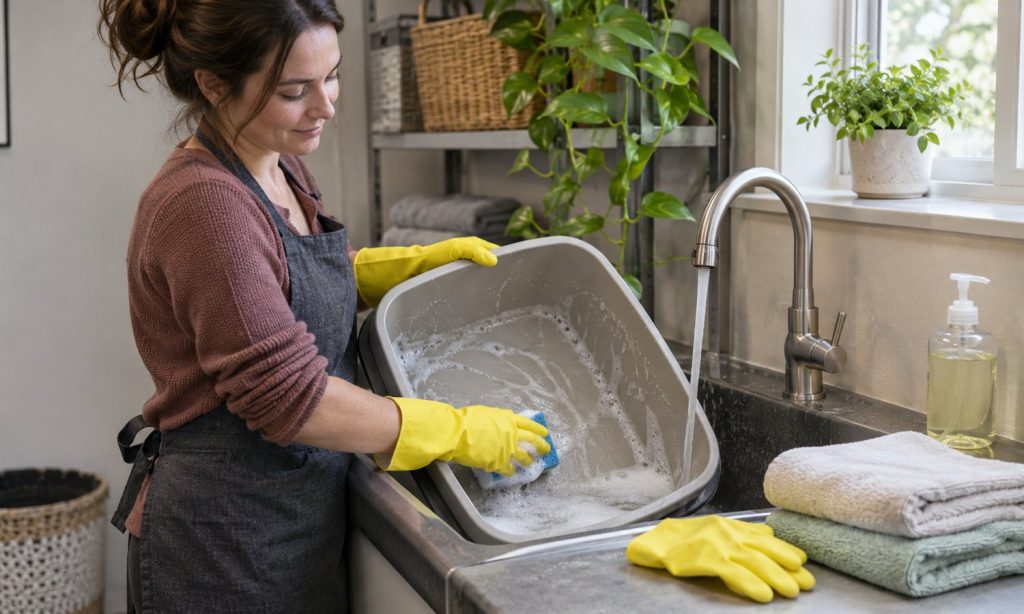
Scooping removes daily waste, but a litter box also needs periodic emptying and washing. How often to clean litter boxes and replace their litter depends on the litter material, the number of cats, the box surface, and whether odors remain after routine scooping. A full wash removes residue that a scoop cannot reach.
This guide separates daily upkeep from full cleaning, explains when to replace litter, and offers a practical schedule for shared homes. If you are choosing boxes for a busy household, our guide to litter boxes for multiple cats covers size and access considerations that can make cleaning easier. A repeatable routine also helps prevent leftover residue from becoming a hidden odor source between full changes. This schedule should reflect your cats’ real use, not just a set date on the calendar.
Separate scooping from a full box wash
Scoop waste at least once daily, or more often when the box is shared and fills quickly. A full wash is a separate task: empty all litter, clean the box interior, rinse it, and dry it before refilling. A clean-looking surface does not guarantee that old urine residue is gone.
Use the litter’s package directions as a starting point for full changes. Clumping materials may allow waste removal and top-ups between full washes, while non-clumping products often need more frequent replacement. Check the box itself for odor, residue, or damp spots rather than following a rigid calendar alone.
Choose a replacement interval by litter type
Clumping litter typically needs daily scooping and periodic complete emptying. Non-clumping clay, wood, paper, and crystal products behave differently, so use the product guidance and observe how quickly moisture and odor build up. Shared boxes may need a shorter interval than a single-cat household.
Replace litter sooner if it stays damp, breaks down, smells after scooping, or has been contaminated by diarrhea or another spill. Never keep adding fresh litter indefinitely over old material. If odor appears soon after a complete change, inspect the box surface, the scoop, and surrounding area.
Wash with mild, cat-safe cleaning methods
Empty the box and wash it with warm water and mild, unscented soap. Rinse thoroughly and dry it fully before adding clean litter. Strong fragrances, deodorizing powders, and leftover detergent can bother cats, so avoid products that leave a scent or film.
Do not mix cleaning products. Bleach should never be combined with ammonia-containing cleaners, and any disinfectant should be used only according to its label with the cat kept away until the area is safe. In many routine situations, physical removal of residue and a thorough rinse are the most important steps.
Clean scoops, mats, and nearby floors
A dirty scoop can return residue to a freshly washed box. Wash the scoop regularly and let it dry. Shake out or wash the litter mat as directed, and wipe nearby floors to remove tracked granules and splashes.
If a cat urinates outside the box, use an appropriate pet-safe cleaner on the surface and follow its directions. Avoid products that only mask odor. Persistent scent may draw a cat back to the same spot, while a cat’s repeated accidents may also need veterinary evaluation.
Adjust the schedule for a multi-cat household
More cats create more waste and put more demand on each box. Provide multiple boxes in separate areas, not all in one cluster, and clean each according to its use. A box that one cat guards or avoids may stay clean while another becomes overloaded.
A useful layout often starts with one box per cat plus one extra, with accessible stations on different floors when needed. Our guide to litter boxes for multiple cats can help you think about roomy designs and easy-clean surfaces. The best schedule is one your household can maintain consistently. Our cat-care maintenance guide covers related routine cleaning and inspection.
Replace a box when cleaning no longer works
Plastic boxes can develop scratches that hold odor and residue. Inspect for cracks, rough edges, warped sides, and seams that are difficult to wash. Replace a damaged box when it still smells after thorough cleaning or can no longer be cleaned safely.
A box should also be large enough for the cat to enter, turn, dig, and leave without discomfort. Older cats may need lower sides, while cats that spray may need higher walls. If your cat avoids a newly changed box, review size and access as well as cleanliness.
Use changes in the box to monitor health
During cleaning, note whether urine clumps have changed in number or size and whether stool looks different. A sudden increase in urine, blood, diarrhea, constipation, or straining can be more important than the cleaning schedule. Keep observations brief and share them with your veterinarian if a change persists.
Repeated trips with little or no urine, crying, or obvious pain require prompt veterinary guidance. A cat that cannot pass urine may need emergency care. Do not assume accidents or strong odors are simply a sign that the box needs more frequent washing.
Make full cleaning easier to repeat
Keep a small set of cleaning supplies together so a full change does not become a hunt for a scoop, towel, or waste bag. Empty the box outdoors or into a lined container, remove stuck-on material, wash, rinse, and let it dry completely. Refill only after the surface is clean and free of detergent scent.
For several boxes, rotate the order so every station receives attention. A checklist on a calendar can record the last full wash and any box that needed an early change. This helps household members follow the same routine and makes it easier to spot a box that repeatedly holds odor. If a box is temporarily unavailable, place a clean alternative nearby so a cat is not left without an accessible toilet at all times when possible.
Frequently Asked Questions
A clean box needs both daily waste removal and periodic full washing. These answers address when to empty, scrub, and replace litter.
Use the litter instructions and box condition to tailor the routine. Increase cleaning when multiple cats share a station or residue builds quickly.
How often should I wash the whole litter box?
There is no universal interval. Follow the litter directions and wash sooner if residue or odor remains after scooping.
Can I just top up litter instead of replacing it?
Top-ups help maintain depth, but they do not replace complete changes when litter is saturated, contaminated, or persistently smelly.
What soap should I use to clean a litter box?
Mild, unscented soap and warm water are often suitable for routine washing. Rinse well and avoid strong lingering fragrances.
Does a multi-cat home need more frequent cleaning?
Often, yes. More cats increase use and waste, so inspect each box daily and adjust full changes to its condition.
When should I replace the box itself?
Replace it if it is cracked, deeply scratched, difficult to clean, or still holds odor after washing.
Final Words
Clean litter boxes by scooping daily, fully emptying and washing them as the litter type and household require, and replacing material sooner when it stays damp or smells. A clean, dry box is easier for cats to use and easier for people to maintain.
In a multi-cat home, distribute accessible boxes and check each one. Our guide to litter boxes for multiple cats offers more on size and upkeep. Contact your veterinarian if odor or litter habits change suddenly or your cat shows discomfort.









