
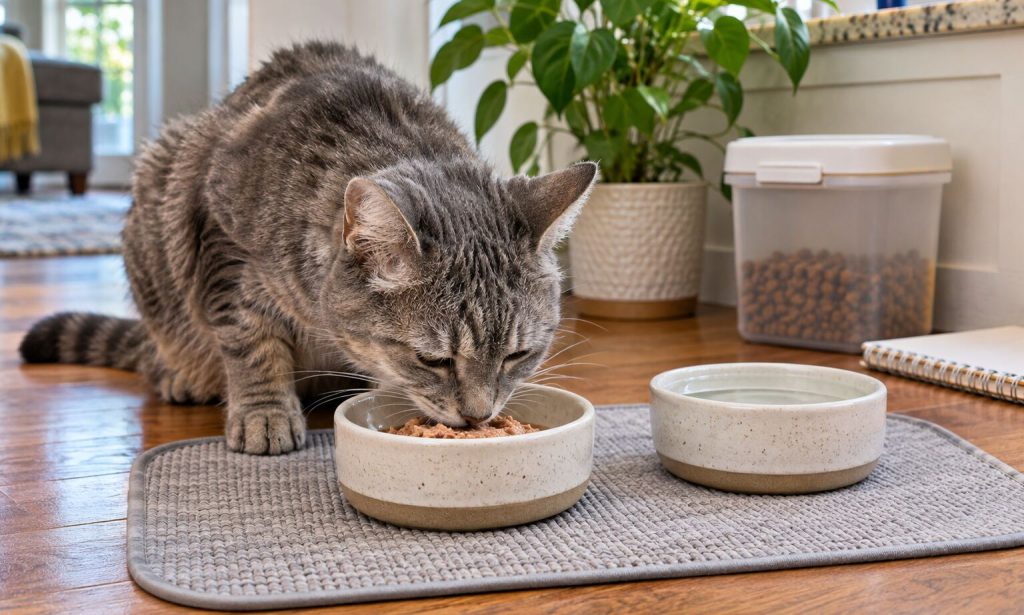
A cat with hyperthyroidism may seem ravenous yet keep losing weight. Food matters, but it cannot replace a diagnosis or a treatment plan. If you are wondering how to introduce a non prescription cat food for hyperthyroidism to your pet, begin with one crucial distinction: an ordinary complete-and-balanced diet can support feeding, but it does not control excess thyroid hormone. Your veterinarian must decide whether medication, radioiodine, surgery, or a tightly controlled therapeutic diet is appropriate.
The phrase non prescription cat food for hyperthyroidism often appears in searches because owners want a simpler feeding solution. This guide explains how to discuss a safe diet change, transition meals gradually, watch appetite and weight, and recognize warning signs. It also shows when an over-the-counter food is unsuitable. The goal is a calm, measurable feeding routine that protects your cat’s health alongside veterinary care.
Understand What Food Can and Cannot Do
Hyperthyroidism means the thyroid gland produces too much hormone, which can raise metabolism and strain the heart and other organs. Increased appetite, weight loss, vomiting, restlessness, and thirst can occur. These signs also overlap with other illnesses. A veterinarian confirms the condition with a physical assessment and blood testing, then checks kidney function and blood pressure as appropriate.
Ordinary commercial cat food is not designed to lower thyroid hormone. A veterinarian-directed iodine-restricted therapeutic diet is a distinct treatment approach with strict feeding conditions. Cornell University explains that this approach requires exclusive feeding: treats, other foods, and hunting can undermine iodine restriction. Therefore, swapping among regular diets is not an equivalent alternative.
When nutrition changes are reasonable
If your cat already receives antithyroid medication or is recovering after another treatment, a nutritional change may still make sense. The aim could be better acceptance, adequate calorie intake, easier chewing, or hydration. Ask the veterinary team to review the complete diet and daily intake, especially if the cat has kidney disease, heart problems, or an unstable weight.
Why the “nonprescription” label can mislead
A regular diet can be nutritionally complete without being therapeutic for the thyroid disorder. “Supports thyroid health” on packaging is not evidence that a food treats hyperthyroidism. Avoid adding iodine, kelp, or supplements without veterinary direction. An appealing label must never displace a measurable treatment response. The strongest checks are the cat’s clinical condition and veterinarian-guided thyroid testing.
Prepare Before the First Meal
Before changing food, write down what your cat currently eats. Include the brand-independent nutrition information, wet or dry texture, measured daily amount, treats, table scraps, and any medications. Record the most recent weight and any changes in appetite, stool, vomiting, and drinking. This baseline helps the veterinarian determine whether the new diet addresses the actual problem.
Choose a food that meets your cat’s appropriate life-stage needs and fits the veterinarian’s guidance. Check calorie density per can, pouch, or cup because two foods can look similar but provide very different energy. Ask whether the cat should gain, maintain, or reduce weight after thyroid control. An unplanned calorie restriction can be dangerous in an already thin cat.
Get veterinary approval before switching
For owners investigating how to introduce a non prescription cat food for hyperthyroidism to your pet, the first actionable step is often a vet call rather than opening a new bag. A feeding change can complicate interpretation of poor appetite or gastrointestinal signs during a medication adjustment. Agree on a start date and the symptoms that should trigger a pause.
Gather simple monitoring supplies
Use a clean measuring scoop or, better, a kitchen scale for portions, a notebook or phone log, and the same reliable scale for repeated weights. Place food and water where your cat feels secure. In multi-cat homes, separate feeding stations so you know who ate what. A small daily record is much more useful than a vague impression that the bowl seems emptier.
Transition the Diet Without Forcing It
If the veterinarian approves a regular diet change, introduce the new food gradually over about a week when your cat is stable. A common starting pattern is roughly one quarter new food and three quarters familiar food for the first couple of days. Increase the new proportion every few days only if appetite, stool, and behavior remain normal. Some cats need a slower schedule.
Never apply that mixing schedule to a therapeutic iodine-restricted diet without the veterinarian’s specific instructions. Strict dietary treatment depends on exclusive intake, and treatment plans vary. Likewise, a cat with persistent vomiting, severe weight loss, dehydration, or refusal to eat needs individual medical advice instead of a do-it-yourself transition.
Keep the transition steady
Serve small, consistent meals in a familiar place. Keep water readily available and discard leftover wet food promptly according to its label. For a cat who dislikes changes, focus on texture and feeding environment before adding unapproved toppers. The question of how to introduce a non prescription cat food for hyperthyroidism to your pet becomes much easier when the plan respects feline preferences and medical limits.
If your cat refuses the new diet
Do not starve a cat into accepting a different food. Cats that stop eating can become seriously ill, particularly if overweight or already medically vulnerable. Contact your veterinarian promptly if appetite falls sharply, and ask how long a change in intake can safely be observed in your cat’s situation. Discuss texture, meal temperature, dental discomfort, nausea, and medication effects before trying more changes.
Manage multi-cat households
A second cat may steal the new food or leave leftovers that the affected cat eats later. Separate rooms, scheduled meals, and supervised feeding can clarify intake. If the hyperthyroid cat is using an iodine-restricted therapeutic diet, access to another cat’s meal can undermine treatment. Every caregiver should understand the plan, including anyone who offers treats or lets cats outdoors.
Monitor Progress and Know When to Call
Keep a short daily log for the first two weeks. Note how much was offered and actually eaten, along with stool consistency, vomiting, energy, thirst, and medication timing. Weigh your cat at an interval recommended by the vet, using comparable conditions. Report persistent changes rather than waiting for the next routine appointment.
Thyroid treatment can expose or change the picture of underlying kidney disease, so repeat blood work matters. A diet that appears to improve appetite is not proof of thyroid control. Veterinary follow-up may include thyroid hormone, kidney values, heart assessment, and blood pressure. This is why food and medical care should remain coordinated.
Recognize urgent changes
Call the veterinarian sooner for repeated vomiting, poor appetite, weakness, marked thirst, breathing changes, or continued weight loss. Seek urgent help for collapse, severe difficulty breathing, or profound lethargy. Avoid interpreting every symptom as food intolerance; medication effects and uncontrolled disease can look similar.
Use weight and body condition together
A cat’s weight alone does not show whether muscle is recovering. Older hyperthyroid cats can lose muscle despite eating a lot. Ask the veterinary team to track muscle condition and body condition alongside weight. Your cat’s calorie and weight-gain needs depend on the diagnosis, not merely the number on the scale.
Common Mistakes to Avoid
The biggest mistake is treating a store-bought food as a cure. Another is changing several variables at once: diet, treats, supplements, and medication timing. That makes new symptoms hard to interpret. Do not add iodine-containing supplements or abruptly restrict calories without medical guidance. A slightly improved appetite can be reassuring, but it cannot replace the recommended blood tests.
A second mistake is assuming that every cat with the same diagnosis needs the same feeding approach. Age, kidney status, medication tolerance, dental health, body condition, and household routines all matter. A cat who eats a therapeutic iodine-restricted diet requires very different supervision from one eating regular food while taking antithyroid medication. Keep the feeding strategy matched to the actual treatment.
Avoid changing everything at once
Finally, watch for hidden calories and unauthorized food sharing. Inconsistent meals prevent accurate intake tracking. When researching how to introduce a non prescription cat food for hyperthyroidism to your pet, resist complicated feeding hacks. A simple routine with clear measurements usually makes follow-up conversations more useful.
A practical check-in schedule
Before the diet change, confirm the purpose and calorie target. During the transition, check appetite and stool daily. After the transition, discuss body weight and any symptoms at the vet’s recommended interval. Continue thyroid and kidney monitoring on the clinic’s schedule. Record changes in one place, and bring that record to appointments. The plan should be adjusted by evidence, not guesswork.
Frequently Asked Questions
A few recurring questions deserve direct answers because owners often encounter conflicting advice about food and thyroid disease. These answers clarify the limits of ordinary diets and the safeguards that matter most during a transition.
Use these points to prepare for a veterinary visit, not to substitute for one. Every cat’s treatment, weight, and concurrent conditions can change the best next step.
Can ordinary cat food cure hyperthyroidism?
No. Ordinary food does not treat excessive thyroid hormone production. Veterinary treatment may use medication, radioiodine, surgery, or a strictly managed therapeutic iodine-restricted diet. Ask which approach is appropriate for your cat.
How quickly should I switch foods?
For a medically stable cat changing between regular diets, a gradual transition over several days to about a week is often easier on digestion. Follow individualized veterinary directions if the cat is sick or using a therapeutic thyroid diet.
Should I add kelp or iodine supplements?
No, not without explicit veterinary direction. Iodine affects thyroid hormone production. Supplements can interfere with a carefully planned diet and may complicate disease management.
What if my cat is hungry but keeps losing weight?
Arrange a veterinary reassessment. Continued weight loss despite appetite may indicate inadequately controlled hyperthyroidism or another disease. Do not simply keep increasing portions without checking the underlying cause.
Can I feed treats during an iodine-restricted treatment diet?
Not unless your veterinarian specifically approves them as compatible. That type of treatment generally requires exclusive dietary intake. Other foods, treats, and prey can defeat the intended iodine restriction.
Final Words
Learning how to introduce a non prescription cat food for hyperthyroidism to your pet starts with a safe definition of success. The goal is not a miracle food. It is dependable nutrition, comfortable eating, accurate intake records, and medical treatment that is actually controlling the disease. Ask your veterinarian what the food change should accomplish and how progress will be measured.
If you are considering non prescription cat food for hyperthyroidism, remember that a standard diet and a therapeutic thyroid diet are fundamentally different. Keep transitions gentle, monitor weight and appetite, and protect any prescribed feeding restrictions. Good care is a coordinated routine, not a single ingredient.
Reference
These veterinary resources explain feline hyperthyroidism, diagnostic monitoring, nutritional limits, and safe feeding. They inform the medical cautions throughout this article.
Reference material is educational. Your veterinarian should interpret it against your cat’s medical record, laboratory results, and chosen treatment plan.









