
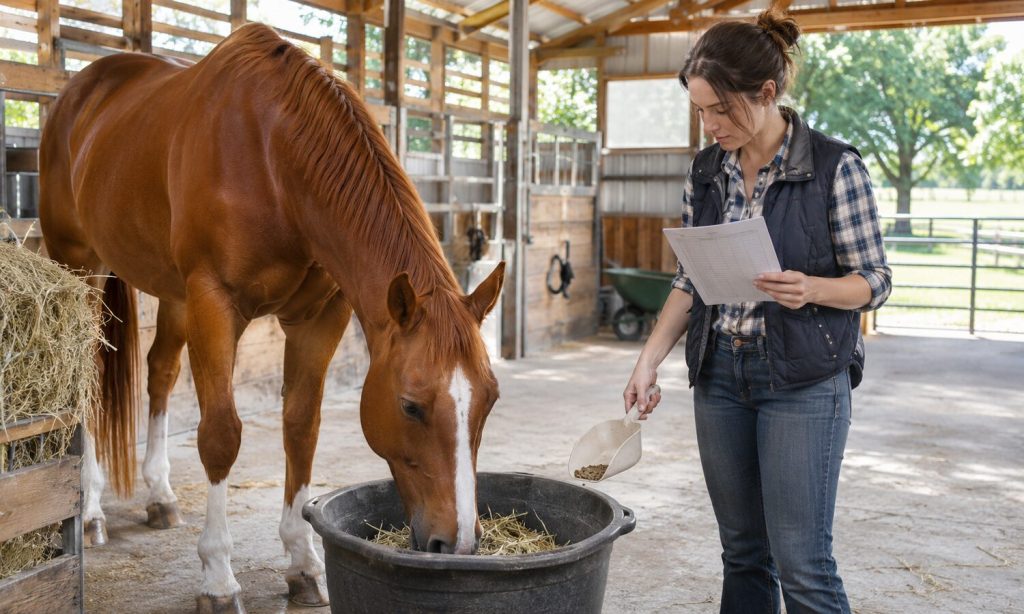
How to introduce a respiratory supplement for horses to your pet should begin with a veterinarian, especially when coughing, nasal discharge, wheezing, or reduced exercise tolerance is present. These signs can reflect equine asthma, infection, airway irritation, or another condition. A feed supplement cannot diagnose or replace treatment for a breathing disorder. The safest first step is to understand the horse’s condition and whether the proposed supplement has a clear purpose.
If the veterinarian agrees a nutritional addition is reasonable, introduce it within a stable feeding routine and monitor intake, manure, appetite, and breathing. Our published guide to respiratory supplement for horses discusses label considerations, but no list substitutes for individualized advice. This article explains pre-use checks, gradual feeding, dust management, recordkeeping, medication interactions, and red flags that call for prompt veterinary attention.
Identify the Respiratory Problem First
Equine asthma involves airway inflammation and can be influenced by dust, mold, and stable conditions. Other causes of coughing or labored breathing include infectious disease and structural airway problems. A veterinarian may need a physical exam and diagnostic testing to distinguish them. Giving a supplement before assessment can delay essential management or mask a worsening pattern in your records.
How to introduce a respiratory supplement for horses to your pet depends on the diagnosis and the ingredients. A substance marketed for ‘airway support’ is not equivalent to an approved medicine or a proven treatment. Ask the veterinarian what outcome you are trying to support and which signs would show the plan is not appropriate. Avoid promises of curing asthma, allergies, or infections through feed additives.
Know When Breathing Is an Emergency
Visible struggle to breathe, marked respiratory distress at rest, severe weakness, collapse, or sudden serious illness needs urgent veterinary care. Do not ask a horse to exercise through respiratory distress. Stop feeding experiments and contact the veterinarian promptly. Even a mild cough that persists or recurs deserves investigation, especially when several horses at the barn become affected.
Review the Full Ration and Ingredient List
Begin with the horse’s forage, concentrate, mineral intake, and any existing supplements. Duplicating nutrients can create imbalances. List all ingredients, active substances, serving instructions, and manufacturer details from the proposed product. Ask the veterinarian whether the formula adds anything nutritionally useful or conflicts with the horse’s current diet. Transparent labeling is more important than a dramatic marketing slogan.
Some horses have medical conditions, medication schedules, pregnancy concerns, or competition restrictions that change what can be given. How to introduce a respiratory supplement for horses to your pet cannot be separated from those facts. If the label lacks clear ingredient amounts or directions, do not invent a dose. Keep the original packaging so lot and expiration information remain available.
Separate Nutrition From Disease Treatment
A horse with equine asthma often needs changes to dust exposure and may require prescribed veterinary medication. The Merck Veterinary Manual describes environmental management as a central part of equine asthma care. Nutritional supplements are not substitutes for those measures. If a product implies it treats a diagnosed disease, ask the veterinarian about the strength of evidence and regulatory status before use.
Introduce Only One Change at a Time
If the vet approves the product, follow the label or the veterinarian’s specific feeding plan. Some horses accept a new taste mixed into their usual feed; others reject it. Do not increase the amount simply to speed up an imagined effect. Ask whether a gradual introduction is appropriate for the particular formulation. The goal is reliable intake and an observable response without disrupting the entire feeding program.
How to introduce a respiratory supplement for horses to your pet works best when forage, meals, turnout, and routine stay predictable. Changing hay, bedding, supplements, and medication simultaneously makes it hard to know which factor affected the horse. Keep a daily log of the administered amount, feeding acceptance, and any unusual signs. Contact the vet if appetite, manure, or behavior deteriorates.
Measure Rather Than Guess
Use the measure specified on the label or in the veterinary plan. A volume scoop from one product may not match the weight of another powder. Never borrow dosing instructions from a different horse or formula. For liquids, use a clean dedicated measuring device. Keep feed equipment dry when storing powders, and prevent other horses from accessing the supplement.
Protect the Horse From Dust and Irritants
Air quality often matters more than a supplement container. Manage dusty hay, moldy feed, bedding particles, and poor ventilation. Work with the veterinarian and stable manager on suitable forage preparation, turnout, and low-dust housing. Avoid sweeping or blowing dust next to a horse that is eating. Remove visibly moldy materials rather than attempting to hide the odor.
A respiratory-support feeding routine should not create additional dust exposure. How to introduce a respiratory supplement for horses to your pet includes considering the form of the supplement and safe mixing instructions, especially if it is a dusty powder. A horse already coughing in a dusty stall needs environmental attention, not simply another powder. The specifics should fit that animal’s diagnosis.
Account for Smoke and Seasonal Changes
Wildfire smoke, barn renovation, dry weather, and poor ventilation can aggravate respiratory symptoms. Veterinary guidance from the University of California, Davis discusses limiting smoke and dust exposure for horses. When conditions worsen, reduce exertion and consult the veterinarian about appropriate precautions. A supplement cannot protect lungs from heavy airborne irritants or make dangerous air safe.
Monitor Response Without Inventing Claims
Keep a baseline record of resting breathing observations, cough frequency, nasal discharge, appetite, and work tolerance. Follow the veterinarian’s guidance on which measurements are meaningful. Write down changes in barn conditions and medications too. A few quiet days are not proof that a supplement treated a disease. Symptoms can fluctuate naturally and with environmental exposure.
How to introduce a respiratory supplement for horses to your pet should include a review date. Ask the veterinarian how long to try the plan and when to stop if no benefit is apparent. Watch for unwanted effects such as feed refusal, digestive upset, or unexpected behavior. Discontinue and contact the vet if a concerning reaction develops. Do not combine additional products to ‘rescue’ a failed trial.
Keep Records Useful for the Veterinary Team
Write the supplement name, ingredients, lot number, measured amount, start date, and any other medications. Note whether respiratory signs occur at rest, during exercise, or near hay feeding. Share observations rather than assuming cause and effect. This helps the veterinarian assess whether management changes or further testing are needed.
Store and Handle the Supplement Safely
Follow the package’s storage conditions for temperature, moisture, light, and expiry. Keep it in the original labeled container away from feed contamination, pests, and children. Close lids after measuring. Do not use a product with unknown identity, damaged packaging, or suspicious changes. Wash measuring tools as appropriate and dry them before contacting moisture-sensitive powders.
If more than one horse shares the barn, clearly identify each horse’s approved regimen. How to introduce a respiratory supplement for horses to your pet is not an invitation to add it to a communal feed bin. Some horses may have contraindications or different veterinary directions. Monitor individual intake and never let another animal consume accidental leftovers.
Check Competition and Medication Rules
For a horse that competes, ask the veterinarian or relevant governing organization about permitted substances and contamination risks. A supplement label alone does not establish competition safety. Disclose all treatments and additives to the veterinary team. Avoid stopping prescribed respiratory medication in favor of an unverified supplement.
Frequently Asked Questions
Respiratory supplements can sound straightforward, but their use raises medical, feeding, and management questions. These answers emphasize veterinary direction and observable horse welfare.
A stable with recurring coughs needs more than a shopping decision. Investigate air quality and illness promptly rather than assuming every horse has a simple nutritional need.
Can a respiratory supplement cure equine asthma?
No reliable general claim supports replacing veterinary treatment with a supplement. Equine asthma requires clinical assessment and often environmental management and medication.
How quickly should a horse start a new supplement?
Use the label and veterinarian’s instructions for the exact formulation. Do not assume that every supplement needs the same introduction schedule.
Should I stop prescribed inhalers or medication?
No. Never stop or alter veterinary treatment without the prescribing veterinarian’s direction. A supplement is not a direct replacement for medication.
What if my horse refuses the supplemented feed?
Do not force an unknown dose. Tell the veterinarian or nutrition professional and review the formulation, mixing instructions, and any possible adverse effects.
When should I call the veterinarian again?
Contact the vet for persistent or worsening cough, reduced performance, nasal discharge, abnormal breathing, feed refusal, or any concerning reaction. Respiratory distress at rest needs urgent care.
Final Words
How to introduce a respiratory supplement for horses to your pet starts with diagnosis, an ingredient review, and a clear veterinary purpose. Keep the regular ration stable, measure any approved addition accurately, and record feeding tolerance and respiratory signs. Most importantly, address hay dust, barn air quality, and other triggers alongside the medical plan.
If you are researching a respiratory supplement for horses, use the label as a question list for your veterinarian, not as evidence that breathing disease has been treated. Stop and seek advice when symptoms worsen, and obtain emergency help for serious breathing difficulty. A horse’s comfort is the outcome that matters.
Reference
Equine clinical guidance: Merck Veterinary Manual — Asthma in Horses; and Merck Veterinary Manual — Overview of Respiratory Diseases of Horses.
Environmental and regulatory background: UC Davis School of Veterinary Medicine — Wildfire Smoke and Horses; and FDA — Animal Food Labeling and Claims.









