
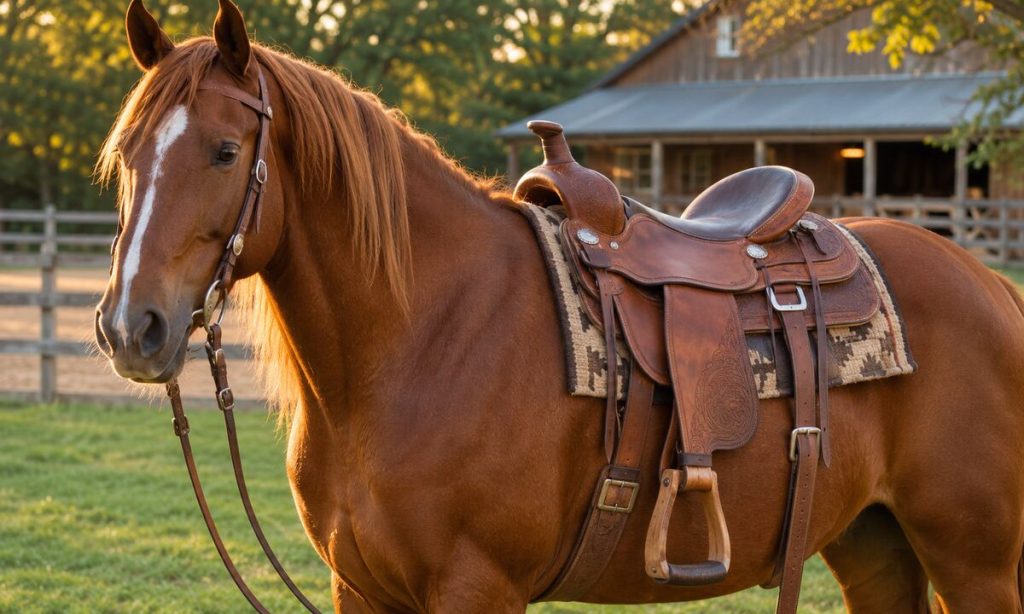
A smooth gait does not eliminate pressure from a poorly fitted saddle. Gaited horses vary widely in back shape, shoulder angle, wither height, and muscling, so a saddle labeled for gaited breeds will not automatically suit every horse. The best saddle for gaited horse riding distributes the rider’s weight evenly, stays stable through movement, and allows comfortable shoulder and back motion.
We compared seven distinct Western, trail, and synthetic models marketed for gaited horses or built around gaited saddle trees. Our picks include treeless and flex-tree designs alongside more traditional saddles. Treat each as a fitting candidate, not a guaranteed match. A qualified saddle fitter should evaluate the horse standing and moving with the intended pad, girth, and rider before regular use.
Quick Picks
The models differ in tree approach, materials, seat size, and riding purpose. Confirm exact measurements and a trial fit before ordering.
| Product | Best For | Key Advantage | Buy | |
|---|---|---|---|---|
| HILASON Western Gaited Flex Trail Treeless Saddle | Treeless-style trail comparison | Hand-tooled leather construction | View on Amazon | Jump to Review |
| HILASON Hand-Tooled Western Gaited Flex-Tree Saddle | Flex-tree Western trial | Four-way flex-tree design | View on Amazon | Jump to Review |
| Tough1 Royal King Aspen Gaited Trail Saddle | Traditional trail styling | Round skirt and padded seat | View on Amazon | Jump to Review |
| Tough1 Royal King Memphis Gaited Saddle | Black Western gaited option | Distinct Royal King model | View on Amazon | Jump to Review |
| Abetta Gaited Comfort Trail Saddle | Lightweight synthetic trail rides | 20-pound Cordura construction | View on Amazon | Jump to Review |
| King Series Gaited SQ Synthetic Saddle | Synthetic gaited saddle comparison | Gaited synthetic design | View on Amazon | Jump to Review |
| Double T Light Oil Leather Gaited Western Saddle | Traditional leather pleasure riding | Semi-quarter bars and 6.5-inch gullet | View on Amazon | Jump to Review |
HILASON Western Gaited Flex Trail Treeless Saddle

- Treeless-style approach
- Gaited trail positioning
- Full-grain leather finish
- Five-inch cantle
- Traditional Western styling
- Treeless fit requires expertise
- Listed weight is substantial
The HILASON Gaited Flex Trail Treeless Saddle is a Western-style leather saddle marketed for gaited riding and general trail use. Its hand-tooled full-grain leather gives it a traditional appearance, while the listing emphasizes a treeless construction and a five-inch cantle. A horse owner may consider this model when comparing how different support structures interact with the back. However, a treeless label does not mean there are no pressure concentrations or that the saddle adapts perfectly to every horse.
The advertised weight is around twenty-eight pounds, so it is not especially light simply because it is described as treeless. Consider the horse’s size, work, rider weight, and overall equipment load. Correct pressure distribution depends on the saddle’s internal structure, the intended pad, and the rider’s balance. A saddle fitter should examine spine and wither clearance, shoulder movement, and the way the saddle remains positioned through the horse’s natural gait. Do not rely only on the broad advertised gullet range.
Leather construction also means ongoing care. Keep the seat, fenders, rigging, and stitching clean and inspect them after wet trail rides. Check the exact listing for included cinch straps or accessories, as packages may vary. This model is a candidate for someone who prefers Western leather styling and wants to evaluate treeless-style support. Its suitability must be established by a mounted fitting trial, not by the assumption that gaited horses automatically benefit from a more flexible construction.
My Recommendation
I would shortlist HILASON’s treeless-style Gaited Flex only with access to a saddle fitter familiar with treeless pressure distribution. The traditional leather finish is appealing, but fit, pad compatibility, and the listed weight deserve close review. Arrange a controlled trial and reassess the horse’s back after riding before committing.
HILASON Hand-Tooled Western Gaited Flex-Tree Saddle

- Four-way flex-tree claim
- Full-grain harness leather
- Gaited-horse positioning
- Includes tack components
- Hand-tooled finish
- Flex does not ensure fit
- Accessory quality needs checking
This second HILASON model uses a four-way flex-tree construction rather than the treeless format of the first pick. The manufacturer positions the movement of its tree as useful for gaited horses, which often need unrestricted shoulder and back action during natural gait. The saddle also features hand-tooled harness leather, a Western seat, and matching tack components in the advertised package. These details make it a distinct construction choice, although the exact tree shape remains more important than the promise of flexibility.
A flex-tree saddle still has support points that can pinch, bridge, or rock if its geometry mismatches the horse. Have the fitter check bar angle, front clearance, saddle length, and pressure with the rider seated. Flex behavior under load is difficult to judge by hand in a tack room; a movement evaluation is essential. Compare the advertised seat size and stirrup range to the rider’s leg position. Included bridles or cinches must be fitted individually rather than assumed suitable because they arrived with the saddle.
The full-grain leather will require regular cleaning and conditioning, particularly after sweat, rain, or dusty trail conditions. Check buckles, stitching, and rigging hardware before each ride. This option suits shoppers who want to compare a structured tree with some engineered movement against a more conventional rigid gaited tree. It is not a substitute for a horse-specific fit assessment or a fix for poor riding balance. A good outcome depends on matching all components together.
My Recommendation
The HILASON flex-tree is a useful comparison for riders curious about controlled tree movement. I would select it only after verifying the model’s bar geometry and having a fitter examine it under a mounted rider. Confirm the included accessories separately; an attractive tack package is not evidence that the horse will be comfortable.
Tough1 Royal King Aspen Gaited Trail Saddle

- Gaited trail designation
- Padded leather seat
- Round skirt profile
- Quick-change fender buckles
- Classic border tooling
- Seat-size choices may vary
- Exact tree dimensions need checking
The Tough1 Royal King Aspen is a gaited trail saddle listed with a smooth padded leather seat and a rounded skirt. That rounded outline can be worth discussing with a fitter when a horse has a shorter weight-bearing back, though shape alone does not prove the bars are the correct length. The saddle also includes quick-change fender buckles, long saddle strings, and decorative border tooling. These are practical and aesthetic differences from the more elaborate HILASON options above.
The selected listing indicates a fifteen-inch seat, which will suit some riders but not everyone. Seat size must be evaluated with the rider wearing typical riding clothing and using the intended stirrup length. A rider forced too far forward or backward can alter pressure across the horse’s back. Verify the manufacturer’s actual tree and gullet specifications before ordering. The gaited designation is a useful search filter, but the saddle must still clear the withers and allow free shoulders during movement.
For an everyday trail saddle, small details matter: fender adjustment should be secure, stirrups should sit comfortably, and saddle strings must not snag surrounding tack. Clean and condition leather as directed and inspect girth attachments before riding. This model may appeal to owners wanting a straightforward gaited Western saddle without a large accessory package. The key decision is whether its tree and seat work for this particular horse-and-rider combination, not whether the round skirt looks proportionate from the side.
My Recommendation
I like the Aspen as a traditional trail-style candidate for riders who fit its seat size and prefer a rounded skirt. Ask the seller for complete tree specifications and schedule a saddle-fit assessment. Do not assume the rounded outline is automatically ideal for a short-backed gaited horse; check bar contact and movement first.
Tough1 Royal King Memphis Gaited Saddle

- Gaited-model designation
- Black finish
- Listed 16.5-inch seat
- Western riding layout
- Alternative to Aspen profile
- Sparse listing specifications
- Fit details must be confirmed
The Tough1 Royal King Memphis is another Western saddle specifically labeled for gaited horses, sold in a black finish with a listed sixteen-and-a-half-inch seat. The larger listed seat distinguishes it from the fifteen-inch Aspen selection, which may matter for rider fit. However, the product listing provides comparatively limited technical detail. When saddle information is sparse, avoid filling in assumptions about the bar angle, tree construction, weight, or skirt length based on photographs of similar-looking products.
Before buying, request official measurements and a clear description of the tree, rigging, and materials. Confirm the seat size is measured by the maker’s stated method and that the rider sits balanced without leaning against the cantle. A professional fitter should evaluate the horse’s wither shape, shoulder travel, and back contact while moving. The saddle’s black finish is aesthetic; it says nothing about suitability. Compare return conditions carefully in case the initial trial reveals unsuitable pressure or instability.
Owners may appreciate having a different seat size in a gaited-marketed Western model, but buying a saddle based solely on that dimension can be expensive. Measure the horse and rider, inspect construction when the saddle arrives, and take short controlled rides before longer trail work. Check the pad recommended for that tree and do not use layers of extra padding to compensate for a mismatch. The Memphis is a candidate to investigate with verified specifications, not a guaranteed match for any gaited breed.
My Recommendation
Consider the Royal King Memphis if you need a gaited-listed Western model with a larger advertised seat than the Aspen. I would request tree dimensions and material details before placing an order, because the available listing is brief. A documented trial fit is especially important when specifications are sparse.
Abetta Gaited Comfort Trail Saddle

- Gaited poly-solid tree
- About 20 pounds listed
- 1000D Cordura covering
- Extra-cushioned seat
- Endurance-style stirrups
- Synthetic appearance differs
- Six-inch gullet not universal
The Abetta Gaited Comfort Trail Saddle is built around a poly-solid tree described for gaited horses and a Cordura nylon exterior. The selected listing gives an approximate weight of twenty pounds, noticeably lighter than some heavy leather Western options. It also advertises an extra-cushioned seat, endurance stirrups, and a 1000-denier synthetic finish. For a rider who frequently tacks up alone or travels with multiple horses, reduced lifting weight may be a meaningful practical benefit.
Although the saddle is specifically designed around a gaited-style tree, the listed six-inch gullet and narrow-angle bars will not fit all gaited horses. A fitter should assess the entire front-to-back contact area, clearance, and rider balance. Lighter weight can make handling easier, but it does not prevent poor pressure distribution when a tree is too narrow or otherwise mismatched. Confirm skirt length and rigging position against the horse’s back and the rider’s preferred trail seat. Test at the horse’s actual working gait.
The synthetic exterior may be simpler to clean after muddy rides than ornate leather tooling, but all stitching, fleece, webbing, and hardware still need inspection. Follow the manufacturer’s cleaning guidance and allow the saddle to dry properly. This is a particularly useful comparison point because it pairs a gaited-specific tree with a lightweight everyday construction. It can be a strong candidate for the right horse-and-rider combination, provided the narrower design is genuinely compatible rather than merely visually appealing.
My Recommendation
Abetta is my first model to investigate for riders seeking a lighter gaited trail saddle. The listed twenty-pound construction and cushioned seat are practical advantages. However, the six-inch gullet and tree angle are specific, not universal. Have a fitter confirm the horse’s shoulder and back clearance before choosing it.
King Series Gaited SQ Synthetic Saddle

- Gaited model labeling
- Synthetic exterior
- Reinforced stirrup bars
- Western seat format
- Alternative care profile
- Limited sizing disclosure
- Tree details need confirmation
The King Series Gaited SQ Synthetic Saddle is a Western-style synthetic option listed with reinforced stirrup bars. It offers an alternative to the leather-focused models for riders who prioritize an easier-care outer material. The product title identifies a gaited design and a listed fifteen-and-a-half-inch seat, but publicly visible features are brief. Treat those details as a prompt for further investigation rather than assuming an exact fit profile or a particular tree construction that the listing does not clearly establish.
The key questions for the seller are the tree’s actual bar angle, gullet opening, length, load rating, and recommended pad. Confirm the rider’s fit at the stated seat size, because synthetic Western saddles can place the rider differently from another brand with the same nominal number. Reinforced stirrup bars are a useful construction point, yet the rest of the rigging deserves equal attention. Have a saddle fitter check wither clearance, back contact, and movement while the horse performs its normal gait.
A synthetic exterior may be convenient when rides involve regular rain or dusty trails, but it still needs proper cleaning, drying, and inspection for cracking or loose components. Do not assume synthetic saddles are automatically lighter, because internal materials vary. Review product weight and any manufacturer warranty before comparing it with the Abetta model. This is a legitimate gaited-labeled alternative, but uncertainty around detailed specifications means it belongs on a shortlist for careful fitting rather than a confident mail-order recommendation.
My Recommendation
I would consider King Series Gaited SQ only after obtaining clear tree and weight specifications. Its synthetic format and reinforced stirrup bars are noteworthy, but the listing leaves important fit questions unanswered. Compare it with Abetta if you prefer synthetic materials, and decide by mounted fit rather than by finish.
Double T Light Oil Leather Gaited Western Saddle

- Gaited Western positioning
- Top-grain leather finish
- Published 6.5-inch gullet
- Wood fiberglass-covered tree
- Adjustable stirrups
- Fixed tree shape needs fit
- Semi-quarter bars not universal
The Double T Light Oil Leather saddle combines Western pleasure styling with a gaited-horse marketing designation. The listing supplies a six-and-a-half-inch gullet, semi-quarter horse bars, and a fiberglass-covered wood tree. Those concrete specifications are helpful when discussing potential fit with a saddle professional, though none can settle the question by itself. The leather tooling and traditional horn suit riders who prefer classic Western appearance over a more utilitarian synthetic shell.
Because semi-quarter bars have a defined shape, a horse with a very different shoulder and back profile may not match them. A fitter should assess bar angle and pressure through the saddle’s length, not only place a ruler across the front. Check that the listed sixteen-inch seat suits the rider and that the stirrup adjustment range works with leg length and riding position. A saddle that rocks or bridges at rest may cause discomfort when the horse moves. Avoid trying to correct major tree mismatch with thick pads.
Keep the leather clean and conditioned, and inspect the fiberglass-covered tree, rigging, and all attachment points for damage over time. The tree construction means this model has a different support philosophy from the treeless HILASON and the lightweight synthetic Abetta. For a horse whose back genuinely matches this tree, traditional design may work well. For another horse of the same breed, it may be wrong. The Double T is most useful when its published specifications allow a meaningful preliminary fit discussion.
My Recommendation
Double T is my traditional leather option for buyers who want known basic tree measurements to discuss with a fitter. Its semi-quarter bars and 6.5-inch gullet are not inherently ideal for gaited horses. I would buy only after confirming bar shape, full-length contact, rider seat fit, and satisfactory movement in a trial.
How to choose best saddle for gaited horse
To find the best saddle for gaited horse comfort, begin with the horse’s anatomy and the rider’s balance. Product labels and listed gullet measurements are only screening clues, not a complete saddle fit.
Assess tree shape, shoulder freedom, and contact
Gaited horses include Tennessee Walking Horses, Missouri Fox Trotters, Rocky Mountain Horses, and individual crosses with different back profiles. Evaluate the full tree angle, bar flare, length, and contact area; a single gullet-width number cannot predict fit. The saddle should provide suitable wither and spine clearance without bridging, rocking, or concentrating pressure on the shoulders or loins. The horse must be able to move freely through its natural gait without discomfort. Have a trained fitter inspect the saddle at rest and while a rider walks, turns, and performs the intended gait. Look for signs such as resistance, short strides, pinned ears, uneven sweat patterns, or soreness after work. None of these signs proves one specific diagnosis, but they warrant re-evaluation. Recheck fit after changes in weight, muscle, or riding intensity.
Choose treeless, flex-tree, or traditional construction carefully
Treeless designs can feel close to the horse and may adapt to some outlines, yet they are not automatically more comfortable or suitable for every weight and rider. Pressure distribution depends on the entire construction, appropriate pad, and rider balance. Flex-tree saddles provide some engineered movement but still have distinct tree geometry and contact points. Traditional gaited trees are built with specific angles, though brand labels and model names do not guarantee compatibility. Inspect the exact listing for tree type and verify what it means with the manufacturer. Consider how long the saddle is relative to the horse’s weight-bearing area. The choice should depend on a fitting assessment rather than a belief that one design category is universally superior. Use any trial or return period to arrange a professional evaluation before riding extensively.
Match rider position, tack, weight, and care
A saddle must fit the rider as well as the horse. A cramped or oversized seat can shift the rider’s weight, affecting stability and comfort. Compare seat size, cantle height, stirrup length, rigging position, and the security of attachment hardware. Leather requires appropriate cleaning and conditioning; synthetic materials can reduce maintenance but still need inspection at seams and stress points. Check total saddle weight in relation to the horse’s overall workload and the rider’s equipment. Choose a pad recommended for the specific tree and fitted horse, not an extra-thick pad intended to disguise a poor match. Before each ride, inspect girth and billet condition, stirrup leathers, and any worn stitching. A saddle that appears suitable in the barn should also be checked after a short test ride and again as the horse’s musculature changes.
Frequently Asked Questions
Here are practical answers to the questions owners often ask before choosing.
Do gaited horses need a special saddle?
Not every gaited horse needs a model explicitly marketed as gaited. They need a saddle that fits their individual back, allows shoulder movement, distributes pressure, and positions the rider correctly.
Is a treeless saddle better for a gaited horse?
Not automatically. Treeless and treed designs can both fit or misfit. Padding, pressure distribution, rider weight, and a professional fitting assessment matter.
Can a wide gullet fix saddle pressure on a gaited horse?
Gullet width is only one measurement. Tree angle, bar contact, length, panel design, and wither clearance all affect fit.
Should I use a thick pad to fix a poor saddle fit?
No. Additional padding can change pressure and may worsen an already unsuitable fit. Have a qualified fitter assess the saddle and recommend an appropriate pad.
When should saddle fit be rechecked?
Reassess after significant weight or muscle changes, a new rider, changes in work, or signs of discomfort. A short movement test after initial fitting is important.
Final Verdict
The best saddle for gaited horse riding is the one proven comfortable on the specific horse with the intended rider. The HILASON treeless and flex-tree options offer different construction approaches; Royal King Aspen and Memphis provide other Western gaited designs. Abetta’s Gaited Comfort Trail emphasizes a lightweight synthetic build.
King Series Gaited SQ and Double T’s gaited Western saddle expand the material and tree choices. Do not infer fit from a breed name, a price, or an advertised gullet size. Arrange a professional trial, monitor movement and back response, and prioritize stability and pressure distribution.
Affiliate disclosure: This article contains Amazon affiliate links. If you purchase through them, PetAdvisorPro may earn a commission. As an Amazon Associate I earn from qualifying purchases.









