
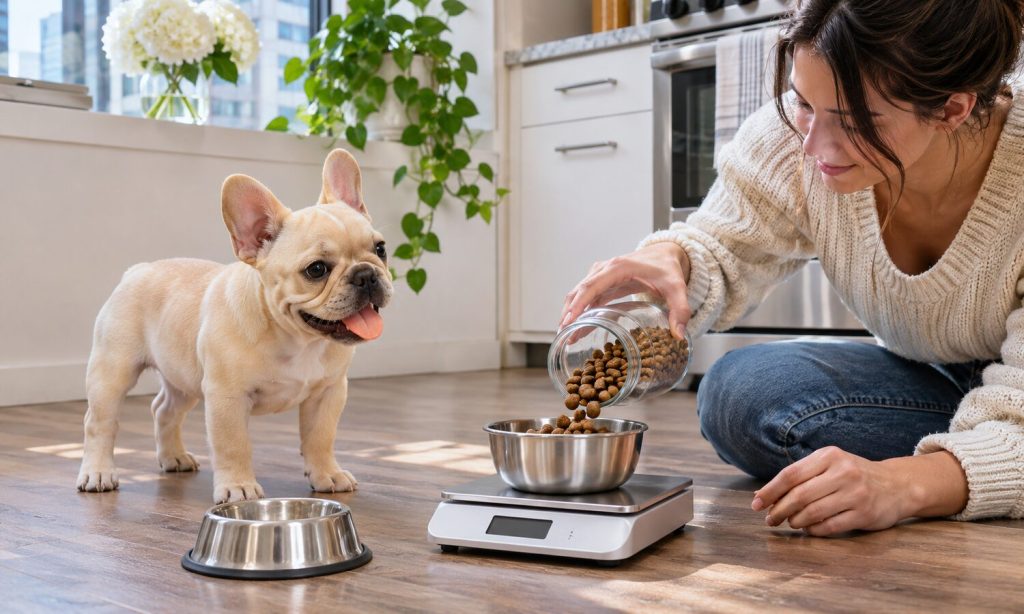
A French Bulldog puppy has a small stomach and a rapidly changing body, so feeding the right quantity takes more than following a generic scoop recommendation. When owners ask how to size a dog food for french bulldog puppy, they usually need to calculate portions, choose an appropriate kibble texture, and adjust meals as the puppy grows. These are related but different decisions. Breed averages alone cannot tell you the correct number of calories for your individual puppy.
This guide explains how to size French Bulldog puppy food using the nutritional label, calories per cup or gram, a body-condition assessment, and a veterinarian’s feeding plan. It also covers meal frequency, safe feeding equipment, signs of overfeeding or underfeeding, and diet transitions. The goal is steady growth and comfortable meals, not a fixed portion chart that ignores activity, health, and development.
Choose a Growth-Appropriate Food First
A French Bulldog puppy should eat a complete and balanced diet intended for the puppy’s life stage. The nutritional adequacy statement is more meaningful than a marketing image or claims about small-breed energy. Check that the package gives calories per cup, can, or gram so you can measure a daily ration. A small kibble piece can be easier for some puppies to chew, but kibble size itself does not prove the nutrients are balanced. Wet and dry puppy diets may have very different calorie densities.
Consult your veterinarian if the puppy has frequent regurgitation, digestive upset, a congenital concern, or difficulty chewing. French Bulldogs can have airway and heat-tolerance limitations related to their brachycephalic structure, and breathlessness during or after eating is not simply a portioning issue. Do not push a struggling puppy to finish food. A suitable diet and comfortable feeding setup should support calm eating and normal activity.
Use the label’s feeding guide as a starting point
Feeding charts are estimates, not promises that every puppy of the same weight needs identical calories. Find the row for your puppy’s current weight and age if the manufacturer uses both. Note whether the recommendation is a daily total or a per-meal amount; confusing those can double or triple food intake. Record the food’s calories and the amount you actually serve. Your veterinarian can refine the target using growth, body condition, health, and treat consumption.
Measure Portions With Calories and a Scale
Start with the total daily energy target established from the product guide and your veterinary advice. If the food lists calories per gram, divide the target calories by that value to estimate grams per day. For example, a hypothetical 400-calorie target and a food containing 4 calories per gram would yield 100 grams daily; these figures illustrate arithmetic only and are not a recommendation for any real puppy. Recheck the calculation whenever the food or target changes.
A kitchen scale is usually more repeatable than a heaping cup, especially when pellets vary in shape. If you use a measuring cup, level it consistently and compare it with the manufacturer’s serving size. Divide the daily amount among the appropriate number of puppy meals. Subtract calories from training treats or chews rather than adding them on top without thought. A young dog receiving too many extras can gain weight even while the main bowl looks modest.
Separate daily ration from each individual meal
Puppies often eat several smaller meals through the day. Your veterinarian can recommend a schedule suitable for age and medical needs. Once a daily ration is set, divide it by the number of meals without multiplying the total. A written feeding chart on the refrigerator prevents two household members from accidentally feeding the same puppy twice. Keep meal times predictable and allow the puppy to eat in a low-stress place away from competing pets.
Adjust for Growth and Body Condition
Weigh your French Bulldog puppy at regular intervals and keep a simple growth log. Body-condition scoring considers ribs, waist, and abdominal tuck rather than weight alone. A puppy should grow steadily without an excessive fat covering. Your veterinary team can show you how to assess the ribs gently and account for normal puppy proportions. If the dog is losing weight, becoming potbellied, or gaining rapidly, do not make a dramatic unsupervised calorie change; identify the reason first.
As a puppy matures, energy needs relative to body weight change. A feeding amount that worked last month may not fit now. Review portions when you open a new bag, at vaccination and wellness visits, or after a meaningful activity change. A puppy recovering from illness or surgery may need a different plan. Avoid using adult-dog weight charts to set a growing puppy’s exact daily calories.
Treats and extras can distort the calculation
Training rewards are useful but can add substantial calories when offered many times each day. Consider using part of the puppy’s measured daily kibble allowance for training. Keep high-value treats small and ask your veterinarian how to keep extras within an appropriate share of the diet. Do not add supplements or fatty toppings solely to speed growth. Consistent meals allow changes in stool and appetite to be evaluated more easily.
Fit the Bowl and Texture to the Puppy
A low, stable bowl may help a French Bulldog puppy eat without chasing food across the floor. Choose a size that gives easy access without forcing the muzzle into a deep container. Some puppies find wide shallow dishes more comfortable; others eat normally from a standard bowl. Wash dishes after meals and provide clean drinking water. If the puppy gulps food, a safe slow-feeding approach may help pace eating, but persistent coughing or gagging needs veterinary evaluation.
Do not treat a special bowl as a cure for breathing difficulties or gastrointestinal illness. Watch for labored breathing, blue or pale gums, repeated regurgitation, choking, or collapse; urgent symptoms require immediate veterinary attention. If dry kibble seems too hard to manage, consult the veterinarian before changing food texture or soaking a large batch. Any moistened food should be handled as perishable and not left standing for extended periods.
Change foods without losing portion accuracy
When switching from one puppy food to another, compare calories per gram or cup before reusing the old scoop amount. Follow a gradual transition when medically appropriate, with veterinary advice for sensitive digestion. Sudden changes can cause loose stools. Keep both labels during the switch and record any stomach problems. Do not use a recalled or spoiled formula for mixing. A successful transition maintains energy, normal stools, and a suitable growth trend.
Recognize Problems a Portion Chart Cannot Fix
Persistent diarrhea, vomiting, poor growth, marked hunger with weight loss, or refusal to eat can indicate illness, parasites, or an inappropriate diet. These problems need a veterinary assessment rather than constant portion adjustments. Dogs may also eat quickly because of competition, anxiety, or learned habits. Feed in a quiet area and monitor behavior without assuming every issue is nutritional. A puppy with airway distress should be evaluated promptly even if eating appears otherwise normal.
Keep a record of food name, lot, calories, grams fed, treats, stool quality, and weight. This makes veterinary conversations more productive. Avoid comparing your French Bulldog puppy with another owner’s puppy that has a different body condition or activity level. The most useful feeding chart is the one you revise based on your dog’s actual progress and professional guidance.
Frequently Asked Questions
Sizing French Bulldog puppy food means translating a nutrition plan into consistent portions. These questions clarify common calculations and feeding decisions.
Always reassess with your veterinarian if growth, digestion, or breathing symptoms suggest the current plan may be unsuitable.
How much should my French Bulldog puppy eat per day?
There is no single correct amount. Use the food’s calories, current weight, growth stage, body condition, and veterinarian-guided energy target.
Can I use a scoop instead of a kitchen scale?
You can, but a scale provides more consistent grams. A cup is reliable only when filled and leveled the same way each time.
How many meals should a French Bulldog puppy have?
Young puppies commonly need multiple smaller meals. Ask your veterinarian to set frequency for your puppy’s age and health.
Should I change portions as my puppy grows?
Yes. Review weight, body condition, and calorie needs regularly rather than continuing an old amount unchanged.
Does smaller kibble mean a better puppy food?
No. Kibble size is a handling consideration; nutritional adequacy and feeding suitability are separate priorities.
Final Words
To size a dog food for french bulldog puppy, start with a complete growth diet and a realistic daily calorie target. Translate that target into measured grams using the label, divide the ration among meals, and include treats in the total. Check growth and body condition frequently, because one fixed scoop cannot serve every stage of puppyhood.
Our French Bulldog food guide discusses feeding formats, and introducing a new food to a Frenchie addresses transitions. Ask your veterinary team to refine a plan for your individual puppy, especially when growth, stool changes, or breathing issues complicate mealtimes.









