
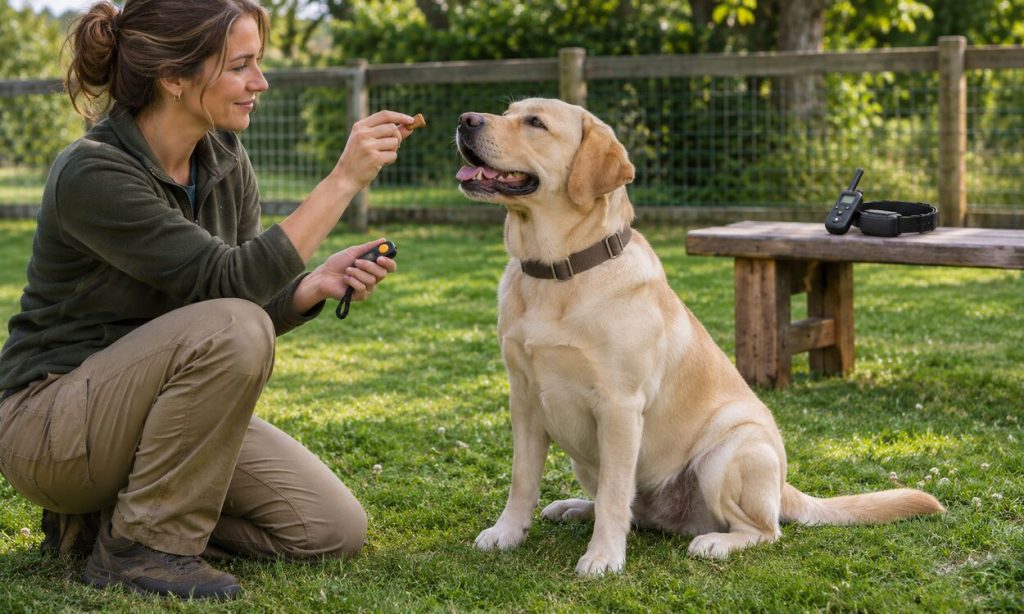
Large dogs can pull hard on a leash, bark loudly, or become distracted at a distance. Some owners therefore consider electronic shock collars, sometimes called e-collars. The most important question, however, is not how strong a shock the device can produce. It is whether the proposed training method is humane, effective, and appropriate for the dog’s behavior. Veterinary behavior specialists caution that pain-based tools can increase fear and other welfare risks.
This guide explains what features matter most in a shock collar for big dogs from a safety-first perspective. It covers sizing, contact points, device reliability, environmental risks, and why reward-based training is generally preferred. For a related discussion of existing electronic-collar use and alternatives, see our guide to shock collars for large dogs.
The Most Important Feature Is Whether the Tool Should Be Used
The American Veterinary Society of Animal Behavior recommends reward-based methods for dog training and advises against aversive techniques, including electronic shock collars. Aversive stimulation may stop an outward behavior temporarily without teaching the dog what to do instead. In some dogs, it can increase anxiety, avoidance, or aggressive responses. Size and physical strength do not remove these concerns. A large dog can experience the same fear and confusion as a small one.
Before considering equipment, identify the behavior you want to change and why it occurs. Barking may signal alarm, boredom, pain, or separation-related distress. Pulling may reflect limited training or overwhelming distractions. A veterinarian can evaluate health factors, while a qualified reward-based trainer can build a safe plan. IMO, choosing humane training before hardware is the decision that most protects both the dog and the relationship with its owner.
Fit and Neck Safety Still Matter
If an owner already possesses a collar and wants to assess its safety, inspect whether the strap fits without slipping or pressing excessively into the neck. An oversized dog does not justify a collar that is painfully tight. Contact points may cause rubbing or skin injury, particularly with prolonged wear, trapped moisture, or poor placement. Check the skin and coat regularly, and discontinue use if redness, swelling, sores, or distress appears. Never leave questionable equipment on an unattended dog.
Neck size, body size, and temperament are different variables. A product’s weight or breed label may not match an individual dog’s neck shape. Bulky receivers can catch on obstacles, while narrow straps may create pressure points. For everyday identification and leash control, a properly fitted non-aversive collar or harness is usually the more appropriate tool. Seek veterinary advice for dogs with neck pain, respiratory issues, skin disease, or previous trauma.
Electronic Reliability Does Not Guarantee Humane Results
Remote collars vary in signal range, stimulation levels, waterproofing claims, battery behavior, and controls. A signal can be interrupted, the owner can press a wrong button, or the dog can associate an unpleasant event with an unrelated person or animal. The presence of many adjustable settings does not solve the underlying welfare problem. Repeated or unpredictable stimulation can confuse the animal and disrupt learning.
Do not interpret a dog’s silence or stillness as proof of comfort. A frightened dog may freeze or avoid behavior without understanding the intended cue. For recall, reward-based protocols can build reliable responses by gradually increasing distance and distractions. Training should begin in controlled safe places, not by relying on an electronic correction to prevent a dog from running into traffic. Secure physical management remains vital.
Look for Safer Training Characteristics Instead
Consider a comfortable harness, secure leash, rewards the dog values, and a predictable marker such as a click or verbal cue. These are not punishments; they help communicate the desired behavior and reinforce it. A credentialed reward-based trainer can tailor sessions to the dog’s size, mobility, and learning history. Break tasks into manageable stages, practice in low-distraction settings, and gradually increase challenge only when the dog is succeeding.
Reward-based methods still involve rules and clear boundaries. For a big dog that jumps, for example, reward four paws on the floor and manage greetings so jumping is not repeatedly rehearsed. For barking, identify the trigger and teach alternative responses. Consult a veterinary behaviorist if aggression, panic, or severe reactivity is present. No device is a shortcut around evaluating a serious behavior problem.
Understand the Risks Around Water, Batteries, and Damage
Any electronic pet device also introduces ordinary equipment hazards. Inspect housings for cracks, compromised seals, loose wires, or damaged batteries. Water resistance claims depend on the exact design and condition. A wet or malfunctioning device should be taken out of service. Keep batteries away from dogs that chew objects, and contact a veterinarian promptly if a battery is swallowed. Do not use improvised repairs that leave sharp edges or exposed electrical parts.
Store electronic collars out of reach when not in use, and remove any uncomfortable equipment during rest. A dog can snag a collar on crates, fencing, or household furniture. If a dog suddenly scratches at its neck or becomes withdrawn, inspect for injury and seek veterinary guidance. Equipment-safety checks are necessary but do not make aversive shock an acceptable behavior intervention under veterinary behavior guidance.
Discuss Specific Problems With Qualified Professionals
A large dog barking at visitors may need controlled exposure and reward for calmer behavior, while a dog barking when alone may need an assessment for separation-related distress. The plan differs because the underlying emotion differs. Similarly, recall, jumping, and leash pulling are separate skills. A veterinarian and qualified reward-based trainer can identify realistic goals and choose strategies that avoid punishment or overwhelming the animal.
Ask a trainer what methods they use, what credentials they hold, and how they manage fear, pain, and unexpected reactions. Be cautious of promises to fix every behavior in one session or claims that a painful correction is the only choice for a powerful breed. Our training-collar safety considerations can help frame questions, but no product selection replaces a humane training plan.
Know When to Stop and Seek Help
If a dog shows fear, trembling, avoidance, yelping, neck irritation, or escalated aggression associated with a collar, stop using it and seek veterinary or behavior support. Do not increase stimulation to overcome a lack of response. A dog that suddenly changes behavior may be in pain or ill, so a medical assessment may be necessary before training. For severe aggression or self-injury, specialist assistance is especially important.
Physical safety comes first: use secure fencing, appropriate leashes, and supervised management while teaching new skills. Do not leave a dog loose near traffic because a device promises a long range. Keep training sessions short, reward success, and allow the dog to disengage when overwhelmed. A safe plan should improve the animal’s confidence and communication, not merely suppress visible behavior.
Frequently Asked Questions
Questions about electronic collars are best approached through veterinary behavior evidence and the dog’s specific problem. Device features cannot by themselves establish welfare or effectiveness.
Owners should prioritize safe management, medical assessment when indicated, and a qualified reward-based training plan instead of treating stronger stimulation as a better feature.
Are shock collars recommended for large dogs?
The American Veterinary Society of Animal Behavior recommends reward-based training and advises against aversive methods, including shock collars, regardless of dog size.
Does a bigger dog need stronger stimulation?
No humane training principle says a larger dog needs more pain. Increasing stimulation can increase fear or injury risks and does not establish understanding.
Can a collar cause skin irritation?
Yes. Poor fit, pressure, moisture, or contact points can cause irritation and sores. Remove equipment and seek care for damaged skin.
What can replace a shock collar for recall training?
A secure long line, supervised training area, clear cues, and valuable rewards can support gradual recall training with a qualified reward-based trainer.
When should I seek a veterinary behaviorist?
Seek specialized help for aggression, intense fear, separation-related distress, or behavior that places people or the dog at risk.
Final Words
From a safety standpoint, the features that matter most when discussing a shock collar for big dogs are the risks, not the intensity settings. Veterinary behavior authorities recommend humane reward-based training and caution against aversive electronic stimulation. Fit and electrical inspection can prevent some equipment hazards, but they do not eliminate learning and welfare concerns.
Choose practical management, comfortable non-aversive equipment, and professional behavior guidance. If a dog already shows fear or injury, discontinue shock-collar use and seek help. A large dog deserves clear communication and a training process built on trust.
Reference
Veterinary behavior guidance supports reward-based training and explains the welfare risks of aversive methods. The distinction between device hardware and training ethics is essential.
The sources below informed the training recommendations. They do not endorse any electronic collar or suggest that aversive methods become safer simply through technical adjustments.
- American Veterinary Society of Animal Behavior, “Humane Dog Training Position Statement” (2021; current position).
- American Veterinary Society of Animal Behavior, “How to Choose a Trainer” position guidance.
- American Veterinary Society of Animal Behavior, “What Are Reward-Based Training Methods for Dogs and Cats?”









