
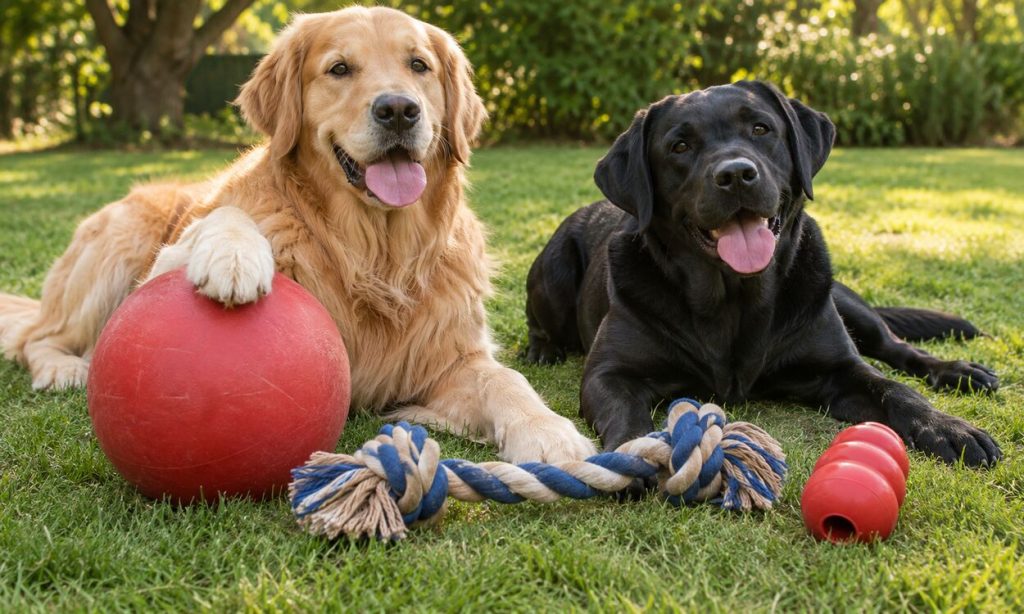
Large dogs can make ordinary toys look surprisingly small, but size alone does not determine whether a toy is suitable. A strong chewer may destroy a soft ball, while a gentle senior may prefer a light toy that is easy to carry. Safe choices depend on the dog’s mouth size, chewing style, mobility, play setting, and how the object behaves under supervision. Comparing toys by how they will be used provides more value than comparing bright colors or dramatic durability claims.
This guide explains how to compare toys for big dogs by fit and use. It covers chewing, fetch, tug, puzzles, water play, material safety, and replacement signs. For an overview of common toy formats, see our guide to toys for big dogs. Here, the emphasis stays on matching play to the individual dog’s needs.
Start With Mouth Size and Swallowing Risk
A toy must be large enough that the dog cannot swallow it whole or lodge it at the back of the mouth. The ASPCA advises matching chews and play objects to a pet’s size and chewing habits. Test with the dog supervised rather than assuming an ‘XL’ package fits every large breed. Objects can compress, break, or change shape as they wear, so examine the dimensions and design rather than relying solely on the original size.
Consider the dog’s jaw shape and usual carrying behavior. A narrow long chew might be manageable for one dog but awkward for another. Balls should not fit completely behind the dog’s front teeth where they may become a choking hazard. Any toy with detachable parts, squeakers, or plastic eyes needs special scrutiny. A favorite object that becomes small through chewing should be retired promptly.
Compare Chew Toys by Firmness and Wear
Chewing provides activity and can occupy a dog, but extremely hard items can injure teeth. Cornell veterinary guidance cautions about hard bones, antlers, hooves, and manufactured objects. A chew toy should not shatter or shed pieces that the dog can swallow. Consider the material’s flexibility, surface texture, and whether it can withstand the dog’s actual chewing pattern. A toy that seems indestructible may still be too rigid for safe teeth.
Inspect new chew toys during initial sessions. Look for cracking, tearing, sharp ridges, or loose fragments after use. Some dogs nibble gently while others bite repeatedly at one seam; the same object may last very differently in those households. Replace a damaged toy instead of cutting off broken sections and giving the remainder back. For aggressive chewers, supervised shorter sessions may be more appropriate than leaving a toy available all day.
Use Fetch Toys for Movement, Not Hard Impacts
Fetch can support physical activity and training, but the right toy should be comfortable to carry and visible in the play area. Consider bounce, weight, and how the dog retrieves the object. Very heavy balls can strain teeth or joints, and repeated abrupt stops may be unsuitable for dogs with orthopedic issues. Start with moderate throws in safe open areas and keep sessions short enough to avoid exhaustion or overheating.
A floating object may be useful near water, but water play adds separate hazards. Never throw toys into unsafe currents or assume every dog is a strong swimmer. Outdoor toys should be easy to find and clean, and they should not resemble small stones or objects the dog might accidentally ingest. Supervise fetch around other dogs to prevent collisions or competition. IMO, a gentle game repeated safely is better than one spectacular, risky throw.
Choose Tug Toys for Controlled Shared Play
A tug toy should offer enough length for both dog and handler to hold safely without fingers near teeth. Check seams, stitching, handles, and any attached pieces. Very thin or fraying ropes can shed strands that should not be swallowed. Set simple play rules: start and stop on a cue, release when asked, and keep the dog’s body position comfortable. A tug game should be cooperative, not a test of which participant can jerk harder.
Teach exchange and release using rewards rather than intimidation. Avoid sharp pulls for puppies, seniors, or dogs with known neck or dental problems. If the dog becomes overaroused or guards the toy, pause and seek guidance on safer play patterns. Do not leave a frayed rope unsupervised with a strong chewer. Our dog-toy safety mistakes guide discusses related supervision habits.
Assess Puzzles and Enrichment Toys by Difficulty
Puzzle toys can slow feeding, provide mental work, and encourage problem-solving. The best design is stable, appropriately sized, and free from small detachable parts. Begin with easy tasks so the dog succeeds, then increase difficulty gradually. Count food rewards toward daily calories. Do not choose a complicated puzzle simply because a larger dog looks too clever for a simple one; frustration is not the objective.
Some dogs solve puzzles by pawing gently while others flip or chew the whole toy. Observe the first few sessions and remove an object that is being destroyed. Wash food-contact surfaces according to their instructions and let them dry fully. If a dog has dental or mobility limitations, select an activity that does not require forceful biting or awkward bending. Enrichment should be accessible and enjoyable.
Plan for the Setting, Age, and Health of the Dog
An athletic adult dog may enjoy energetic fetch, while a dog recovering from surgery may need quiet scent games under veterinary guidance. Consider age, weight, joint comfort, heat tolerance, and any physical restrictions. Toys used in the home must not block hallways, create tripping risks, or tempt two dogs into guarding the same object. Separate play sessions may be best when animals have different styles or resource concerns.
Rotate a few safe objects to maintain interest without filling the house with unnecessary clutter. Keep outdoor toys clean and dry to reduce grime and mold. If the dog suddenly refuses a favorite chew or drops it on one side, ask the veterinarian about dental pain. Toy choice cannot diagnose health problems, but behavior changes may reveal discomfort worth investigating.
Inspect and Replace Toys Before They Become Dangerous
Check every toy for missing sections, frayed fibers, damaged seams, cracks, or loose attachments before offering it again. Clean according to the material’s instructions and avoid harsh residues. Throw away damaged items that could become choking or intestinal obstruction hazards. Cornell notes that non-digestible swallowed objects can cause serious gastrointestinal blockages. Prompt veterinary attention is needed if a dog swallows a piece or develops vomiting, pain, or lethargy.
Keep a simple note of which types survive normal play and which fail quickly. This helps choose an appropriate category the next time without making unsupported durability promises. A toy that lasts for months in a gentle household may fail in minutes with a powerful chewer. Safe fit, supervised use, and timely replacement are ongoing responsibilities rather than one-time purchase decisions.
Frequently Asked Questions
Toy suitability changes with a dog’s chewing habits and health. Use first-hand supervised observations rather than packaging claims alone.
Remove anything that breaks, fits too far into the mouth, or encourages swallowing. Contact a veterinarian immediately when a swallowed object or choking is suspected.
How big should a ball be for a large dog?
Large enough that the dog cannot swallow it or lodge it at the back of the mouth. Observe carrying behavior during supervised play.
Are harder chew toys always more durable and safer?
No. Very hard objects can damage teeth, and a rigid toy is not necessarily safer than a flexible one. Check veterinary guidance and inspect for wear.
Can I leave rope toys with my dog unattended?
Avoid leaving fraying rope toys with strong chewers. Swallowed strands or detached sections can pose medical risks.
Do puzzle toys work for large dogs?
Yes, when appropriately sized and durable for the individual dog. Start with easy activities and monitor for destructive chewing.
When should I replace a dog toy?
Replace it if it develops sharp edges, cracks, loose pieces, significant fraying, or a size that could be swallowed.
Final Words
To compare toys for big dogs, evaluate mouth size, material firmness, chewing behavior, play purpose, and supervision. Fetch, tug, chewing, and puzzles serve different needs, so the safest setup may include several types rather than one all-purpose toy.
Prioritize comfort and inspect toys before every session. Replace damaged objects promptly and adapt activities to the dog’s age and mobility. Our guide to play needs in Golden Retrievers offers related examples of activity variety.









