
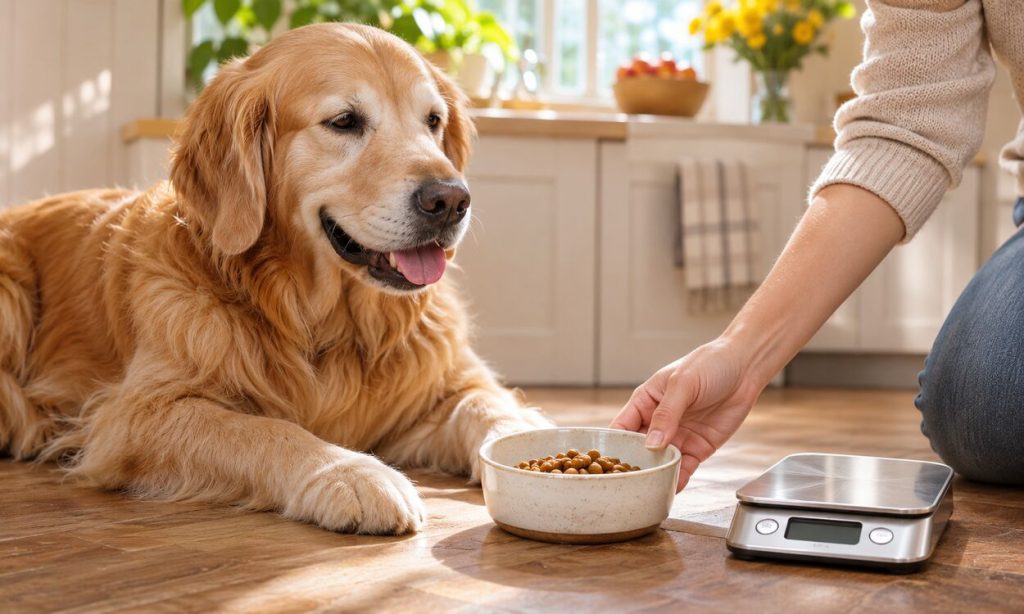
When a dog is being treated for cancer, measuring food portions is not simply a weight-management exercise. Appetite may fluctuate with treatment, pain, nausea, or the disease itself, and muscle loss can occur even when body weight changes little. Owners need a reliable way to record what the dog eats while a veterinarian or oncology team determines appropriate calories and nutrition. There is no single serving size for every dog with cancer.
This guide explains how to size dog food portions for dogs with cancer safely, using a veterinary feeding plan, food-label calories, and careful monitoring. It also covers body condition, palatability, small meals, food hygiene, and when intake becomes urgent. Our guide to food considerations for dogs with cancer offers related questions to discuss with the care team.
Start With the Oncology Team’s Nutritional Goal
A dog with cancer may need to maintain weight, regain lost muscle, or manage another illness that changes diet needs. The 2026 American Animal Hospital Association oncology guidance emphasizes individualized nutrition and the importance of addressing appetite loss. Ask the treating veterinarian which outcomes matter now and whether a veterinary nutrition specialist should participate. Do not rely on generic breed-based feeding calculators for a dog whose metabolism or intake has changed.
Bring a detailed history of the current diet, treats, supplements, medications, and recent weight changes. Mention mouth pain, vomiting, diarrhea, swallowing trouble, and any treatment that affects eating. A food plan should work with the diagnosis, stage of treatment, and comorbid conditions. If the dog has kidney disease, pancreatitis, or diabetes as well, a seemingly simple calorie change may be inappropriate without professional oversight.
Assess Body Weight and Muscle Condition Together
Weigh the dog with the same reliable scale when possible and record dates. Ask the veterinary team to assess body-condition score and muscle-condition score, which describe different aspects of body composition. The World Small Animal Veterinary Association recommends both measurements during nutritional evaluation. A dog can lose muscle while maintaining fat or fluid weight, so a single number on the scale may hide a meaningful decline.
Check whether the dog can eat comfortably, walk normally, and rest without distress. Muscle loss or an abrupt reduction in food intake warrants discussion with the team. Do not aim for weight loss because the dog was overweight before the cancer diagnosis unless the veterinarian still supports that goal. In many cases, keeping the dog eating a complete balanced diet and preventing further unintended loss is the near-term priority.
Translate the Calorie Plan Into Actual Portions
Once the veterinarian specifies a daily energy target, read the food’s calorie statement. It may list kilocalories per cup, can, pouch, or kilogram. Convert the prescribed daily calories into measured portions for that exact food. A kitchen scale can be more reliable than a variable scoop, particularly for partial cans or mixed feeding. Record how much is offered and how much remains after the meal. Offered calories are not the same as consumed calories when appetite is poor.
If the veterinarian adjusts the target, update the feeding chart before the next meal. Different formulas vary in energy density, so moving from a lower-calorie food to a richer diet requires a new portion calculation. Do not apply the old scoop size automatically. If several caregivers feed the dog, assign one clear record-keeping system. This reduces accidental double feeding and helps the oncology team evaluate changes in actual intake.
Choose Nutritional Completeness and Palatability
Cornell veterinary oncology guidance highlights the value of a complete, balanced diet that supplies enough calories. During treatment, getting the dog to eat may be more important than following unproven theories about starving tumors or avoiding entire nutrient groups. The veterinary team can consider a more energy-dense or palatable formula when necessary. Avoid raw diets and improvised supplements without approval, especially when treatment affects immune defenses or digestion.
Texture and meal temperature can influence acceptance. Some dogs prefer soft food when oral discomfort is present; others eat better with familiar crunch. Ask the veterinarian about safe warming or feeding adjustments. Never force-feed a dog who is struggling to swallow or breathe. If eating causes pain, the underlying problem needs attention. A food-label comparison cannot replace supportive medications or other oncology care.
Offer Manageable Meals and Monitor Symptoms
The clinical team may recommend several smaller meals rather than one large serving if nausea or poor appetite is a problem. Follow their specific schedule. Keep fresh water available and monitor drinking, vomiting, stool, and activity. Avoid adding fatty leftovers, salty broth, or new treats that complicate symptom tracking. A consistent small meal that the dog comfortably eats is more informative than repeatedly changing recipes without knowing the cause of refusal.
Discuss nausea control, pain management, or appetite support promptly when intake drops. AAHA oncology guidance emphasizes early supportive care and alternatives when a pet cannot consume adequate food. These are medical decisions; do not use human appetite medicines or unprescribed supplements. For food safety, refrigerate leftover wet food promptly, use clean utensils, and keep medication-handling areas separate from meal preparation. These ordinary precautions are especially important during complex treatment.
Track Trends Instead of Guessing from One Meal
A daily log can include the exact food, measured calories offered, amount eaten, vomiting or diarrhea, weight checks, and medication timing. Bring it to oncology visits. A dog may eat poorly after treatment but recover intake later, while a persistent decline may require timely intervention. The log can help clinicians distinguish a temporary pattern from a significant trend. Record observable facts rather than assigning cause without evidence.
Do not judge success solely by whether the bowl is empty. Monitor the dog’s comfort, hydration, interest in food, muscle condition, and enjoyment of daily activities. Veterinary goals may shift during treatment or palliative care. Ask what level of intake is adequate and when to contact the team between appointments. That conversation is safer than increasing portion sizes blindly when the dog is refusing food.
Recognize When Professional Help Cannot Wait
Call the veterinarian promptly for poor appetite, repeated vomiting, significant diarrhea, pain, dehydration, or difficulty swallowing. Urgency depends on the dog’s condition and treatment, so follow the team’s specific thresholds. A dog receiving chemotherapy may require extra precautions with food preparation and drug handling. Do not store medications used for cancer treatment alongside food or handle hazardous medicines in a food preparation area without professional instruction.
If a dog cannot eat enough despite supportive care, the veterinary team may discuss additional nutritional assistance. This is not a failure by the owner. It reflects the complexity of serious illness. Focus on the dog’s welfare and the clinician’s advice, and avoid websites that promise a diet will cure cancer. The purpose of nutrition is to support health and quality of life alongside appropriate medical care.
Frequently Asked Questions
Feeding a dog with cancer requires individual assessment. These answers explain how to use a veterinary plan and what changes deserve follow-up.
Do not transfer a portion calculation from one dog or food to another. Verify the calorie content of the exact diet and monitor actual intake.
How many cups should a dog with cancer eat?
There is no universal amount. The veterinarian should establish a calorie goal and the food label supplies calories per cup or other unit for measuring portions.
Can a dog with cancer eat ordinary complete food?
Often a complete balanced diet is appropriate, but the oncology team should assess appetite, weight, treatment and other conditions before changes.
Should I cut carbohydrates to starve cancer?
Do not follow an unsupported diet theory or restrict major nutrients without veterinary advice. Adequate calories and complete nutrition are priorities.
What if the dog only eats small amounts?
Record actual intake and contact the veterinary team promptly. Nausea, pain, or other effects may need treatment, and nutritional support options may exist.
How do I know if portions are working?
Track eaten calories, weight, muscle condition, symptoms and quality of life with the care team. A clean bowl alone does not show nutritional adequacy.
Final Words
To size dog food portions for a dog with cancer, begin with the oncology team’s daily nutritional goal, then translate that target into measured servings of a complete, appropriate diet. Record what the dog eats and reassess body and muscle condition regularly. Appetite support and quality of life matter as much as mathematical precision.
Seek veterinary help when intake falls, symptoms worsen, or weight and muscle decline. Avoid unsupported claims that one food or supplement treats cancer. Calm, accurate feeding records and individualized professional care make the most useful difference.
Reference
Veterinary oncology and nutrition guidance informed the emphasis on adequate calories, palatability, body condition, and timely supportive care.
These references address nutritional support during cancer treatment. None establishes a universal cancer-diet dose, and none replaces an individual feeding plan from the dog’s clinician.
- American Animal Hospital Association, “2026 AAHA Oncology Guidelines for Dogs and Cats,” supportive care section.
- Cornell University College of Veterinary Medicine, “Diet Decisions During Cancer Treatment.”
- Cornell University College of Veterinary Medicine, comparative cancer research supportive therapy guidance.
- World Small Animal Veterinary Association, Global Nutrition Toolkit (body and muscle condition assessment).









