
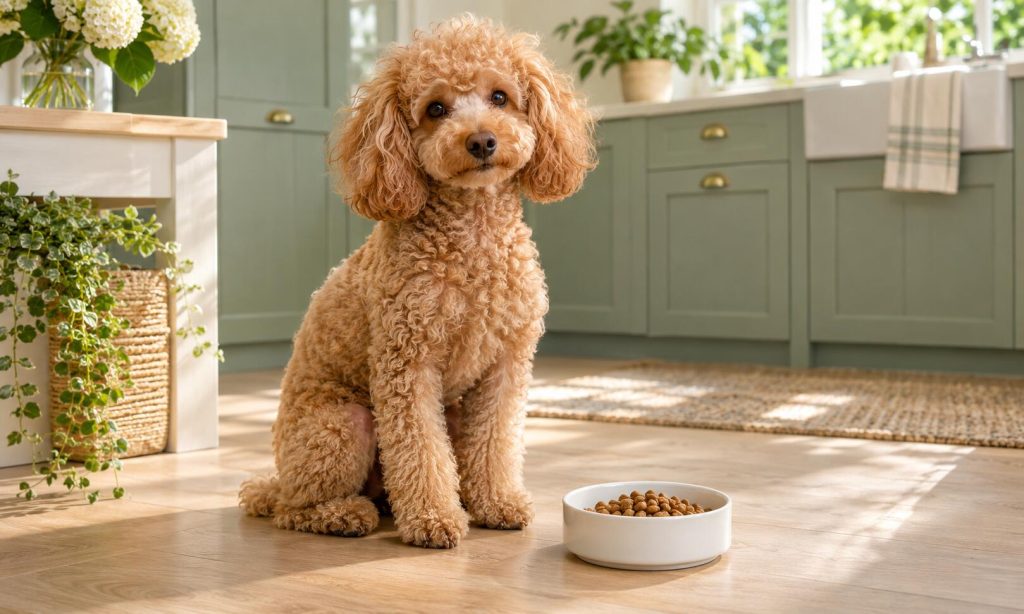
Miniature Poodles are active dogs needing complete nutrition matched to size and stage. The best dog food for miniature poodles should support a healthy body condition without assuming every poodle needs a special coat formula. Small kibble can be convenient, while wet food may help a dog that prefers softer meals. Puppies, energetic adults, and older dogs do not necessarily share the same nutritional requirements.
I compared seven current products: breed-specific adult dry and wet foods, a matching puppy recipe, everyday small-breed choices, and a senior formula. The listing features are real, but no food cures skin allergies, dental disease, or joint pain. Compare calories, the nutritional adequacy statement, and your dog’s appetite and condition. If the dog is losing weight, scratching intensely, or avoiding chewing, seek a veterinary assessment rather than relying on a marketing promise about coat shine or digestion.
Quick Picks for Miniature Poodles
Start with the right stage: puppy growth, adult maintenance, or senior feeding. Then compare kibble size, calories per serving, and texture. Breed-specific Poodle formulas are options, not requirements for every healthy Miniature Poodle.
| Product | Best For | Key Advantage | Buy | |
|---|---|---|---|---|
| Royal Canin Poodle Adult Dry | Breed-specific adult kibble | Curly-coat nutrients and jaw-shaped pieces | View on Amazon | Jump to Review |
| Hill’s Small & Mini Adult 1–6 | Everyday small adult feeding | Chicken, brown rice, digestible ingredients | View on Amazon | Jump to Review |
| Royal Canin Poodle Adult Wet | Soft breed-oriented meals | Loaf-in-sauce texture | View on Amazon | Jump to Review |
| Purina Pro Plan Small Breed | High-activity small adults | Chicken protein and probiotics | View on Amazon | Jump to Review |
| Royal Canin Poodle Puppy | Poodle puppy growth | Breed-specific small puppy kibble | View on Amazon | Jump to Review |
| Hill’s Small & Mini Senior 7+ | Older Miniature Poodles | Senior-focused small kibble | View on Amazon | Jump to Review |
| Blue Buffalo Life Protection Small | General small adult variety | Chicken and antioxidant bits | View on Amazon | Jump to Review |
1. Royal Canin Poodle Adult Dry — Best Breed-Specific Kibble

What We Like
- Poodle-focused adult recipe
- Ten-month-plus intended age
- Specialized muzzle-friendly kibble
- EPA and DHA for coat support
- Muscle-maintenance protein focus
What We Don’t Like
- Breed label does not set calorie needs
- Not an allergy treatment
Royal Canin Poodle Adult is a breed-specific dry food intended for purebred Poodles ten months and older. Its current listing describes kibble shaped for the breed’s straight muzzle and jaw, along with EPA and DHA from fish oil for skin and coat support. These are tangible differences from a generic small-breed diet. A Miniature Poodle with a healthy appetite may handle the kibble well, but size and chewing comfort still vary. Evaluate the food’s nutritional adequacy statement and calorie content rather than choosing only because a Poodle appears on the package.
The curly coat may be one reason owners notice the formula’s fatty-acid features. However, proper brushing, bathing, grooming, and veterinary skin care remain essential. Omega nutrients cannot treat an infection or a genuine food allergy. If your Poodle develops recurring itching or sore skin, ask the veterinarian for diagnosis instead of frequently switching brands. The listing also highlights protein to maintain muscle. Portion size and adequate exercise matter as much as protein wording. A small, energetic dog can become overweight if training treats and meal additions are not counted.
The ten-pound bag may be convenient for a Miniature Poodle household, provided it stays fresh and protected from moisture. Transition slowly and monitor stool and appetite. If the dog has dental pain, a specialized kibble shape will not fix it. This product is most attractive to owners who like a defined breed-specific maintenance option and whose adult Poodle tolerates its ingredients. Its limitation is that the same healthy dog might thrive on a suitable complete small-breed adult food at a different price. Choose by real fit, not branding alone.
My Recommendation
Royal Canin Poodle Adult Dry is my breed-specific comparison for a healthy Miniature Poodle in the appropriate adult stage. I like the clear kibble design and coat-oriented nutrient features. I would still use body condition to set portions. If dental or skin problems are present, investigate them rather than expecting the recipe to cure them.
2. Hill’s Science Diet Small & Mini Adult — Best General Maintenance

What We Like
- Defined adult one-to-six age range
- Small-breed kibble
- Chicken and brown rice
- Digestibility-oriented ingredients
- Balanced energy formulation
What We Don’t Like
- Not specifically a Poodle formula
- Chicken may not suit dietary restrictions
Hill’s Science Diet Small & Mini Adult 1–6 is a straightforward maintenance alternative to breed-specific Poodle kibble. The product listing describes chicken and brown rice, digestible ingredients including pumpkin, and balanced energy for small dogs. Many healthy Miniature Poodles do not need more specialization than a complete food suited to their adult life stage and body condition. The small-kibble format may be practical for their mouths, but it does not replace dental care. Check the package’s calories per cup and nutritional adequacy statement before determining whether the food fits the dog.
This recipe can serve as a stable baseline when a Poodle’s activity fluctuates between long walks and quiet indoor days. Measure daily servings, then include treats in the total. Small dogs have less calorie margin for generous extras than their owners sometimes realize. Use weight and rib coverage as useful checkpoints. The adult 1–6 label is a product category, not a universal transition rule. Puppies and older dogs may need a different recipe. If a dog is unusually thin, lethargic, or gaining weight rapidly, seek veterinary guidance before repeatedly changing portions by guesswork.
The four-and-a-half-pound bag can be useful for one small dog and may support good freshness after opening. Keep the food sealed away from heat and damp. Introduce any change gradually and observe stool, coat, and appetite. A chicken-based recipe is not appropriate for every diagnosed protein restriction, and a retail adult formula cannot substitute for a prescription diet. Hill’s stands out for clear adult nutrition and manageable kibble rather than a Poodle-specific promise. It deserves consideration when the owner wants a simple, steady diet and the dog tolerates it well.
My Recommendation
Hill’s Small & Mini Adult is my general adult alternative when a Miniature Poodle does not need breed-specific features. Its simple life-stage positioning and smaller kibble are practical. Measure portions and avoid uncounted training treats. If the dog has a condition requiring clinical nutrition, a veterinarian should review the food choice.
3. Royal Canin Poodle Adult Wet — Best Soft Breed-Specific Option
What We Like
- Poodle adult wet formula
- Three-ounce portions
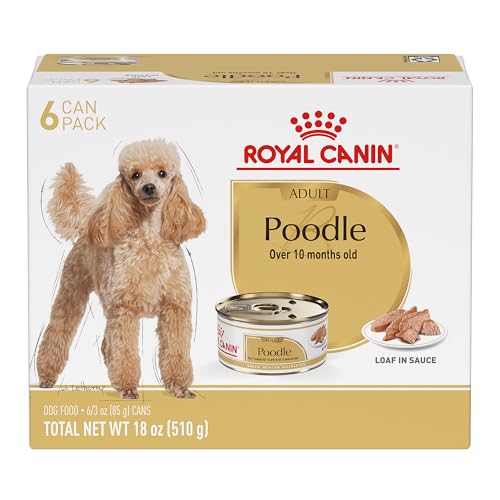
- Soft loaf-in-sauce texture
- Omega-3 coat support
- Protein and L-carnitine features
What We Don’t Like
- Wet food needs prompt storage
- Six-pack may be costly for full feeding
Royal Canin Poodle Adult Wet provides a different texture with a breed-targeted approach. The listing describes a soft loaf in sauce, a Poodle adult age target of ten months and older, omega-3 fatty acids, and tailored protein with L-carnitine. This can be appealing for a Miniature Poodle that enjoys wet meals or benefits from individually sized portions. It is not automatically better than kibble, and a softer option does not solve a painful tooth. If the dog suddenly struggles to chew, arrange a dental examination rather than only changing texture.
The three-ounce portions can help an owner build a consistent feeding schedule. However, using a complete wet diet requires checking how many portions meet daily calories and whether the selected product is labeled complete and balanced for that stage. If mixed with dry food, calculate both rather than using a pouch as an uncounted topper. Coat nutrients are useful formulation features, not proof that a dog’s curls will become healthier. Good coat care also depends on grooming technique and identification of skin disease when it occurs. Keep fresh water available despite the wet texture.
Wet foods must be handled carefully. Check the manufacturer’s directions for unopened and opened storage, refrigerate leftovers, and clean bowls promptly. The smaller six-pack may be a convenient trial, but compare the daily cost with a dry or mixed routine. For a picky but otherwise healthy adult Poodle, the loaf texture may be worth testing gradually. It is less useful if the dog needs a strict medical diet or has reactions to ingredients in the selected recipe. The main advantage here is a breed-focused soft meal with portion flexibility.
My Recommendation
Royal Canin Poodle Wet is my texture-based alternative for an adult Miniature Poodle that enjoys soft food. I like the portioned loaf format and breed-specific nutrient focus. Read the nutritional adequacy statement and count every pouch. Sudden chewing difficulty deserves a dental check, not just a move from dry to wet meals.
4. Purina Pro Plan Small Breed — Best for Active Poodles
What We Like
- Active small-breed positioning
- Real chicken first
- Live probiotics included
- Small kibble pieces
- Six-pound bag
What We Don’t Like
- Not a specialized allergy recipe
- Energy needs must be measured
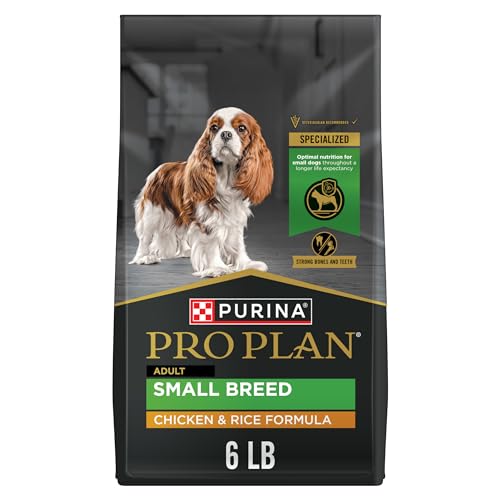
Purina Pro Plan Small Breed Chicken & Rice is marketed to highly active small adults. The listing emphasizes chicken as the first ingredient, a higher-protein formulation, and guaranteed live probiotics for digestive support. A Miniature Poodle that enjoys agility, long walks, or frequent play may be a reasonable candidate for an active small-breed food. The label does not automatically justify larger servings. Body condition, daily calorie intake, and activity remain the deciding factors. Even an athletic dog can gain weight when family members offer extra snacks throughout the day without accounting for them.
Probiotics may be useful formulation features, but they are not cures for chronic diarrhea or food intolerance. If your Poodle has recurrent stomach upset, ask the veterinarian whether testing or a diet trial is needed. The chicken recipe is not a hypoallergenic product just because it mentions digestion. It may be unsuitable for a dog on a strict protein elimination program. Keep food changes controlled, with a gradual transition and consistent treats. Watch stools, appetite, and weight over several weeks. Poodles can be sensitive to changes in routine even when a formula is nutritionally sound.
The six-pound bag may offer a practical compromise between per-pound cost and freshness for one dog. Compare calories per serving with the previous food before keeping the same scoop amount. Maintain regular dental care, grooming, and exercise outside the feeding plan. Purina Pro Plan stands out for clearly described active-small-breed needs, not for exclusive Poodle suitability. If a calm senior dog eats the same calories as a young athlete, the food may no longer fit. Choose this product for the individual dog’s lifestyle and stage rather than relying on its higher-protein reputation.
My Recommendation
Purina Pro Plan Small Breed suits an energetic adult Miniature Poodle whose nutrition needs fit an active small-dog formula. The live probiotic feature and chicken protein are clear. I would compare calories and continue weight checks. For a sedentary or senior dog, a different maintenance stage may be more appropriate.
5. Royal Canin Poodle Puppy — Best Growth-Stage Formula
What We Like
- Poodle puppy-specific formula
- Eight-weeks-to-ten-months target
- Puppy-size shaped kibble
- Antioxidants including vitamin E
- EPA and DHA for developing coat
What We Don’t Like
- Not adult maintenance food
- Growth feeding amounts change rapidly
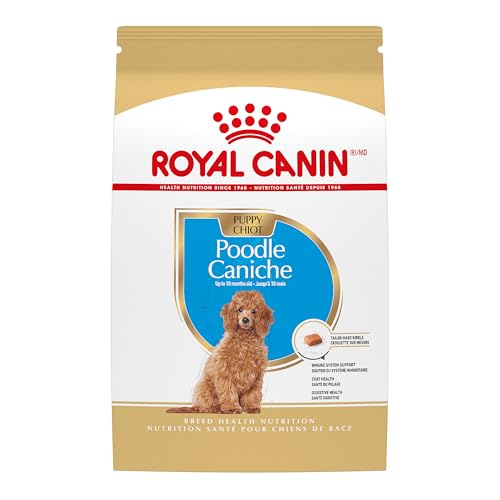
Miniature Poodle puppies need growth nutrition rather than the adult food used by an older household dog. Royal Canin Poodle Puppy is intended for purebred Poodles approximately eight weeks to ten months old. The listing describes a specialized pickup-and-chew kibble, antioxidants including vitamin E, and omega fatty acids for the developing coat. These are growth-stage features, not signs that the puppy will never need grooming or veterinary preventive care. Choose a complete formula with a nutritional adequacy statement for growth. The precise amount depends on current body weight, age, and the puppy’s development.
Small puppies eat relatively small meals, so careful measuring matters. Establish a predictable daily schedule and reassess portions as weight changes. Use puppy-appropriate training treats sparingly and include them within total calories. A growth diet should not be replaced by adult weight management food merely because the puppy looks round after a meal. If the puppy has persistent diarrhea, poor appetite, or slow growth, consult a veterinarian. Feeding adjustments sometimes help, but medical conditions also need to be considered. Avoid jumping among multiple puppy products every few days.
This two-and-a-half-pound bag can support freshness for a young dog with small daily intake. Check the product’s guidance for transition to adult food, then confirm timing with your veterinarian. The manufacturer’s age range is a useful general guide, not a substitute for individual assessment. Maintain fresh water, clean bowls, and gradual food transitions. Royal Canin Puppy is appealing for owners who prefer a Poodle-specific growth design. Its limitation is simple and important: this is not the right formula for adult or senior maintenance once the dog reaches the appropriate next stage.
My Recommendation
Royal Canin Poodle Puppy is the clear growth-stage choice among these seven. Its age target and small shaped pieces are helpful starting points. I would check the growth adequacy statement and adjust portions as the puppy develops. Do not continue puppy food indefinitely or replace it early without veterinary guidance.
6. Hill’s Science Diet Small & Mini Senior 7+ — Best Older-Dog Option

What We Like
- Senior small-breed target
- Chicken and brown rice recipe
- Balanced mineral formulation
- Digestible ingredients including pumpkin
- Moderate bag size
What We Don’t Like
- Seven-plus label is not a medical diagnosis
- Not designed for growing or active young adults
Hill’s Science Diet Senior Adult 7+ Small & Mini offers a life-stage alternative for an older Miniature Poodle. The listing describes balanced nutrients, digestible ingredients including pumpkin, and a chicken-and-brown-rice dry formula. It also highlights mineral and antioxidant features associated with maintenance of healthy organs. These are routine senior nutrition points, not treatment for kidney or heart disease. An older dog’s food should be chosen using appetite, weight, activity, dental comfort, and current veterinary findings. A seven-year birthday does not automatically mean a healthy dog needs a therapeutic diet or an abrupt change.
Age can bring lower activity and changes in body condition. Measure food carefully and review weight trends, especially if the Poodle becomes less interested in exercise. Some seniors need more attention to muscle maintenance, while others have health issues that require specific diets. Do not infer that a general senior formula is safe for kidney disease solely because the listing mentions balanced minerals. A veterinarian may recommend diagnostic tests before altering food. Similarly, if the dog begins dropping kibble or chewing only on one side, arrange a dental examination. Small pieces do not eliminate oral pain.
The four-and-a-half-pound bag may be convenient for one small senior dog. Store it properly and transition slowly. Keep daily routines predictable, and avoid high-calorie extras that crowd out balanced meals. If you compare this with the Poodle Adult Dry food, focus on calories and current needs rather than assuming a breed formula always wins. Hill’s Senior stands out because it recognizes that older dogs can have a different maintenance context. Its limitation is that a general senior recipe cannot replace a clinical treatment plan when chronic disease is diagnosed.
My Recommendation
Hill’s Small & Mini Senior 7+ is my older-dog comparison when a Miniature Poodle needs ordinary senior maintenance and tolerates chicken. I like its stage-specific nutrition and manageable kibble. Ask the veterinarian about sudden weight, appetite, or energy changes. A senior label cannot substitute for diagnosis or a prescribed therapeutic diet.
7. Blue Buffalo Life Protection Small Breed — Best Alternative Adult Kibble

What We Like
- Chicken first ingredient
- Complete small-breed adult focus
- Small breed energy positioning
- LifeSource antioxidant bits
- Five-pound bag
What We Don’t Like
- Antioxidant language is not a treatment
- Chicken not suitable for every restriction
Blue Buffalo Life Protection Small Breed provides another complete adult option for owners comparing nutrition and taste rather than buying only a Poodle-specific bag. The listing highlights chicken as the first ingredient, carbohydrate sources for energy, and its LifeSource Bits containing antioxidant nutrients. Those are formulation features, but they do not demonstrate that every Miniature Poodle needs this product. Evaluate the full ingredient list, nutritional adequacy, calories, and your dog’s response. A small-breed energy focus may suit an active adult, but feeding too much can still lead to unwanted weight gain.
The mixed kibble pieces may appeal to some dogs while others prefer a uniform texture. Introduce them gradually and watch for changes in appetite or stool. If a dog refuses a new product, avoid turning mealtime into a stressful contest. Check dental comfort if reluctance appears suddenly. Blue Buffalo’s chicken formula is not suitable for a strict chicken-free elimination trial. Likewise, a claimed immune-support blend cannot treat infections, allergies, or illness. Those conditions require veterinary attention. Ordinary complete food should support general health, not be advertised as a cure for an unrelated disease.
The five-pound bag can work well for a single Miniature Poodle with modest daily portions. Check its calorie content against the current diet and measure servings accordingly. Maintain normal grooming and dental care. Poodles can have different activity levels despite sharing the same breed name, so observe actual weight and muscle condition. I like Blue Buffalo as an alternative for a healthy adult household that wants to compare ingredient patterns and kibble format. Its limitation is that brand-specific antioxidant language should not overshadow basic nutritional suitability and consistent feeding.
My Recommendation
Blue Buffalo Life Protection Small Breed is a practical alternative adult kibble for a healthy Miniature Poodle that tolerates chicken. I like the small pack and clear adult energy focus. The extra antioxidant bits are not a reason to overlook calories or dental care. Compare the full diet to the dog’s actual needs.
How to choose best dog food for miniature poodles
Miniature Poodles are small but can be lively and long-lived. Choose complete nutrition for their actual life stage, then evaluate calories, kibble size, coat-related nutrients, and daily feeding practicality. No single brand is necessary for every Poodle.
Match Food to Puppy, Adult, or Senior Needs
A young Poodle requires a diet nutritionally adequate for growth. The adult maintenance stage should follow development and veterinary guidance rather than only a printed month. Older dogs may need changes in energy intake or medical nutrition based on examinations. A senior formula is not a treatment for kidney, heart, or dental disease. Read the nutritional adequacy statement to confirm the intended stage and compare calories. If a Miniature Poodle has an established medical condition, ask the veterinarian whether a therapeutic food takes priority over breed-specific marketing. Use the same caution when evaluating weight-control claims. The WSAVA nutrition guidance emphasizes individualized assessment.
Keep a record of appetite, weight, stool, and activity. Sudden changes are reasons to investigate, not merely triggers to switch flavors. Introduce a new formula gradually and keep treats stable during the trial.
Compare Coat Features Without Overpromising
Poodles have a continuously growing curly coat that requires regular grooming. Some formulas highlight EPA, DHA, other omega fatty acids, and protein for skin and coat support. These can be reasonable nutritional features, but the food cannot untangle mats or treat infections. If the dog scratches intensely, develops recurrent ear problems, or shows red skin, consult a veterinarian. A true food allergy requires a structured evaluation; ordinary retail coat formulas do not diagnose one. Choose ingredients that suit known tolerances and a complete diet that supports the dog’s overall condition. Avoid adding unmeasured oils simply to improve coat appearance.
Kibble shape can make pickup more comfortable, but chewing behavior varies. A small dog with dental pain needs examination even if it eats soft food. Compare actual texture and safe portion sizes rather than trusting specialized claims.
Use Measured Portions and Watch Body Condition
Small bodies offer less room for calorie errors. Measure servings consistently, add wet and dry meal calories together, and include training treats in the total. Check rib coverage and waist with the veterinarian’s guidance. A highly active Poodle may need more energy than a quiet companion, but the difference should be based on real condition, not a breed stereotype. Our guide to estimating daily dog food portions provides a practical starting process. If your dog eats slowly, choose manageable kibble and a calm feeding space. Do not force rapid eating or leave wet leftovers unrefrigerated.
Review the dog food label comparison guide for life-stage and calorie details. For older dogs needing soft meals, our guide to senior canned-food features outlines useful texture questions. The best Poodle food is one the dog tolerates consistently while staying at a healthy weight.
Frequently Asked Questions
Choose by the particular Miniature Poodle’s age, eating habits, and nutritional needs.
Does a Miniature Poodle need Poodle-specific dog food?
No. A complete small-breed food suited to the dog’s life stage can be appropriate. Breed-specific options may offer convenient kibble shapes and targeted nutrient features.
What should a Miniature Poodle puppy eat?
A complete puppy growth diet with measured portions. The exact transition to adult food should follow development and veterinary advice, not just a bag’s suggested age.
Is wet food better for a Miniature Poodle?
Not automatically. Wet and dry complete foods can both fit. Wet meals add moisture and soft texture; dry kibble is convenient. Count total calories when mixing them.
Can Poodle coat food cure itching?
No. Omega fatty acids may support normal skin and coat nutrition, but allergies, infections, or parasites require diagnosis. Seek veterinary advice for persistent itching.
How do I avoid overfeeding a Miniature Poodle?
Measure food, count treats, monitor body condition and weight, and adjust calories based on actual activity. A veterinarian can help set a target for growing, senior, or overweight dogs.
Final Verdict
Royal Canin Poodle Adult Dry is the most breed-specific kibble option, and its wet counterpart offers a soft texture. Hill’s Small & Mini and Blue Buffalo are sensible adult alternatives, while Purina Pro Plan suits active small dogs. Royal Canin Poodle Puppy belongs to the growth stage, and Hill’s Small & Mini Senior is aimed at older pets. Choose complete nutrition and measured calories before emphasizing coat claims. Your Miniature Poodle’s life stage, health, and feeding response should decide the winner.
Affiliate disclosure: This article contains Amazon affiliate links. If you purchase through them, PetAdvisorPro may earn a commission. As an Amazon Associate I earn from qualifying purchases.









