
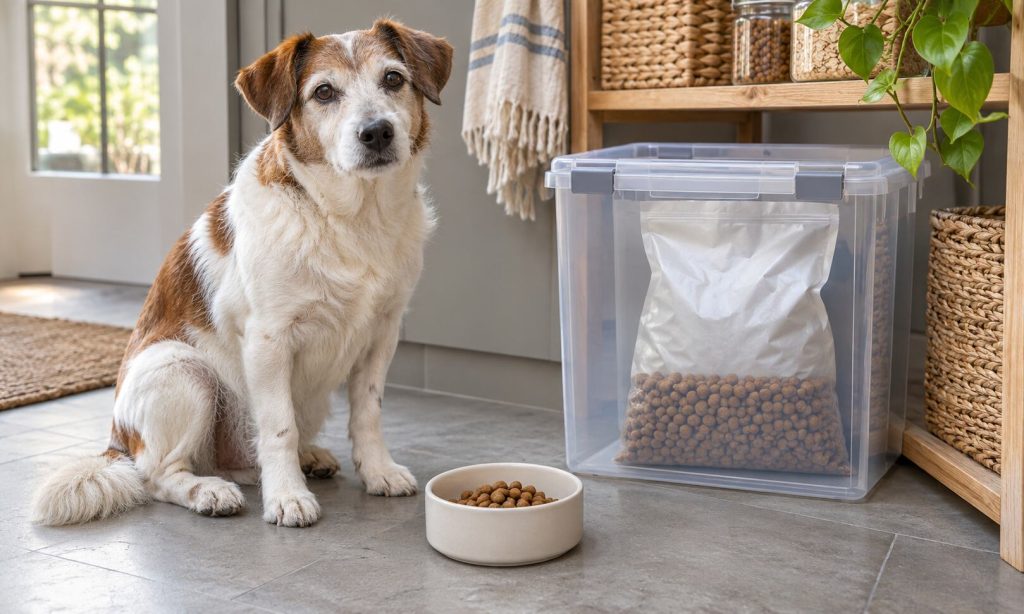
Storing dry dog food for pancreatitis safely is part of maintaining a veterinarian-directed feeding plan. Pancreatitis involves inflammation of the pancreas and can cause painful, potentially serious illness. Dogs recovering from or living with pancreatic disease may require a specific lower-fat, digestible diet, but the appropriate formulation and duration depend on their diagnosis. A damaged bag, poor storage conditions, or accidental mixing with rich treats can undermine an otherwise carefully chosen plan.
This guide explains how to store dry dog food for pancreatitis in its original packaging, prevent contamination, measure meals, and handle changes without accidentally feeding the wrong formula. If you are researching the best dry dog food for pancreatitis, compare suitability with your veterinarian; our low-fat dog food for pancreatitis guide provides related diet categories. Storage protects the selected food, but it does not treat an acute attack.
Confirm the Prescribed Diet Before Storing It
Before storing dry dog food for pancreatitis, verify the exact product, formulation, feeding amount, and whether it is intended for short-term recovery or long-term management. A label saying low fat may not be equivalent to a veterinary therapeutic diet. Fat content can be stated in different units; comparing percentages without considering energy and moisture may mislead. Ask your veterinarian what nutritional threshold and digestibility matter for your dog’s condition.
Do not change to a retail formula just because it is cheaper or easier to store. If a prescribed diet is unavailable, request an acceptable substitute from the clinic. Keep a photo of the package label and medical instructions on your phone so household members can check before serving. The VCA pancreatic nutrition guide explains why veterinary low-fat diets are commonly considered in management.
Keep the Original Bag and Lot Code
The most dependable method to store dry dog food for pancreatitis is keeping kibble inside its original bag with the top secured and placing that bag in a clean, lidded container if useful. The FDA recommends retaining the original packaging because it carries the product identity, expiry information, and lot number. This is especially important if a veterinarian needs to confirm the exact formulation or investigate a recall.
If you must decant the kibble, use a clean, dry, food-safe container and retain the complete label and lot information. Avoid loose handwritten descriptions such as low-fat dog food that could refer to several recipes. Do not mix formulas in one bin, even if the bags look similar. A small labeling mistake may defeat a careful treatment plan when several people feed the dog.
Control Moisture, Heat, and Air Exposure
To store dry dog food for pancreatitis safely, choose a cool, dry, indoor location away from direct sunlight, wet floors, heaters, and strong chemical odors. Humidity can encourage clumping and spoilage; heat and oxygen can accelerate deterioration of fats. Keep the bag folded and the container lid closed after every meal. Do not leave the supply in a hot vehicle or damp garage for convenience.
Inspect the storage area for insects and rodents regularly. Keep bags elevated if floor moisture is a concern, but place heavy food where it cannot fall. Use a scoop with dry hands and never return damp leftovers to the bag. The FDA storage guidance gives practical advice on containers and original bags. Storage conditions apply to any dry food, but clinical diets deserve extra attention to avoiding a mix-up.
Buy a Bag Size You Can Finish Fresh
A large discounted bag can be poor value when storing dry dog food for pancreatitis if your dog eats small measured meals and the supply remains open too long. Estimate how many days the package will last using the prescribed daily grams. Compare that with the manufacturer’s storage directions and best-before date. Choose a manageable size instead of assuming that one large bulk purchase is always safer or cheaper.
Write the opening date on the package and rotate supplies using the oldest appropriate sealed bag first. Do not pour fresh kibble onto the residue at the bottom of an older container. When a bag is finished, clean and fully dry the bin if it contacts food directly. Keep spare bags sealed away from pets, children, moisture, and extreme temperatures.
Separate Therapeutic Meals From Treats
Storage for dog food for pancreatitis includes managing access to other foods. Our dog treat storage guide covers routine handling, but the veterinary restrictions here take priority. Keep high-fat treats, table scraps, and other pets’ meals out of reach and clearly separate. A dog may scavenge a rich snack even while the owner carefully measures low-fat kibble, potentially complicating management. Ask the veterinarian which treats or toppers are allowed, and use the prescribed food as training rewards when appropriate.
In a multi-pet home, feed dogs in separate areas and close bins securely. Label bowls or meal containers for each animal so a well-meaning family member does not swap diets. Count all permitted snacks in the daily ration. The VCA pancreatitis overview describes clinical management; prevention of accidental rich meals is a practical part of carrying out those instructions at home.
Measure Portions With Clean, Dry Tools
When serving dry dog food for pancreatitis, use the exact amount and meal schedule prescribed by the veterinary team. Our general dog food portion guide explains measurement concepts but does not replace this clinical instruction. A kitchen scale can improve consistency because cups vary with kibble shape and density. Keep a dedicated clean, dry scoop or spoon in the feeding area, not buried inside the bag with a dirty handle. Wash food bowls regularly and let them dry thoroughly before use.
For dogs recovering from illness, meal size and frequency may differ from their ordinary routine. Do not invent a fasting or refeeding plan; severe pancreatitis can require hospitalization and supportive treatment. If the dog refuses prescribed meals, vomits repeatedly, or appears painful, contact the clinic. A food-storage system should support precise feeding, never delay care for an acute problem.
Recognize Spoilage and Packaging Problems
Do not feed dry dog food for pancreatitis if the package is torn, wet, pest-contaminated, moldy, or smells rancid. Examine seals and printed dates, and discard suspect product safely. Do not wash, toast, or air-dry kibble as a way to restore it. Retain the lot number and other information if you plan to report a suspected manufacturing issue. Keep a safe alternative diet approved by the veterinarian if supply interruptions are likely.
Food quality and the dog’s appetite both need attention. A dog that suddenly refuses a previously accepted clinical diet may be experiencing pain, nausea, or another complication, not merely boredom. Watch for vomiting, diarrhea, abdominal discomfort, weakness, and dehydration. Seek prompt veterinary advice rather than offering rich food to tempt an ill dog into eating.
Plan Travel and Emergency Supplies
To store dry dog food for pancreatitis while traveling, pre-measure meals into clean, dry, clearly labeled food-safe containers and keep the original label available. Use an insulated or climate-controlled location when ambient heat is high, but avoid condensation that wets kibble. Carry enough of the approved diet for the trip plus a reasonable contingency. Do not substitute roadside fast food or greasy treats if you run short.
If your dog needs medications or a specific feeding schedule, pack written instructions and the veterinary clinic’s contact details. Avoid leaving food in a parked hot car. For boarding, provide the entire labeled bag or clearly marked individual portions and explain dietary restrictions to caregivers. A simple printed checklist can prevent accidental feeding of another pet’s richer food.
Avoid Abrupt Formula Changes
A veterinarian may adjust dry dog food for pancreatitis after recovery, but a change should follow clinical reassessment, not a product promotion. Follow the recommended transition when the dog is stable, measure calories across both diets, and watch stool, appetite, and discomfort. Some dogs need lifelong fat restriction while others may later tolerate a different maintenance plan. The appropriate path is individual.
Keep old and new bags separate during the transition and discard leftover therapeutic food only when the veterinarian confirms it is no longer needed and it remains safe to dispose of. Do not combine two diets in one storage bin, where the proportions become unknowable. Ask whether treats and medications require changes too. An organized pantry makes dietary adjustments safer and easier to audit.
Frequently Asked Questions
These answers address storage and handling of veterinarian-directed dry diets. Acute pancreatitis symptoms require care, not a storage or feeding experiment.
The exact amount, fat level, and feeding duration should come from the clinician managing the dog.
Should low-fat dog food be refrigerated?
Ordinary dry kibble is generally stored in a cool dry place according to its package, not refrigerated unless directed. Moisture and condensation can damage it. Follow the exact manufacturer instructions.
Can I put the diet in a clear plastic bin?
Prefer keeping the original bag inside a clean sealed container. If decanting, retain the label and lot information and ensure the bin is completely dry.
Can I add regular treats to a pancreatic diet?
Not without veterinary approval. Rich foods may be inappropriate, and the clinical plan may require strict fat limits. Ask for compatible rewards.
What if the dog refuses the prescribed kibble?
Contact the veterinarian promptly, particularly if there is nausea, vomiting, pain, or weakness. Do not improvise with fatty toppers or a prolonged fast.
Can I switch to another low-fat brand?
Only after verifying nutritional equivalence and the dog’s medical needs with the veterinary team. Front-label low-fat claims do not guarantee the same formulation.
Final Words
To store dry dog food for pancreatitis safely, keep the original bag and lot code, control heat and humidity, use a sealed clean container, and keep the prescribed diet separate from other meals. If you are comparing the best dry dog food for pancreatitis, the veterinarian’s diagnosis and fat target outweigh general marketing claims. Our low-fat pancreatitis dog food overview can frame questions, not replace clinical guidance.
Measure each meal, avoid unapproved rich treats, and label travel portions so caregivers follow the same plan. Spoiled food should be discarded, while sudden vomiting, pain, or refusal requires prompt veterinary care. Good storage preserves a carefully selected diet but cannot treat pancreatic inflammation.
Reference
These veterinary and government resources support the clinical and safe-handling points in this article. They are not prescriptions for any particular dog.
Diet fat levels, feeding schedules, transition timing, and the duration of therapeutic nutrition require an individualized veterinary recommendation.









