
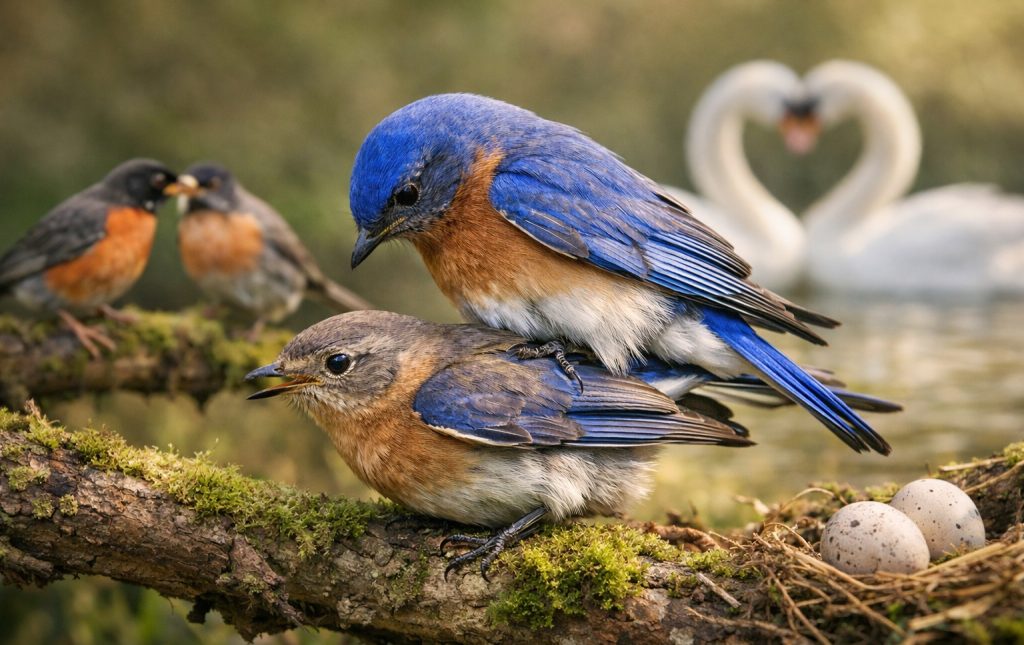
Most birds mate by brief cloacal contact, where the male transfers sperm to the female.
I have studied bird behavior and worked with field biologists for years, and this guide explains how do birds mate with clear, evidence-based detail. You will learn anatomy, courtship, mating systems, copulation mechanics, fertilization, and real-world examples to help you understand why bird mating varies so widely across species.
Bird sexual anatomy and how it affects mating
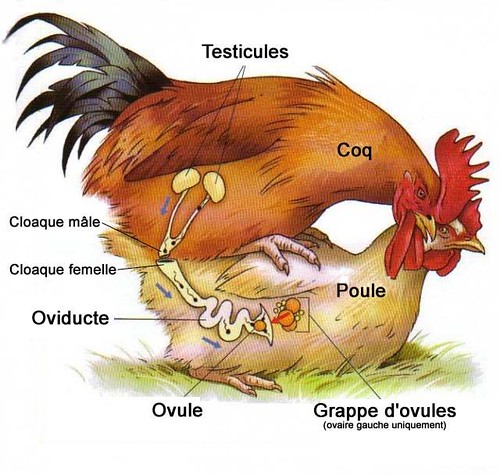
Bird reproductive anatomy is compact and efficient. Most birds lack an external penis. Instead, males and females have cloacas—muscular openings used for waste and reproduction. During mating, the male mounts and aligns his cloaca with the female’s to pass sperm. This is the basic mechanism behind how do birds mate in the majority of species.
Some birds, such as ducks and ostriches, have evolved a phallus. These species use a more penis-like organ for sperm transfer, which changes mating dynamics and can involve forceful behavior in some cases. Understanding anatomy helps explain why mating looks simple in many backyard birds but complex in others.
Courtship behaviors: how birds mate starts with attraction
Courtship is crucial for successful mating. Birds use songs, displays, colors, dances, and gifts to attract mates. These signals show health, genes, and parental potential. For many species, successful courtship determines whether a pair will mate.
Common courtship elements:
- Visual displays such as plumage fluffing or wing-spreading.
- Vocal displays including complex songs and calls.
- Physical gifts like food offerings to the prospective mate.
- Territory displays to prove resource access.
Courtship intensity and length vary. Some species pair after a single display, while others have long, elaborate rituals. These rituals are the opening chapter in how do birds mate, shaping pair bonds and future cooperation.
Source: birdtricksstore.com
Mating systems: monogamy, polygamy, and everything between
Birds use several mating systems. These systems shape how do birds mate and influence parenting roles.
Major systems include:
- Social monogamy: One male and one female form a pair bond for a season or life. They usually share nesting duties.
- Sexual monogamy: Rarer; both partners mate exclusively with each other.
- Polygyny: One male mates with several females. Females typically provide most parental care.
- Polyandry: One female mates with several males. Males often incubate eggs and rear young.
- Promiscuity: No lasting bonds; individuals mate with many partners and may not help raise young.
Extra-pair copulations occur in socially monogamous species. Even bonded pairs can include sneaky matings by one partner. These behaviors complicate the simple answer to how do birds mate, because social bonds and genetic relationships do not always match.

Source: mybirdbuddy.com
The copulation process: step-by-step mechanics
Copulation in birds is usually quick and precise. Here is a general sequence describing how do birds mate during copulation:
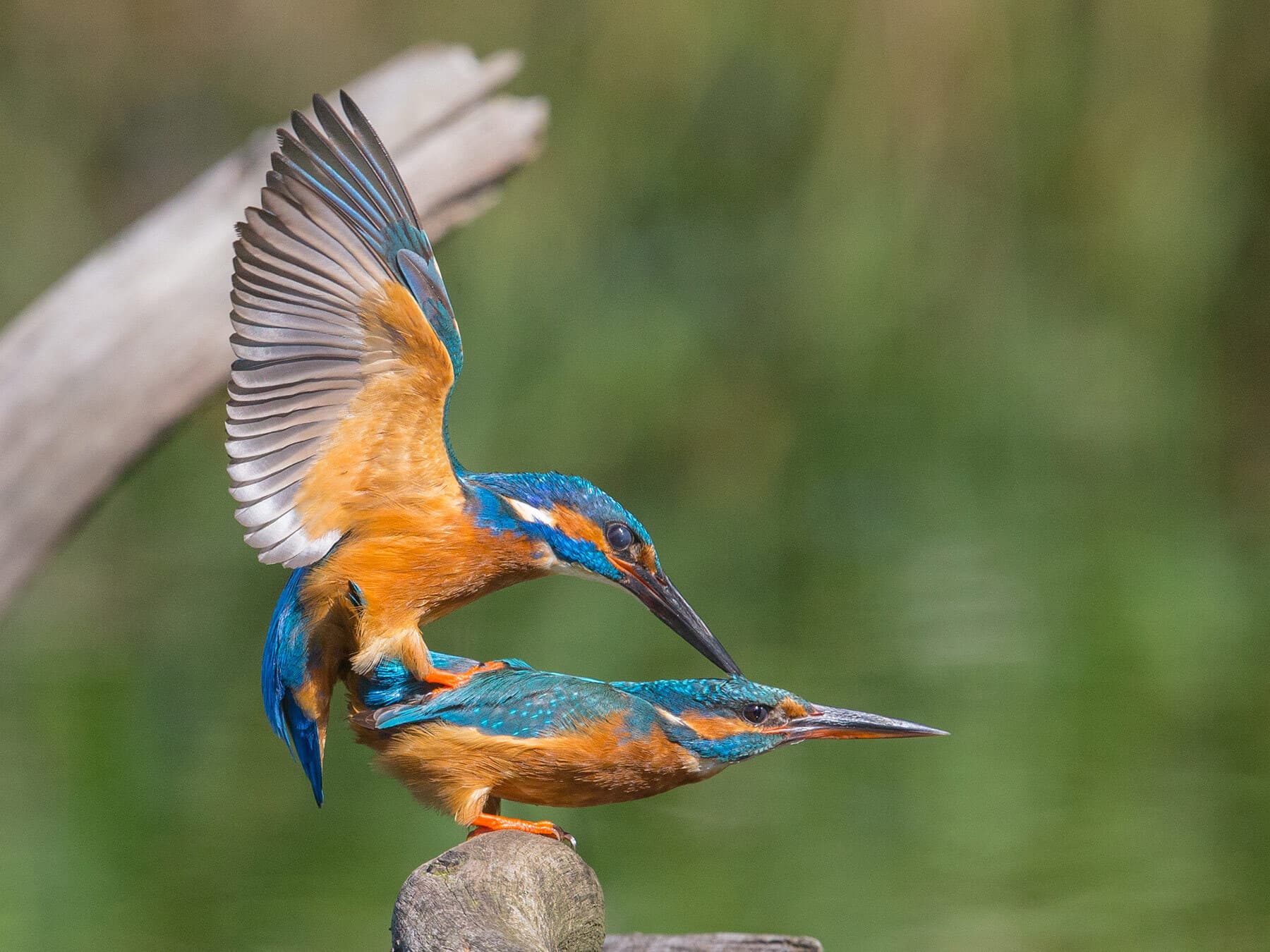
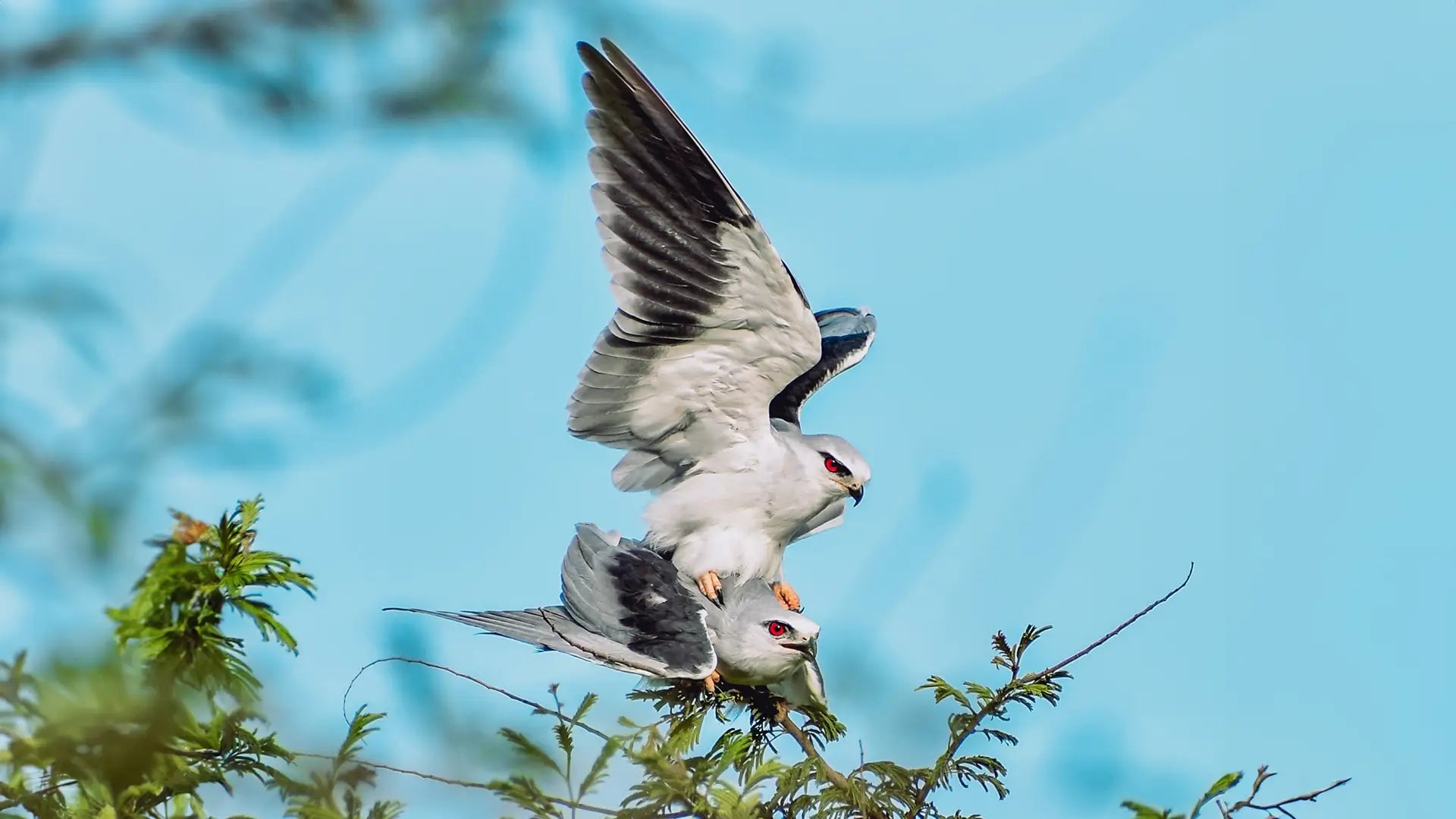
- Approach and alignment: The male perches on the female’s back or stands close.
- Mounting: The male balances and leans forward toward the female’s cloaca.
- Cloacal contact: The male and female press their cloacas together in a brief “cloacal kiss.”
- Sperm transfer: Sperm passes from the male to the female in seconds.
- Dismounting and separation: The pair quickly disengage and may preen or call.
Timing is important. Fertility windows are brief. Females may store sperm in special sperm-storage tubules. This allows fertilization of multiple eggs from a single mating event. These details explain part of how do birds mate and how effective a single mating can be.
Source: birdfact.com
Fertilization, egg formation, and nesting
After sperm enters the female, fertilization occurs in the oviduct. The egg is formed over hours to days. Layers of albumen, membranes, and shell are added before the egg is laid. Female birds often lay a clutch of multiple eggs over several days.
Key points about reproduction:
- Sperm storage can allow fertilization days or weeks after mating.
- Egg-laying timing and clutch size vary by species and environment.
- Incubation starts either after the first egg or after the full clutch, depending on species.
- Parental care strategies change with mating systems and ecology.
These steps close the loop on how do birds mate and produce offspring. The link from mating to egg-laying is critical for population dynamics.
Species examples: diverse mating strategies
Looking at species helps make how do birds mate concrete.
Examples:
- Songbirds (most passerines): Short cloacal contact, social monogamy, frequent extra-pair mating.
- Ducks: Many have phalluses; forced copulation occurs in some species; complex mating behaviors follow.
- Albatrosses: Long-term monogamy with elaborate pair-bond displays and long courtship dances.
- Phalaropes: Females are more colorful and compete for males; males incubate eggs (sex-role reversal).
- Ostriches and emus: Polygynous or lek-like systems with varying male parental involvement.
These examples show the range from simple cloacal contact in small birds to prolonged, forceful interactions in some waterfowl. They illustrate many answers to the question of how do birds mate.
Risks, conflicts, and sperm competition
Mating is not just romance. It includes competition and conflict. Males may fight over mates. Females may reject advances. Sperm from multiple males can compete inside the female reproductive tract.
Mechanisms addressing competition:
- Mate guarding to reduce extra-pair copulation.
- Female choice to select higher-quality sperm or partners.
- Anatomical adaptations like sperm storage and specialized tubules.
Researchers have found that sperm length and motility can vary by species. These traits influence paternity outcomes. Understanding these pressures helps explain why how do birds mate is a complex mix of behavior and biology.
Source: bilantan.com
Human interaction: pet birds, breeding, and ethical care
If you keep pet birds, you may wonder how do birds mate in captivity. Breeding pet birds requires knowledge and care.
Practical tips:
- Provide privacy and a safe nesting site for breeding pairs.
- Match compatible species and ages to reduce aggression.
- Monitor health and nutrition; breeding is demanding on the female.
- Avoid forcing mating or keeping birds in stressful conditions.
From my fieldwork and work with captive breeding programs, respectful handling and proper environment produce better outcomes. Mistakes to avoid include overcrowding and inadequate diet, both of which impair reproductive health.
Research methods and conservation relevance
Studying how do birds mate informs conservation. Scientists use direct observation, video, genetic testing, and telemetry to track mating and paternity. Genetic tests reveal extra-pair parentage rates and mating networks.
Conservation implications:
- Captive breeding programs use mating knowledge to maintain genetic diversity.
- Understanding mating systems helps manage endangered populations.
- Habitat loss can disrupt courtship displays and reduce mating success.
I have assisted in projects where simple changes—adding display perches or reducing disturbance—boosted mating success. Practical research can lead to direct conservation wins.

Source: nestboxlive.com
Common questions people also ask about how do birds mate
Q: Do all birds mate the same way?
A: No. Methods vary. Most use cloacal contact, but some species have a phallus and others show diverse courtship.
Q: Can one mating fertilize many eggs?
A: Yes. Females can store sperm and fertilize multiple eggs over days or weeks from a single mating.
Q: Why do some birds mate outside their pair bond?
A: Extra-pair mating can increase genetic diversity or allow females to secure better genes while maintaining help from a social partner.
Q: Is forced mating common?
A: Forced copulation occurs in some species, especially among certain waterfowl. It is not the norm across birds.
Q: How long does copulation last?
A: Most copulations are very brief—often just a second or two—though courtship can take much longer.

Source: mybirdbuddy.com
Frequently Asked Questions of how do birds mate
How do birds mate without a penis?
Most birds use a cloacal kiss: the male and female press their cloacas together briefly to transfer sperm. This method is quick and works well for most species.
Why do some birds have a penis?
A few bird groups, like many waterfowl and ratites, evolved a phallus. It can help with sperm transfer in aquatic environments or where mating is complex.
Do birds mate for life?
Some species form lifelong pair bonds, but many are seasonally monogamous or promiscuous. Pair bonds vary by species and ecological pressures.
Can female birds choose multiple mates?
Yes. Females may mate with multiple males to increase genetic diversity or secure better genetic traits for offspring. Stored sperm can fertilize eggs later.
How can I encourage mating in pet birds?
Provide privacy, proper diet, a safe nest, and compatible mates. Avoid disturbance and keep stress low, as birds need calm settings to pair and breed.
Do birds always incubate eggs right away?
No. Some species start incubating after the first egg; others wait until the clutch is complete. Timing affects chick hatching synchrony.
Conclusion
This guide explained how do birds mate across anatomy, behavior, and systems. You now know the typical cloacal kiss, the role of courtship, the variety of mating systems, and how sperm storage and extra-pair matings influence outcomes. Use these insights to appreciate bird behavior, support ethical breeding, or guide conservation work. If you found this useful, share your questions, subscribe for updates, or leave a comment about your own bird observations or experiences.