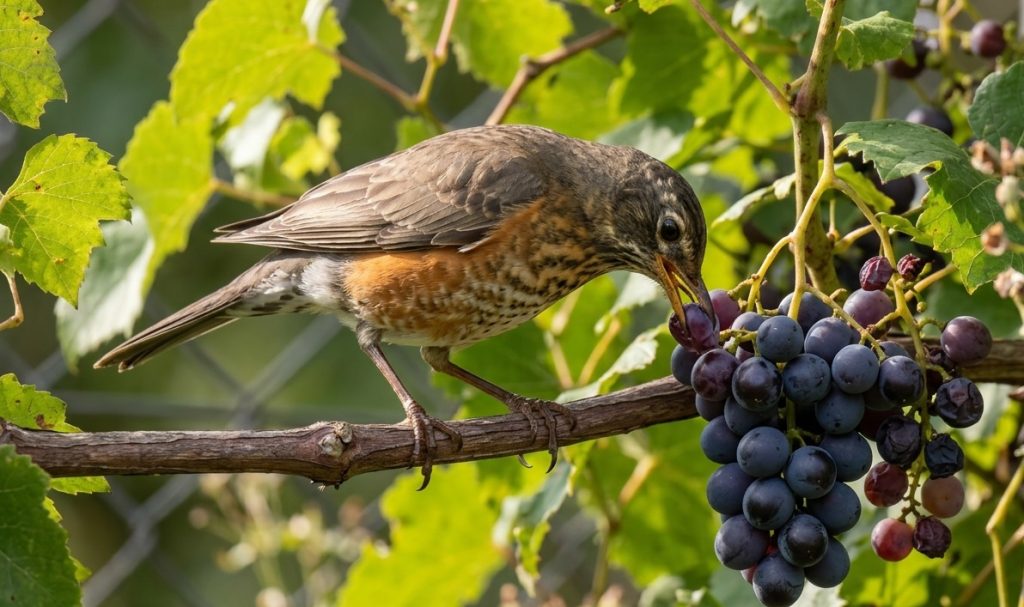
Yes — many wild and pet birds will eat grapes and often enjoy them as a treat.
I have studied bird diets and worked with backyard and captive birds for years. This article explains whether do birds eat grapes, which species like them, the benefits and risks, and how to offer grapes safely. Read on for practical tips, examples from fieldwork, and clear guidance you can use today.
Why do birds eat grapes?
Birds eat grapes because grapes are sweet, hydrating, and visible. The sugars give quick energy. The water content helps birds on hot days or during migration. Bright color and scent attract fruit-eating species and opportunistic feeders.
Many birds have evolved to eat fruit. Fruit-eating birds help spread seeds when they consume grapes. Understanding why do birds eat grapes helps you manage feeders and protect fruit trees.
Which bird species eat grapes?
Several species commonly eat grapes in backyards and wild areas. Examples include:
- Cedar waxwings — famous grape lovers and flock feeders.
- Starlings and robins — take grapes from trees and feeders.
- Orioles and thrushes — seek ripe fruit in summer.
- Pigeons and doves — peck at fallen grapes on the ground.
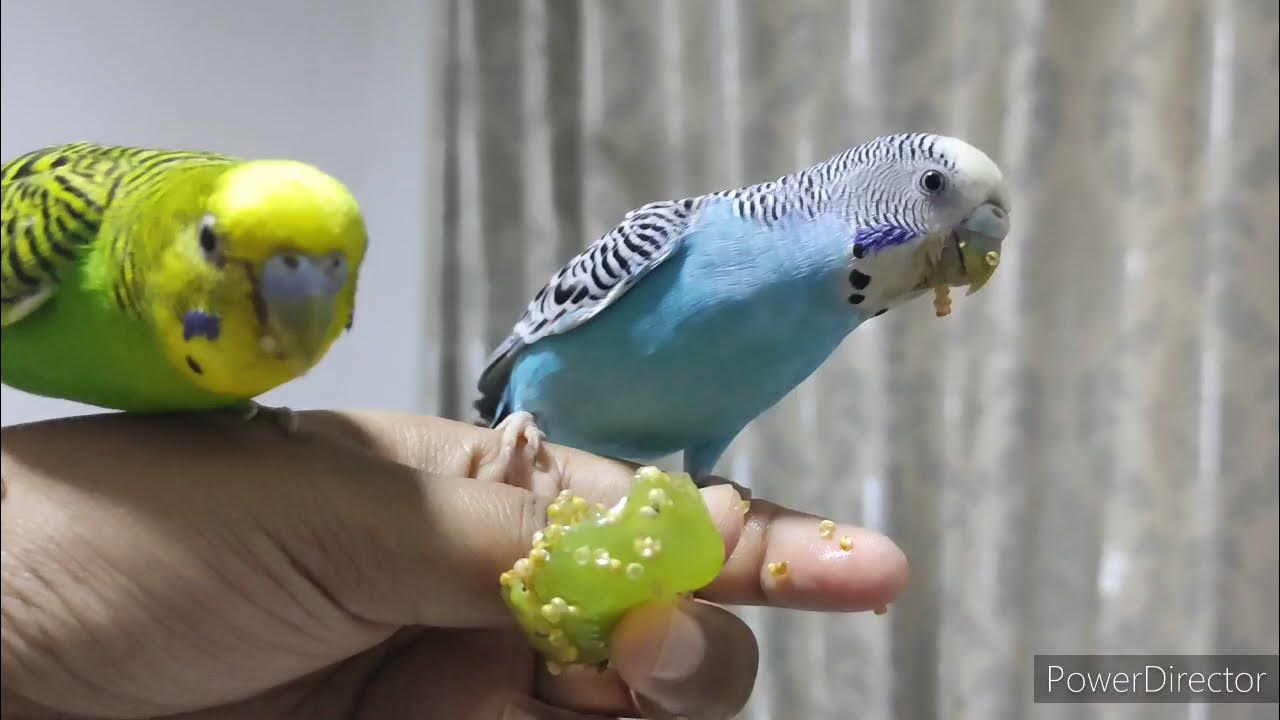
- Parrots and parakeets in captivity — enjoy grapes as a treat.
Do birds eat grapes across regions? Yes. Fruit-eating species and opportunists in many climates will try grapes when available. Understanding local species helps you predict which birds will appear at grape offerings.
Source: petpalace.uk
Nutritional value of grapes for birds
Grapes provide simple carbs, water, and small amounts of vitamins. Key points:
- High sugar gives quick energy for short flights.
- Water helps hydration, especially in dry weather.
- Vitamins A and C appear in small amounts along with antioxidants.
Grapes are low in protein and fat. They should not replace a bird’s main diet. For many birds, grapes are best as occasional treats or as part of a varied fruit mix. This balance answers why do birds eat grapes but also shows limits.
Risks and precautions when offering grapes
Grapes are usually safe, but there are risks to manage. Main concerns:
- Moldy grapes can contain harmful mycotoxins. Throw out old or rotting fruit.
- Fermented grapes can produce alcohol. Avoid offering overripe fruit that can intoxicate birds.
- Pesticide residue can harm birds. Always wash grapes thoroughly.
- Choking risk for very small species. Slice grapes for tiny birds.
Also avoid leaving large piles of fruit that attract pests or create dependency. Awareness of these risks helps you feed responsibly and reduces harm.

Source: birdwatchingdaily.com
How to feed grapes to birds safely
Follow steps to reduce risk and increase enjoyment for birds:
- Wash grapes under running water to remove pesticides.
- Cut large grapes in halves or quarters for small birds.
- Offer grapes on clean platform feeders or spread on a tray.
- Rotate offerings and remove uneaten fruit within 24 hours.
- Avoid grape juice with additional sugar or preservatives.
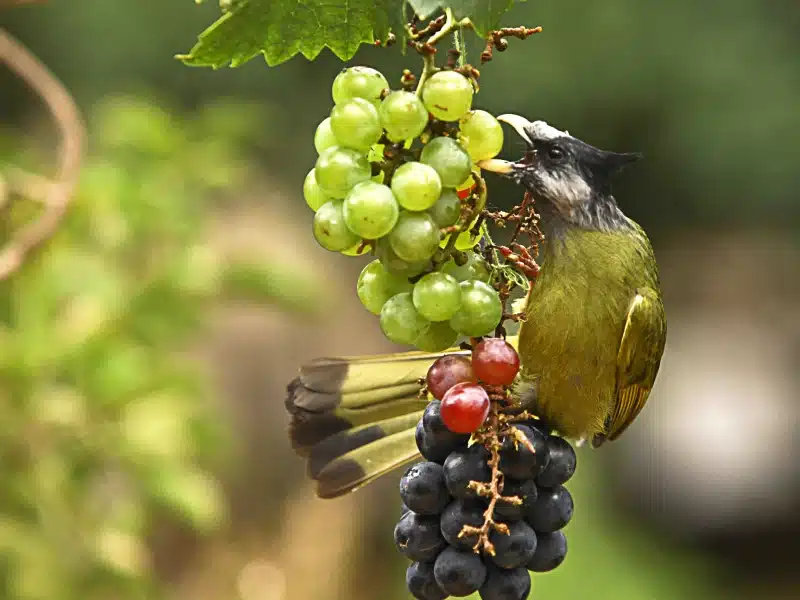
Do birds eat grapes from feeders? Yes, many will. Keep feeder hygiene high to prevent disease and spoilage.
Source: ysnetting.com
Practical tips from my experience
I have offered grapes to backyard birds for years. I learned a few reliable tips:
- Halving grapes increased visits from small songbirds. They could peck pieces easily.
- Cedar waxwings arrived in loud flocks and finished fruit fast. I learned to limit quantities to avoid waste.
- Parrots in rescue care loved grapes but needed them in moderation. Too many sweets caused weight gain in captive birds.
Mistakes to avoid:
- Leaving fruit out for days.
- Not washing fruit thoroughly.
- Feeding only fruit and no balanced diet to pet birds.
These lessons show how do birds eat grapes in real life and how to do it well.
Quick questions people often ask
Do grapes harm wild birds if left on the ground?
If grapes are fresh, they usually do not harm wild birds. Rotting or fermented grapes can be risky and should be removed.
Can baby birds eat grapes?
Very young chicks need a species-appropriate diet. Small, soft pieces of grape can be offered to fledglings only with guidance or under care.
Are grape seeds dangerous for birds?
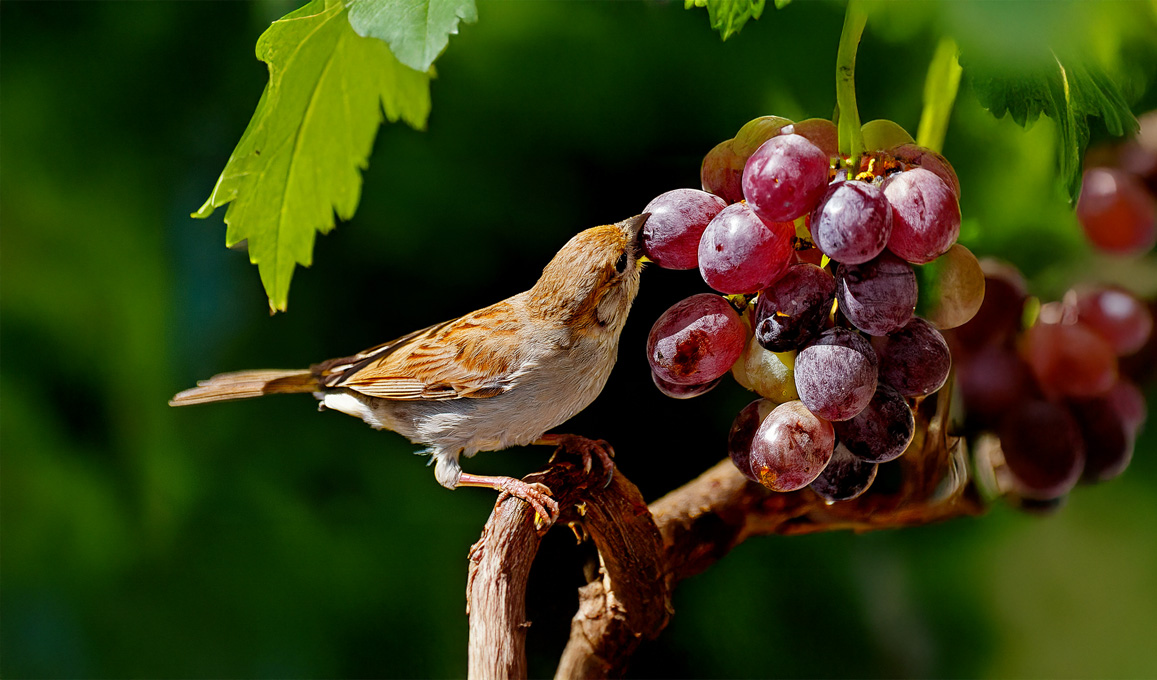
Most adult birds swallow small seeds without issue. For very small pet birds, remove seeds to avoid choking or digestive upset.
Source: com.au
Frequently Asked Questions of do birds eat grapes
Do wild birds naturally eat grapes?
Yes. Many wild birds eat grapes when grapes are ripe or available. Fruit-eating species seek grapes in vineyards, orchards, and backyards.
Can parrots eat grapes every day?
Parrots can eat grapes but not every day in large amounts. Grapes are high in sugar, so offer them as a treat a few times per week within a balanced diet.
Are grapes toxic to some bird species?
Grapes are not broadly toxic to birds, but spoiled or fermented grapes can be harmful. Some individual birds may have sensitivities, so monitor reactions.
How should I prepare grapes for small birds?
Wash grapes, then slice them into halves or quarters. Place pieces on a low platform feeder so small birds can reach them easily.
Will feeding grapes attract pests?
Yes, grapes can attract squirrels, raccoons, and other pests if left out. Offer small portions and remove leftovers daily to reduce pest visits.
Can feeding grapes make birds dependent on humans?
Overfeeding any single food can alter natural foraging. Offer grapes occasionally and keep natural food sources available to avoid dependency.
Conclusion
Grapes are a popular, tasty treat for many wild and pet birds. They offer quick energy and hydration but are low in protein and should be given in moderation. Follow safety steps: wash fruit, cut for small birds, remove spoiled grapes, and keep feeders clean. Try offering small grape portions and watch which species visit. Share observations, adjust feeding habits, and enjoy the added diversity at your feeders. If you found this helpful, subscribe for more bird-safe feeding tips or leave a comment about your experiences with offering grapes to birds.