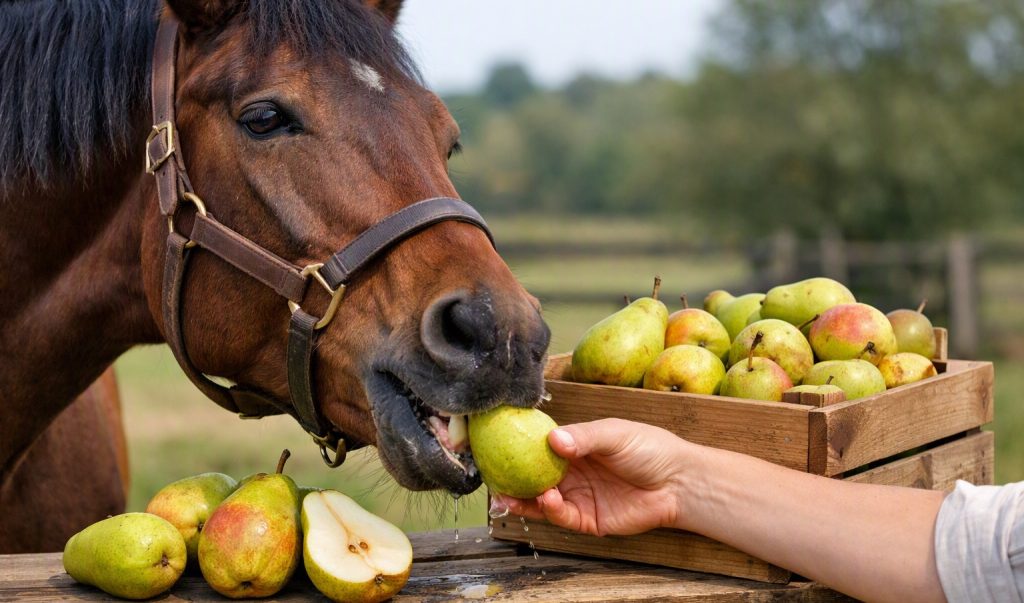
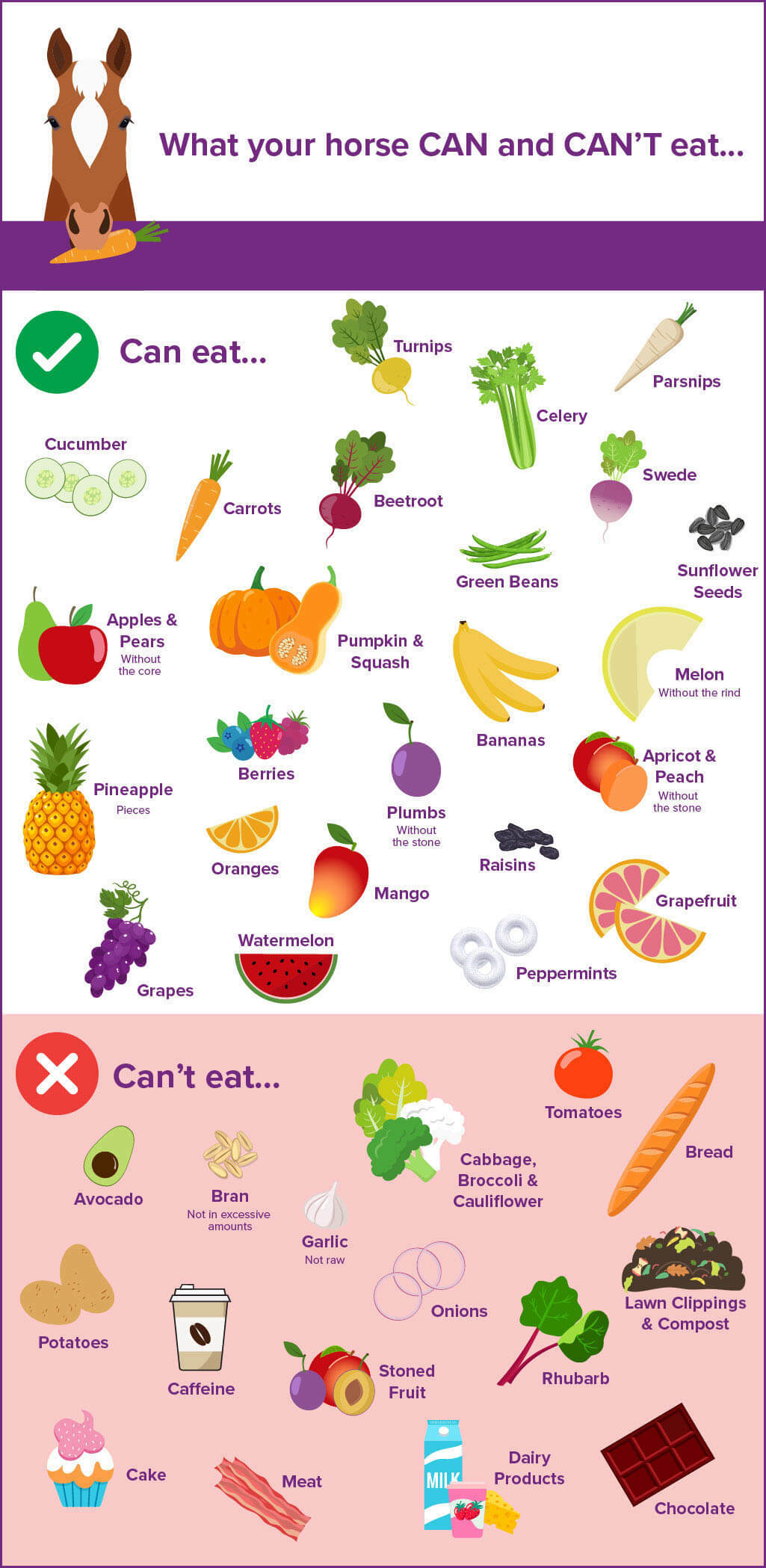
Yes — horses can eat pears in small, supervised amounts as an occasional treat.
I have worked with horses and equine caretakers for years, advising on safe treats and balanced diets. This article answers “can horses eat pears” in detail, with clear feeding steps, risks, and practical tips drawn from field experience and veterinary guidance. Read on to learn when pears are safe, how to prepare them, portion limits, signs of trouble, and the best ways to include pears in a horse’s routine.
Are pears safe for horses?
Pears are generally safe for most horses when fed in moderation. The flesh is mostly water and sugar, with fiber that horses can digest, making pears a fine occasional treat.
However, safety depends on the horse’s health, dental status, and current diet. Horses with metabolic issues, laminitis risk, or insulin resistance may need stricter limits on fruit and sugar.

Source: co.uk
Nutritional value of pears for horses
Pears offer simple nutrients that can complement a horse’s diet in small amounts.
- Calories: Low to moderate for fruit portions, mostly from natural sugars.
- Fiber: Provides some soluble fiber which can aid gut function in small doses.
- Vitamins and minerals: Contains vitamin C, potassium, and small amounts of B vitamins.
Pears do not replace forage or a balanced feed plan. Use them to add variety rather than as a staple.
Benefits of feeding pears to horses
Pears can be a useful treat and training reward when used correctly.
- Palatability: Many horses enjoy the sweet flavor, which helps positive reinforcement during training.
- Hydration boost: The high water content can slightly help hydration on warm days.
- Low preparation: Easy to slice and serve, making pears convenient for short training sessions.
Keep treats limited so they do not disrupt hay, concentrate intake, or body weight control.
Risks and precautions
You should know the common risks before offering pears.
- Sugar load: Pears contain natural sugars that can trigger weight gain or laminitis in susceptible horses.
- Choking hazard: Whole pears or large chunks can cause choke. Always cut into small pieces.
- Core and seeds: Apple and pear seeds contain tiny traces of cyanogenic compounds. Remove cores and seeds to be safe.
- Dental issues: Older horses with dental problems may struggle to chew raw fruit safely.
Always consult your veterinarian if your horse has metabolic disease, laminitis history, or dental concerns.
How to introduce pears and serve them safely
Follow these steps to make feeding pears safe and enjoyable.
- Inspect: Choose ripe but firm pears without mold or bruises.
- Wash and prepare: Rinse fruit to remove dirt and pesticides.
- Remove core and seeds: Cut out the core and discard seeds to minimize risk.
- Slice small: Cut into bite-size pieces to reduce choking risk.
- Offer by hand or scatter: Hand-feed for training or scatter on clean ground to prevent rapid gulping.
Start with a single small slice to check tolerance. Never mix large amounts of pear into meals meant for rapid consumption.
Portion size and frequency
Moderation is key when asking “can horses eat pears” responsibly.
- Small horse: 1–2 small slices once or twice a week.
- Medium to large horse: 2–4 slices once or twice a week.
- Ponies or insulin-resistant horses: Avoid or limit to very occasional single bites.
Treats should make up less than 10% of daily calories. Monitor weight and behavior after giving pears and adjust frequency.
Source: reddit.com
Signs of adverse reactions and what to do
Watch closely after introducing pears for any signs of trouble.
- Digestive upset: Loose droppings or mild colic signs may indicate intolerance.
- Choke: Signs include coughing, extended neck, and saliva with feed; call your vet immediately.
- Laminitis flare: Increased digital heat, lameness, or reluctance to move requires urgent action.
If you observe any of these signs, stop feeding pears and contact a veterinarian.
Personal experience: lessons from the barn
From my years working with horses, pears have been a pleasant, low-drama treat when handled right. I once offered a whole pear to a curious gelding who tried to swallow it whole and began to cough. That taught me to always pre-slice fruit and remove the core. Another mare with mild insulin resistance tolerated tiny pear pieces once a month, but only after we checked bloodwork and calorie balance.
Practical tips I learned:
- Always prepare fruit before the horse sees it.
- Use fruit sparingly for positive reinforcement, not as a daily reward.
- Track body condition and hoof health when adding any sugary treats.
Expert tips and final recommendations
Use these clear rules to feed pears responsibly.
- Treats are treats: Never replace forage with fruit.
- Pre-cut and seed-free: Always remove cores and seeds and slice fruit.
- Know your horse: Skip pears for insulin-resistant or laminitic horses unless vet approves.
- Monitor and record: Track reactions and adjust portions based on weight and behavior.
- Combine with training: Use small pear pieces as a high-value reward during short sessions.
When in doubt, consult your veterinarian or an equine nutritionist for a tailored plan.
Source: co.uk
Frequently Asked Questions of can horses eat pears
Can horses eat pear skin?
Yes, horses can eat pear skin if it is clean and free of pesticides. For safety, wash the pear well and remove waxy coatings before feeding.
Are pear seeds toxic to horses?
Pear seeds contain trace cyanogenic compounds and should be avoided. Remove cores and seeds to reduce any theoretical risk.
Can foals eat pears?
Small amounts may be safe for foals old enough to eat solid treats, but avoid feeding very young or nursing foals fruit. Always consult your veterinarian before introducing new foods to foals.
How many pears can cause problems for a horse?
A single whole pear may not hurt most horses, but repeated or large amounts raise sugar and calorie risks. Horses prone to metabolic issues can react to just a few pieces.
Is canned pear safe for horses?
Canned pears usually contain added sugar or syrup and are not recommended. Fresh, plain pear slices are a safer choice.
Can horses with laminitis eat pears?
Horses with laminitis should generally avoid fruit due to sugar content unless a veterinarian gives specific permission. Even small amounts can trigger problems in sensitive animals.
What if my horse chokes on a pear?
If choking occurs, keep the horse calm and call a veterinarian immediately. Do not attempt blind probing; follow your vet’s advice for safe care.
Conclusion
Pears can be a safe, tasty treat for many horses when given in small, prepared portions and used sparingly. Remove cores and seeds, slice the fruit, and avoid regular feeding for horses with metabolic or hoof issues. Use pears as a training reward or occasional treat, and always watch your horse after new foods. Try these tips, talk with your vet if you have concerns, and share your experience or questions in the comments to help other caretakers make informed choices.