
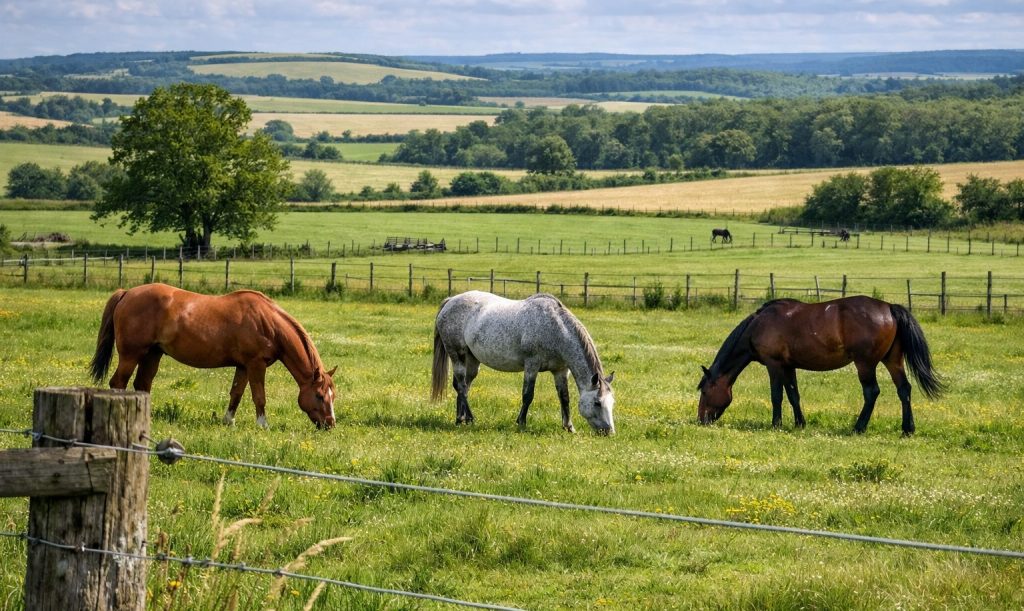
Most horses need about 1.5 to 2 acres of good pasture per horse for sustainable grazing.
I have spent years managing pastures and caring for horses, so I know there is no one-size-fits-all answer to how many acres does a horse need. This guide explains the common rule-of-thumb, the factors that change acreage needs, practical pasture plans, small-property options, and clear examples to help you make an informed choice for your horse’s health and your land. Read on for simple calculations, proven pasture practices, and real-world tips from hands-on experience.
Standard acreage guidelines for one horse
A common starting guideline answers how many acres does a horse need: plan on about 1.5 to 2 acres of well-maintained pasture per adult horse. This assumes average soil, moderate climate, and regular pasture management.
Many horse owners use a range instead of a single number. Use these quick references:
- 1 acre per horse — possible for a horse that receives daily hay and limited turnout.
- 1.5 to 2 acres per horse — recommended for most situations where grazing is the main feed.
- 2.5 to 4 acres per horse — useful in poor soil, dry climates, or for heavy grazing pressure.
Adjust the baseline when you change feeding or management. If you supplement heavily with hay, you can reduce acreage. If you manage pasture well, you can support more horses per acre without harming the land.

Source: paddockblade.com
Key factors that change how many acres does a horse need
Several factors can increase or decrease the amount of land you need for one horse. Consider each carefully when planning.
- Pasture quality and soil fertility
- Rich soil and good grass reduce land needs.
- Thin soil and heavy weed cover mean you need more acres.
- Climate and rainfall
- Wet climates grow more forage. Dry climates need more land or feeding.
- Seasonal growth patterns affect stocking rates.
- Horse size, workload, and health
- Larger or working horses eat more and need more acres.
- Older or thin horses may require supplemental feed even with good pasture.
- Number of grazing days and rotation
- Continuous grazing damages pasture and increases acres needed.
- Rotational grazing improves forage regrowth and reduces acreage demand.
- Supplemental feeding and hay
- Feeding high amounts of hay lowers pasture pressure and can let you keep horses on less land.
- Overfeeding concentrates nutrients and can create mud or runoff problems near feeders.
- Terrain and layout
- Sloped or rocky land lowers usable grazing area.
- Good water access and even fencing make smaller pastures more effective.
Source: co.uk
Can I keep a horse on less than an acre?
Yes, but it requires planning. You must feed sufficient hay, provide exercise, manage mud, and protect pasture by using sacrifice areas or a track system.
Will two horses always need double the acreage?
Not always. Two horses may graze more uniformly and reduce waste, but two horses still eat roughly twice the forage, so plan acreage accordingly with good management.
Pasture management practices to maximize acreage
Proper pasture care can lower how many acres does a horse need by improving forage production and soil health. Small steps produce big gains.
- Rotate paddocks often
- Rest paddocks for 3–6 weeks, depending on growth.
- Keep rotation simple: divide land into at least three paddocks.
- Manage legumes and grass mix
- Aim for a mix of grasses and clovers for steady forage.
- Overseed bare spots in spring or fall.
- Control weeds and reseed when needed
- Remove toxic plants quickly.
- Reseed thin areas to improve yield.
- Fertilize based on soil tests
- Test soil every 2–4 years and follow recommended fertilizer rates.
- Avoid over-fertilizing near water sources.
- Use sacrifice areas in wet weather
- Sacrifice paddocks protect the rest of the pasture.
- Use gravel or mats near gates and around waterers.
- Manage manure
- Regularly remove manure from paddocks to limit parasite load and promote even grass growth.

Source: horseloversmath.com
Alternatives for small properties and limited land
If you can’t provide 1.5–2 acres per horse, explore these alternatives. Each option changes how many acres does a horse need effectively.
- Dry lot or small turnout
- Use a non-grassy paddock with access to hay and shelter.
- Rotate locations to prevent mud build-up.
- Track or lane system
- Keeps horses moving and spreads hoof impact.
- Works well on small acreage by preserving central grazing areas.
- Increased hay feeding
- Accept pasture primarily as exercise space and feed hay for calories.
- Monitor weight and dental health closely.
- Shared grazing or leasing pasture
- Partner with a neighbor to expand grazing options.
- Agree on grazing plans and responsibilities.
- Pasture board or livery
- Place horses where acreage and management already meet needs.
- Saves you from managing larger tracts yourself.

Source: reddit.com
How to calculate acres needed: a simple formula and examples
A clear formula helps answer how many acres does a horse need for your situation. Use this approach and tweak for local factors.
Simple formula:
- Acres needed = Number of horses × Baseline acres per horse × Quality factor
Baseline acres per horse = 1.5 to 2.0 (use 2 for conservative planning)
Quality factor = 0.7 to 1.5 (lower if pasture is rich, higher if poor)
Example 1 — One horse on good pasture:
- 1 × 1.5 × 0.8 = 1.2 acres. Round up to 1.5 acres to allow rotation and rest.
Example 2 — Three horses in a dry region with poor soil:
- 3 × 2.0 × 1.3 = 7.8 acres. Round to 8 acres and plan for supplemental hay.
Use the formula as a guideline. Local conditions and management choices will alter final needs.
Environmental, legal, and community considerations
Plan acreage not just for feeding horses but for environmental and legal responsibilities. These factors influence how many acres does a horse need in practice.
- Local zoning and ordinance limits
- Check minimum acreage rules and setbacks before buying land.
- Some areas require specific manure management plans.
- Water quality and runoff control
- Avoid placing feeders and loafing areas near streams.
- Buffer strips and good drainage protect waterways.
- Neighborhood and nuisance issues
- Odor and flies can affect neighbors; manage manure and feed cleanly.
- Communicate grazing plans if you share boundaries.
- Wildlife and habitat protection
- Keep native areas intact and avoid overgrazing sensitive zones.
- Use fencing that protects wildlife and horses.
Source: wildjolie.com
My experience: lessons from managing pastures
I have leased and managed small and medium horse properties for over a decade. Here are lessons that help answer how many acres does a horse need in real life.
- Start with modest expectations
- I once tried to run three horses on two acres. The pasture collapsed quickly.
- Lesson: plan more acres or accept heavier feeding and more maintenance.
- Rotate early and often
- Small paddocks with regular rest kept grass productive during dry spells.
- A simple three-paddock rotation saved me hay in spring and fall.
- Invest in water and fencing
- Good water access and strong temporary fencing let me manage more horses on less land.
- Portable panels and pumps gave flexibility and reduced trampling.
- Use sacrifice paddocks strategically
- A sacrifice lot kept mud away from fields and extended pasture life.
- It’s cheaper to build a durable sacrifice area than to reseed a ruined pasture.
Frequently Asked Questions of how many acres does a horse need
How many acres does a horse need for basic grazing?
Most horses do best with 1.5 to 2 acres of good pasture per horse to maintain weight and pasture health without heavy supplementation.
Can one acre support a horse year-round?
One acre can support a horse year-round only if you feed significant supplemental hay and limit grazing time, and accept extra maintenance and possible pasture damage.
How does climate affect acreage needs?
Dry or cold climates reduce grass growth and increase acreage needs, while wet, temperate climates grow more forage and lower acreage requirements.
Is rotational grazing necessary to reduce acreage needs?
Yes. Rotational grazing gives rest to forage plants, increasing productivity and allowing you to support more horses on the same land.
What if my land is hilly or rocky?
Hilly or rocky land lowers usable grazing area. Count only usable flat or gently sloped pasture when deciding how many acres does a horse need.
Conclusion
Deciding how many acres does a horse need comes down to soil, climate, horse type, and how you manage pasture. Use 1.5–2 acres per horse as a starting point, then adjust for local conditions, feeding plans, and pasture care. Start small with clear goals, rotate paddocks, and invest in water and sacrifice areas to protect your land. Take action now: assess your pasture quality, run the simple acreage formula, and make a management plan that keeps your horse healthy and your acreage productive. Share your pasture questions or experiences below, or subscribe for more practical tips.