The best automatic ball launcher for dogs is the one that matches your dog’s ball size, your available space, and the way you supervise fetch.
Your dog brings the ball back again just as your throwing arm is ready for a break. An automatic launcher can handle the throw, but choosing one takes more thought than comparing maximum distance. Ball fit, a clear launch path, power requirements, and the ability to pause the game matter more than a promise of endless play.
My editorial starting choice is the PetSafe Automatic Dog Ball Launcher for its adjustable setup and front motion detection. The iFetch Too is a strong alternative for standard-ball dogs when rechargeable portability matters. For smaller dogs, choose the ball diameter first and compare the miniature models below.
As an Amazon Associate I earn from qualifying purchases.
How these picks were selected: This is a research-based comparison of verified product identities and published manufacturer features, checked September 30, 2026. Recommendations reflect suitability and tradeoffs, not hands-on testing or an analysis of a recent Amazon review corpus. Current prices, sellers, bundles, and return terms should be checked on the product listing.
Quick Picks: Automatic Ball Launchers for Dogs
| Product | Best For | Key Advantage | Buy | |
|---|---|---|---|---|
| PetSafe Automatic Dog Ball Launcher | Adjustable play with motion detection | Distance and angle controls; front motion sensor | View on Amazon | Jump to Review |
| iFetch Too Automatic Ball Launcher | Medium and large dogs using standard-size balls | Rechargeable battery and a random-distance setting | View on Amazon | Jump to Review |
| iFetch Original Automatic Ball Launcher | Small dogs that comfortably carry miniature balls | 1.5-inch balls and simple distance selection | View on Amazon | Jump to Review |
| Hyper Pet GoDogGo Fetch Machine | Owner-controlled backyard fetch | Remote control, wide bucket, and timed launches | View on Amazon | Jump to Review |
| Franklin Ready Set Fetch Standard Ball Launcher | Standard-ball play with adjustable launch angle | Motor dial, adjustable feet, and optional warning sound | View on Amazon | Jump to Review |
| Franklin Ready Set Fetch Mini Ball Launcher | Small-ball outdoor fetch with adjustable distance | 1.7-inch balls and a manufacturer-stated 10–40-foot range | View on Amazon | Jump to Review |
| ALL FOR PAWS Small/Medium Dog Ball Launcher | Dogs that prefer a two-inch ball | Three included two-inch balls and adjustable throw distance | View on Amazon | Jump to Review |
Start With Ball Fit and a Safe Play Area
Choose a ball your dog can comfortably carry without being able to swallow it. Miniature launcher balls are a poor choice for dogs whose mouths can engulf them, even if the machine itself looks convenient. In a household with dogs of different sizes, separate play sessions and separate ball storage may be necessary.
Measure the usable running area before comparing launch distances. Include space beyond the landing point for your dog to slow down, and keep people, pets, furniture, stairs, and windows out of the path. A short setting still requires supervision. If your dog is fearful of motor noise, reluctant to retrieve, or likely to chew the machine, an ordinary shared fetch game may be a better use of your budget.
PetSafe Automatic Dog Ball Launcher

A launcher needs to fit the space where your dog actually plays. The PetSafe Automatic Dog Ball Launcher gives you nine distance settings and six launch angles, with a manufacturer-stated range of 8–30 feet. That combination makes it easier to plan a controlled fetch lane than simply choosing the longest possible throw. It uses standard-size tennis balls and holds up to three, so you can keep a few compatible balls ready during supervised play. PetSafe includes two balls and a power adapter. You can also use six D-cell batteries, purchased separately. I would start with the shortest setting, check the full landing area, and adjust only after seeing how your dog approaches and retrieves the ball.
The front motion sensor is the main reason this model earns a place near the top of my list. PetSafe says it prevents launching when it detects your dog within seven feet in front of the opening. An audible tone also announces the throw. These are useful safeguards, but your dog still needs to learn to wait beside the machine, and you need to supervise. PetSafe’s current product page describes a 30-minute play period followed by a 15-minute rest. Treat that as a machine setting, not a recommended exercise duration for every dog; end the game sooner whenever needed. Its water-resistant design allows indoor or outdoor use, but it should not be treated as equipment you can leave exposed indefinitely. For a household that values adjustable setup and an additional front-of-machine check, this is a practical starting point.
What We Like
- Nine distance settings help match the throw to the available space.
- Six angle settings offer additional control over the launch path.
- Front motion detection adds a useful safeguard during supervised play.
- Standard-size tennis balls and two power options simplify setup.
- Audible launch cues and an automatic rest period support a structured routine.
What We Don’t Like
- The front detection area requires room and training; small rooms may be unsuitable.
- Six D-cell batteries are an additional purchase for cordless use.
My Recommendation
My first choice for owners who prioritize adjustable setup and motion detection. Choose it when you can provide the required clearance and teach a side-wait position. A smaller-ball machine is a better fit if your dog cannot comfortably carry a standard-size ball.
iFetch Too Automatic Ball Launcher

The iFetch Too is the version to consider when your dog comfortably carries a standard-size tennis ball. It launches at 10, 25, or 40 feet and includes a random-distance option. Its built-in rechargeable battery is particularly useful if the best fetch area is away from a convenient outlet. You can charge it before a session and place it where the running surface and sightlines make sense. The package includes three standard-size balls, and the manufacturer identifies the supplied ball diameter as 2.5 inches. The controls also include a switch that limits the machine to its shortest setting until you enable longer throws. That gives you a clear starting point for introduction and helps avoid selecting a longer distance casually.
I would choose the iFetch Too for a dog that already enjoys returning a ball and has an open, supervised area for the longer settings. The random option can vary the game, but the whole possible landing zone must remain clear before you use it. It is not a reason to switch distances unpredictably in a narrow room. The manufacturer specifically warns that a ball launched at the highest setting can injure a dog standing directly in front of the opening. Teach your dog to approach from behind or beside the machine and wait out of the launch path. Ball condition matters, too: wetness, dirt, and damage can affect how a ball feeds and travels. Keep clean spares nearby rather than trying to solve a poor launch by increasing power immediately. Its strongest appeal is the combination of standard-size balls, rechargeable operation, and a useful choice of distances.
What We Like
- Uses standard-size balls rather than miniature balls.
- Built-in rechargeable battery makes placement more flexible.
- Three distance choices include a longer outdoor option.
- Random-distance mode adds variety when the whole area is clear.
- A short-distance safety switch supports a cautious initial setup.
What We Don’t Like
- The 40-foot setting needs substantial clear space and careful positioning.
- Ball condition and routine cleaning remain part of ownership.
My Recommendation
Choose the iFetch Too for a standard-ball fetch enthusiast when cordless placement matters. I would use a fixed short distance during training and reserve random mode for a familiar open area. Pick PetSafe instead if front motion detection is your main selection criterion.
iFetch Original Automatic Ball Launcher

The original iFetch serves a different dog than the iFetch Too. It uses miniature tennis balls approximately 1.5 inches in diameter and offers 10-, 20-, and 30-foot launch settings. Three mini balls and a wall plug are included. It can also run on six C-cell batteries, which are sold separately. The manufacturer lists a nine-inch diameter and an eight-inch height, making this a compact option to consider when you do not want a large bucket-style machine in your play area. Its button-based distance selection keeps the basic routine straightforward. The important first step, however, is checking whether this specific ball size is appropriate for your dog, rather than choosing the smallest machine because it looks convenient.
For a small dog that struggles to pick up a standard tennis ball, the original iFetch can make the carry-and-return part of fetch more manageable. I would introduce it in a clear area at the shortest setting and remain close enough to guide the return. A miniature ball is not automatically suitable for every small breed, and it should be kept away from dogs that could swallow it. In a mixed-size household, that may make a standard-ball model or separate play sessions more practical. The original iFetch also lacks the Too model’s built-in rechargeable battery, so cordless use means keeping the appropriate batteries available. Like other powered launchers, it asks you to manage motor noise, positioning, and ball maintenance as well as the game itself. Its appeal is a compact machine built around a clearly defined small-ball format, not a promise that every dog will learn independent reloading.
What We Like
- Miniature balls can suit dogs that cannot carry standard tennis balls.
- Three fixed distances keep selection straightforward.
- Compact manufacturer-listed dimensions suit a smaller setup.
- Wall power and battery operation provide placement choices.
- Includes three matching mini balls to begin supervised training.
What We Don’t Like
- Miniature balls can present a swallowing risk for larger dogs.
- Cordless operation requires separate C-cell batteries.
My Recommendation
A sensible choice for a small dog whose mouth safely suits 1.5-inch balls. I would avoid it in a shared play area with larger dogs. Consider the AFP small-ball option below if your dog needs a ball closer to two inches.
Hyper Pet GoDogGo Fetch Machine
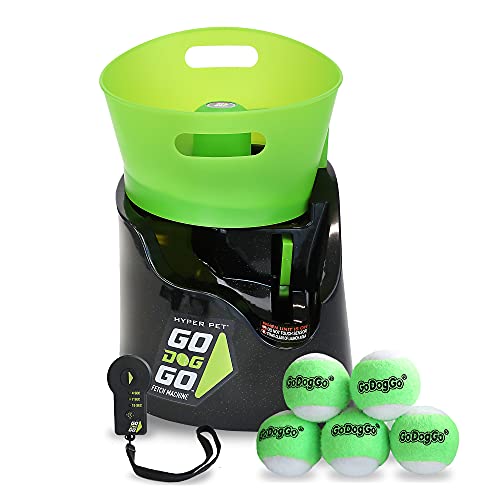
The Hyper Pet GoDogGo Fetch Machine stands out for owners who want to remain actively involved while letting the machine handle the throw. It combines remote-controlled operation with timed launching, and Petmate lists intervals of four, seven, or fifteen seconds. The wide-mouth bucket gives a returning dog a larger target than a narrow opening. The current manufacturer package includes five balls, a remote, rechargeable lithium batteries, and an AC adapter. The verified Amazon listing identifies the supplied balls as the medium 2.5-inch format and targets dogs weighing 20–60 pounds. Ball suitability still depends on the individual dog. I would use the slowest interval first, load modestly, and watch whether the dog can return calmly without hovering around the exit.
The reason to choose GoDogGo is control over the rhythm of a supervised game, rather than filling the bucket and walking away. Petmate describes an upward-and-outward launch arc and three distance settings. An arc is useful to consider when planning the play area, but it does not make close-range interception safe. Keep the dog away from the opening and confirm the entire flight path is clear. There is also an ownership limitation worth weighing before purchase: Petmate’s current product page states that replacement parts are no longer available and directs owners to customer service for technical help or qualifying warranty replacement. That changes the value calculation if you expect to repair individual components over time. I would check the seller, exact version, warranty terms, and return policy before committing. For owners comfortable with that tradeoff, the remote and broad return bucket make this an appealing option for a spacious backyard routine.
What We Like
- Remote control keeps the owner involved in launch timing.
- Three timed intervals allow a slower starting rhythm.
- Wide-mouth bucket offers a broad ball-return target.
- Rechargeable batteries and AC power provide setup flexibility.
- Includes five balls for a ready supply during play.
What We Don’t Like
- Petmate currently says replacement parts are no longer available.
- A bucket-style setup needs room and careful launch-path training.
My Recommendation
Consider GoDogGo when you want remote-assisted backyard fetch and understand the parts-support limitation. I would not buy it solely for a large ball capacity. A simpler model may be preferable if compact storage and ongoing component support matter more.
Franklin Ready Set Fetch Standard Ball Launcher

Franklin’s Ready Set Fetch standard-ball launcher is worth considering if you want a familiar tennis-ball format and direct control over the setup. The manufacturer describes a motor dial for distance and feet that adjust the launch angle in three positions. The 90038X product page states a launch range of 10–40 feet and includes a power adapter and a standard non-abrasive tennis ball. Its built-in carry handle helps when moving between storage and the play area. For cordless use, Franklin specifies eight D-size alkaline batteries, sold separately. That is an important practical difference from a built-in rechargeable model: moving the machine is straightforward, but maintaining portable power adds another item to your ownership checklist.
The optional warning sound can help a dog learn that a launch is coming, although a cue does not physically stop a dog from stepping into the path. I would teach a clear waiting spot before using the machine repeatedly and keep the sound enabled during early training if the dog is comfortable with it. Franklin also warns that dirty or wet balls affect performance. A few clean, compatible spares are therefore more useful than assuming every returning ball will travel the same distance. Pay attention to the exact listing and bundle when ordering: Franklin sells multiple Ready Set Fetch versions, and another standard-ball page advertises different included balls and longer performance with a specialty ball. Those details should not be mixed into this model’s expectations. For me, the appeal is adjustable placement with standard balls, provided you are willing to manage battery costs, ball condition, and a supervised training routine.
What We Like
- Standard-ball format avoids the smallest miniature-ball options.
- Motor dial provides direct distance adjustment.
- Three foot positions change the launch angle.
- Warning sound can be enabled or disabled.
- Included adapter and carry handle simplify moving and setup.
What We Don’t Like
- Cordless use requires eight separately purchased D batteries.
- Wet or dirty balls can reduce performance; bundle details vary.
My Recommendation
Choose this model if angle adjustment and a standard-ball format fit your routine. Verify the exact bundle before purchase. I would favor a rechargeable alternative if you plan to use it cordless frequently.
Franklin Ready Set Fetch Mini Ball Launcher

The Ready Set Fetch Mini offers a middle ground between the original iFetch’s 1.5-inch balls and the two-inch AFP format. Franklin specifies 1.7-inch mini tennis balls for this model and includes a matching ball with a power adapter. Its published launch range is 10–40 feet. That range makes it a small-ball machine that still needs a properly sized play area; a mini label does not mean the longest setting belongs in a living room. The distance is controlled through the motor dial, and an optional warning sound announces a coming launch. Franklin also provides a carry handle and specifies four D-size alkaline batteries for portable operation, purchased separately. Check the Mini designation and ball size carefully when comparing it with the standard version.
I would consider this launcher for a smaller dog that comfortably carries the specified ball and already enjoys a steady retrieve-and-return game. The shortest distance is the sensible place to start, especially while you teach a waiting position away from the outlet. A dog that drops the ball at your feet may still need your help to reload, which is perfectly acceptable. The goal is an enjoyable shared activity, not passing an independence test. Franklin warns that excessive wetness and dirt affect performance, so ball care remains part of the routine. Keep larger dogs away from the miniature balls and store them separately after play. Compared with the standard machine, the Mini uses fewer batteries, but it still has the ongoing cost of replaceable cells when used without the adapter. Its particular appeal is the 1.7-inch format with adjustable distance, provided those two characteristics match your dog and your available space.
What We Like
- Specified 1.7-inch balls provide a distinct small-ball option.
- Adjustable distance allows a cautious initial setting.
- Optional warning sound supports a consistent launch cue.
- Power adapter is included for use near an appropriate outlet.
- Carry handle and battery option support moving the setup.
What We Don’t Like
- Miniature balls must be kept away from dogs that could swallow them.
- Cordless use still requires four D batteries, and ball condition affects throws.
My Recommendation
Choose the Mini because the 1.7-inch ball fits your dog, not because it claims a long throw. I would compare replacement-ball availability with the original iFetch and AFP before deciding. Keep the longer settings for a clear, supervised outdoor area.
ALL FOR PAWS Small/Medium Dog Ball Launcher

The ALL FOR PAWS small/medium launcher is the option to compare when your dog needs something larger than a very small mini ball but smaller than the usual standard tennis ball. The verified listing for this selection includes three two-inch tennis balls and describes adjustable throw distance. That ball diameter is its most useful point of difference in this roundup. For a dog that finds standard balls awkward to carry, it may improve the return part of the game without requiring the smallest format. Before ordering, confirm that the selected variant is the small/medium machine with the two-inch balls. AFP sells several launchers under similar names, including larger-ball versions, so a brand name or a familiar photo alone is not enough to establish compatibility.
I would assess this option by watching how your dog picks up and releases a two-inch ball during ordinary supervised fetch. You want a ball that is comfortably carried and cannot disappear into the mouth. Then measure your play area and compare the selected listing’s settings, power requirements, and replacement-ball options. The adjustable throw gives you flexibility, but even the shortest setting needs clearance beyond the landing point and a surface where your dog can slow down comfortably. Do not assume a ball from another brand will work simply because its advertised diameter matches. Material, condition, and the manufacturer’s instructions also matter. Keep the three supplied balls together, inspect them before each game, and remove any damaged one. For me, this model’s value is the intermediate ball size and straightforward supervised fetch role. It is a reasonable candidate when that fit solves a real problem, rather than an interchangeable substitute for every AFP machine.
What We Like
- Two-inch balls offer an alternative to 1.5- and 1.7-inch formats.
- Three matching balls are included.
- Adjustable throw distance supports adapting the setup.
- Small/medium-dog positioning gives a clear starting use case.
What We Don’t Like
- Similar AFP names and variants make careful listing selection essential.
- Two-inch balls remain unsuitable for dogs that could swallow them.
My Recommendation
Consider this verified small/medium variant if a two-inch ball is the best fit for your dog. Check the current variant details and available spares before buying. Choose a standard-ball model if a larger ball is needed for safe play.
How to Choose an Automatic Dog Ball Launcher
Compare the Ball, Not Just the Machine
The original iFetch uses approximately 1.5-inch balls, Franklin Mini specifies 1.7 inches, and the selected AFP small/medium model uses two inches. Standard-ball machines are a separate category. Match both your dog and the launcher. A replacement ball that is merely labeled “tennis ball” may be the wrong size or construction.
Choose Power That Fits Your Routine
A built-in rechargeable battery is useful when you move away from outlets regularly. Replaceable-battery machines can also be portable, but batteries add an ongoing cost. Wall power may suit a fixed setup if the cord stays out of the running path and you follow the electrical and weather precautions in the manual. Check the supplied adapter rather than substituting one casually.
Treat Safety Features as Extra Help
Motion detection, warning sounds, distance locks, and upward launch arcs serve different purposes. A warning sound announces a throw; it does not prevent one. An arc changes the trajectory; it does not protect a dog standing at the outlet. Teach a consistent waiting position and stay present even after your dog learns to reload.
Plan for Spares, Cleaning, and Support
Check replacement-ball availability before buying. Keep clean, dry spares and inspect them for damage. Switch off and disconnect the machine before clearing a jam or cleaning, following the exact manual. Do not put fingers into a powered launch mechanism. Seller terms and support matter too, especially where the manufacturer has limited replacement-parts availability.
How to Introduce a Launcher Without Rushing Your Dog
PetSafe’s training guidance recommends a gradual introduction and supervised use. Start with the launcher switched off and reward calm investigation. Introduce the sounds from a comfortable distance. Do not force a worried dog to approach; stop and return another day if needed.
- Choose a clear play area and the shortest appropriate setting.
- Teach your dog to wait beside or behind the unit, away from the opening.
- Reload yourself while your dog learns the launch cue and return routine.
- Practice “drop it” separately, then gradually guide the ball into the hopper.
- Keep sessions brief and end while your dog is still comfortable.
Some dogs will enjoy retrieving while you reload. That still gives your arm a break and lets you inspect the ball each time. Independent reloading is optional; safe, relaxed participation is the useful goal.
Keep Exercise Within Your Dog’s Limits
Do not let an automatic timer decide how much exercise your dog gets. Age, health, fitness, weather, and enthusiasm all affect what is appropriate. Ask your veterinarian about fetch if your dog has mobility concerns, is recovering from injury, or has an exercise restriction.
Cornell’s canine health guidance identifies strenuous exercise in hot or humid conditions as a heatstroke risk and recommends frequent opportunities to drink water. Play during cooler conditions, provide water and breaks, and stop if your dog shows discomfort or unusual exhaustion. Seek prompt veterinary help for suspected overheating. A dog still asking for the ball does not establish that continuing is safe.
If your dog mainly wants to chew instead of retrieve, our guide to chew toys for dogs that destroy toys may help you explore a more suitable activity. A launcher ball should not become an unattended chew toy.
Frequently Asked Questions
Can I leave my dog alone with an automatic ball launcher?
I would use it only during supervised play. A machine cannot reliably judge fatigue, ball damage, a blocked path, or every unsafe approach. PetSafe’s training instructions explicitly call for supervision.
Which automatic ball launcher is best for small dogs?
Start with a safe ball diameter. Compare the original iFetch for 1.5-inch balls, Franklin Mini for 1.7-inch balls, and the selected AFP model for two-inch balls. Your dog’s mouth and play area should decide the fit.
Can I use ordinary tennis balls in any launcher?
No. Some machines use standard-size balls, while others require miniature formats. Follow the exact model’s ball-size and material guidance. Never use a smaller ball just to make it fit the opening.
Why does a launcher throw a ball a shorter distance than expected?
Wrong size, wetness, dirt, damage, power condition, or a setting can affect performance. Switch it off and follow the model’s troubleshooting instructions. Inspect and replace an unsuitable ball before assuming the machine needs a higher setting.
Are automatic ball launchers worth buying?
They can be worthwhile for a dog that likes fetch and an owner who wants help with repeated throwing. They are less useful if your dog dislikes machine noise, rarely returns a ball, or lacks a safe play area. Budget for training, compatible spares, and maintenance.
Final Verdict
For adjustable, supervised play with front motion detection, I would begin with PetSafe. For standard-ball dogs and rechargeable placement, compare the iFetch Too. GoDogGo is worth considering for remote-controlled backyard play if its current parts-support limitation is acceptable.
For smaller dogs, ball fit settles the shortlist: iFetch Original, Franklin Mini, and the verified AFP small/medium model offer different miniature diameters. The Franklin standard launcher suits owners who value angle adjustment and understand its battery and ball-care requirements. Choose the machine that makes a safe shared game easier to manage, and check the exact listing before ordering.
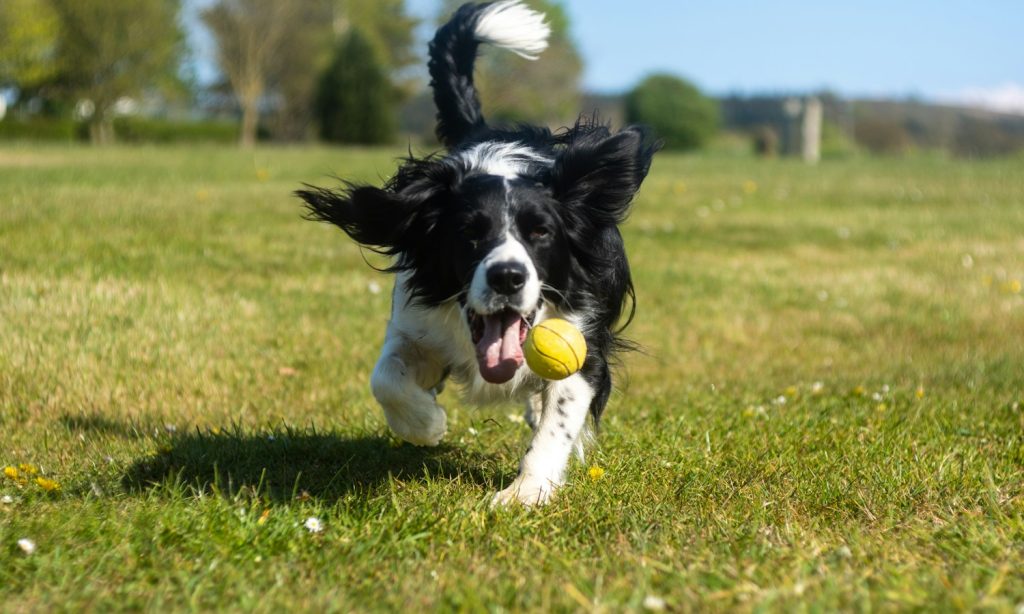
Feature photo: Andy Powell / Unsplash. Illustrative fetch photo.
Sources and Product Information
Product information checked September 30, 2026. Manufacturer specifications describe intended performance; actual throw distance can vary with conditions. Amazon product identities were verified through the site’s authorized Creators API integration.
- PetSafe Automatic Dog Ball Launcher: product information
- iFetch Too Automatic Ball Launcher: product information
- iFetch Original Automatic Ball Launcher: product information
- Hyper Pet GoDogGo Fetch Machine: product information
- Franklin Ready Set Fetch Standard Ball Launcher: product information
- Franklin Ready Set Fetch Mini Ball Launcher: product information
- ALL FOR PAWS Small/Medium Dog Ball Launcher: product information
- iFetch: ball compatibility, safety, and maintenance FAQ
- PetSafe: gradual introduction and supervised training
- Cornell University: summer heat safety for dogs