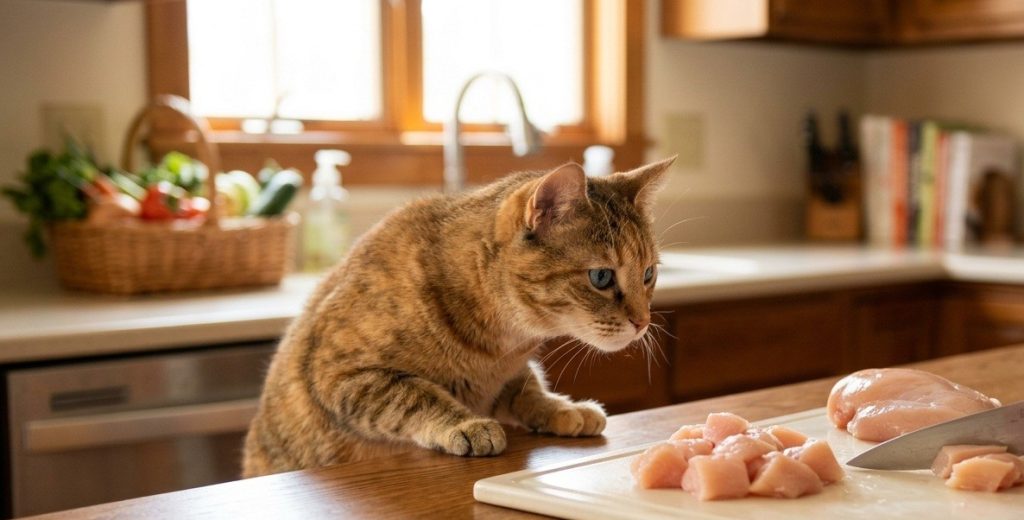
If you have ever caught your cat staring at you with unblinking intensity while you chop up raw poultry for dinner, you are not alone. As someone who has spent the last 15 years living with, caring for, and cleaning up after a small army of pets—including my late, great tabby, Oliver, who once tried to snatch a whole raw chicken breast right off my cutting board—I know that look all too well. It is a mix of ancient predator instinct and plain old feline audacity.
That brings us to a question many pet parents in the USA find themselves asking: Can cats eat raw chicken?
The short answer is yes, cats can physically digest raw poultry, but the complete answer is far more complex. While raw meat for cats has become a hot topic in online pet communities, feeding uncooked poultry carries very real health risks alongside potential nutritional perks. Before you serve up a raw feast to your favorite feline, let’s look at the science, the safety hazards, the digestive mechanics, and what you need to know to keep your whiskered companion safe and healthy.
Understanding the Feline Digestive System: Natural Born Carnivores
To answer whether cats should eat raw meat, we have to start with feline biology. Cats are obligate carnivores. Unlike humans or dogs, who are omnivores and can thrive on a diverse diet including grains and vegetables, cats require meat to survive.
In the wild, a cat’s ancestor hunted mice, birds, and small reptiles, consuming them whole—bones, organs, and raw flesh included. Because of this evolutionary path, the feline digestive tract is short and highly acidic.
How the Feline Gut Works
-
Highly Acidic Stomach (pH ~1 to 2): Rapidly breaks down raw proteins and neutralizes potential pathogens.
-
Short Small Intestine: Absorbs dense nutrients quickly before decay sets in.
-
Compact Large Intestine: Quickly expels remaining waste products safely.
The high stomach acidity is designed to digest raw meat quickly and kill off many harmful microbes before they can colonize the gut. IMO, this anatomical fact is why so many pet owners naturally assume that raw chicken is an ideal meal for their indoor housecats. However, there is a massive difference between a wild African wildcat catching a songbird and a domestic cat eating grocery store poultry.
The Benefits of a Raw Diet for Cats
Proponents of raw feeding often point to noticeable health improvements when switching cats from standard dry kibble to uncooked meat diets. When done correctly under veterinary supervision, incorporating raw poultry or a balanced raw diet for cats can offer several advantages.
1. Superior Protein and Hydration
Cats rely heavily on protein for energy rather than carbohydrates. Commercial chicken contains high-quality amino acids, including taurine, which is vital for heart function and vision. Additionally, raw muscle meat naturally contains about 70% to 75% water, which helps support urinary tract health in cats who rarely drink enough water on their own.
2. Improved Digestion and Dental Health
Many pet parents report smaller, less odorous stools after transitioning to raw feeding. Because raw meat is highly digestible for carnivores, less waste is produced. Raw bones—when small, soft, and completely uncooked—can also act as natural dental floss, helping scrape away tartar from feline teeth.
3. Shiny Coat and Lean Muscle Mass
Healthy fats and digestible proteins found in poultry help maintain a dense, shiny coat and keep housecats at an ideal weight, reducing the risk of feline obesity and diabetes.
The Hidden Dangers: Why Feeding Raw Chicken Is Risky
While wild cats eat raw meat every day, our modern food chain presents hazards that nature never intended. Giving your cat raw meat from the local supermarket is not the same as a wild cat catching fresh prey.
| Hazard Category | Key Concern | Potential Health Impact on Cats |
| Bacterial Contamination | Salmonella, E. coli, Listeria | Severe gastroenteritis, vomiting, fever, and sepsis |
| Nutritional Imbalance | Lack of essential vitamins/minerals | Calcium deficiency, weak bones, organ failure |
| Physical Trauma | Bone splinters or chunks | Intestinal blockages, mouth lacerations, choked airways |
| Cross-Contamination | Bacteria spreading to human family | Food poisoning in children, elderly, or immune-compromised humans |
Bacterial Pathogens: A Threat to Pets and Humans
Grocery store chicken is processed, packaged, transported, and stored for days before reaching your kitchen. During this process, bacteria like Salmonella, Campylobacter, and E. coli can multiply rapidly on the surface of the meat.
While a cat’s acidic stomach can handle some bacteria, high bacterial loads can lead to severe food poisoning. Furthermore, a cat eating raw meat becomes a vector for bacterial shedding. Bacteria pass through their digestive tract and end up in the litter box, on their fur, and across your living room furniture when they groom themselves 🙂
The Risk of Bone Splinters and Choking
Never feed cooked chicken bones to cats, as cooking makes bones brittle and prone to splintering into sharp shards that can puncture the esophagus or stomach. However, even raw bones carry risks if they are too large or improperly sized for your cat’s mouth, potentially causing choking or bowel obstructions.
Signs of Food Poisoning in Cats
If your cat managed to snag a piece of raw chicken off the counter or ate raw poultry that was left out too long, you must watch closely for signs of bacterial illness.
| Stage | Common Symptoms | Action Required |
| Early Warning Signs | Acute lethargy, loss of appetite, persistent vomiting | Withhold food, offer fresh water, monitor closely |
| Advanced / Severe | High fever, bloody diarrhea, severe dehydration | Immediate emergency veterinary evaluation |
If your cat exhibits persistent vomiting, severe lethargy, or blood in their stool after consuming raw poultry, visit an emergency veterinarian immediately. FYI, young kittens, senior cats, and cats with pre-existing conditions (like kidney disease or diabetes) are at a much higher risk of rapid dehydration and severe complications from foodborne illnesses.
How to Safely Introduce or Feed Raw Poultry (If You Choose To)
If you decide that a raw diet for cats is right for your household, you must take strict measures to minimize health hazards. Simply throwing a raw chicken breast into your cat’s bowl is a recipe for trouble.
| Preparation Step | Focus Area | Safe Practice Standard |
| Step 1: Sourcing | Ingredient Quality | Buy high-grade, antibiotic-free poultry from reputable butchers. |
| Step 2: Preparation | Hygiene Control | Sanitize cutting boards, knives, and counters with disinfectant. |
| Step 3: Portion Control | Meal Safety | Serve small, manageable portions; remove uneaten meat in 15 mins. |
| Step 4: Cleanup | Sanitation | Wash stainless steel bowls thoroughly after every feeding session. |
1. Source Quality Ingredients
Avoid pre-ground chicken from the store. Commercial ground meat has a massive surface area, making it a breeding ground for bacteria. If you prepare raw meat for cats at home, use whole breasts or thighs sourced from reputable suppliers, and wash your hands thoroughly before and after handling.
2. Practice Rigid Kitchen Hygiene
Treat your cat’s raw food prep with the same cleanliness standard as a restaurant kitchen. Use dedicated cutting boards for pet food, disinfect all surfaces immediately, and wash your cat’s feeding dishes with hot, soapy water after every meal. Glass or stainless steel bowls are preferred because plastic bowls develop microscopic scratches where bacteria love to hide.
3. Ensure Complete Nutritional Balance
Plain chicken meat lacks essential nutrients like calcium, phosphorus, and specific vitamins found in bone marrow and organ meats. If fed exclusively on chicken breast, a cat will eventually develop severe metabolic bone disease. Always consult a veterinary nutritionist to ensure your homemade raw diet for cats includes the necessary vitamin premixes and mineral supplements.
Cooked vs. Raw: What Is the Better Option?
For most pet owners, plain, unseasoned cooked chicken offers all the protein benefits of poultry without any of the bacterial Russian roulette.
| Feature / Benefit | Plain Cooked Chicken | Uncooked Raw Chicken |
| Bacterial Safety | High (Heat kills pathogens) | Low (Risk of Salmonella / E. coli) |
| Preparation Difficulty | Low (Simple boiling or baking) | High (Requires strict sanitation) |
| Digestibility | Highly digestible for cats | Highly digestible for cats |
| Human Risk | Minimal | High (Risk of cross-contamination) |
Boiling or baking chicken breast without oil, butter, garlic, or onion produces a safe, highly digestible treat that is perfect for rewarding good behavior or soothing an upset stomach.
(Note: Never add onions or garlic when cooking chicken for your cat. Both ingredients contain compounds that destroy feline red blood cells, leading to severe anemia.)
Frequently Asked Questions (FAQs)
1. Can cats eat raw chicken skin?
While raw chicken skin is not toxic, it is extremely high in fat. Feeding raw skin can easily upset your cat’s digestive system, leading to diarrhea or pancreatitis (a painful inflammation of the pancreas). It is best to stick to lean muscle meat.
2. How much raw chicken can I give my cat as a treat?
If you are giving raw meat for cats as an occasional treat rather than a full meal, it should account for no more than 10% of their daily caloric intake. A bite-sized piece once or twice a week is plenty for a standard-sized housecat.
3. Will raw chicken give my cat worms or parasites?
Fresh raw poultry in North America carries a lower risk of macro-parasites than wild game, but protozoan parasites like Toxoplasma gondii can still be present in raw meat. Freezing the meat at sub-zero temperatures for several days before serving can help destroy certain parasites, though it does not kill bacteria.
4. What should I do if my cat eats raw chicken left on the counter?
Do not panic. Monitor your cat closely for the next 24 to 48 hours for signs of lethargy, vomiting, or diarrhea. Ensure fresh water is available at all times. Most healthy adult cats will process small amounts without issue, but call your vet if any abnormal symptoms appear.
5. Can kittens eat raw chicken?
It is strongly recommended to avoid feeding raw meat to kittens. Their immune systems and digestive tracts are still developing, making them far more vulnerable to severe dehydration and death caused by bacterial food poisoning.
Final Words
So, can cats eat raw chicken? Technically, yes—their bodies are built to process meat. But whether they should eat raw chicken depends on your ability to source high-quality ingredients, balance their nutritional requirements, and maintain strict kitchen sanitation.
For most pet owners, the safest route is offering plain, cooked chicken as an occasional treat alongside a balanced, commercially prepared feline diet. If you are determined to transition your pet to a raw diet for cats, work alongside a veterinarian or a certified veterinary nutritionist to ensure your cat gets all the nutrients they need without exposure to dangerous pathogens.
Taking care of our furry family members means balancing their natural instincts with modern safety—keeping them purring, healthy, and safe for years to come.