Having spent the last 15 years sharing my living space with three extraordinarily stubborn cats, two rescue dogs, and a perpetually rotating array of foster animals, I have seen my fair share of pet care trends come and go. I have cleaned up things I would rather not describe on a Sunday morning, spent fortunes on automated litter boxes that my cats promptly ignored, and spent endless hours researching what actually goes into the food bowl.
Over the last few years, few topics have sparked as much heated debate in the pet community as raw feeding. Mention a raw diet for cats in a room full of pet parents, and you will immediately divide the room into two passionate camps: those who swear it restored their cat’s youth, and those who view it as a biohazard waiting to happen. IMO, both sides raise valid points, but the truth sits somewhere in the middle.
If you are currently staring at a bag of dry kibble wondering if you are failing your obligate carnivore, take a deep breath. In this comprehensive guide, we are going to explore the raw diet for cats: benefits and risks, how feline digestion actually works, the safety protocols you cannot skip, and whether switching to raw food is the right move for your home.
Understanding Feline Nutrition: What Is a Raw Diet for Cats?
To understand why a raw diet for cats has gained such a massive following across the US, we have to look at the evolutionary biology of the domestic feline (Felis catus). Unlike dogs, who have adapted over thousands of years to digest a more omnivorous diet alongside humans, cats remain strict obligate carnivores. This means their bodies are biologically engineered to derive their essential nutrients strictly from animal tissue.
In the wild, a cat’s natural meal consists of small prey—rodents, birds, insects, and reptiles. They consume the meat, organs, bones, and digestive contents of their prey raw. A commercial or homemade raw diet for cats attempts to mirror this natural prey model by delivering uncooked muscle meat, organ meat, and crushed bones (or bone meal) without high-heat processing or synthetic fillers.
The Biological Foundation of Wild Feline Prey
-
High Moisture: 70% – 80% natural water content
-
High Protein: 50% – 60% essential animal protein
-
Low Carbohydrate: Under 10% naturally occurring carbohydrates
The Three Core Components of a Balanced Feline Raw Diet
When building or buying a raw diet for cats, precision is everything. You cannot simply throw a piece of raw steak into a bowl and call it a day. A balanced raw meal relies on a specific ratio often referred to as the Prey Model Raw (PMR) or BARF (Biologically Appropriate Raw Food) standard:
-
Muscle Meat (80–84%): Provides essential amino acids like taurine, arginine, and lysine, which cats cannot synthesize on their own.
-
Raw Bone Meal or Soft Bones (10%): Provides calcium and phosphorus in the exact balanced ratio necessary for skeletal strength and metabolic health.
-
Organ Meat (6–10%): Liver, kidney, and heart act as nature’s multivitamins, supplying crucial fat-soluble vitamins (A, D, E, K) and vital trace minerals.
The Benefits of a Raw Diet for Cats
As someone who transitioned one of my senior cats, a domestic shorthair named Oliver, to a raw diet for cats several years ago after he developed chronic digestive issues, I have seen the positive changes firsthand. While every cat responds differently, pet parents across North America report noticeable health improvements when ditching ultra-processed foods.
| Health Feature | Traditional Dry Kibble | Balanced Raw Diet |
| Moisture Content | 6% – 10% (Low) | 70% – 80% (High naturally) |
| Carbohydrate Load | 30% – 50% (Fillers & Starches) | Minimal to None (<2%) |
| Protein Processing | Rendered, high-heat cooked | Uncooked, natural state |
| Stool Output | High volume, frequent, strong odor | Low volume, firm, minimal odor |
| Dental Impact | Sticky carbohydrates cling to teeth | Less starch residue, active chewing |
1. Superior Hydration and Kidney Support
Cats have a naturally low thirst drive. In nature, they obtain almost all their daily hydration directly from their prey, which is roughly 70-80% water. Dry kibble, by contrast, sits around 6-10% moisture. Cats fed strictly dry food often live in a state of mild chronic dehydration, which puts heavy stress on their kidneys and urinary tract over time. A raw diet for cats naturally delivers the high moisture content necessary to flush the bladder and prevent painful urinary crystals.
2. Improved Digestion and Reduced Litter Box Odor
One of the most immediate perks you will notice after switching to a raw diet for cats is in the litter box. Because a cat’s short, highly acidic digestive tract easily breaks down raw protein and bone, they absorb almost every nutrient provided. The result? Smaller, firmer, and remarkably low-odor stools. If you live in an apartment, this benefit alone feels like a gift from above.
3. Vibrant Coat and Healthy Skin
The essential fatty acids (Omega-3 and Omega-6) present in fresh, uncooked meats remain undamaged by high-heat manufacturing processes. Within 4 to 6 weeks on a balanced raw diet for cats, most felines display noticeably softer, shinier fur and experience far less shedding and dandruff.
4. Natural Weight Management and Muscle Tone
Commercial dry pet foods often rely on heavy starches—such as peas, corn, wheat, or potatoes—to bind the kibble together during production. Cats are not built to process high amounts of carbohydrates. Excess carbs are quickly converted into body fat. A raw diet for cats provides clean protein that builds lean muscle mass while helping overweight cats naturally drop unnecessary pounds.
Common Raw Protein Questions: Chicken, Beef, and Fish
When pet parents start researching a raw diet for cats, they usually begin with the common meats found at their local grocery store. Let’s look at how specific protein sources fit into a feline raw diet.
Can Cats Eat Raw Chicken?
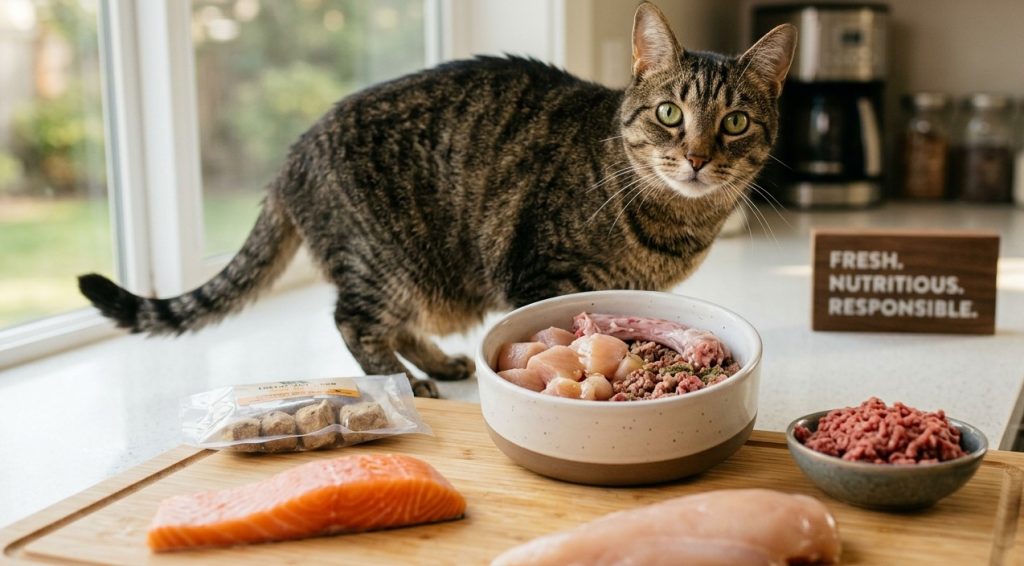
Yes, can cats eat raw chicken safely? Absolutely, provided it is fresh and handled with strict hygiene. Raw chicken is one of the most accessible, digestible, and cost-effective foundation meats for a raw diet for cats. It is rich in essential protein, and soft chicken bones (like neck or wing tips) provide natural calcium. However, store-bought raw chicken can carry Salmonella, so proper storage and handling are non-negotiable.
Can Cats Eat Raw Beef?
When considering whether can cats eat raw beef, the answer is also yes, but with a few caveats. Beef is an excellent source of iron, zinc, and B vitamins, making it a powerful addition to a raw diet for cats. However, beef tends to be higher in fat than poultry, and the bones are far too hard for feline teeth. Never feed your cat whole beef bones, as they will break teeth. Stick to finely ground beef or lean, cubed cuts mixed with appropriate bone meal supplements.
Can Cats Eat Raw Fish?
So, can cats eat raw fish safely as a main diet? This is where you need to be very careful. While cats famously love the smell of seafood, raw fish should not form the primary foundation of a raw diet for cats. Raw fish contains thiaminase, an enzyme that breaks down vitamin B1 (thiamine). Over time, feeding raw fish continuously can cause severe, life-threatening thiamine deficiency and neurological issues. Additionally, raw fish carries a higher risk of parasites and heavy metal build-up. An occasional small bite of raw salmon is fine, but leave fish off the daily raw menu.
The Serious Risks of a Raw Diet for Cats
While the benefits sound incredible, we cannot ignore the real hazards. Feeding a raw diet for cats comes with genuine responsibilities and risks that every pet parent must understand before opening a bag of raw meat. Ignorance here can hurt your pet and your family.
| Primary Risk Category | Key Concern | Potential Impact on Feline Health |
| Pathogen Exposure | Salmonella, Listeria, E. coli | Acute gastroenteritis, severe vomiting, diarrhea, human cross-contamination |
| Nutritional Imbalance | Calcium/Phosphorus ratios, Taurine loss | Metabolic bone disease, painful fractures, dilated cardiomyopathy, blindness |
| Physical Hazards | Bone splinters, large unground fragments | Choking, intestinal blockages, stomach lining perforation |
1. Bacterial Contamination and Pathogens
The most significant health concern regarding a raw diet for cats is bacterial contamination from Salmonella, Listeria, and E. coli. While a healthy cat’s stomach acid is significantly more potent than ours (with an acidic pH of around 1.0 to 2.0 designed to destroy bacteria), pathogens can still cause acute gastroenteritis, vomiting, and severe diarrhea in stressed, young, or elderly felines.
More importantly, you are at risk. When you handle raw meat or clean out a litter box from a raw-fed cat, you risk cross-contaminating your kitchen counters and living areas. If you have young children, elderly family members, or immunocompromised individuals at home, a raw diet for cats requires extreme caution.
2. Nutritional Imbalance (The Biggest Silent Trap)
The most dangerous error beginners make when preparing a raw diet for cats at home is feeding muscle meat alone. Meat without bone or supplemental calcium creates a severe calcium-to-phosphorus imbalance. Over time, the cat’s body pulls calcium directly out of its own bones to compensate, leading to metabolic bone disease, painful fractures, and tooth loss.
Furthermore, freezing meat or storing it incorrectly destroys taurine, an essential amino acid. Taurine deficiency in cats causes irreversible dilated cardiomyopathy (a dangerous enlargement of the heart) and blindness. If you choose to make a raw diet for cats at home, following a clinically validated recipe is essential.
3. Physical Obstructions and Internal Damage
If you feed whole or poorly ground bone fragments in a raw diet for cats, there is always a small risk of choking, intestinal blockage, or sharp bone splinters puncturing the delicate lining of the stomach or intestines. Cooked bones are an absolute non-no—they splinter instantly—but even raw bones must be chosen carefully for cat consumption.
Impact of Raw Diet on Feline Health Systems
-
Digestive System: Increased nutrient absorption, shorter transit time, reduced stool volume, and optimized stomach acid production.
-
Renal / Urinary System: High natural moisture keeps urine dilute, drastically reducing the formation of painful bladder stones and crystals.
-
Dental Health: Reduces sticky, carbohydrate-based plaque buildup, though regular brushing is still recommended.
-
Metabolic & Coat: Balanced omega fats reduce shedding, eliminate dry dander, and stabilize blood glucose levels.
Safe Solutions: How to Prepare Raw Food for Cats Properly
If you have weighed the risks and still want to offer your pet a raw diet for cats, safety must be your top priority. You can eliminate the majority of bacterial hazards by sticking to strict food safety protocols in your kitchen.
Essential Hygiene Rules for Raw Feeding
-
Thaw Safely: Never leave raw meat sitting out on the kitchen counter at room temperature. Always thaw frozen raw meals inside your refrigerator overnight.
-
Dedicated Preparation Tools: Keep a completely separate set of cutting boards, knives, metal bowls, and glass storage containers reserved exclusively for your cat’s raw diet.
-
Sanitize Immediately: Wash all bowls, utensils, and food prep surfaces with hot, soapy water immediately after feeding, followed by a pet-safe disinfectant.
-
The 30-Minute Rule: Leave raw food out for a maximum of 30 minutes. If your cat turns up their nose or grazes slowly, pick up the bowl, discard the leftover food, and wash the dish. FYI, leaving raw meat at room temperature turns your kitchen into a bacteria party 🙂
-
Use Stainless Steel or Ceramic Bowls: Plastic bowls develop microscopic scratches over time where dangerous bacteria can hide, no matter how hard you scrub. Stick to non-porous glass or stainless steel dishes.
Commercial vs. Homemade Raw Diet for Cats
When embarking on a raw diet for cats journey, you must choose between commercial pre-made options or grinding your own food at home.
| Option | Key Advantages | Potential Drawbacks |
| Commercial Pre-Made Meals |
• Formulated to strict AAFCO standards
• Flash-frozen for safety
• Zero preparation math required |
• Higher monthly cost
• Requires significant freezer space |
| Homemade Raw Meals |
• Lower long-term cost
• Complete control over ingredients
• Great for cats with severe allergies |
• High risk of severe nutrient imbalance
• Requires expensive meat grinders
• Time-consuming prep work |
For beginners, commercial raw diets—available in frozen nuggets, freeze-dried patties, or vacuum-sealed rolls—are by far the safest entrance into the world of raw feeding. These commercial formulas are specifically crafted by veterinary nutritionists to meet AAFCO (Association of American Feed Control Officials) nutritional standards, saving you from worrying about complex mineral math.
If you choose the homemade route, work closely with a board-certified veterinary nutritionist. Do not rely on random online forums or social media recipes for your cat’s daily meals.
How to Safely Transition Your Cat to a Raw Diet
Cats are notoriously suspicious of change. If you suddenly swap a bowl of dry kibble for cold raw meat, your cat will likely look at you like you have lost your mind. A sudden diet shift will also trigger severe upset stomach issues.
The 14-Day Transition Schedule
-
Days 1–3: Serve 75% of their old diet with 25% of the new raw diet for cats in a separate dish or mixed in gently.
-
Days 4–7: Shift to a 50/50 ratio if their stool remains firm and normal.
-
Days 8–10: Increase to 75% raw diet and 25% old food.
-
Days 11–14: Full transition to a 100% raw diet for cats.
Pro-tip: Never serve raw food ice-cold straight from the fridge! Cats prefer their meals at room temperature or slightly warm, mimicking fresh prey. Place the raw portion in a sealed ziplock bag and let it sit in a bowl of warm water for 5–10 minutes to take off the chill. Never microwave raw bone, as even seconds in a microwave can harden bone fragments and create a hazard.
Recovery and Monitoring on a Raw Diet
Once your cat has successfully transitioned to a raw diet for cats, ongoing monitoring is essential. Keep a monthly log of your cat’s progress:
-
Body Weight: Weigh your cat once a month. Unexplained weight loss usually means you need to adjust their daily intake percentage (typically 2-3% of their ideal body weight daily).
-
Energy and Behavior: A cat thriving on a raw diet for cats should exhibit bright eyes, clean ears, high energy levels, and a soft coat.
-
Stool Quality: Stools should be small, dark, firm, and virtually odorless. If you notice persistent constipation or diarrhea, pause the diet and reassess your balance of bone, fat, and fiber.
When to Visit a Vet
While a raw diet for cats can work wonders, it is not a magic fix for underlying illnesses. You should consult your veterinarian immediately if you observe any of the following warning signs:
-
Vomiting or Lethargy: If your cat vomits continuously or appears unusually sluggish after a meal, stop feeding raw and seek medical care.
-
Persistent Diarrhea: Diarrhea lasting longer than 24–48 hours can quickly cause severe dehydration in felines.
-
Strain While Defecating: This often indicates too much bone/calcium in their raw mix, leading to painful constipation.
-
Complete Loss of Appetite: If your cat refuses food entirely for more than 24 to 36 hours, contact your vet immediately. Cats that stop eating are at high risk for hepatic lipidosis (fatty liver disease), a dangerous, life-threatening condition.
A quick note: finding a vet who is supportive of a raw diet for cats can take some patience. Many mainstream veterinarians remain cautious about raw feeding due to pathogen risks and nutritional imbalance concerns. If your vet raises concerns, don’t pick a fight. Ask open questions, share the exact ingredients of your chosen raw food, and work together to run routine bloodwork and urinalysis annually.
Alternative Options: Middle-Ground Alternatives to Full Raw
If you like the health benefits of a raw diet for cats but feel uncomfortable handling uncooked meat, don’t panic! You don’t have to go all-or-nothing to improve your cat’s meal quality.
-
Freeze-Dried Raw: Offers all the enzyme and nutritional benefits of raw food, but the freeze-drying process locks in nutrients while making storage completely shelf-stable. Simply rehydrate with warm water or bone broth before serving.
-
Gently Cooked Fresh Diets: Human-grade fresh food cooked at low temperatures to kill surface bacteria while preserving nutrients.
-
High-Protein, Low-Carb Canned Foods: A quality, grain-free wet food provides excellent moisture and protein without any of the pathogen worries attached to raw meat handling.
5 Frequently Asked Questions (FAQs)
1. Will feeding a raw diet for cats make my pet aggressive or wild?
No, absolutely not. This is an old myth. Feeding fresh raw meat meets your cat’s biological cravings, which often leads to a calmer, happier cat. Aggression is driven by genetics, environment, and lack of stimulation—not by uncooked protein.
2. Is a raw diet for cats safe for kittens?
Kittens can eat a raw diet, but the margins for error are razor-thin. Growing kittens require precisely balanced ratios of calcium, phosphorus, and calories to build bones and tissue. If you want to raise a kitten on raw, use a commercial raw diet specifically formulated for “All Life Stages” rather than a homemade blend.
3. How much raw food should I feed my cat daily?
As a general rule, an adult indoor cat should eat approximately 2% to 3% of their ideal target body weight per day in balanced raw food, split across 2 to 3 small meals. For instance, an 8 lb indoor cat requires around 2.5 to 3.8 ounces of raw food daily.
4. Can I mix raw food and dry kibble in the same bowl?
It is generally recommended not to mix raw meat and dry kibble together in the exact same meal. Kibble and raw meat digest at very different rates and alter stomach pH differently, which can cause indigestion, excess gas, or stomach discomfort. If you want to feed both, serve kibble in the morning and raw food for dinner.
5. Is a raw diet for cats more expensive than regular pet food?
A commercial raw diet for cats is undeniably more expensive than standard supermarket kibble. However, many owners find that they save money over time on reduced veterinary bills, fewer dental cleanings, and less litter usage. Buying in bulk or using freeze-dried raw toppers can help stretch your budget further.
Final Words
Deciding whether to feed a raw diet for cats comes down to evaluating your personal lifestyle, your willingness to follow strict kitchen safety standards, and your cat’s individual health needs.
A well-balanced raw diet for cats can offer incredible benefits—from brilliant coats and lean muscle mass to lower litter box odor and superior hydration. However, a poorly planned raw diet creates serious risks of bacterial contamination and crippling nutritional deficiencies.
If you choose to explore raw feeding, take it slow, do your homework, opt for reputable commercial options when starting out, and partner with a trusted veterinarian to monitor your cat’s health along the way. Your furry friend relies on you to make smart, informed choices for their bowl—so trust your gut, keep things clean, and enjoy watching your little carnivore thrive!