
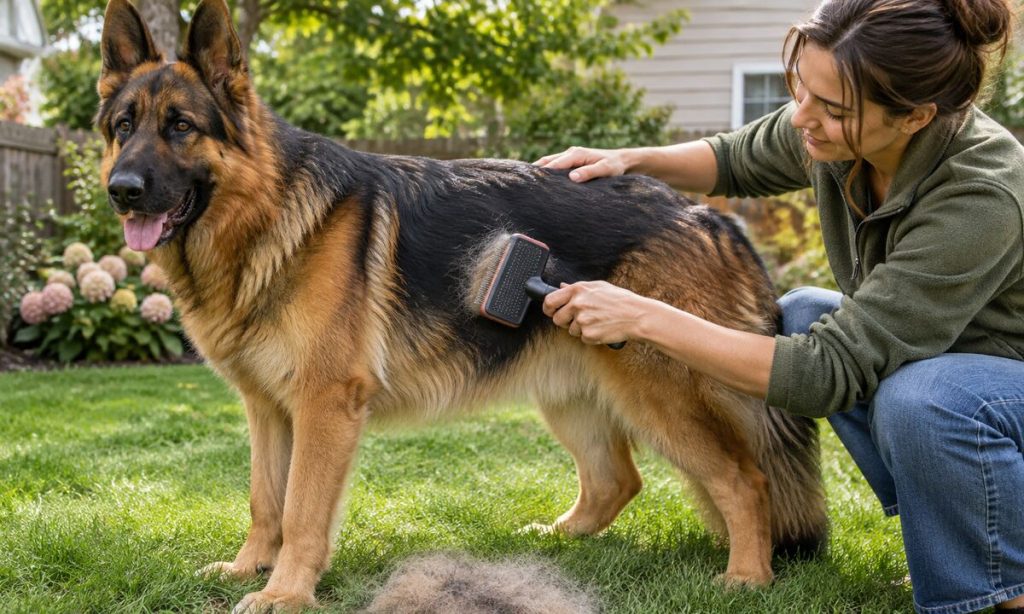
A German Shepherd’s dense double coat needs a brush that lifts loose undercoat without scraping the skin or stripping healthy guard hairs. During seasonal shedding, an ordinary surface brush can leave plenty of dead hair beneath the topcoat. Yet a sharp dematting tool used too aggressively can create discomfort. The best dog brush for a German Shepherd depends on coat length, tangles, skin sensitivity, and your own grooming routine. We compare seven distinct Amazon-listed tools and explain their practical tradeoffs.
These picks include undercoat rakes, dual-sided detangling tools, and a combined slicker system. Start with short, gentle strokes in the direction of coat growth. Watch for redness or distress rather than chasing a dramatic hair-removal claim. If your Shepherd has persistent itching, our German Shepherd skin-allergy guide explains signs worth discussing with a veterinarian.
Quick Picks
The right brush reaches loose fur while staying manageable against the dog’s skin. These options vary by tooth design, cleanup method, and grooming style.
| Product | Best For | Key Advantage | Buy | |
|---|---|---|---|---|
| Pecute Self-Cleaning Undercoat Rake | Fast cleanup during shedding | Rounded 18-tooth rake and release plate | View on Amazon | Jump to Review |
| Refuresh Adjustable-Head Deshedding Brush | Longer coats and controlled reach | Adjustable head with rounded L-shaped teeth | View on Amazon | Jump to Review |
| GoPets Double-Row Dematting Rake | Straightforward undercoat work | Dual-row steel teeth with silicone grip | View on Amazon | Jump to Review |
| DOGI Double-Row Undercoat Rake | Basic grooming value | Two rows of steel pins at a lower cost | View on Amazon | Jump to Review |
| Staltwo Dual-Sided Deshedding Rake | Mats followed by loose hair | Nine-tooth and 17-tooth sides | View on Amazon | Jump to Review |
| Nalako Two-in-One Slicker and Undercoat Brush | Surface finish plus deshedding | Slicker and rake functions with eject button | View on Amazon | Jump to Review |
| PINKIELINK Three-in-One Grooming Tool | Several tooth patterns in one kit | Rake, dematting and deshedding heads | View on Amazon | Jump to Review |
Pecute Self-Cleaning Undercoat Rake

- 18 rounded steel teeth
- One-click fur release
- Non-slip lightweight handle
- Finishing comb included
- Rake needs gentle pressure
- May miss fine surface debris
Pecute’s undercoat rake uses 18 rounded stainless-steel teeth and a push-button plate to release collected fur. This design directly addresses two common German Shepherd grooming chores: reaching loose undercoat and emptying a brush repeatedly. The maker also includes a dual-density finishing comb. The undercoat rake is the main tool for broader sections of the body, while the second comb can help refine the topcoat afterward. The separate comb is useful when longer feathering behind the legs needs careful attention, but it does not mean every tangled area is safe for forceful raking.
The attraction here is a relatively simple metal-tooth layout plus faster hair removal from the head. Heavy seasonal shedding can quickly pack the teeth on a conventional rake. A release plate may reduce the time spent pulling fur out by hand. The maker describes a non-slip handle, which can help maintain control during a large dog’s grooming session. Still, a self-cleaning mechanism is no guarantee that the brush will glide through every coat. Inspect skin condition and adjust pressure rather than treating any advertised shedding-reduction percentage as independently established.
Use this rake on dry, reasonably detangled coat sections. Begin with a few light strokes over the shoulder or flank and see how your dog responds. Lift gathered fur away from the coat, then clear the tool before resuming. The rounded metal teeth are intended to be gentle, but repeated pressure in one spot can cause irritation. Avoid sores, thin-skinned areas, and knots tight against the skin. Clean and dry the teeth after use. If your Shepherd has a very short coat or resists deep grooming, a softer slicker or finishing comb may be more appropriate.
My Recommendation
Pecute is a convenient pick for frequent brushing during German Shepherd shedding season. The built-in fur release is genuinely useful when loose undercoat accumulates fast. Owners who need a more delicate surface brush may prefer Nalako’s slicker function or a separate soft finishing tool.
Refuresh Adjustable-Head Deshedding Brush

- Adjustable grooming head
- Rounded L-shaped teeth
- Push-button fur release
- Comfortable ergonomic grip
- Listed for longer coats
- Small variant may cover less area
Refuresh offers an adjustable-head brush with L-shaped, rounded teeth designed for longer coats. Its listing specifically describes use on hair roughly four to ten centimeters long, including long-coated German Shepherds. The adjustable head may help you control the angle while working across different parts of the body. Unlike a basic fixed rake, this design adds a way to change positioning without twisting your wrist as much. The small red variant shown in this listing should be checked carefully against the size of your dog before purchase.
The rounded tooth shape aims to reach loose undercoat with less snagging when used gently. That matters for a Shepherd whose coat includes longer feathering around the chest and hindquarters. The maker also describes an ergonomic grip and a single-swipe hair-release control. These conveniences may improve a routine that otherwise feels like constant stopping and cleaning. Still, an adjustable head introduces a moving part that should be checked regularly. Do not assume it makes an unsuitable tooth length appropriate for a different coat type or a severely tangled patch.
Start in an area without mats and brush with coat growth. Keep strokes short around the legs and feathering, where long hair may wrap around teeth. If a clump resists, separate it gently instead of pulling. Empty the collected fur using the release control and inspect the head for trapped debris. For a short, tight German Shepherd coat, this longer-coat tool may be more elaborate than necessary. For a heavily matted dog, professional grooming help may be safer than trying to drag the tool through tight knots at home.
My Recommendation
Refuresh is best suited to long-coated German Shepherds whose owners want angle control and easier hair disposal. The adjustable head is the differentiator. Check the selected head size carefully; for a large short-coated Shepherd, a simpler wide rake may work more efficiently.
GoPets Double-Row Dematting Rake

- Double-row rounded teeth
- Deep undercoat reach
- Silicone non-slip handle
- Simple rake design
- No one-touch release
- Tight mats still need care
GoPets keeps the undercoat-rake concept straightforward with two rows of stainless-steel teeth and a silicone-grip handle. The maker positions it for dogs with thick, shedding coats, which makes it a relevant option for many German Shepherds. A dual-row design can gather loose hairs in successive passes without needing a separate brush head. The rounded teeth are presented as a gentler contact surface. This is not a substitute for judging coat condition, but the tool’s simple arrangement makes it easier to understand what touches the dog during grooming.
Compared with a multi-function kit, a dedicated double-row rake has fewer steps to manage. You hold one handle, work through a small area, remove fur, and continue. Its silicone grip is helpful when a large dog moves, because maintaining a light, steady hold matters more than pushing harder. The maker also describes detangling use, though tight mats can pull painfully regardless of tool claims. Work from the outer ends of loose tangles, and stop when resistance increases. A rake should remove shedding fur without scraping at the same skin patch repeatedly.
The main tradeoff is cleanup. With no advertised push-button release, you may need to remove packed hair manually from the teeth. That can be tolerable for short sessions but becomes an extra chore during a coat blow. Inspect the metal tips before use and dry the tool after cleaning. The rake is most useful along broad body areas where the undercoat is dense and relatively free of tight knots. Around delicate areas, use shorter strokes or switch to a gentler comb. Keep your Shepherd relaxed with pauses rather than working until every loose hair is gone.
My Recommendation
GoPets is a sensible option for owners who want a solid undercoat rake without multiple attachments. Its two-row teeth and grippy handle are easy to understand. Choose Pecute instead if one-button hair release is a major priority during intense shedding.
DOGI Double-Row Undercoat Rake

- Double-row steel pin layout
- Non-slip silicone-style grip
- Simple one-piece tool
- Works across several coat lengths
- No built-in fur ejector
- Marketing claims need caution
DOGI’s double-row rake is one of the simpler choices in this comparison. The listing describes stainless-steel pins arranged in two rows and a contoured non-slip handle. It is marketed for several coat lengths, including long and medium hair. For a German Shepherd owner who wants to try an undercoat rake without purchasing a large grooming kit, the uncomplicated design has appeal. There is no complex adjustment system to learn. You can focus on handling the coat gently and identifying where loose undercoat collects most heavily.
The maker advertises dramatic shedding reduction, but that percentage should not be treated as an independently verified outcome for your dog. German Shepherd shedding varies with season, age, health, and coat length. What matters more is whether the pins lift loose hairs without snagging or redness. The two-row format may gather a good amount of fur along the shoulders and flanks. Pay attention to pressure and stroke direction. Do not repeatedly rake the same patch just because the brush continues collecting hairs; coat damage and irritated skin can result.
After brushing, remove the fur caught between the teeth and check that no pins have bent. A non-slip handle may help you keep a controlled angle, especially when your Shepherd shifts position. Keep grooming sessions brief at first and pair them with calm praise or small breaks. If your dog has thick tangled feathering, tease apart the ends with a suitable comb before using the rake. This tool is most appropriate for routine loose-fur management, not for diagnosing skin issues or treating serious mats. Owners wanting push-button cleanup should look at another model.
My Recommendation
DOGI offers an accessible double-row rake for routine loose-undercoat grooming. It is a straightforward starting tool, provided you use gentle technique. It lacks the cleanup convenience of Pecute and the multiple grooming functions offered by Nalako. Its open, no-frills layout also makes routine inspection easy.
Staltwo Dual-Sided Deshedding Rake

- Nine-tooth detangling side
- 17-tooth deshedding side
- Lightweight rubber handle
- Two functions in one head
- Dematting edge needs caution
- No automatic hair release
Staltwo uses a dual-sided grooming head with a nine-tooth side and a 17-tooth side. The maker suggests the wider-spaced side for tangles and the denser side for loose undercoat. That sequence can be useful for a long-coated German Shepherd with small knots near the breeches or chest feathering. It also means you need to know when to stop: a tight mat next to the skin may require professional care rather than more force. This is a more specialized tool than a soft finishing brush, so choose it for genuine coat-management needs.
The two different tooth layouts let one device handle slightly different stages of grooming. Start with the less dense side on a loose tangle, then switch to the shedding side only when the coat moves freely. The maker describes rounded tooth ends and a non-slip rubber grip. Those features are helpful, but they cannot prevent irritation if you repeatedly scrape one spot. Ignore the impression that a claimed high percentage of hair removal is a target you should reach. A good session ends with the dog comfortable, coat manageable, and skin looking normal.
Clean hair out of both sides after use and check for debris between the teeth. Switch sides deliberately so that sharp or close-spaced portions do not drag unexpectedly across sensitive areas. For very short-coated Shepherds, the detangling side may be unnecessary. For dogs with chronic matting, ask a professional groomer to show you safe parting and brushing techniques. Store the tool where teeth will not bend. Staltwo’s value is having two tooth patterns in one handle, but that versatility is worthwhile only if the owner knows how to use each gently.
My Recommendation
Choose Staltwo if your long-coated Shepherd has both loose undercoat and occasional mild tangles. The two-sided design saves carrying several rakes. For uncomplicated seasonal shedding, a single rounded rake may be easier and safer to use. Skip it for routine short-coat grooming with few tangles.
Nalako Two-in-One Slicker and Undercoat Brush

- Slicker and rake combination
- One-touch hair cleanup
- Flexible nylon bristles
- Rubberized ergonomic handle
- Two functions add complexity
- Slicker may need extra cleanup
Nalako combines a slicker-style brush with an undercoat-rake function in one grooming tool. The manufacturer lists flexible nylon bristles, a rubberized handle, and a one-touch eject control. This combination is attractive when your German Shepherd needs both deep loose-fur removal and lighter surface finishing. A rake alone can leave the topcoat looking uneven after a heavy shedding session. A separate finishing pass can tidy the fur and lift visible debris. Nalako’s approach reduces the number of handles you must carry to the grooming area.
The two functions should not be used with identical pressure. A slicker can catch surface tangles or loose hairs, while a rake typically reaches farther into the coat. Work in short sections and adjust your wrist angle so the teeth do not press into the skin. The maker says the nylon bristles are designed to reduce tugging, but any brush can be uncomfortable if the coat is tightly tangled. The hair-eject mechanism is a useful convenience when a double-coated dog releases fur quickly. Watch for collected hair blocking a grooming surface and clear it before continuing.
After a session, remove remaining strands around the head and check the release mechanism for smooth movement. A combined tool may be less convenient to clean than two simple separate brushes, especially when hair traps around moving parts. The rubberized grip should help with everyday handling, but take breaks if your dog becomes restless. This model is an option for households that want one device for several steps. It cannot replace a fine comb for tiny tangles or professional help for severe mats. Use it as part of a calm routine rather than aggressive coat stripping.
My Recommendation
Nalako is the flexible pick for a German Shepherd owner who wants both a slicker and an undercoat tool. Its one-touch release saves some cleanup. If you already own a good slicker, the simpler GoPets rake might add more value.
PINKIELINK Three-in-One Grooming Tool

- Multiple grooming tooth patterns
- Rounded steel tooth ends
- Rubber anti-slip grip
- Hanging storage hole
- More surfaces to clean
- Complexity not needed for all coats
PINKIELINK markets a three-in-one grooming tool that combines an undercoat rake, a dematting side, and a deshedding surface. The listing describes several tooth arrangements, including nine- and 17-tooth sides, a 33-tooth rake, and an 87-tooth finishing surface. That range offers flexibility for a German Shepherd owner managing longer feathering and dense seasonal undercoat. It can reduce the need for several separate handles. The tradeoff is learning which surface is appropriate before the tool touches the dog, especially around sensitive skin and thin-haired areas.
Different tooth densities serve different jobs. A widely spaced side can work through small, loose tangles, while closer teeth may collect shed fur or smooth the outer coat. Do not move from one pattern to another simply to maximize the amount of hair removed. Inspect the dog’s comfort, keep pressure light, and avoid tight mats. The maker describes rounded ends and stainless-steel construction, but those specifications do not make improper brushing harmless. Use small sections and follow the direction of the coat. For most German Shepherds, consistent short grooming is more beneficial than trying every attachment in one long session.
Cleaning takes more attention when several tooth surfaces trap fur. Check each row for hair, debris, and bent metal after use. The anti-slip handle and hanging hole are practical for storage near towels and grooming supplies. This design may suit a household with more than one pet or coats of different lengths. For a single short-coated Shepherd, however, the extra functions may add unnecessary complexity. If your dog becomes tense around metal tools, begin with a softer brush and build tolerance slowly. Stop and seek veterinary advice if grooming reveals painful skin lesions.
My Recommendation
PINKIELINK is for owners who genuinely need several tooth patterns and are comfortable learning them. It offers useful flexibility for longer coats. If you want one predictable tool for a quick weekly routine, a simple double-row rake is easier to manage.
How to choose best dog brush for a german shepherd
German Shepherd coats vary in length and density. Choose a tool that matches the dog’s coat and tolerance. Examine tooth ends, cleaning method, and your own hand comfort before settling on one.
Choose tooth spacing for the actual coat
A short-coated German Shepherd and a long-coated Shepherd may need different grooming tools, even though both have undercoats. Wider-spaced rake teeth often reach through a dense coat more comfortably than a tightly packed slicker. A slicker can be useful for surface finishing and small tangles. Start by parting the coat and inspecting the skin. Use the tool in the direction of hair growth with light, controlled pressure. A brush should glide rather than snag. If it catches, stop and separate the tangle gently by hand. Never pull a heavy mat directly against the skin, and do not cut close to the skin with scissors. Sensitive areas around the belly, legs, and ears need extra care. A long-coat dog may benefit from a finishing comb after the main undercoat session. The right tool is the one you can use safely and consistently, not the one advertising the largest shedding percentage.
Balance deshedding with skin health
Loose undercoat can build up quickly when the seasons change, but more passes are not always better. Use short sessions and stop if the skin looks irritated or your Shepherd begins avoiding the brush. Metal teeth should have smooth rounded ends. Some dematting tools include sharpened edges that require careful handling. A single tool may not suit every body area. A soft finishing brush may be more comfortable around bony points, while an undercoat rake may work better across the broad back and hips. Remember that normal shedding is different from hair loss with bare patches, sores, or excessive scratching. Those problems deserve veterinary attention. Learn what changes merit attention in our guide to German Shepherd skin reactions. Grooming should help you monitor the coat, not substitute for treatment.
Consider maintenance and the whole grooming routine
Heavy shedding generates a surprising amount of loose hair. A release button can simplify cleanup during a long session, while a basic rake may be easier to rinse and inspect for bent teeth. An ergonomic, non-slip grip matters when you work across a large dog’s coat. Check whether the tool is one piece or a set of detachable heads. More attachments add versatility but can also add storage and cleaning chores. Brush outdoors when practical, dispose of collected fur safely, and keep metal parts dry after cleaning. The coat should be detangled before bathing so wet knots do not tighten. For handling tips, our calm dog-bathing guide complements a gentle brushing routine. Make the session predictable with praise and breaks. A short pleasant routine several times a week is usually more sustainable than one aggressive marathon.
Frequently Asked Questions
Here are practical answers to the questions owners often ask before choosing.
How often should I brush a German Shepherd?
Many German Shepherds benefit from several gentle brushing sessions each week, with extra attention during seasonal shedding. Adjust to coat condition and comfort. Stop if the skin becomes irritated.
Should I use an undercoat rake or slicker brush?
An undercoat rake reaches loose fur beneath the topcoat. A slicker is often more useful for surface debris and finishing. Some households use both, but technique and tooth design matter more than quantity.
Can a deshedding tool damage a German Shepherd’s coat?
Yes, excessive pressure or repeated passes with sharp tools can irritate skin and harm coat fibers. Use light pressure and never force through mats. Seek a qualified groomer’s help for severe matting.
Should I shave a German Shepherd to reduce shedding?
Shaving a healthy double coat is generally not a routine shedding solution. Ask your veterinarian or a qualified groomer about medical matting, skin disease, or other special circumstances.
What if brushing reveals bald patches or sores?
Pause grooming over affected skin and consult a veterinarian. Sudden coat loss, persistent itching, wounds, or unusual odor may need diagnosis rather than a new brush.
Final Verdict
For a dense coat, the Pecute rake is a practical starting point because its rounded teeth and one-touch hair release address everyday deshedding. GoPets offers a simpler dual-row rake, while Nalako combines slicker and rake functions for homes that need both. Use the least force that removes loose hair and choose the tool your German Shepherd tolerates comfortably.
Inspect the coat and the brush after each session. A good grooming routine is consistent, calm, and adapted to the individual dog, not a contest to remove the most fur.
Affiliate disclosure: This article contains Amazon affiliate links. If you purchase through them, PetAdvisorPro may earn a commission. As an Amazon Associate I earn from qualifying purchases.









