Thick dog coats can make an ordinary grooming clipper feel underpowered surprisingly fast. Dense, curly, woolly, or heavy fur creates more resistance at the blade, so the right tool needs enough cutting consistency to move through a properly prepared coat without turning a home grooming session into repeated passes and frustration. For this guide, I focused on current Amazon clipper identities that are specifically positioned for dog grooming, including several models whose listings directly mention thick or heavy coats. I also looked at practical differences such as cordless convenience, kit contents, noise-focused designs, and whether the clipper is better suited to demanding full-coat work or lighter maintenance. The goal is not to encourage unnecessary shaving. Coat type matters, and difficult matting, skin problems, or uncertainty about clipping a double coat are good reasons to involve a professional groomer or veterinarian. Start with coat preparation, use the correct blade or guard, and stop whenever the blade or your dog needs a break.
As an Amazon Associate I earn from qualifying purchases.
Quick Picks: Dog Clippers for Thick Coats
| Product | Best For | Key Advantage | Buy | |
|---|---|---|---|---|
| oneisall Thick Heavy Coat Clippers | Thick-coat home grooming | Listing specifically targets thick, heavy coats | View on Amazon | Jump to Review |
| oneisall Heavy Duty Grooming Kit | All-in-one thick-coat setup | Heavy-duty kit positioning | View on Amazon | Jump to Review |
| oneisall Thick Heavy Coat Clippers | Dense-coat clipping | Dedicated thick-coat listing | View on Amazon | Jump to Review |
| oneisall Low Noise Grooming Kit | Routine grooming | Low-noise positioning | View on Amazon | Jump to Review |
| oneisall LED Display Clippers | Owners wanting status visibility | LED display | View on Amazon | Jump to Review |
What Matters When Clipping a Thick Coat
A clipper cannot compensate for a coat that has not been prepared. Brush and detangle as appropriate for your dog’s coat, follow the clipper maker’s blade-care directions, and work with clean equipment. Dense fur also makes blade temperature worth monitoring. Do not keep pushing through resistance simply because the motor is still running.
Coat type matters as much as coat thickness. Some dogs have double coats that should not be routinely shaved simply to reduce shedding or cope with warm weather. If the coat is severely matted, your dog has irritated skin, or you are unsure how short to clip, professional guidance is safer than experimenting with a close cut.
1. oneisall Dog Clippers for Grooming Thick Heavy Coats

What We Like
- Built for thick, heavy coats
- Purpose-focused grooming design
- Complete home-grooming approach
- Easy-to-scan grooming setup
What We Don’t Like
- Dense coats still need preparation
- Blade care remains essential
Start with the problem this model is meant to solve: resistance from thick, heavy fur. The current Amazon identity explicitly names thick heavy coats, which makes it a more focused candidate than a generic trimmer that happens to be marketed for pets. That distinction matters when you are working through a dense coat and want a tool chosen around full grooming rather than only paws, faces, or quick touch-ups. I would still prepare the coat before switching the clipper on, because knots and compacted undercoat can make even a stronger grooming tool snag or require unnecessary repeated passes. Work in manageable sections, keep the skin flat, and let the blade do the cutting instead of forcing the clipper forward. This model makes the most sense for an owner who already understands basic brushing, coat preparation, and blade maintenance and wants a home clipper whose listing directly addresses heavier coat work.
The practical appeal is focus rather than a promise that one clipper will suit every breed. Thick coats vary dramatically: a curly doodle coat, a dense spitz-type undercoat, and a heavy drop coat do not behave the same way under a blade. Choose cutting length around the individual dog and the grooming goal, and be conservative when you are learning. Check blade temperature often and pause before heat becomes uncomfortable. If the clipper begins dragging, stop and inspect the coat and blade rather than increasing pressure. I also would not use “thick coat” as a reason to shave a double-coated dog automatically. Routine coat care may call for brushing and undercoat management instead. For owners who genuinely need clipping and want an Amazon-verified model explicitly positioned for heavy coats, this is the clearest starting point among these five.
My Recommendation
My first choice from this group when the priority is a clipper explicitly positioned for thick, heavy coats. Use it with careful coat preparation and conservative cutting lengths rather than treating motor power as a substitute for grooming technique.
2. oneisall Dog Clippers Grooming Kit for Thick Coats & Heavy Duty

What We Like
- Heavy-duty kit positioning
- Thick-coat grooming focus
- Convenient kit format
- Good fit for home routines
What We Don’t Like
- Kit pieces need organized storage
- Not a substitute for detangling
A grooming kit can be more useful than a bare clipper when you are building a home setup from scratch. This oneisall listing combines that kit concept with explicit thick-coat and heavy-duty positioning, so its intended use aligns closely with the search problem behind this guide. I like that approach for an owner who does not want to assemble every grooming component separately before the first session. The key is to judge each included item by what your dog’s coat actually needs rather than assuming every accessory should be used every time. Begin by brushing and separating the coat, choose an appropriate cutting length, and make a short test pass where you can see how the fur feeds into the blade. If resistance builds, stop and correct the cause. A heavy-duty label should never become permission to push a clipper through tangles or pull at the skin.
Where this model fits best is regular home maintenance on a dog whose coat genuinely requires clipping. Owners dealing with substantial matting should be especially cautious, because mats can sit close to the skin and make it difficult to see what the blade is approaching. Professional grooming can be the safer route in that situation. During normal clipping, keep the working area well lit, give your dog breaks, and monitor the blade for heat and debris. The kit format is convenient, but maintenance becomes part of the routine: clean hair from the cutting area and follow the maker’s lubrication and care directions. Compared with the first pick, I see this option as especially attractive to someone who values an all-in-one grooming setup. The first model remains the simpler editorial starting point if the only priority is a clearly thick-coat-focused clipper.
My Recommendation
Choose this version when you want thick-coat positioning plus the convenience of a grooming-kit format. It is particularly sensible for a home setup that will be used regularly rather than for a single emergency haircut.
3. oneisall Dog Clippers for Grooming Thick Heavy Coats

What We Like
- Thick-coat specific listing
- Dense-fur grooming purpose
- Home clipping convenience
- Clear full-coat use case
What We Don’t Like
- Coat prep takes extra time
- Technique affects results
Another dedicated thick-heavy-coat listing gives you a useful alternative when comparing current oneisall options. Rather than choosing by appearance, I would compare the exact Amazon listing, included pieces, and the way you expect to groom. A dog that receives occasional full-body clipping presents a different workload from one that only needs sanitary areas and small maintenance trims. The reason this candidate stays in the roundup is that its verified identity directly addresses thick heavy coats, so the intended job is not being inferred from a generic pet-clipper name. That said, the same preparation rules apply. Dense fur should be clean and appropriately detangled before clipping, and you should never use extra hand pressure to compensate for a blade that is struggling. A smooth, controlled pass is safer and usually tells you more about whether your preparation and cutting setup are appropriate.
Think of this as an alternative configuration rather than an automatic upgrade over the first two picks. Product suitability depends on the exact dog, grooming frequency, preferred cutting length, and whether you are comfortable maintaining clipper blades. Keep a close eye on skin folds and areas where loose skin can approach the cutting path. Around sensitive areas, slower deliberate work is more important than finishing quickly. If your dog becomes restless, end the session and continue later instead of trying to complete a full coat in one sitting. Owners of double-coated breeds should also distinguish trimming needs from unnecessary full shaving. If you are uncertain, ask a groomer what coat management is appropriate before deciding on a clipper technique. For a buyer comparing verified Amazon models that explicitly call out thick coats, this remains a relevant option, but I would choose between the three thick-coat-specific oneisall listings based on the exact current kit and your grooming routine.
My Recommendation
A worthwhile comparison option for owners who specifically want a thick-coat-focused oneisall model. Compare the current package with the first two picks and choose the configuration that matches the work you actually plan to do.
4. oneisall Low Noise Dog Clippers Grooming Kit

What We Like
- Low-noise positioning
- Simple grooming-kit format
- Useful for routine maintenance
- Broad pet-grooming purpose
What We Don’t Like
- Not thick-coat specific
- Less focused for demanding coats
Noise can matter almost as much as cutting ability when a dog is uneasy around grooming equipment. This model’s verified Amazon identity emphasizes a low-noise grooming kit rather than specifically promising thick-coat performance. That makes it a different kind of choice from the first three. I would consider it for an owner whose dog needs ordinary maintenance and who values a gentler introduction to powered grooming, but I would not automatically put it first for the densest or most demanding coats. Introduce the sound before trying a full groom: let the dog experience the clipper at a comfortable distance, reward calm behavior, and keep early sessions brief. When you begin cutting, prepare the coat carefully and make a small test pass. The goal is to learn how the clipper and your dog’s particular fur interact before committing to a large area.
For truly thick fur, a quiet experience is useful only if the cutting setup can handle the coat without repeated snagging. If you find yourself going over the same patch again and again, reassess preparation, blade condition, and whether a more thick-coat-focused machine is appropriate. Never compensate by pressing harder. This candidate makes more sense for routine clipping, touch-ups, and owners who put noise management high on the list. It can also be useful as part of gradual grooming training, provided the dog remains comfortable. Keep expectations realistic: “low noise” does not mean silent, and an anxious dog may react to vibration, handling, or restraint as much as motor sound. If grooming is consistently stressful, a patient professional may achieve a safer result. Within this roundup, I see the low-noise kit as the temperament-conscious alternative rather than the strongest thick-coat specialist.
My Recommendation
Consider this model when routine grooming and noise sensitivity matter more than maximum thick-coat specialization. For a very dense coat, I would start with one of the listings that explicitly targets thick, heavy fur.
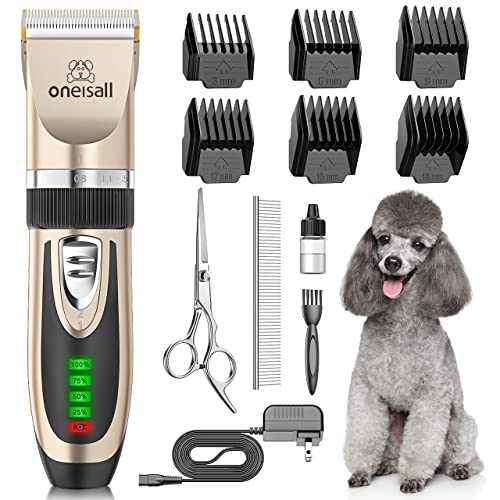
5. oneisall Dog Grooming Clippers with LED Display
What We Like
- LED status display
- General dog grooming design
- Easy status visibility
- Useful maintenance option
What We Don’t Like
- No thick-coat claim in title
- Display does not add cutting power
An LED display is primarily a usability feature, not evidence that a clipper will cut a dense coat better. That distinction is why this oneisall model sits later in the roundup. Its verified Amazon identity describes grooming clippers for dogs and cats with an LED display, but unlike the first three products, the title does not specifically call out thick or heavy coats. The display can still be convenient because visible status information is easier to check during a grooming routine than guessing what the tool is doing. I would consider this model for general maintenance where interface visibility matters, then judge its suitability for your dog’s fur conservatively. Prepare the coat thoroughly, begin in an easy area, and stop if the clipper repeatedly catches or requires pressure. A convenient interface should make grooming easier to manage; it should not encourage you to keep working when the cutting setup is wrong.
This option is best understood as a general-purpose alternative for owners attracted to the display and grooming-kit concept. For a particularly dense, curly, or heavy coat, I would give more weight to a model explicitly designed around that workload. Regardless of the model, keep the cutting surface clean, monitor blade temperature, and use the length appropriate for the dog’s coat rather than automatically clipping as short as possible. Dogs also differ in tolerance for handling, so plan breaks before frustration develops. If mats are tight against the skin, avoid trying to slide a blade blindly underneath them. Professional removal is often the safer choice. The LED model earns its place because it offers a distinct usability feature within the verified candidates, but I would not interpret that feature as a thick-coat performance specification. Choose it when ease of monitoring and routine maintenance are stronger priorities than specialized dense-coat clipping.
My Recommendation
Best suited to owners who value an LED interface for general grooming. If thick-coat cutting is the main reason for buying, prioritize the three verified listings whose identities explicitly target thick or heavy coats.
How to Choose Dog Clippers for Thick Coats
Match the Clipper to the Actual Coat
“Thick” can mean dense undercoat, curly hair, coarse guard hairs, or a coat that has become compacted. Identify what you are dealing with before choosing a cutting strategy. A professional groomer can help if you are unsure.
Prepare Before You Clip
Clipping goes more smoothly when the coat is appropriately brushed, detangled, and prepared for the dog’s coat type. Do not expect motor power to solve matting or poor preparation.
Watch Blade Temperature
Long grooming sessions can warm cutting components. Check frequently, follow the manufacturer’s maintenance directions, and give both the equipment and your dog breaks.
Do Not Shave a Double Coat Just Because It Is Thick
Double-coated dogs have different coat-management needs. Routine shaving is not a universal solution for shedding or warm weather. Get breed-appropriate grooming guidance when you are unsure.
Frequently Asked Questions
What makes a dog clipper suitable for thick coats?
Look for a grooming clipper designed for full-coat work, a cutting system appropriate for your dog’s fur, and product guidance that explicitly supports dense or heavy coats. Technique and coat preparation remain essential.
Should I clip a thick coat when it is matted?
Severe matting can sit close to the skin and make home clipping risky. If you cannot clearly and safely separate the coat from the skin, professional grooming is the better choice.
Can I shave my double-coated dog in summer?
Do not assume shaving is appropriate simply because the weather is hot. Double coats have specific grooming needs, and routine shaving can be the wrong approach. Ask a qualified groomer or veterinarian when uncertain.
Why do clippers snag in thick fur?
Coat tangles, compacted fur, blade condition, inappropriate cutting setup, and inadequate preparation can all contribute. Stop and identify the cause rather than forcing the clipper through resistance.
How often should I stop during a grooming session?
There is no single interval for every dog and clipper. Monitor your dog’s comfort and the cutting surface frequently, and pause whenever either needs a break.
Final Verdict
For this verified five-product group, the oneisall Dog Clippers for Grooming Thick Heavy Coats (B09QFRN3D5) is my editorial starting point because its current product identity directly matches the job. The heavy-duty kit and the second thick-coat-specific oneisall model provide alternatives when their exact package better fits your setup. The low-noise and LED-display models address different priorities and are less specifically positioned for demanding thick coats.
Whichever clipper you choose, preparation and technique matter. Keep the coat manageable, use an appropriate cutting length, monitor the blade, and do not force the tool through resistance. For severe matting, skin concerns, an uncertain double-coat strategy, or a dog that cannot tolerate home grooming safely, professional help is the better next step.