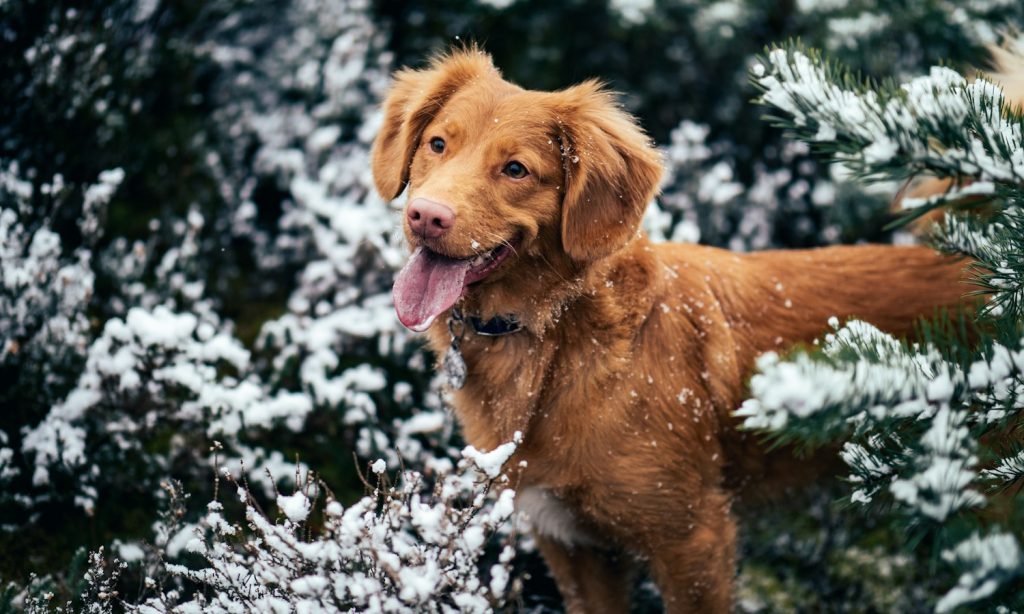
A winter walk can leave your dog’s paws carrying more than a little snow. Sidewalk salt, wet slush, and dry indoor air create different problems, which is why choosing a paw balm starts with deciding what you need it to do. A wax used before a walk serves a different purpose from a moisturizer applied to clean, dry pads afterward. Neither turns bare paws into insulated boots.
The best paw balm for dogs in winter should fit your dog’s routine, your handling preferences, and the ingredients your dog tolerates. This guide compares manufacturer-documented options for outdoor barriers and everyday conditioning, with practical tradeoffs for each. Our recommendations reflect ingredient and intended-use research, not hands-on testing or an analysis of Amazon customer reviews. Start with healthy, intact pads, introduce new products carefully, and keep rinsing and drying paws after winter outings. If your dog is limping or has bleeding, swollen, or painful paws, contact your veterinarian instead of covering the problem with balm.
As an Amazon Associate, I earn from qualifying purchases.
Quick Picks: Best Paw Balm for Dogs in Winter
| Product | Best For | Key Advantage | Buy | |
|---|---|---|---|---|
| Musher’s Secret, 60 g | Pre-walk wax care | Outdoor-focused wax | View on Amazon | Jump to Review |
| PawTection, 2 oz Stick | Plant-based outdoor barrier | Plant waxes and mango butter | View on Amazon | Jump to Review |
| Paw Soother, 2 oz Stick | After-cleaning conditioning | Jojoba oil and butter blend | View on Amazon | Jump to Review |
| kin+kind Nose & Paw, 1.76 oz | Simple push-up application | Short listed formula | View on Amazon | Jump to Review |
| Skout’s Honor Prebiotic Balm, 2 oz | Paw-and-nose moisturizing | Prebiotic blend and mānuka honey | View on Amazon | Jump to Review |
| Pet Head Coconut Paw Butter, 1.4 oz | Scent-tolerant dogs | Shea and mango butters | View on Amazon | Jump to Review |
Choose a Winter Paw Balm by Its Job
Before considering a brand, decide whether your dog needs a protective layer before going outdoors or conditioning after coming inside. Snow and salted sidewalks call for a different plan from mildly rough pads noticed during a quiet evening at home.
| Your situation | Product type to consider | Other care that matters |
|---|---|---|
| Ordinary winter walks with intact pads | Paw wax intended for outdoor barrier use | Cleaner route, paw inspection and after-walk rinse |
| Mild dryness without wounds or pain | Paw moisturizer or butter | Drying thoroughly and checking tolerance |
| Heavy deicer exposure or prolonged cold | Well-fitting boots and shorter exposure | Balm alone is insufficient |
| Limping, bleeding or painful cracks | Veterinary assessment | Do not rely on a cosmetic balm |
How We Compared the Options
We considered manufacturer-listed ingredients, intended application, packaging, and meaningful differences between products. We did not assign numerical ratings or repeat medical promises from marketing pages. A useful recommendation explains the tradeoff: a compact stick might simplify application, while a strongly scented formula might be a poor match for a dog that dislikes scented grooming products.
Winter Paw Balms Compared
1. Musher’s Secret Paw Wax, 60 g — For Pre-Walk Barrier Care

What We Like
- Outdoor-focused paw wax
- Snow-and-salt use guidance
- Food-grade wax blend
- Vitamin E formula
What We Don’t Like
- Hands-on jar application
- No boot-like insulation
For a dog whose winter routine includes brief walks over snowy sidewalks, Musher’s Secret is a logical barrier-style option. The manufacturer describes a wax blend intended to protect paw pads from environmental exposure, including snow and road salt. That positioning matters more than treating every balm as interchangeable. A protective wax is something you consider before the outing, while your dog is comfortable and the pads are clean. The brand also describes food-grade ingredients and vitamin E. Those are formulation details, not a reason to encourage licking or to assume that every dog will tolerate the product. I would judge its suitability by the actual walking conditions and your ability to apply a controlled layer, rather than by how dramatic the marketing sounds. An owner comfortable handling each paw may find a jar practical; someone trying to manage a restless dog at the door might prefer a direct-application stick.
The sensible winter role here is a supplemental surface barrier on healthy pads. It cannot make a long walk safe in severe cold or physically cover sharp ice. If your route is heavily salted, choosing a cleaner route or using properly fitted boots remains a more substantial change to the exposure itself. Think through the whole routine before deciding: where the container will live, when you will handle the paws, and how you will clean them afterward. Keep the application calm and finish with a reward your dog enjoys. Once you return, remove winter residue and look between the toes instead of assuming that a wax layer kept everything away. I would not use the product’s protective positioning to postpone assessment of a sore paw. A dog suddenly avoiding weight on one foot needs a different decision from a dog with mildly rough but comfortable pads.
My Recommendation
Consider this option when your main goal is a winter pre-walk wax and you are comfortable with jar application. Choose boots and shorter exposure when cold or heavily treated surfaces are the bigger concern.
2. Natural Dog Company PawTection, 2 oz Stick — For a Plant-Based Barrier

What We Like
- Pre-outing application focus
- Plant-derived wax blend
- Tin and stick formats
- Mango butter included
What We Don’t Like
- Lavender essential oil
- Temporarily slick pads
Unlike a balm chosen mainly for evening conditioning, PawTection is positioned by its manufacturer for application before outdoor activity. Its documented blend includes plant waxes, mango butter, rice bran oil, and lavender essential oil. The linked option is the 2-ounce stick; the brand also offers tins, giving you a useful choice of application formats. A stick may suit the owner who wants direct application, whereas a tin allows fingertip control over the areas being covered. Neither format automatically makes the experience easier for a dog that dislikes having its feet touched. I would select the packaging around the dog’s comfort and the owner’s routine first. The essential oil is also a real distinction: someone seeking a formula without added aromatic oils should compare another option instead of assuming that plant-based means suitable for every sensitive dog.
The manufacturer’s directions specifically note that paws can be slick after application. That makes the location of your paw-care session important. Use a secure mat rather than asking your dog to stand on a polished floor while you work. Allow the application to settle according to the label, and do not rush straight into a situation where footing matters. The product’s barrier positioning makes it more relevant to before-walk care than to a claim that it can repair any injured pad. For example, an otherwise comfortable dog going out for a short neighborhood loop represents a different use case from a dog with a split pad that hurts to touch. Keep those decisions separate. I would also avoid buying several similar barriers at once; introduce one suitable product and assess tolerance. If you prefer a different ingredient profile, the format choice alone is not a reason to overlook that preference. Your dog’s reaction is more useful than a label full of reassuring adjectives.
My Recommendation
Consider PawTection if you want a plant-based pre-walk formula with a choice of application formats. Compare a different formula if you avoid lavender essential oil, and plan for the temporary slipperiness noted in its directions.
3. Natural Dog Company Paw Soother, 2 oz Stick — For Dry-Pad Conditioning

What We Like
- Dry-pad conditioning focus
- Jojoba and hempseed oils
- Mango and cocoa butters
- Tin and stick choices
What We Don’t Like
- Cajeput essential oil
- Rest-time application needed
When the concern is mild roughness noticed after the day’s walks, Paw Soother has a different role from PawTection. The linked 2-ounce stick uses a moisturizing butter blend for dry paw pads; the manufacturer lists jojoba oil, hempseed oil, mango butter, and cocoa butter among its ingredients. It also includes cajeput essential oil, so it is not an essential-oil-free alternative. The distinction between the two products from this brand is useful: one is positioned as an outdoor barrier, while this option is more relevant to conditioning. That does not establish a need to buy both. Decide which problem you actually have before building a multi-product routine. I would consider Paw Soother for comfortable, intact pads with ordinary dryness, rather than interpreting its name or promotional claims as evidence that it can treat infection, allergies, or wounds. Those concerns require their own assessment and appropriate care.
A quiet period after cleaning gives you a better opportunity to notice whether your dog accepts application. The manufacturer warns that pads may be slick, so a secure resting area makes more sense than immediate play on smooth flooring. A bedtime routine may also be simpler for an owner who cannot manage another step during a busy morning departure. Keep the observation practical: does your dog tolerate the handling, does the product remain comfortable, and are the pads staying free of worsening irritation? Do not turn repeated licking into a reason to keep adding balm. It may reflect discomfort or sensitivity rather than a need for more product. If you need help with surface-cleaning choices, our guide to dog wipes for sensitive skin explains another part of routine grooming; winter salt still calls for careful rinsing. For ongoing pain, deep cracks, or skin changes between the toes, a cosmetic conditioning plan is not enough.
My Recommendation
Consider Paw Soother for a controlled after-cleaning routine focused on mildly dry, intact pads. Choose a barrier product for the pre-walk job, and seek veterinary guidance for persistent licking or painful skin changes.
4. kin+kind Nose & Paw, 1.76 oz — For a Simple Push-Up Stick

What We Like
- Direct push-up application
- No synthetic fragrance
- Five listed ingredients
- Plastic-free stick packaging
What We Don’t Like
- Firms up in cold
- Contains beeswax
Application convenience is the main reason kin+kind Nose & Paw deserves consideration in a winter routine. The manufacturer documents a push-up stick containing coconut oil, beeswax, jojoba oil, carnauba wax, and shea butter. It states that the packaging is plastic-free and that no synthetic fragrance is added. For an owner who wants a short ingredient list and direct application, those are clear selection criteria. The manufacturer also explains that the waxes can become firmer in cooler temperatures and may need brief warming for smoother use. That is particularly relevant if you normally keep grooming products by a chilly exterior door. Store and handle the stick according to its label rather than expecting the same texture in every room. The push-up design is another small detail worth understanding before purchase; it is not a twist-up mechanism. Convenience depends on knowing how the actual container works.
This option could appeal to the owner who prefers to avoid scooping balm from a tin during each session. Still, direct application does not remove the need for a clean paw or gentle handling. I would use the format as a reason to simplify the routine, not as a reason to rush it. Choose a comfortable position, expose only as much product as needed, and keep the contact easy for your dog to accept. The beeswax matters if you are specifically looking for a vegan formula, in which case a plant-wax alternative is a better fit. A short ingredient list also does not guarantee that an individual dog will tolerate every ingredient. Make one change at a time so you can tell how the routine is going. For dogs uneasy about paw care, the gradual handling approach discussed in our nervous-dog nail grinder guide may help you plan calmer grooming sessions without forcing contact.
My Recommendation
Consider kin+kind if your priorities are a short listed formula, no synthetic fragrance, and a push-up application format. Keep its cool-temperature firmness and beeswax content in mind when comparing alternatives.
5. Skout’s Honor Prebiotic Pet Balm, 2 oz — For a Multifunction Moisturizer

What We Like
- Paw-and-nose use focus
- Shea butter included
- Mānuka honey formula
- Prebiotic ingredient blend
What We Don’t Like
- Not a dedicated snow wax
- Honey and beeswax content
For a household comparing moisturizing products for more than one dry area, Skout’s Honor Prebiotic Pet Balm offers a different emphasis. The manufacturer positions it for paws, noses, and other sensitive areas and lists castor oil, coconut oil, beeswax, shea butter, a prebiotic blend, and mānuka honey. These details describe the formula; they do not establish that the balm treats a skin disorder or performs better than other moisturizers. I would consider the multi-area positioning useful only if you have a sensible, label-appropriate reason to use it that way. A paw-focused winter article should not turn every additional use into a purchase requirement. The honey and beeswax are also meaningful for owners excluding animal-derived ingredients. They make this a different choice from a vegan plant-wax product, regardless of how similar the containers may look in a shopping comparison.
The practical fit is everyday conditioning within a simple grooming routine. If your main concern is a before-walk layer for snow and salt, a product specifically positioned as a winter outdoor barrier offers a clearer starting point. Here, I would focus on what the dog actually needs after cleaning rather than expecting a prebiotic label to answer every paw-care question. Novel ingredients can attract attention, but the purchasing decision should still come back to tolerance, ease of use, and the condition of the pads. Avoid stacking several moisturizers just because each has a different featured ingredient. That complicates the routine and makes reactions harder to interpret. It is also worth separating comfortable dryness from changes that need professional assessment. A dog that repeatedly chews a paw, resists touch, or develops redness between the toes should not simply receive a larger amount of balm. A manageable routine is valuable; it becomes less useful when it hides the need to find the cause of discomfort.
My Recommendation
Consider this option for a paw-and-nose conditioning routine when its listed ingredients suit your preferences. Prefer a dedicated barrier option for the outdoor snow-and-salt role, and do not buy it on unsupported treatment expectations.
6. Pet Head All Paws Coconut Paw Butter, 1.4 oz — For Scent-Tolerant Dogs

What We Like
- Shea and mango butters
- Paw-and-nose application
- Small-amount directions
- Vegan manufacturer positioning
What We Don’t Like
- Added coconut fragrance
- No established winter endurance
Scent tolerance is the first question I would ask before considering Pet Head All Paws Coconut Paw Butter. The manufacturer identifies a coconut fragrance and lists fragrance in the formula, alongside ingredients such as shea butter, mango butter, coconut oil, and oat ingredients. That makes this a distinct option for an owner who does not mind scented grooming products, rather than the default suggestion for a dog that avoids fragrance. The documented product is the current All Paws Coconut version, which should not be confused with older or differently scented paw-butter listings. Matching the exact product matters because a similar brand name does not prove identical formulation. The brand’s directions call for massaging a small amount into paws and noses when needed. I would treat that as a reason to start with a measured application, not a reason to leave a heavy coating on every paw.
The likely place for this option is a modest conditioning step after cleaning, assuming your dog tolerates the ingredients and scent. This is different from proving that the butter lasts through a specific number of hours in snow; we have not established that performance. If you want a product mainly for salted sidewalks, compare the outdoor barrier options first. If your priority is a moisturizing butter and you like the application approach, the formula may still fit your routine. Remember that a pleasant smell to the owner does not establish comfort for the dog. Watch how your dog responds during ordinary handling, and keep the process unhurried. I would also avoid letting a scented balm become a way to cover an unusual paw odor. Changes in odor together with persistent licking or irritated skin deserve assessment. The useful purchase is the product that solves a modest, clearly defined grooming need without adding a new handling or sensitivity problem to winter care.
My Recommendation
Consider this exact Coconut Paw Butter option for occasional conditioning if your dog accepts scented products. Compare kin+kind when avoiding synthetic fragrance is a priority, and choose an outdoor-focused wax for the pre-walk job.
Balm or Boots: Which Makes More Sense?
The decision depends on exposure. A balm adds a layer to the pad; a boot physically separates the foot from the surface. Balm does not provide the same insulation or coverage. On a heavily treated sidewalk, a cleaner route and properly fitting boots may matter more than switching between similar balms.
Check the fit and your dog’s ability to walk normally before relying on boots outdoors. Shorten outings when your dog shows discomfort, and reassess the route rather than pushing through because you applied a product. Winter paw care works best when exposure management, cleaning, and conditioning support one another.
Build a Simple Winter Paw-Care Routine
- Inspect before applying. Look at the pads and between the toes. Stop routine application if you find a painful area, wound, or unexplained swelling.
- Follow the specific label. Use the chosen product for its stated purpose; do not copy one brand’s amount or schedule onto another.
- Keep footing secure. Apply on a mat and allow for the slipperiness described by some manufacturers.
- Remove residue afterward. Rinse paws with warm water after salted or dirty walks, then dry carefully between the toes.
- Melt snow gently. A warm, damp towel can loosen ice clumps. Avoid pulling them out of the fur.
- Review the results. Persistent licking, worsening redness, pain, or limping calls for veterinary guidance rather than escalating cosmetic care.
Have a towel ready before leaving so the return-home step is easy to keep. A balm that fits naturally into this routine is more useful than an elaborate collection of products you struggle to apply.
Frequently Asked Questions
Should I Apply Paw Balm Before or After a Winter Walk?
Use an outdoor protective wax before exposure according to its label. Use a conditioning balm on cleaned, dried paws at an appropriate quiet time. The right timing depends on the product’s stated purpose, so do not assume all paw balms use the same schedule.
Does Paw Balm Replace Boots in Snow?
No. Balm does not supply boot-like insulation or physically cover the paw. For significant cold, rough ice, or heavy salt exposure, consider suitable boots, a cleaner route, and shorter outings.
Is a “Lick-Safe” Balm Meant to Be Eaten?
No. Follow the label and avoid encouraging ingestion. Incidental licking and eating a container are different situations. Contact your veterinarian if your dog consumes a substantial amount or develops symptoms after exposure.
Can I Put Balm on a Bleeding or Deeply Cracked Pad?
Do not use a routine cosmetic balm as your treatment plan. Bleeding, deep cracks, pain, swelling, or limping warrants veterinary guidance. The useful distinction is between mild dryness on intact skin and an injury or other condition that needs assessment.
How Do I Remove Road Salt After a Walk?
Rinse paws with warm water, reach between the toes and pads, and dry thoroughly. Do not assume that a pre-walk wax eliminates the need for cleaning. Check for debris or irritated areas while you clean.
Final Verdict
For a winter pre-walk barrier, Musher’s Secret and PawTection are the clearest manufacturer-positioned options in this research set. For dry-pad conditioning, compare Paw Soother, kin+kind, Skout’s Honor, and Pet Head by ingredients and application preferences. kin+kind offers a short listed formula and push-up format; Pet Head’s added fragrance is a specific tradeoff.
My priority would be one suitable product within a reliable routine: inspect, manage exposure, clean, and condition when needed. No balm replaces boots in demanding conditions or veterinary assessment of a painful paw. Choose around the job your dog needs, rather than expecting one container to handle every winter problem.
Featured photo by Jamie Street on Unsplash.