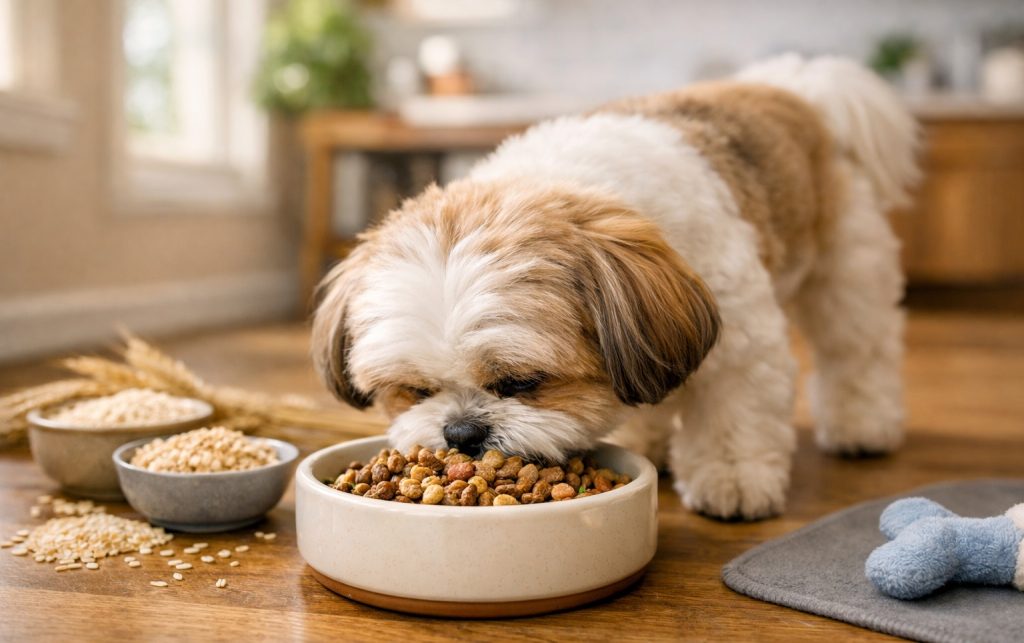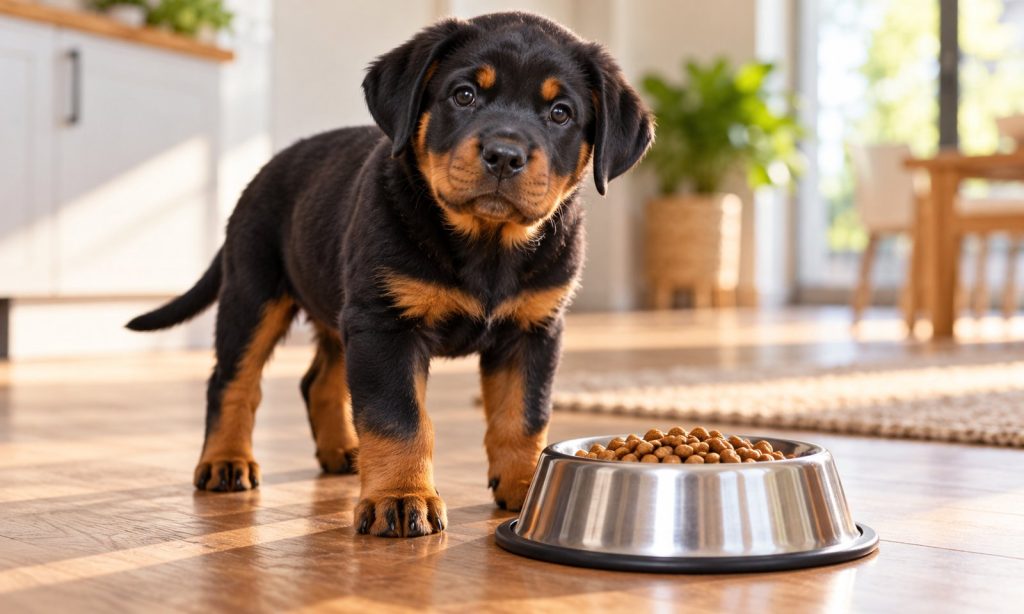
The best dog food for a Rottweiler puppy should be labeled for large-breed growth and fit the puppy’s current stage. I compared seven large-breed puppy formulas by the age and size guidance, protein source, and development features shown in their listings. Rottweilers grow into large dogs, so measured feeding and steady body condition matter alongside the recipe. Use the current package to confirm the food’s intended use, then ask your veterinarian how the formula and portions fit your puppy. Check the growth statement and expected adult-size range on the current package. Compare calories and feeding directions with your puppy’s development, and ask your veterinarian to review growth, body condition, and the timing of an adult-food transition.
For label basics, read our dog nutrition guide. The FDA explains complete-and-balanced pet-food labels, and the WSAVA selection guide offers questions for evaluating food makers.
For additional comparison, see our comparison of adult large-breed diets.
Quick Picks
| Product | Best For | Key Advantage | Buy | |
|---|---|---|---|---|
| Royal Canin Large Puppy Dry Dog Food | Large-breed puppies | Large-breed puppy positioning | View on Amazon | Jump to Review |
| Hill’s Science Diet Puppy Large Breed Chicken & Brown Rice | Large-breed puppies | Balanced minerals and DHA listed | View on Amazon | Jump to Review |
| Purina Pro Plan Large Breed Puppy Chicken & Rice | Large-breed puppies | Chicken-first formula with growth-rate focus | View on Amazon | Jump to Review |
| Purina Pro Plan Sensitive Skin & Stomach Large Breed Puppy Salmon & Rice | Large-breed puppies | Salmon-and-oatmeal recipe | View on Amazon | Jump to Review |
| Eukanuba Puppy Large Breed Dry Dog Food | Large-breed puppies | Age and expected-size guidance | View on Amazon | Jump to Review |
| Diamond Naturals Large Breed Puppy Lamb & Rice | Large-breed puppies | Lamb-first large-breed puppy formula | View on Amazon | Jump to Review |
| Blue Buffalo Life Protection Formula Large Breed Puppy Chicken & Brown Rice | Large-breed puppies | Chicken-first large-breed puppy recipe | View on Amazon | Jump to Review |
For sensitive digestion questions, compare this puppy-focused advice with our guide to large-breed foods for sensitive stomachs.
As your Rottweiler approaches adulthood, see our large-breed adult food guide for a separate comparison of maintenance formulas.
1. Royal Canin Large Puppy Dry Dog Food
- Large-breed puppy positioning
- Royal Canin Large Puppy is a dry formula listed for puppies 2
- Royal Canin Large Puppy is a dry formula listed for puppies 2 to
- Verify that your puppy’s age and projected adult size fit the
- Crunchy kibble
- Listed age and size range may exclude some puppies
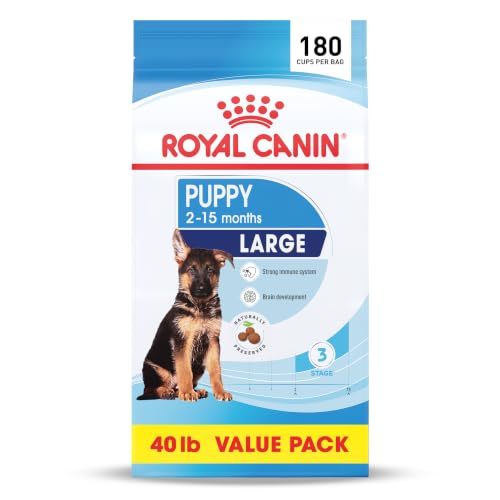
Royal Canin Large Puppy is a dry formula listed for puppies 2 to 15 months old with an expected adult weight of 56 to 100 pounds. That clear range can help a Rottweiler owner compare growth diets, though expected size and development should be checked with a veterinarian or breeder. The product is designed for larger puppies, rather than being a general adult food.
Verify that your puppy’s age and projected adult size fit the current package directions before selecting it. The listing describes a crunchy kibble and says the formula supports growth and development, immune support, and digestive health. It names antioxidants, prebiotics, and proteins among its features. The kibble can be served dry, and the product page notes that it can be mixed with the matching wet food. If you combine foods, account for the calories from both so the daily ration remains appropriate. Measure meals and track body condition as the puppy grows.
Check the current bag for its nutritional adequacy statement, calorie information, feeding chart, and transition directions. Large-breed growth foods are a specific category, so do not assume every puppy recipe is interchangeable. Ask your veterinarian when your Rottweiler should move to adult food, particularly if growth or body condition raises questions. A puppy with a health condition, poor tolerance, or unusual growth may need an individual plan. The listed size range is useful, but the label and veterinary guidance should decide fit.
My Recommendation
Royal Canin Large Puppy is the most specific size-and-age pick here: its listing covers puppies 2 to 15 months old and projected adult weights of 56 to 100 pounds. I like that clear targeting, along with the listed digestive and immune support features.
2. Hill’s Science Diet Puppy Large Breed Chicken & Brown Rice

- Hill’s Science Diet Puppy Large Breed is a chicken-and-brown-rice
- Its listing highlights balanced minerals for growing bones and
- Confirm the product’s life-stage statement on the current bag and
- Protein for developing muscles and an antioxidant blend
- Protein for developing muscles and an antioxidant blend for
- Chicken recipe will not fit a chicken-avoidance diet
Hill’s Science Diet Puppy Large Breed is a chicken-and-brown-rice dry food intended for large-breed puppies. Its listing highlights balanced minerals for growing bones and teeth and DHA from fish oil for brain and eye development. Those details make it relevant when comparing Rottweiler puppy foods, where the goal is appropriate growth rather than simply choosing the richest or highest-calorie recipe. Confirm the product’s life-stage statement on the current bag and make sure it matches your puppy’s age.
The listing also mentions protein for developing muscles and an antioxidant blend for immune support. Chicken and brown rice are familiar ingredients in a conventional dry recipe, but ingredient names alone cannot predict how an individual puppy will tolerate a food. Watch appetite, stool quality, skin, and body condition after a transition. Follow the package feeding chart as a starting point, measure portions, and discuss any adjustments with your veterinarian as your puppy grows.
Before buying, read the current package for its complete-and-balanced claim, calorie content, and instructions for the large-breed growth stage. This formula is positioned specifically for large-breed puppies, distinguishing it from adult recipes and standard puppy choices. If your Rottweiler has a diagnosed condition, repeated digestive signs, or suspected food reaction, ask the veterinarian if this recipe is suitable. Keep fresh water available and change foods gradually unless your vet recommends a different transition plan. Review the exact formula and feeding instructions with your veterinarian if your puppy’s growth, appetite, or digestion changes.
My Recommendation
Hill’s Science Diet Puppy Large Breed is a straightforward chicken-and-rice choice with listed features for bone development, DHA-supported brain and eye development, muscle growth, and immune support. I like its clear large-breed puppy positioning. I would still check the current bag’s nutritional adequacy statement and feeding chart, then ask your veterinarian whether the formula fits
3. Purina Pro Plan Large Breed Puppy Chicken & Rice

- Dry food formulated for large-breed puppies
- Real chicken as the first ingredient
- Purina Pro Plan Large Breed Puppy Chicken & Rice is a dry food
- Adjust meals to age
- If you are switching from a breeder’s food
- Growth portions need careful adjustment over time
Purina Pro Plan Large Breed Puppy Chicken & Rice is a dry food formulated for large-breed puppies. The listing identifies real chicken as the first ingredient and says the recipe is designed to support an appropriate growth rate. That makes it a relevant option for a Rottweiler puppy, although the breed label alone cannot tell you whether a particular formula is right. Check the product’s current nutritional adequacy statement and confirm the intended growth stage with your veterinarian.
The product details call out glucosamine for developing joints and cartilage, DHA from fish oil for brain and vision development, and vitamin A and omega-6 fatty acids for skin and coat. These are features named in the listing, not a guarantee of an individual health outcome. Review the calorie content and daily feeding amounts, then measure portions instead of free-feeding. Adjust meals to age, activity, body condition, and veterinary advice as your Rottweiler develops.
This recipe may suit households looking for a large-breed puppy formula from a broad product line. Compare the current bag’s feeding instructions, ingredient statement, and complete-and-balanced claim with your puppy’s needs. If you are switching from a breeder’s food, ask what the puppy currently eats and plan a gradual transition when practical. Ongoing vomiting, diarrhea, itching, or appetite changes are reasons to contact your veterinarian instead of repeatedly changing foods without guidance. Review the exact formula and feeding instructions with your veterinarian if your puppy’s growth, appetite, or digestion changes.
My Recommendation
Purina Pro Plan Large Breed Puppy Chicken & Rice combines a large-breed growth focus with listed DHA, glucosamine, and skin-and-coat nutrients. I like that the listing states its growth-rate intent and identifies chicken first. I would review the current calorie information and serving directions closely because portion control matters as a Rottweiler grows.
4. Purina Pro Plan Sensitive Skin & Stomach Large Breed Puppy Salmon & Rice

- Salmon as the first ingredient
- Introduce a new food gradually when possible and watch for stool
- If signs are severe or persistent
- Salmon recipe may be a practical alternative for some households
- Puppy with suspected food allergy may need a
- Sensitive-skin positioning does not diagnose an allergy
This Purina Pro Plan Sensitive Skin & Stomach recipe is a salmon-and-rice dry food made for large-breed puppies. The listing identifies salmon as the first ingredient and describes oatmeal as a digestible ingredient. For a Rottweiler owner comparing protein sources or looking for a formula with sensitive-skin-and-stomach positioning, those details make it worth considering. They do not diagnose or treat allergies or digestive disease, which require a veterinary evaluation.
Listed features include DHA from fish oil for brain and vision development, omega-6 fatty acids and vitamin A for skin and coat, plus live probiotics and prebiotic fiber. The product is also described as supporting an appropriate growth rate for large-breed puppies. Introduce a new food gradually when possible and watch for stool changes, appetite shifts, or skin symptoms. If signs are severe or persistent, talk with your veterinarian before assuming food is the cause.
Check the current package for its growth-stage adequacy statement, serving guidance, calories, and transition directions. A salmon recipe may be a practical alternative for some households, but it is not automatically hypoallergenic. A puppy with suspected food allergy may need a veterinarian-directed elimination diet. Consider this option when the large-breed life-stage and ingredient profile match your puppy’s needs, and use the bag’s directions together with veterinary advice rather than relying on a product-page claim alone. Review the exact formula and feeding instructions with your veterinarian if your puppy’s growth, appetite, or digestion changes.
My Recommendation
Purina Pro Plan Sensitive Skin & Stomach Large Breed Puppy is the salmon-and-oatmeal option here, with listed probiotic and prebiotic features. I like that the product combines sensitive-digestion positioning with large-breed growth guidance. I would not treat it as an allergy solution without a veterinary assessment.
5. Eukanuba Puppy Large Breed Dry Dog Food

- Eukanuba Puppy Large Breed is described as a
- Chicken as the first ingredient and positions the recipe for
- Fat and carbohydrate levels are also described as providing
- Recheck daily amounts as weight and activity change
- Eukanuba’s stated large-breed puppy age limit gives owners a
- Expected adult size must match the label’s range
Eukanuba Puppy Large Breed is described as a complete-and-balanced dry formula for large-breed puppies up to 15 months old with an expected adult weight over 55 pounds. That stated size and age range can help Rottweiler owners narrow a search, although individual dogs mature at different rates. The listing identifies chicken as the first ingredient and positions the recipe for growing puppies.
Check the current package to confirm its directions and that the intended size range fits your puppy. The product details mention calcium and phosphorus levels for bone development, animal protein for muscle growth, and DHA for brain development. Fat and carbohydrate levels are also described as providing energy for growth. These are product-listed features, not a substitute for monitoring healthy development. Use the feeding guide as a starting point, weigh portions, and ask your veterinarian to assess body condition during regular puppy visits. Recheck daily amounts as weight and activity change.
Eukanuba’s stated large-breed puppy age limit gives owners a point to revisit the diet as the dog approaches maturity. Do not switch to adult food by calendar alone; ask your veterinarian when the transition makes sense and how to complete it. Confirm the nutritional adequacy statement, calorie density, and instructions on the current bag. A food that matches a product’s stated size range still needs to be tolerated by the individual puppy and fit its health needs.
My Recommendation
Eukanuba Puppy Large Breed stands out for its stated use through 15 months and for puppies expected to exceed 55 pounds as adults. I like the clear size-and-age framing and listed DHA and mineral features. I would plan a veterinary check-in before the adult-food transition and verify that your Rottweiler’s expected size fits the current package.
6. Diamond Naturals Large Breed Puppy Lamb & Rice

- Dry formula with pasture-raised lamb identified as its first
- Specifically positioned for large-breed puppies
- Confirm the current package details and nutritional adequacy
- DHA for brain and vision development
- Diamond Naturals Large Breed Puppy Lamb & Rice is a dry formula
- Lamb recipe may not suit dogs avoiding lamb
Diamond Naturals Large Breed Puppy Lamb & Rice is a dry formula with pasture-raised lamb identified as its first ingredient in the product listing. It is specifically positioned for large-breed puppies, and the listing describes its protein and mineral content as formulated for larger growing bodies. That makes it a candidate for Rottweiler owners comparing lamb-based recipes.
Confirm the current package details and nutritional adequacy statement because the label explains how the food is intended to be used. The listing also mentions DHA for brain and vision development. Lamb and rice provide a different ingredient profile from chicken-first foods, but changing protein does not by itself confirm or resolve a food sensitivity. If your puppy has recurring ear, skin, or digestive symptoms, consult a veterinarian rather than trying ingredients one by one. When transitioning a healthy puppy, follow a gradual schedule and keep portions measured so acceptance and stool quality are easier to monitor.
Large-breed growth claims deserve a careful label check: verify that the food is complete and balanced for the appropriate growth stage and that its large-size puppy wording applies to your dog. Ask your veterinarian to review the diet alongside your puppy’s growth curve and body condition. This product may appeal to owners seeking a lamb-centered large-breed puppy food, but suitability depends on the individual dog, the exact current label, and veterinary guidance rather than protein choice alone.
My Recommendation
Diamond Naturals Large Breed Puppy Lamb & Rice is the lamb-centered choice in this group. Its listing identifies lamb first and describes protein and mineral levels for large-breed puppies, with DHA also noted. I like the different protein option and large-puppy positioning.
7. Blue Buffalo Life Protection Formula Large Breed Puppy Chicken & Brown Rice

- Dry puppy food described for large breeds
- Real chicken is the first ingredient and identifies
- Verify the current package statement and your puppy’s expected
- LifeSource Bits
- Blue Buffalo Life Protection Formula Large Breed Puppy Chicken &
- Chicken and brown rice may not suit every sensitivity plan
Blue Buffalo Life Protection Formula Large Breed Puppy Chicken & Brown Rice is a dry puppy food described for large breeds. The Amazon listing says real chicken is the first ingredient and identifies DHA for cognitive development, along with nutrients for muscle and bone development. For a Rottweiler puppy, the large-breed positioning makes it relevant to compare with other growth diets. Verify the current package statement and your puppy’s expected adult size before choosing a formula.
The listing also mentions LifeSource Bits, described as a blend of fruits and vegetables with vitamins, minerals, and antioxidants. It states that the food is formulated to meet AAFCO dog food nutrient profiles and excludes poultry by-product meals, corn, wheat, soy, artificial flavors, and preservatives. Ingredient preferences are personal and do not establish that one recipe is universally better. Monitor your puppy’s tolerance and body condition after a transition, and measure the daily ration.
Before feeding, check the package for life-stage directions, calories, and complete-and-balanced language, and discuss questions with your veterinarian. A large-breed puppy formula can be a useful starting category, but portions and timing should follow growth and body condition. If your puppy has a diagnosed condition or suspected adverse food reaction, the veterinarian can recommend a suitable diet and transition plan. Keep the product label available when discussing the food so the exact formula can be reviewed. Review the exact formula and feeding instructions with your veterinarian if your puppy’s growth, appetite, or digestion changes.
My Recommendation
Blue Buffalo Life Protection Formula Large Breed Puppy is a chicken-and-brown-rice option with listed DHA, bone and muscle support, and a large-breed puppy focus. I like the product’s clear ingredient and formulation details. I would compare the actual nutritional adequacy and calorie information on the bag with your veterinarian’s guidance rather than choosing based only on ingredient exclusions.
How to choose best dog food for rottweiler puppy
Rottweiler puppies grow into large dogs, so food selection should follow a growth-appropriate label and your veterinarian’s feeding guidance. Compare the adequacy statement, calorie information, and portion directions instead of choosing by breed marketing or assuming every puppy needs the same amount.
Confirm the large-breed growth statement
Compare the current label and package instructions with the dog’s age, size, routine, and known sensitivities. A specific product feature is useful only when it fits those practical needs.
Compare the expected adult-weight range and age directions with your Rottweiler’s stage, and bring the package to a veterinary visit if you want help interpreting it. The FDA label guide explains what complete-and-balanced means. The WSAVA guide suggests questions about a manufacturer’s nutrition experts and quality controls.
Begin with the nutritional adequacy statement on the current bag. Look for a food intended for puppy growth and check whether the statement covers growth of large-size dogs when applicable. A front label saying “puppy” is not enough to determine suitability.
Keep portions consistent and review growth
Use the feeding chart as a starting estimate, then discuss portions with your veterinarian as your puppy’s weight and body condition change. Measure meals and include treats in the daily calorie total. Avoid switching foods repeatedly in response to normal day-to-day variation; record appetite, stool quality, and weight instead. When moving to a new recipe, transition gradually if your veterinarian has not advised otherwise. A consistent routine makes it easier to notice a real change and helps your vet assess whether the amount is appropriate.
Compare calories, protein source, and feeding directions on the exact bag rather than relying on a product name alone. If your puppy has a medical issue, digestive symptoms, or a suspected food reaction, get veterinary advice before changing the diet. Ask when to move from puppy food to an adult formula; timing should reflect your dog’s growth and the product’s intended life stage. Keep fresh water available and store food as directed. Our dog nutrition guide offers more background for routine feeding decisions.
It can also help to keep a simple feeding log during puppyhood. Note the food and exact amount, any treats or toppers, stool changes, and weight at regular intervals. This gives the veterinary team useful context if your puppy’s appetite or digestion changes. Check the package for the specific product size and recipe you are buying because online listings can combine variants. If you are unsure which statement applies, ask the manufacturer or veterinarian to review the label before opening the bag.
Frequently Asked Questions
What should I look for in food for a Rottweiler puppy?
Check for a complete-and-balanced food intended for puppy growth, including large-size growth wording where applicable. Confirm the package’s age and weight guidance with your veterinarian.
Does a Rottweiler puppy need large-breed food?
A large-breed growth formula is a useful category to compare. Check its exact adequacy statement and ask your vet whether it suits your puppy.
How much should I feed my Rottweiler puppy?
Start with the package chart, measure meals, and adjust with veterinary advice based on age, growth, activity, and body condition.
When can a Rottweiler switch to adult food?
There is no single date for every puppy. Use product directions and your dog’s development, then plan the transition with your veterinarian.
What if my puppy has digestive problems?
Contact your veterinarian for persistent or severe symptoms. They can help determine whether diet is involved and recommend a safe feeding plan.
Final Verdict
For a Rottweiler puppy, start with a large-breed growth food whose current label matches the puppy’s age and expected adult size. Compare the seven formulas by their adequacy statements, feeding directions, calories, and tolerance. A package claim is only a starting point; portion size and growth should be reviewed with your veterinarian. Check the label again as your puppy develops and ask when an adult formula is appropriate.
Affiliate disclosure: This article contains Amazon affiliate links. If you purchase through them, PetAdvisorPro may earn a commission. As an Amazon Associate I earn from qualifying purchases.