
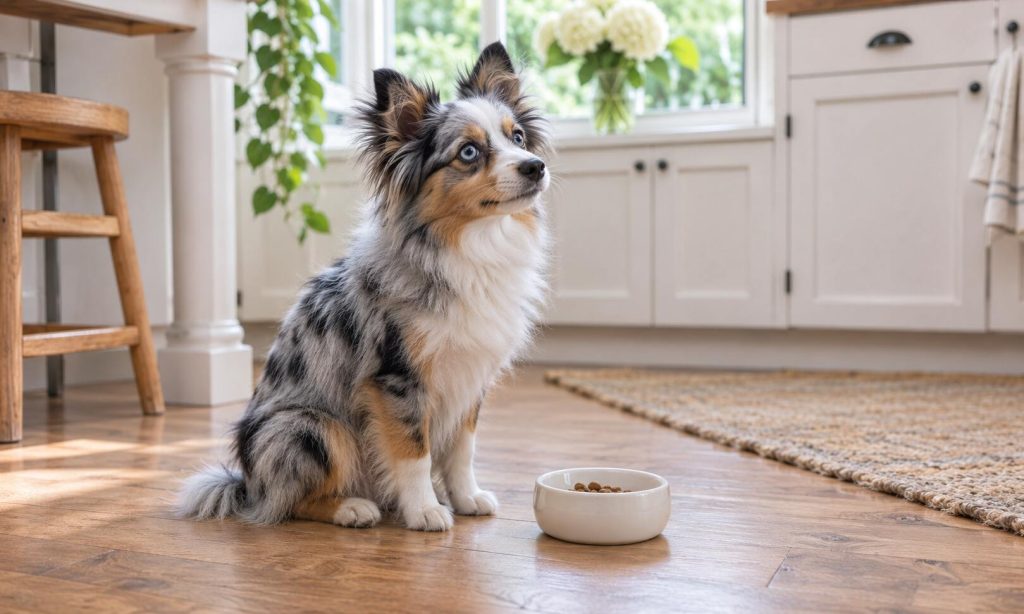
Toy Australian Shepherd is an informal label for very small Aussie-type companions, not an official size variety of the recognized Australian Shepherd breed. A dog with that label may differ from a registered Miniature American Shepherd. The best dog food for toy Australian Shepherd households should follow actual weight, expected mature size, age, and activity. Some dogs fit an extra-small formula; others need ordinary small or medium-dog food.
I compared seven complete toy or small-dog recipes, including one puppy food. Their small kibble and energy features can help everyday feeding, but toy dogs still need measured calories. Herding-type companions may be busy, yet body condition remains the best check. Confirm the weight and life-stage target, measure meals, and discuss unusual growth or health concerns with a veterinarian. Breed marketing cannot fix medical problems.
Quick Picks for Small Australian Shepherd-Type Companions
First weigh the dog. Royal Canin X-Small targets adults up to eight pounds; other options cover broader small-breed needs. Purina Pro Plan Toy Puppy belongs only to growing dogs. Choose by actual size and nutritional adequacy.
| Product | Best For | Key Advantage | Buy | |
|---|---|---|---|---|
| Royal Canin X-Small Adult | True extra-small adults | Defined eight-pound maximum | View on Amazon | Jump to Review |
| Purina Pro Plan Toy Breed Adult | Energetic toy-size adults | Chicken, protein, and prebiotic fiber | View on Amazon | Jump to Review |
| Wellness Complete Health Toy Breed | Tiny everyday maintenance | Chicken with whole grains | View on Amazon | Jump to Review |
| Hill’s Small & Mini Adult | Broader small adult range | Chicken brown rice with digestible ingredients | View on Amazon | Jump to Review |
| Purina ONE Plus Small Breed Lamb | Lamb-led small adult recipe | Small kibble with tender morsels | View on Amazon | Jump to Review |
| Blue Buffalo Life Protection Small | Small adult energy maintenance | Chicken and antioxidant blend | View on Amazon | Jump to Review |
| Purina Pro Plan Toy Breed Puppy | Tiny growing puppies | Growth formula and small kibble | View on Amazon | Jump to Review |
1. Royal Canin X-Small Adult — Best Precisely Tiny Fit

What We Like
- Explicit up-to-eight-pound target
- Ten-month-to-eight-year range
- Extra-small kibble
- Prebiotic and digestible protein features
- Two-and-a-half-pound bag
What We Don’t Like
- Too small a category for many Toy Aussies
- Not for puppies
Royal Canin X-Small Adult is the most precisely weight-defined option here. Its listing targets dogs weighing up to eight pounds, roughly ten months to eight years old. That can be an appropriate category for a genuinely tiny Aussie-type companion, but many dogs called Toy Australian Shepherds are heavier. Do not assume the informal label guarantees an eight-pound adult. The formula emphasizes small kibble, digestible proteins, prebiotics, and antioxidant nutrients. These features make sense for very small mouths and modest meal volumes. They cannot replace nutritional adequacy for a dog outside the intended category.
The product mentions kibble designed to help clean teeth, but ordinary feeding still does not eliminate the need for dental care. Small dogs can develop painful oral disease, and chewing discomfort warrants veterinary examination. Measure the dog’s current weight and body condition before choosing this food. If the pet weighs considerably more than eight pounds, compare a regular small-breed formula instead. Portion accuracy is especially important with truly tiny dogs. A few extra treats can represent a meaningful fraction of daily energy. Provide complete meals, fresh water, and consistent feeding times.
The small bag may stay fresh for a very light eater and be easier to store than a large bulk purchase. Compare cost per calorie rather than bag price alone. When changing diets, transition gradually and monitor appetite and stool. An energetic dog may need calorie adjustment, but higher activity should be measured against body condition. Royal Canin X-Small is valuable because it sets a clear weight boundary. Its main limitation is the temptation to apply that boundary to every dog called toy or mini. Let the scale, not the nickname, decide.
My Recommendation
Royal Canin X-Small is my choice only when the adult dog truly fits its up-to-eight-pound target. I like the clear size limit and tiny kibble. If your Toy Aussie is larger, choose an appropriate small-breed formula instead. Keep portions measured and do not use the breed label as a substitute for weighing the dog.
2. Purina Pro Plan Toy Breed Adult — Best Active Toy Formula

What We Like
- Toy-breed adult positioning
- Chicken first ingredient
- High-protein active-dog approach
- Prebiotic fiber
- Five-pound bag
What We Don’t Like
- Active label does not mean free feeding
- Not for dogs outside toy-size needs
Purina Pro Plan Toy Breed Chicken & Rice is intended for toy-size adults with substantial activity. Its listing describes chicken first, higher protein for active toy breeds, and natural prebiotic fiber. These are reasonable features for a small companion that spends time on walks, games, and training. However, a Toy Aussie may have herding-type energy without matching the tiny body size expected by a toy-breed product. Check your dog’s mature weight, calorie needs, and mouth comfort. A small bag labeled toy is not automatically the best choice for every Australian Shepherd-type mix.
The activity message should not prompt overfeeding. A dog that runs for short bursts indoors may still gain weight if treats are uncounted. Use the calorie statement and a measured daily portion. Training rewards should fit within that budget. The formula’s prebiotic fiber is a digestive feature, not treatment for chronic diarrhea. Repeated vomiting, loose stools, or unexplained weight loss need veterinary evaluation. A chicken-based recipe also may not suit a documented protein restriction. If food sensitivity is suspected, ask for a proper veterinary diet strategy instead of frequent improvised brand changes.
The five-pound bag can be practical for one toy-size adult when stored sealed and dry. Make transitions gradually and watch stool and appetite. Do not assume a high-protein label means the dog will become more energetic or better behaved; exercise and enrichment remain separate responsibilities. Purina is most appealing when the animal truly fits a toy-size adult category and maintains a healthy body condition on the food. Its tradeoff is that the active-dog positioning may be misleading for a dog with lower energy needs or a larger mature frame.
My Recommendation
Purina Pro Plan Toy Adult is a strong comparison for an energetic dog that fits toy-breed feeding needs. Chicken and prebiotic fiber are clear features. Use actual calories and body condition to set servings. The food cannot replace exercise or solve digestive illness. Many dogs called Toy Aussies may be too large for toy-specific food.
3. Wellness Complete Health Toy Breed — Best Whole-Grain Toy Option

What We Like
- Toy-breed adult formula
- Chicken, rice, and peas
- Probiotics listed
- Omega-fatty-acid coat features
- Four-pound package
What We Don’t Like
- Not suited to every larger Mini Aussie
- Functional claims are not medical care
Wellness Complete Health Toy Breed Adult is a small-format dry food with chicken, brown rice, and peas. Its listing highlights probiotics, antioxidants, taurine, and omega fatty acids. Those ingredients are useful comparison points for a healthy tiny companion, but the foundation is complete adult nutrition at an appropriate calorie level. A dog called Toy Aussie may be larger than a typical toy breed. Confirm size and life stage before choosing. Coat-oriented marketing cannot make an unsuitable calorie or kibble profile ideal for a dog outside the product’s audience.
The tiny pieces may suit a small jaw, though chewing style still matters. Regular dental care remains important, and a dog that struggles to eat needs veterinary assessment. Omega fatty acids support normal coat nutrition but cannot prevent mats or treat infection. The probiotic feature is not a cure for repeated diarrhea. Use an appropriate transition schedule, keep treats stable, and monitor stool and appetite. It is easier to understand a dog’s response when one feeding variable changes at a time. Avoid adding oils or supplements merely because the dog has a fluffy coat.
The four-pound bag is convenient for a small eater and may support freshness after opening. Compare price per daily serving and storage instructions. If your Toy Aussie enjoys active walks and games, assess energy needs through body condition rather than assuming toy dogs are sedentary. Wellness stands out for an everyday adult recipe with whole-grain ingredients and multiple support features. Its limitation is simple: it belongs in the toy-size category, not automatically with every Australian Shepherd-type dog. A complete small-breed formula may be more appropriate for a larger individual.
My Recommendation
Wellness Toy Breed is my alternative toy-size adult choice when the dog tolerates chicken and grains. The compact bag and small-kibble format are useful. I would prioritize the nutritional adequacy statement, calories, and actual body weight over antioxidant claims. A larger Mini Aussie may need an ordinary small or medium formula instead.
4. Hill’s Science Diet Small & Mini Adult — Best Small-Dog Alternative

What We Like
- General small-dog adult formula
- Chicken and brown rice
- Digestible ingredients including pumpkin
- Balanced energy approach
- Four-and-a-half-pound bag
What We Don’t Like
- Not intended for every medium-sized Aussie
- Not puppy nutrition
Hill’s Science Diet Adult 1–6 Small & Mini is a broader maintenance choice when extra-small products seem too narrow. The listing describes chicken, brown rice, digestible ingredients including pumpkin, and balanced energy for small adults. A Toy Aussie above the eight-pound X-Small target may find this category more sensible, depending on the full guidelines. Do not infer suitability from the breed name alone. Use actual weight, age, and activity to evaluate portions and nutritional adequacy. Small kibble can be convenient but does not automatically improve dental health.
The adult life-stage label makes this product useful for ordinary maintenance. A puppy needs growth nutrition, and an older dog may have changing medical requirements. Measured meals track how much energy the dog receives. An active companion may need a different portion from a quiet pet of identical weight. Keep rewards and chews counted. A small dog’s calorie budget can be overwhelmed by seemingly harmless extras. If weight changes unexpectedly, ask a veterinarian whether there is a health issue rather than endlessly changing food amounts.
Hill’s is not marketed as an Australian Shepherd formula, and that is acceptable when complete nutrition fits the individual. The four-and-a-half-pound bag is manageable for small households. Store it sealed, make transitions gradually, and monitor stool. If the dog is significantly larger than typical small-breed sizes, investigate medium adult options instead. I like this product when the animal is a healthy adult that needs a general small-dog category rather than an extremely tiny toy formula. Its limitation is that all size labels have boundaries, and the owner must verify them.
My Recommendation
Hill’s Small & Mini is my broader small-adult alternative for a Toy Aussie that does not fit a strict extra-small diet. I like its ordinary complete maintenance purpose. Check the exact recommended dog-size range and calories. A medium-sized dog or growing puppy may need a different product, regardless of the label used by a breeder.
5. Purina ONE Plus Small Breed Lamb — Best Lamb Alternative

What We Like
- Lamb first ingredient
- Small-breed adult nutrition
- Crunchy and tender texture
- Omega-6 for coat support
- Seven-point-four-pound pack
What We Don’t Like
- Lamb does not mean hypoallergenic
- Mixed texture may not suit all eaters
Purina ONE Plus Small Breed Lamb & Rice is an alternative when owners want a lamb-led recipe instead of chicken-first food. The listing describes lamb as the primary ingredient, a small-breed adult purpose, and crunchy pieces mixed with tender morsels. It also mentions omega-6 fatty acids and antioxidants. These are standard nutrition features, not evidence that lamb cures itchy skin. If a dog has suspected food allergy, consult a veterinarian about a controlled trial. Retail lamb food can contain additional ingredients and is not automatically a safe diagnostic diet.
The texture variation may help appetite for some pets, while others prefer uniform kibble. Observe how your dog chews and whether it leaves pieces behind. Dental pain should be assessed regardless of texture. Portion size matters in small dogs, especially when frequent training rewards are added. Toy Aussie is an informal phrase, so confirm measured size before assuming a small-breed product fits. Energy needs come from actual activity and body condition. A small dog that trains frequently may still need moderate meals if treats are generous.
The 7.4-pound bag may offer a convenient size for a small active household. Check expiry and store the food dry. When transitioning recipes, do so gradually and watch stool and appetite. Purina ONE’s advantage is a lamb-first adult choice with distinct eating texture. Its limitation is that a changed primary protein does not establish allergy suitability or improved coat health. Use it when the dog is healthy, within a suitable small-dog range, and enjoys it without weight gain. The dog’s actual response should decide whether it remains a good fit.
My Recommendation
Purina ONE Lamb is my alternative protein comparison for a healthy small adult that likes mixed kibble textures. I appreciate the lamb-led recipe but would not call it hypoallergenic. Confirm size and calories, and account for training treats. Persistent itching or digestive symptoms need a veterinary plan, not an unstructured switch to lamb.
6. Blue Buffalo Life Protection Small Breed — Best General Active Adult

What We Like
- Wholesome carbohydrate blend
- Small-breed complete nutrition
- Energy-oriented adult positioning
- Antioxidant LifeSource Bits
- Mixed kibble textures
What We Don’t Like
- Not a recognized Toy Aussie-specific diet
- No guarantee of improved performance
Blue Buffalo Life Protection Small Breed offers a complete chicken-led adult formula that emphasizes nutrition for small dogs with higher energy needs. Its listing describes chicken first, wholesome carbohydrates, and antioxidant-rich LifeSource Bits. That may sound well matched to an enthusiastic Aussie-type companion, but a product cannot know how active your individual dog is. Small size and herding ancestry do not automatically mean exceptional daily calorie requirements. Compare the food’s energy density with the dog’s current weight and condition. A calm household pet may need fewer calories than a dog training intensely every day.
The mixed kibble bits are a distinctive texture, though their antioxidant claims should be interpreted as ordinary nutrition support rather than disease prevention. If your dog has recurrent skin or digestive problems, ask a veterinarian to determine the cause. More antioxidants or coat ingredients are not substitutes for appropriate care. The small-breed format may be easy to eat, but it should be evaluated against the actual dog’s mature size and dental comfort. A toy-size animal may prefer finer pieces, while a more substantial Miniature American Shepherd could fall into a different category.
The five-pound bag is convenient for smaller daily servings and can limit how long kibble remains open. Read the complete nutritional statement and store it properly. Keep feeding and reward routines consistent through a transition. Monitor body weight, rib coverage, stool, and appetite. Blue Buffalo is a reasonable adult comparison when the dog tolerates chicken and the small-breed category matches its size. Its limitation is that energetic marketing may tempt an owner to overfeed. Exercise and mental enrichment are separate responsibilities that food alone cannot provide.
My Recommendation
Blue Buffalo Small Breed is a practical adult comparison when your Toy Aussie fits a small-dog nutrition category and tolerates chicken. The life-stage and energy positioning are clear. I would still measure portions, count treats, and track body condition. The formula cannot replace training, exercise, or care for a real skin or digestive disorder.
7. Purina Pro Plan Toy Breed Puppy — Best Tiny Puppy Stage

What We Like
- Toy-breed puppy growth purpose
- Chicken and rice recipe
- DHA listed
- Live probiotics
- Small toy-puppy kibble
What We Don’t Like
- Not appropriate for adult maintenance
- Tiny puppies need individualized meal timing
Purina Pro Plan Toy Breed Puppy belongs in the growth category, not with the six adult foods. Its listing describes chicken-and-rice nutrition for active toy-breed puppies, with DHA and live probiotics. A puppy expected to stay toy-sized may be a candidate for this formula. However, dogs sold as Toy Australian Shepherds vary in mature size, and some become larger than a toy-breed diet’s intended audience. Ask the veterinarian to estimate adult size and confirm the nutritional adequacy statement. Growth nutrition is about balanced development, not simply energy.
Young small puppies may need frequent scheduled meals because they have limited reserves. The exact timing depends on age, size, health, and veterinary guidance. Do not let a very small puppy miss meals or assume it can follow an adult dog’s schedule. Weigh the puppy regularly and adjust food amounts as it grows. Large training treats can displace balanced puppy nutrition, so use appropriately sized rewards. If the puppy becomes weak, unsteady, unusually sleepy, or refuses food, seek urgent veterinary advice rather than treating the episode as ordinary pickiness.
The five-pound bag may provide a practical growth supply if stored safely and used fresh. Keep a reliable feeding routine and introduce changes gradually. This product is useful because owners often search by breed label without considering that puppy requirements differ from adult maintenance. A toy puppy needs a complete growth formula, and a puppy expected to be medium-sized may need a different product. Purina’s advantage is its clear toy-puppy purpose. Its limitation is that neither the informal Toy Aussie name nor the food label predicts the dog’s mature size.
My Recommendation
Purina Pro Plan Toy Puppy is my growth-stage comparison for a puppy expected to remain truly toy-sized. Check mature-size expectations and the adequacy statement with the veterinarian. Small puppies may need carefully spaced meals. Do not keep feeding puppy food into adulthood or use a toy formula for a larger growing dog without checking fit.
How to choose best dog food for toy australian shepherd
Because Toy Australian Shepherd is an informal size label, the dog’s measurements matter more than the name on its adoption papers. Compare the actual weight category, adult stage, activity, and calorie density before selecting any formula.
Confirm the Real Breed and Size Category
The United States Australian Shepherd Association’s breed FAQ explains that Miniature American Shepherd is a separate recognized breed, while terms such as miniature or toy Australian Shepherd do not create official Australian Shepherd size varieties. Individual dogs can still be wonderful companions, but their nutritional needs follow real measurements. Weigh the dog and estimate mature weight with a veterinarian if it is still growing. Royal Canin X-Small, for example, targets up to eight pounds. Many small Aussie-type dogs will exceed that. Use a general small-breed or medium adult diet if its size guidance fits better.
Check the complete-and-balanced nutritional adequacy statement. Do not assume a product is suitable just because the packaging pictures a small dog. A growing animal requires growth nutrition, while a mature dog needs appropriate maintenance. Our guide to sizing Australian Shepherd food portions offers general portion principles, but tiny dogs need scaled calculations.
Match Calories to Real Activity, Not Herding Image
An Aussie-type dog may enjoy intense play and mental stimulation, but activity differs across individuals. Compare calories per cup or gram and measure servings. A dog that spends most days indoors may not need the energy intake of an agility competitor. Training rewards can form a meaningful share of a small dog’s calories. Keep track of chews and table scraps as well. Assess body condition with rib and waist checks and regular weighing. The guide to estimating daily dog food portions can support a practical plan. A veterinarian can help establish a target during growth or weight change.
Food does not substitute for walks, safe exercise, or enrichment. High-protein advertising does not guarantee better focus or behavior. Choose complete nutrition that the dog tolerates, and make activity adjustments based on actual condition.
Choose Tiny Kibble and Meal Timing Sensibly
A genuinely toy-sized dog may prefer very small pieces. Check whether the kibble is easy to pick up and chew. Dental disease still needs examination, even when a dog can swallow tiny food. Puppies may require more frequent meals than adults; ask for an age-appropriate schedule, especially for extremely small animals. Watch for weakness, collapse, or refusal of food and seek urgent care if these develop. Do not rely on a diet switch to manage a suspected low-blood-sugar episode. For adult dogs, keep meal times consistent and adjust portions through body-condition monitoring.
Use the dog food label comparison guide to check life stage, calories, and ingredient restrictions. Store bags securely, introduce new recipes gradually, and keep clean water available. A well-sized complete diet is a better choice than a misleadingly precise breed label.
Frequently Asked Questions
Because the term Toy Aussie is informal, body size and growth-stage questions matter most.
Is a Toy Australian Shepherd an officially recognized Australian Shepherd size?
No. The Toy Aussie term is informal. Miniature American Shepherd is a separate recognized breed. Use actual weight and expected mature size when choosing food.
Should every Toy Aussie eat toy-breed dog food?
No. Some dogs called Toy Aussies are too large for extra-small formulas. Compare the product’s intended weight range with your dog’s measurements and veterinary advice.
Do small herding dogs always need high-protein food?
Not automatically. Activity and health vary. Choose complete nutrition and set calories using body condition, age, and actual exercise, not a general breed stereotype.
How often should a tiny puppy eat?
Young, truly toy-sized puppies may need frequent scheduled meals. A veterinarian should advise timing and portions based on age and size. Weakness or refusal of food needs urgent assessment.
Is the X-Small formula suitable for a ten-pound adult?
The listed Royal Canin X-Small target ends at eight pounds. A ten-pound dog should be compared with suitable small-breed foods rather than assuming the extra-small formula fits.
Final Verdict
Royal Canin X-Small offers the clearest weight boundary for a truly tiny adult. Purina Pro Plan Toy and Wellness Toy are other active toy-size comparisons, while Hill’s Small & Mini, Purina ONE Small, and Blue Buffalo Small cover broader small-adult needs. Purina Pro Plan Toy Puppy is only for appropriate growing puppies. The most important decision is to ignore vague Toy Aussie sizing and weigh the individual dog. Choose complete stage-appropriate food, measure calories, and let body condition guide adjustments.
Affiliate disclosure: This article contains Amazon affiliate links. If you purchase through them, PetAdvisorPro may earn a commission. As an Amazon Associate I earn from qualifying purchases.









