
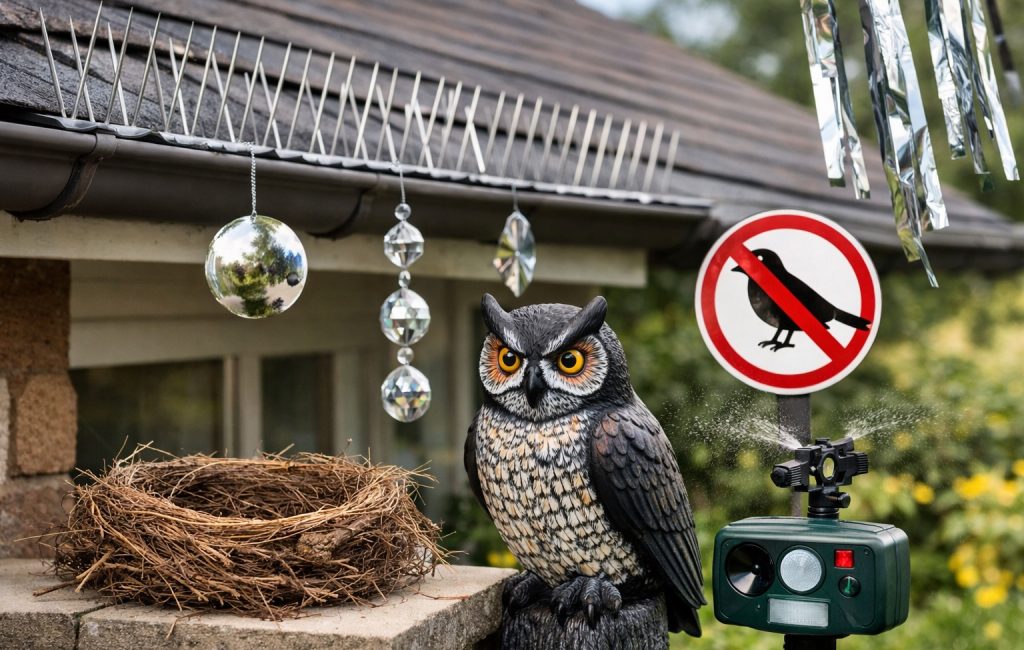
The best way to deter birds from building nests is to remove shelter, block access, and use humane deterrents early.
Bird nesting problems can start small and turn into a real headache fast. If you know how do you deter birds from building nests the right way, you can protect vents, roofs, ledges, signs, and other high-risk spots without harming wildlife. I’ve seen this issue in homes, storefronts, and commercial buildings, and the pattern is always the same: birds choose safe, quiet, protected places, so the best solutions make those places less appealing before nesting begins.
Why birds build nests in the first place
Birds do not nest randomly. They look for places that feel safe from predators, weather, and people. Warm ledges, eaves, gutters, vents, awnings, and small openings are all attractive because they mimic shelter.
Timing matters too. Once birds decide a spot is suitable, they often return to it year after year. That is why how do you deter birds from building nests is really about prevention, not just cleanup.
In my experience, the most common mistake is waiting until the nest is already built. At that stage, the bird may be protected by law, and removal becomes more complicated. It is much easier to stop nesting behavior early, before twigs and debris start piling up.
How do you deter birds from building nests effectively?
The most effective answer to how do you deter birds from building nests is to combine exclusion, habitat changes, and humane deterrents. No single method works everywhere, and the best results usually come from using two or three strategies together.
A good plan usually includes:
- Removing nesting material quickly before it becomes a full nest
- Blocking access to favorite spots with netting, mesh, or covers
- Using visual, physical, or sound-based deterrents where allowed
- Reducing food and water sources nearby
- Keeping structures clean and less inviting
The key is consistency. Birds are smart, and if a device is poorly placed or left too long without maintenance, they often learn to ignore it.
Physical barriers that keep birds away
Physical barriers are often the most reliable answer to how do you deter birds from building nests because they stop access altogether. If a bird cannot land, enter, or grip a surface well, nesting becomes much less likely.
Common options include:
- Bird netting for beams, awnings, and open spaces
- Hardware cloth or wire mesh for vents and gaps
- Vent covers made for dryer vents, attic vents, and exhaust openings
- Slope systems or bird slides for ledges and flat surfaces
- Spikes for ledges, signs, and pipes when installed correctly
When I have worked around vents and roof edges, mesh and proper covers usually outperformed gimmicky products. They may not look exciting, but they work because they remove the landing spot birds want.
A few things matter a lot here:
- Install barriers before nesting season if possible
- Make sure the material is tight and secure
- Do not block airflow in vents
- Use the right size mesh so birds cannot slip through
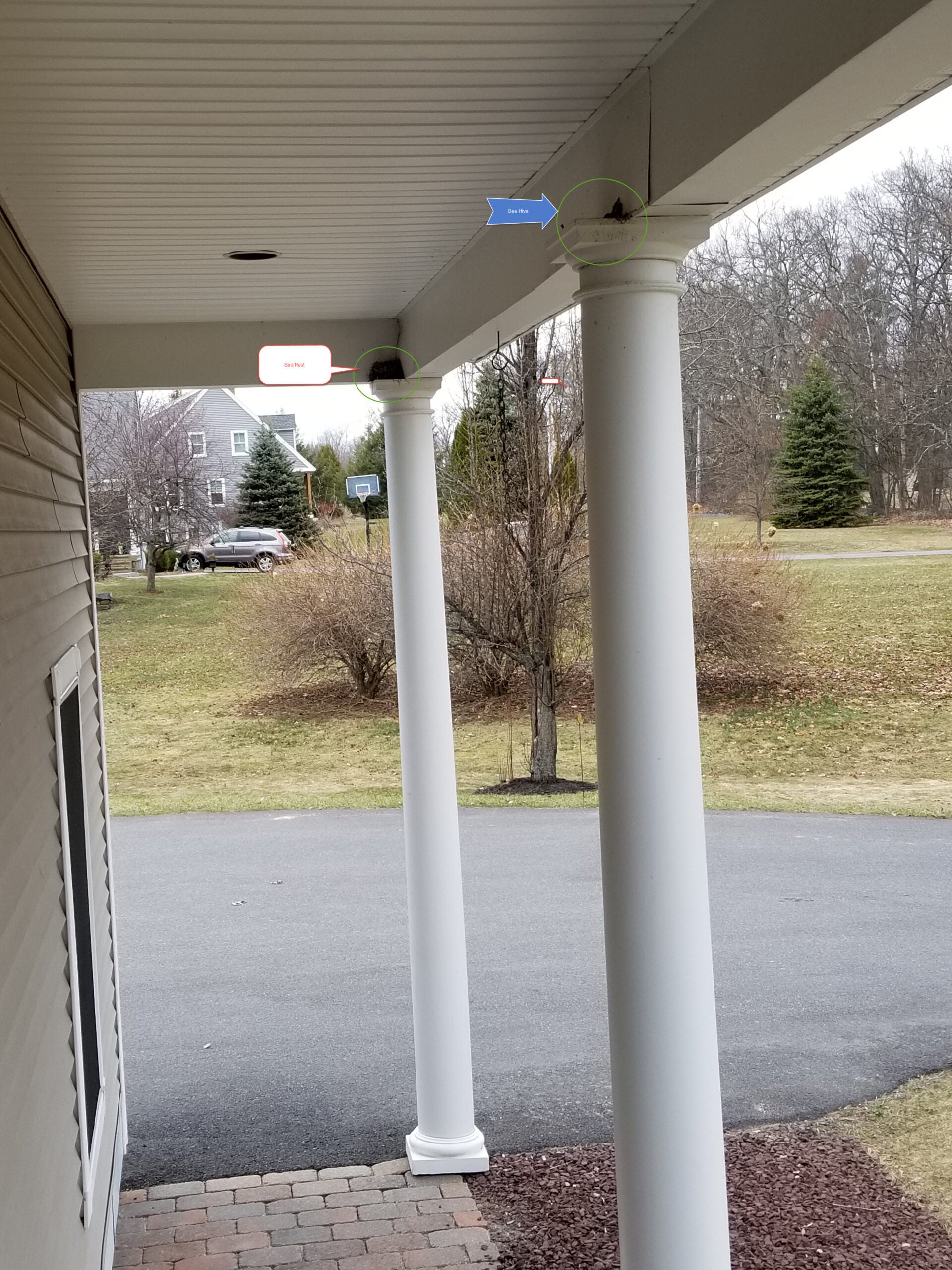 Source: boston.com
Habitat changes that make nesting less appealing
If you want a long-term answer to how do you deter birds from building nests, start by changing what attracts them. Birds like quiet, stable, protected areas with easy access to food and water. Make those areas less comfortable, and nesting pressure often drops.
Practical habitat changes include:
- Trimming branches near roofs and windows
- Clearing standing water, bird feeders, and spilled seed
- Sealing small holes, cracks, and gaps in siding or soffits
- Cleaning ledges, gutters, and corners where debris collects
- Keeping trash lids closed and outdoor eating areas tidy
I once saw repeated nesting on a covered patio that looked harmless at first. The fix was not a fancy product. It was trimming the overhang, cleaning droppings, and sealing a narrow gap behind a trim board. The birds moved on within days.
Humane deterrents you can try
Humane deterrents can help when used correctly, especially in spots where nesting pressure changes from season to season. These methods do not trap or harm birds, but they can make the area feel unstable or unsafe.
Useful options include:
- Reflective tape or moving ribbons
- Decoy predators like owls or hawks, rotated often
- Motion-activated lights or sprinklers
- Wind chimes or other movement-based devices
- Temporary visual deterrents on ledges and railings
The word temporary is important. Birds adapt quickly. If a fake owl stays in the same place for weeks, many birds will learn it is harmless. Moving the device or combining it with another deterrent usually works better.
What not to do when trying to stop nests
Knowing how do you deter birds from building nests also means knowing what not to do. Some methods are ineffective, and some can create legal or safety problems.
Avoid these common mistakes:
- Removing active nests with eggs or chicks without checking local rules
- Using sticky gels in places where they can harm wildlife or collect dirt
- Leaving deterrents dirty, broken, or poorly placed
- Blocking vents with unsafe materials
- Waiting until birds have already settled in
A lot of people think one quick fix will solve the problem forever. In reality, bird control is closer to home maintenance. It works best when you inspect, clean, and adjust over time.
Best time to act
The best time to address how do you deter birds from building nests is before nesting season starts. Birds often begin scouting sites early, and once they commit to a location, they are harder to discourage.
In many places, late winter and early spring are the most important times to inspect buildings. That said, some species may nest multiple times a year depending on climate and location. If you live in a warm area, it is smart to check problem spots all year.
A simple seasonal routine helps:
- Inspect eaves, vents, signs, and awnings monthly
- Remove loose twigs, grass, and debris right away
- Replace damaged screens and covers before peak nesting time
- Watch for repeated perching in the same spot
Legal and ethical concerns
Bird control should always be humane and lawful. In the United States, many native bird species are protected under federal law, and disturbing active nests can be restricted. That means the safest approach is usually prevention before nesting starts.
This is one reason I always recommend checking the nest status before acting. If eggs or chicks are present, the right next step may be to wait or consult a licensed wildlife professional. The rules can vary by species and location, so it is worth being careful.
Ethical bird deterrence means:
- Preventing nesting without injury
- Avoiding harm to eggs and chicks
- Using approved products correctly
- Calling professionals for complex cases
How to keep birds from returning
A big part of how do you deter birds from building nests is making sure they do not return to the same spot. Birds remember safe nesting sites, so follow-up matters.
To reduce repeat nesting:
- Inspect the area after each season
- Repair damage caused by old nests
- Remove droppings and nesting debris safely
- Keep deterrents in place during high-risk months
- Rotate or refresh visual deterrents so birds do not adapt
If a site has a strong history of nesting, expect to use a layered approach. That often means a barrier plus cleanup plus a visual cue. Think of it like locking a door, not just turning off the lights.
When to call a professional
Sometimes the best answer to how do you deter birds from building nests is to bring in a wildlife control professional. That is especially true for tall buildings, hard-to-reach roofs, or recurring infestations.
Professional help makes sense when:
- The nest is in a dangerous location
- Birds keep returning despite deterrents
- There are health concerns from droppings
- The area involves protected species
- You need vent-safe or building-code-friendly solutions
A good technician should explain the species, the nesting risk, and the exact exclusion method used. Clear communication is important because bird control should solve the problem without creating new ones.
Frequently Asked Questions of how do you deter birds from building nests
What is the most effective way to deter birds from nesting?
The most effective method is to block access with physical barriers like netting, mesh, or vent covers. When that is paired with cleanup and habitat changes, the results are usually much stronger and longer lasting.
Do bird spikes stop nesting?
Bird spikes can help on ledges, signs, and narrow surfaces by making landing uncomfortable. They work best when installed correctly and used in places where birds need a flat perch to start nesting.
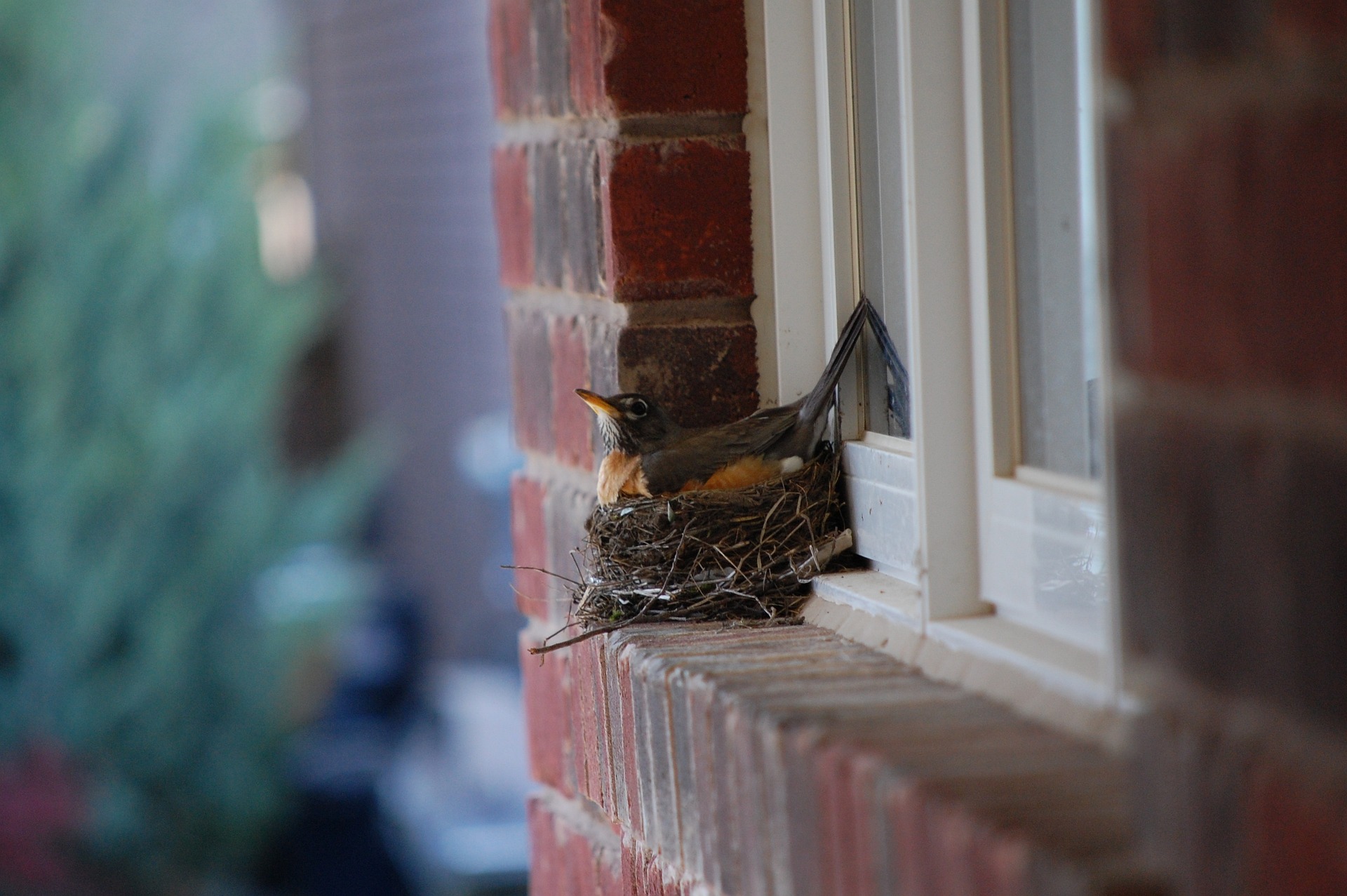
Will birds come back to the same nest site?
Yes, many birds return to sites that once felt safe. That is why cleaning the area and adding prevention measures after one nesting event is so important.
Can I remove a bird nest myself?
If the nest is inactive and local laws allow it, you may be able to remove it carefully. If eggs or chicks are present, it is best to check regulations or contact a wildlife professional first.
Do fake owls really work?
They can work for a short time, especially when birds are still testing a site. For better results, move them often and combine them with other deterrents, since birds quickly get used to stationary decoys.
How do I stop birds from nesting in vents?
Use vent covers or fine mesh designed for airflow and bird exclusion. Do not block the vent with unsafe materials, and make sure the cover fits tightly so birds cannot squeeze through gaps.
Conclusion
If you are trying to figure out how do you deter birds from building nests, the smartest path is prevention, not reaction. Remove access, clean up attractive debris, seal openings, and use humane deterrents before birds settle in. When you combine these steps, you make the space far less inviting without harming the birds.
The best results come from staying consistent and acting early. If you have a problem area at home or work, take a close look this week and start with one practical fix. For more helpful property care tips, keep exploring trusted guides and leave a comment with your biggest bird nesting challenge.