One hand equals four inches when measuring horses, the traditional equine height standard.
I have measured horses for years in stables, clinics, and shows, and I will clearly explain how many inches are in a hand when measuring horses and why that standard matters. This article draws on practical experience and industry practice to give step‑by‑step methods, common conversions, real examples, and tips you can trust. Read on to master how many inches are in a hand when measuring horses and apply it confidently in the barn or at the show.

Source: horsenetwork.com
Understanding the hand as a unit
The hand is a traditional unit used to measure the height of horses at the withers. One hand equals four inches. This unit dates back centuries and remains the accepted measurement across most English-speaking equestrian communities.
Why the hand persists:
- It is simple and visual. A hand gives a quick scale that riders and breeders understand.
- It provides consistent categories for competition and sale.
- Historical continuity helps with breed standards and records.
How many inches are in a hand when measuring horses is straightforward: multiply the number of hands by four to get inches. For example, a 15‑hand horse is 60 inches tall at the withers. That simplicity is the reason the hand remains in use worldwide.

Source: pinkequine.com
Why hand measurement matters
Measuring in hands helps compare horses quickly and uniformly. Buyers, trainers, and judges use hands to classify mounts and select animals for specific disciplines.
Practical reasons include:
- Matching riders to mount size for safety and comfort.
- Determining eligibility for height classes in shows.
- Communicating size in sales and records without complex conversions.
Knowing how many inches are in a hand when measuring horses lets you convert to inches or centimeters when required for veterinary records or international standards. It bridges traditional practice and modern needs.
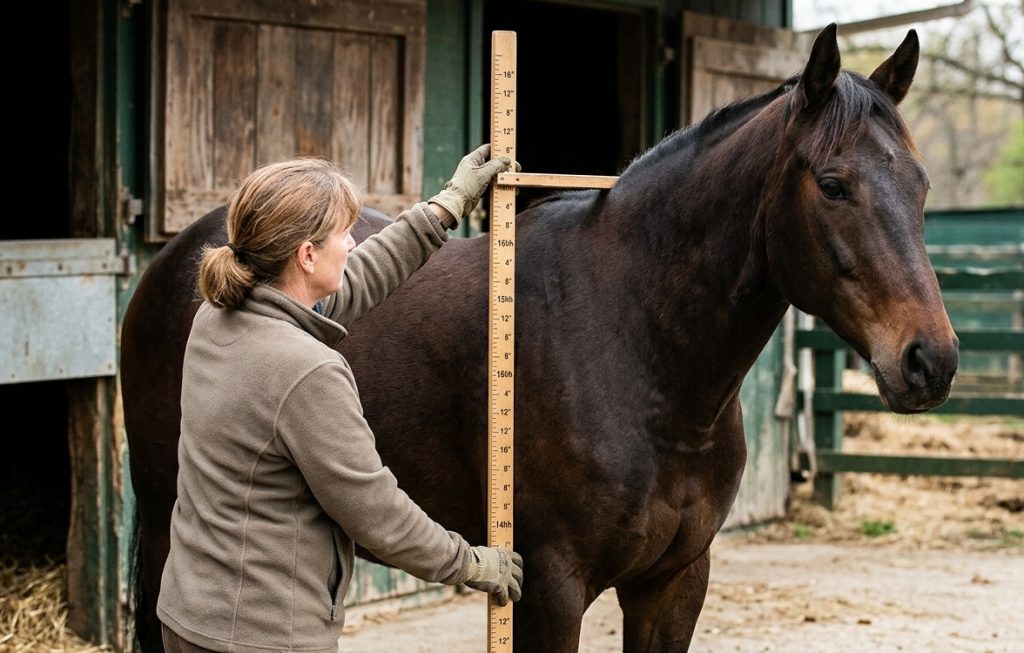
How to measure a horse in hands and inches
Follow a clear, repeatable method to measure accurately.
Step-by-step:
- Stand the horse square on level ground with weight evenly distributed.
- Locate the withers—the highest point of the shoulder blades.
- Use a calibrated measuring stick marked in hands, a spirit level with a ruler, or a tape measure and convert inches to hands.
- Record the height to the nearest quarter hand (0.25 hand equals 1 inch).
Examples of conversion practice:
- To convert hands to inches: hands × 4 = inches.
- To convert inches to hands: inches ÷ 4 = hands (express remainder as quarters: 1 inch = 0.25 hand, 2 inches = 0.5 hand, 3 inches = 0.75 hand).
Remember that how many inches are in a hand when measuring horses determines these conversions exactly, so keep the four‑inch rule in mind each time you measure.
Common conversions and examples
Here are practical conversions you will use often.
Common examples:
- 14 hands = 56 inches.
- 15.2 hands = 62 inches (15 hands × 4 = 60; .2 hand equals 2 inches).
- 16.3 hands = 67 inches (16 × 4 = 64; .3 hand equals 3 inches).
Note on decimals:
- Many people use quarters rather than decimals. For example, 15.1 means 15 and one quarter hand, equal to 61 inches. Understanding how many inches are in a hand when measuring horses avoids confusion between decimals and quarters.
These examples help when comparing pedigrees, categorizing horses, or preparing entries for shows.

Source: co.uk
Practical tips, personal experience, and mistakes to avoid
From years of measuring horses, a few practical lessons stand out.
Tips from hands‑on experience:
- Always measure on firm, level ground. I once measured a youngster on soft footing and got a misleading height that cost time at the vet clinic.
- Use the same tool and technique each time for consistency. Different sticks or angling the head changes readings.
- Record to the nearest quarter hand. One inch can change class eligibility in competitions.
Common mistakes:
- Confusing decimal notation with quarter hands. 15.2 might be read as two tenths instead of two inches.
- Measuring a horse while it is unbalanced or moving, which yields an inaccurate height.
- Forgetting that foals and yearlings change rapidly; measure again before sale or show.
By remembering how many inches are in a hand when measuring horses and following disciplined technique, you will improve accuracy and credibility.
Frequently Asked Questions of how many inches are in a hand when measuring horses
What exactly is a hand in horse measurement?
A hand is a unit equal to four inches used to measure a horse’s height at the withers. This traditional unit is widely used in the equestrian world for classification and communication.
How do I convert hands to inches quickly?
Multiply the number of hands by four to get inches. For example, 15 hands × 4 = 60 inches.
What does 15.2 hands mean in inches?
A 15.2 hand horse is 62 inches tall. The decimal or quarter refers to extra inches: .1 = 1 inch, .2 = 2 inches, .3 = 3 inches.
Can I use centimeters instead of hands?
Yes, you can convert inches to centimeters when needed; first convert hands to inches (hands × 4), then multiply by 2.54 to get centimeters. This lets you use metric records while knowing how many inches are in a hand when measuring horses.
Why do some listings show 15.1 and others 15.10?
Correct notation uses quarters: 15.1 means 15 and one quarter hand (61 inches). Writing 15.10 confuses decimals and should be avoided.
Is the hand used worldwide?
The hand is common in many countries, especially English‑speaking ones, but some nations and official bodies use metric measurements and require conversions. Knowing how many inches are in a hand when measuring horses helps with international communication.
Conclusion
Measuring horses in hands remains a practical, historical standard because one hand equals four inches and conversions are simple. Accurate measurement depends on sound technique: level ground, the withers as the point, and recording to the nearest quarter hand. Apply the steps and tips here to measure with confidence and avoid common errors.
Take action: practice measuring with a calibrated stick, record several readings for consistency, and convert to inches or centimeters as needed. Share your measurements or questions in the comments, subscribe for more equine measurement guides, or test your conversion skills at your next stable visit.